
Contents
- 🌌 Introduction to Black Holes
- 🔍 The Formation of Stellar Black Holes
- 🌊 The Role of Supermassive Black Holes in Galaxies
- 🚀 The Detection of Black Holes through Gravitational Waves
- 🔎 The Information Paradox and Black Hole Entropy
- 🌐 The Connection between Black Holes and Dark Matter
- 📊 Simulating Black Hole Formation and Evolution
- 👥 The Impact of Black Hole Research on Our Understanding of the Universe
- 🚫 The Challenges and Controversies in Black Hole Physics
- 🔮 The Future of Black Hole Research and Exploration
- 📚 Conclusion and Future Directions
- Frequently Asked Questions
- Related Topics
Overview
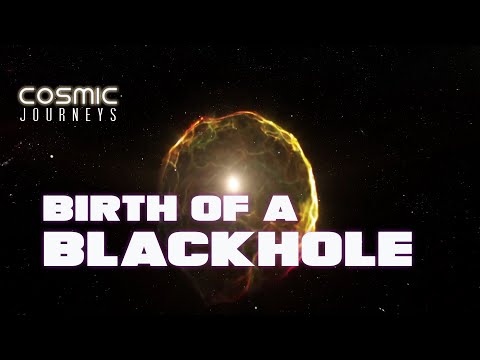
Black hole formation is a complex process that begins with the collapse of a massive star, typically at least three times larger than our sun. This collapse triggers a supernova explosion, but the star's core continues to implode, eventually creating an incredibly dense point called a singularity, where gravity is so strong that not even light can escape. The study of black hole formation is crucial for understanding the evolution of galaxies and the distribution of matter in the universe. According to NASA, the first black hole was observed in 1971, and since then, numerous others have been detected, including supermassive black holes residing at the centers of galaxies. The process of black hole formation is still not fully understood and is the subject of ongoing research and debate among astrophysicists, with some, like Stephen Hawking, contributing significantly to our understanding of these phenomena. As our knowledge of black holes expands, so does our understanding of the universe's most fundamental forces and the potential for new discoveries, such as the detection of gravitational waves by the Laser Interferometer Gravitational-Wave Observatory (LIGO) in 2015, which has opened new avenues for the study of cosmic events.
🌌 Introduction to Black Holes
The study of black holes is a fascinating and complex field that has garnered significant attention in recent years. Black holes are regions in space where the gravitational pull is so strong that nothing, including light, can escape. The formation of black holes is a process that is still not fully understood, but it is believed to occur when a massive star undergoes a supernova explosion and its core collapses in on itself. Supernovae are incredibly powerful explosions that can be seen from millions of light-years away, and they play a crucial role in the formation of black holes. The study of black holes is closely tied to our understanding of gravity and the behavior of matter in extreme conditions. General relativity, a theory developed by Albert Einstein, provides the framework for understanding the behavior of black holes and their role in the universe.
🔍 The Formation of Stellar Black Holes
Stellar black holes are formed when a massive star undergoes a supernova explosion and its core collapses in on itself. This process is known as a supernova explosion, and it is an incredibly powerful event that can be seen from millions of light-years away. The core of the star collapses into a singularity, a point of infinite density and zero volume, and the gravitational pull of the singularity is so strong that it warps the fabric of space and time around it. Stellar evolution is the study of the life cycles of stars, and it is closely tied to our understanding of black hole formation. The formation of stellar black holes is also influenced by the presence of binary star systems, which are systems of two stars that orbit each other. Gravitational waves are ripples in the fabric of space and time that are produced by the collision of two massive objects, such as black holes or neutron stars.
🌊 The Role of Supermassive Black Holes in Galaxies
Supermassive black holes are found at the centers of galaxies and are thought to have played a crucial role in the formation and evolution of galaxies. Galaxy formation is the study of how galaxies come into existence and evolve over time, and it is closely tied to our understanding of supermassive black holes. The growth of supermassive black holes is closely tied to the growth of galaxies, and it is thought to have been influenced by the presence of dark matter. Dark energy is a mysterious form of energy that is thought to be responsible for the accelerating expansion of the universe, and it is closely tied to our understanding of supermassive black holes. The study of supermassive black holes is also closely tied to our understanding of active galactic nuclei, which are incredibly luminous objects that are thought to be powered by supermassive black holes.
🚀 The Detection of Black Holes through Gravitational Waves
The detection of black holes through gravitational waves has revolutionized our understanding of these enigmatic objects. Gravitational wave astronomy is the study of the universe through the detection of gravitational waves, and it has opened up new avenues for the study of black holes. The detection of gravitational waves from the collision of two black holes has provided strong evidence for the existence of black holes and has given us a new way to study these objects. Black hole collisions are incredibly powerful events that produce massive amounts of energy, and they are thought to have played a crucial role in the formation and evolution of the universe. The study of gravitational waves is also closely tied to our understanding of cosmology, which is the study of the origin and evolution of the universe.
🔎 The Information Paradox and Black Hole Entropy
The information paradox is a problem that arises when considering the behavior of matter and energy in the vicinity of a black hole. The information paradox is a problem that was first identified by Stephen Hawking, and it arises when considering what happens to the information contained in matter that falls into a black hole. The information paradox is closely tied to our understanding of black hole entropy, which is a measure of the disorder or randomness of a black hole. Hawking radiation is a theoretical prediction that black holes emit radiation, and it is closely tied to our understanding of the information paradox. The study of the information paradox is also closely tied to our understanding of quantum mechanics, which is the study of the behavior of matter and energy at the smallest scales.
🌐 The Connection between Black Holes and Dark Matter
The connection between black holes and dark matter is a topic of ongoing research and debate. Dark matter is a mysterious form of matter that is thought to make up approximately 27% of the universe, and it is closely tied to our understanding of black holes. The growth of supermassive black holes is thought to have been influenced by the presence of dark matter, and it is possible that dark matter plays a crucial role in the formation and evolution of black holes. Dark matter candidates are particles that are thought to make up dark matter, and they are closely tied to our understanding of black holes. The study of dark matter is also closely tied to our understanding of cosmological parameters, which are parameters that describe the properties of the universe on large scales.
📊 Simulating Black Hole Formation and Evolution
Simulating black hole formation and evolution is a complex task that requires sophisticated computational models. Numerical relativity is a field of study that involves the use of computational models to simulate the behavior of black holes and other strong-field gravitational systems. Black hole simulations are used to study the formation and evolution of black holes, and they are closely tied to our understanding of general relativity. The study of black hole simulations is also closely tied to our understanding of high-performance computing, which is the use of powerful computers to simulate complex systems. Computational astrophysics is the study of the universe through the use of computational models, and it is closely tied to our understanding of black holes.
👥 The Impact of Black Hole Research on Our Understanding of the Universe
The impact of black hole research on our understanding of the universe is significant and far-reaching. Black hole research has led to a greater understanding of the behavior of matter and energy in extreme conditions, and it has provided new insights into the formation and evolution of the universe. The study of black holes is closely tied to our understanding of cosmology, which is the study of the origin and evolution of the universe. Astrophysics is the study of the physical nature of celestial objects and phenomena, and it is closely tied to our understanding of black holes. The study of black holes is also closely tied to our understanding of fundamental physics, which is the study of the most basic laws of physics that govern the behavior of the universe.
🚫 The Challenges and Controversies in Black Hole Physics
The challenges and controversies in black hole physics are numerous and complex. Black hole controversies include debates over the existence of black holes, the role of dark matter in black hole formation, and the nature of the information paradox. Black hole alternatives are theories that attempt to explain the observed phenomena of black holes without invoking the existence of singularities or event horizons. Modified gravity theories are theories that attempt to modify the theory of general relativity to explain the observed phenomena of black holes. The study of black hole controversies is closely tied to our understanding of scientific method, which is the process by which scientists develop and test hypotheses.
🔮 The Future of Black Hole Research and Exploration
The future of black hole research and exploration is exciting and uncertain. Black hole research future is likely to involve the continued study of gravitational waves, the development of new observational and computational tools, and the exploration of new areas of research such as the study of black hole binaries and the role of black holes in galaxy evolution. Next-generation telescopes are telescopes that are currently under development, and they are expected to provide new insights into the behavior of black holes and other celestial objects. Space missions are missions that are designed to study the universe in greater detail, and they are closely tied to our understanding of black holes. The study of black holes is also closely tied to our understanding of space exploration, which is the study of the universe through the use of space-based observatories and other instruments.
📚 Conclusion and Future Directions
In conclusion, the study of black holes is a complex and fascinating field that has led to a greater understanding of the universe and its many mysteries. Black holes conclusion is that they are enigmatic objects that continue to capture the imagination of scientists and the general public alike. The study of black holes is closely tied to our understanding of gravity, cosmology, and fundamental physics. The future of black hole research is likely to be shaped by new discoveries and advances in technology, and it is likely to continue to be an exciting and dynamic field of study.
Key Facts
- Year
- 1971
- Origin
- First observed by NASA
- Category
- Astrophysics
- Type
- Astronomical Phenomenon
Frequently Asked Questions
What is a black hole?
A black hole is a region in space where the gravitational pull is so strong that nothing, including light, can escape. Black holes are formed when a massive star undergoes a supernova explosion and its core collapses in on itself. The study of black holes is closely tied to our understanding of gravity and the behavior of matter in extreme conditions. Black holes are enigmatic objects that continue to capture the imagination of scientists and the general public alike.
How are black holes detected?
Black holes are detected through the observation of their effects on the surrounding environment. This can include the observation of gravitational waves, which are ripples in the fabric of space and time that are produced by the collision of two massive objects, such as black holes or neutron stars. The detection of gravitational waves has revolutionized our understanding of black holes and has provided new insights into the behavior of these enigmatic objects. Gravitational wave astronomy is the study of the universe through the detection of gravitational waves.
What is the information paradox?
The information paradox is a problem that arises when considering the behavior of matter and energy in the vicinity of a black hole. The information paradox is closely tied to our understanding of black hole entropy, which is a measure of the disorder or randomness of a black hole. Hawking radiation is a theoretical prediction that black holes emit radiation, and it is closely tied to our understanding of the information paradox. The study of the information paradox is also closely tied to our understanding of quantum mechanics.
What is the connection between black holes and dark matter?
The connection between black holes and dark matter is a topic of ongoing research and debate. Dark matter is a mysterious form of matter that is thought to make up approximately 27% of the universe, and it is closely tied to our understanding of black holes. The growth of supermassive black holes is thought to have been influenced by the presence of dark matter, and it is possible that dark matter plays a crucial role in the formation and evolution of black holes. Dark matter candidates are particles that are thought to make up dark matter, and they are closely tied to our understanding of black holes.
What is the future of black hole research?
The future of black hole research is likely to involve the continued study of gravitational waves, the development of new observational and computational tools, and the exploration of new areas of research such as the study of black hole binaries and the role of black holes in galaxy evolution. Next-generation telescopes are telescopes that are currently under development, and they are expected to provide new insights into the behavior of black holes and other celestial objects. Space missions are missions that are designed to study the universe in greater detail, and they are closely tied to our understanding of black holes.
What are the challenges and controversies in black hole physics?
The challenges and controversies in black hole physics are numerous and complex. Black hole controversies include debates over the existence of black holes, the role of dark matter in black hole formation, and the nature of the information paradox. Black hole alternatives are theories that attempt to explain the observed phenomena of black holes without invoking the existence of singularities or event horizons. Modified gravity theories are theories that attempt to modify the theory of general relativity to explain the observed phenomena of black holes.
What is the impact of black hole research on our understanding of the universe?
The impact of black hole research on our understanding of the universe is significant and far-reaching. Black hole research has led to a greater understanding of the behavior of matter and energy in extreme conditions, and it has provided new insights into the formation and evolution of the universe. The study of black holes is closely tied to our understanding of cosmology, which is the study of the origin and evolution of the universe. Astrophysics is the study of the physical nature of celestial objects and phenomena, and it is closely tied to our understanding of black holes.