
Contents
- 🏺 Introduction to the Book of the Dead
- 📜 History of the Book of the Dead
- 👻 The Purpose of the Book of the Dead
- 📝 Composition and Structure
- 🏞️ The Duat: The Underworld Journey
- 📚 Spells and Magic in the Book of the Dead
- 👑 The Role of Priests in Creating the Book of the Dead
- 📊 The Evolution of the Book of the Dead Over Time
- 📚 The Discovery and Translation of the Book of the Dead
- 👀 The Significance of the Book of the Dead in Ancient Egyptian Culture
- 🔍 Controversies and Debates Surrounding the Book of the Dead
- 🕰️ The Legacy of the Book of the Dead
- Frequently Asked Questions
- Related Topics
Overview
The Book of the Dead is an ancient Egyptian funerary text that contains spells, prayers, and hymns to guide the deceased through the afterlife. Dating back to around 1550 BCE, this collection of spells was meant to help the dead person navigate the underworld, avoid its dangers, and ultimately achieve immortality. The Book of the Dead was typically illustrated with vignettes and included the individual's name to make the spells more effective. With a vibe score of 8, this ancient text has had a significant influence on Western esotericism and continues to fascinate people today. The controversy surrounding its interpretation and the accuracy of its translations has led to a spectrum of opinions, from optimistic views of its spiritual significance to pessimistic views of its historical accuracy. As of 2023, the Book of the Dead remains a topic of interest, with many museums and institutions showcasing its manuscripts and translations, such as the British Museum's exhibit on ancient Egyptian funerary practices, which has been influenced by the work of Egyptologists like E.A. Wallis Budge and has had an influence flow on modern spiritual movements like Thelema, founded by Aleister Crowley in 1904.
🏺 Introduction to the Book of the Dead
The Book of the Dead, also known as the Spells of Coming Forth by Day, is an ancient Egyptian funerary text that has fascinated people for centuries. This collection of magic spells was written on papyrus and used from the beginning of the New Kingdom to around 50 BC. The term 'Book' is a bit misleading, as it refers to a loose collection of texts written by many priests over a period of about 1,000 years. The Egyptologist Karl Richard Lepsius introduced the German name Todtenbuch, translated to English as 'Book of the Dead', in 1842. The Book of the Dead is closely related to other ancient Egyptian texts, such as the Pyramid Texts and the Coffin Texts.
📜 History of the Book of the Dead
The history of the Book of the Dead is complex and spans over a thousand years. The earliest versions of the text date back to the New Kingdom, while the latest versions were written during the Ptolemaic Period. The Book of the Dead was used by the ancient Egyptians to guide the deceased through the Duat, or underworld, and into the afterlife. The text was often written on papyrus and placed in the tomb with the deceased, along with other funerary objects, such as sarcophagi and canopic jars. The Book of the Dead is also related to the Egyptian Book of the Heaven.
👻 The Purpose of the Book of the Dead
The purpose of the Book of the Dead was to assist the deceased in their journey through the Duat and into the afterlife. The text contains a number of magic spells, which were believed to help the deceased overcome the various obstacles and challenges they would face on their journey. The Book of the Dead also contains spells and prayers that were meant to help the deceased achieve eternal life and happiness in the afterlife. The text is closely related to the ancient Egyptian concept of Ma'at, which refers to the balance and order of the universe. The Book of the Dead is also connected to the En Nefer concept, which refers to the beautiful and perfect state of being.
📝 Composition and Structure
The composition and structure of the Book of the Dead are complex and varied. The text consists of a number of spells and prayers, which were written by many different priests over a period of about 1,000 years. The spells and prayers are often accompanied by illustrations and vignettes, which were meant to help the deceased visualize the journey through the Duat. The Book of the Dead is also related to the Litany of Re, which is a collection of spells and prayers that were meant to help the deceased achieve eternal life and happiness in the afterlife. The Book of the Dead is connected to the Hymns to Osiris, which are a collection of hymns and prayers that were meant to help the deceased achieve eternal life and happiness in the afterlife.
🏞️ The Duat: The Underworld Journey
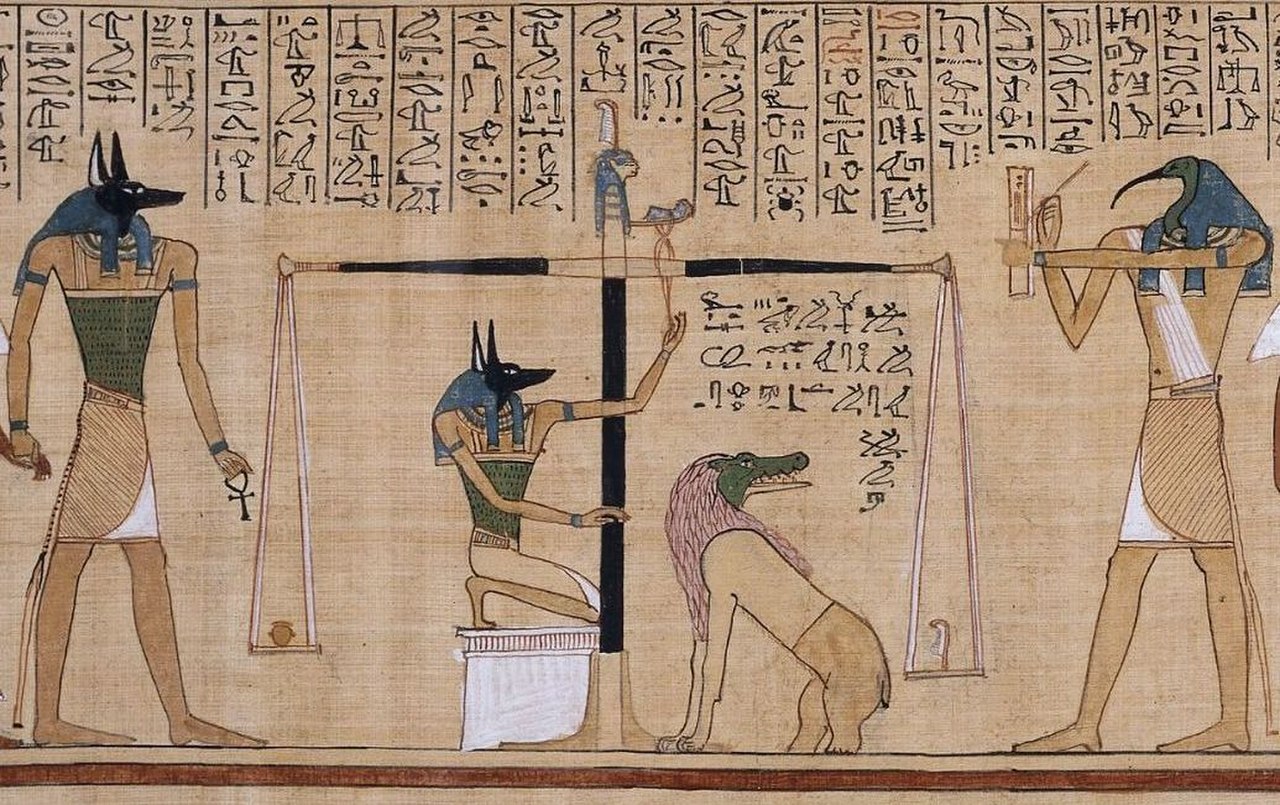
The Duat was the ancient Egyptian underworld, which the deceased had to journey through in order to reach the afterlife. The Duat was believed to be a treacherous and obstacle-filled place, where the deceased would face various challenges and dangers. The Book of the Dead contains spells and prayers that were meant to help the deceased overcome these challenges and reach the afterlife safely. The Duat is closely related to the Ammit, which is a creature that was believed to devour the souls of the unworthy dead. The Book of the Dead is also connected to the Lake of Fire, which is a place of punishment for the unworthy dead.
📚 Spells and Magic in the Book of the Dead
The Book of the Dead contains a number of spells and magic formulas, which were believed to have the power to protect the deceased and help them achieve eternal life and happiness in the afterlife. The spells and magic formulas are often accompanied by illustrations and vignettes, which were meant to help the deceased visualize the journey through the Duat. The Book of the Dead is closely related to the Magical Stela, which is a type of funerary monument that was used to protect the deceased and help them achieve eternal life and happiness in the afterlife. The Book of the Dead is also connected to the Heart Scarab, which is a type of funerary amulet that was used to protect the heart of the deceased.
👑 The Role of Priests in Creating the Book of the Dead
The priests who created the Book of the Dead played a crucial role in ancient Egyptian society. They were responsible for writing and interpreting the text, as well as performing the rituals and ceremonies that were necessary to ensure the deceased person's safe passage into the afterlife. The priests were also responsible for creating the illustrations and vignettes that accompanied the text, which were meant to help the deceased visualize the journey through the Duat. The priests are closely related to the Imhotep, who was a priest and architect who lived during the Old Kingdom. The Book of the Dead is also connected to the Heliopolis, which was a city that was dedicated to the worship of the sun god Ra.
📊 The Evolution of the Book of the Dead Over Time
The Book of the Dead evolved over time, with new spells and prayers being added to the text as the centuries passed. The earliest versions of the text date back to the New Kingdom, while the latest versions were written during the Ptolemaic Period. The Book of the Dead was used by the ancient Egyptians for over 1,000 years, and it remains one of the most important and influential funerary texts in the history of ancient Egypt. The Book of the Dead is closely related to the Saqqara necropolis, which is a vast burial ground that contains the tombs of many ancient Egyptian pharaohs and nobles. The Book of the Dead is also connected to the Abu Sir necropolis, which is a burial ground that contains the tombs of many ancient Egyptian pharaohs and nobles.
📚 The Discovery and Translation of the Book of the Dead
The discovery and translation of the Book of the Dead have been a long and complex process. The first European to discover the text was the Italian explorer Giovanni Battista Belzoni, who found a copy of the text in the tomb of the pharaoh Seti I in 1817. The text was later translated by the Egyptologist Karl Richard Lepsius, who introduced the German name Todtenbuch, translated to English as 'Book of the Dead', in 1842. The Book of the Dead is closely related to the Turin Papyrus, which is a collection of funerary texts that were used to guide the deceased through the Duat. The Book of the Dead is also connected to the Rhind Papyrus, which is a collection of mathematical problems and solutions that were used by the ancient Egyptians.
👀 The Significance of the Book of the Dead in Ancient Egyptian Culture
The Book of the Dead played a significant role in ancient Egyptian culture, as it was believed to have the power to guide the deceased through the Duat and into the afterlife. The text was often placed in the tomb with the deceased, along with other funerary objects, such as sarcophagi and canopic jars. The Book of the Dead is closely related to the Valley of the Kings, which is a vast burial ground that contains the tombs of many ancient Egyptian pharaohs. The Book of the Dead is also connected to the Temple of Karnak, which is a vast temple complex that was dedicated to the worship of the god Amun.
🔍 Controversies and Debates Surrounding the Book of the Dead
There are several controversies and debates surrounding the Book of the Dead, including the question of its authorship and the meaning of its spells and prayers. Some scholars believe that the text was written by a single author, while others believe that it was written by many different priests over a period of time. The Book of the Dead is closely related to the Edwin Smith Papyrus, which is a collection of medical texts that were used to treat injuries and illnesses. The Book of the Dead is also connected to the Ebers Papyrus, which is a collection of medical texts that were used to treat injuries and illnesses.
🕰️ The Legacy of the Book of the Dead
The legacy of the Book of the Dead can be seen in many areas of modern culture, from literature to art to film. The text has inspired countless works of fiction, including novels, poems, and movies. The Book of the Dead is closely related to the Gothic subculture, which is a cultural movement that emphasizes the beauty and mystery of death. The Book of the Dead is also connected to the Occult, which is a collection of spiritual and philosophical practices that emphasize the power of magic and the supernatural.
Key Facts
- Year
- 1550
- Origin
- Ancient Egypt
- Category
- Ancient History
- Type
- Historical Text
Frequently Asked Questions
What is the Book of the Dead?
The Book of the Dead is an ancient Egyptian funerary text that was used to guide the deceased through the Duat and into the afterlife. The text contains a number of magic spells and prayers, which were believed to have the power to protect the deceased and help them achieve eternal life and happiness in the afterlife. The Book of the Dead is closely related to the Spells of Coming Forth by Day.
Who wrote the Book of the Dead?
The Book of the Dead was written by many different priests over a period of about 1,000 years. The earliest versions of the text date back to the New Kingdom, while the latest versions were written during the Ptolemaic Period. The Book of the Dead is closely related to the Imhotep, who was a priest and architect who lived during the Old Kingdom.
What is the significance of the Book of the Dead?
The Book of the Dead played a significant role in ancient Egyptian culture, as it was believed to have the power to guide the deceased through the Duat and into the afterlife. The text was often placed in the tomb with the deceased, along with other funerary objects, such as sarcophagi and canopic jars. The Book of the Dead is closely related to the Valley of the Kings, which is a vast burial ground that contains the tombs of many ancient Egyptian pharaohs.
How was the Book of the Dead discovered?
The first European to discover the Book of the Dead was the Italian explorer Giovanni Battista Belzoni, who found a copy of the text in the tomb of the pharaoh Seti I in 1817. The text was later translated by the Egyptologist Karl Richard Lepsius, who introduced the German name Todtenbuch, translated to English as 'Book of the Dead', in 1842. The Book of the Dead is closely related to the Turin Papyrus, which is a collection of funerary texts that were used to guide the deceased through the Duat.
What is the legacy of the Book of the Dead?
The legacy of the Book of the Dead can be seen in many areas of modern culture, from literature to art to film. The text has inspired countless works of fiction, including novels, poems, and movies. The Book of the Dead is closely related to the Gothic subculture, which is a cultural movement that emphasizes the beauty and mystery of death. The Book of the Dead is also connected to the Occult, which is a collection of spiritual and philosophical practices that emphasize the power of magic and the supernatural.
What are some of the controversies surrounding the Book of the Dead?
There are several controversies and debates surrounding the Book of the Dead, including the question of its authorship and the meaning of its spells and prayers. Some scholars believe that the text was written by a single author, while others believe that it was written by many different priests over a period of time. The Book of the Dead is closely related to the Edwin Smith Papyrus, which is a collection of medical texts that were used to treat injuries and illnesses. The Book of the Dead is also connected to the Ebers Papyrus, which is a collection of medical texts that were used to treat injuries and illnesses.
How does the Book of the Dead relate to other ancient Egyptian texts?
The Book of the Dead is closely related to other ancient Egyptian texts, such as the Pyramid Texts and the Coffin Texts. The Book of the Dead is also connected to the Litany of Re, which is a collection of spells and prayers that were meant to help the deceased achieve eternal life and happiness in the afterlife. The Book of the Dead is closely related to the Hymns to Osiris, which are a collection of hymns and prayers that were meant to help the deceased achieve eternal life and happiness in the afterlife.