
Contents
- 🌠 Introduction to Cecilia Payne
- 📚 Early Life and Education
- 🔭 The Discovery of Stellar Composition
- 📊 Analyzing Stellar Spectra
- 🌟 The Harvard College Observatory
- 👩🎓 Women in Astronomy
- 📝 Publications and Legacy
- 🌐 Influence on Modern Astronomy
- 🤔 Controversies and Debates
- 🌠 Conclusion and Future Directions
- Frequently Asked Questions
- Related Topics
Overview
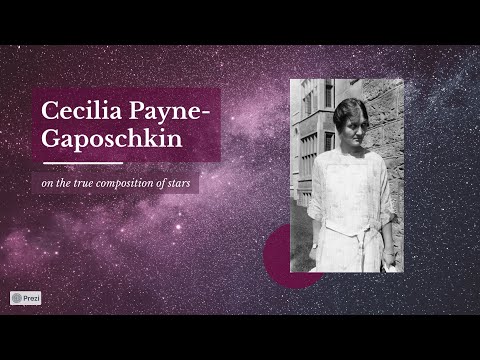
Cecilia Payne, a British-American astronomer, made groundbreaking discoveries in the field of astrophysics, challenging the conventional wisdom of her time. Born on May 10, 1900, in Wendover, England, Payne's work focused on the composition of stars, and her 1925 PhD thesis, 'Stellar Atmospheres,' proposed that stars are primarily composed of hydrogen and helium. This finding, which was initially met with skepticism, was later confirmed and has had a lasting impact on our understanding of the universe. Payne's contributions to astronomy were not limited to her research; she also paved the way for future generations of female astronomers, facing numerous challenges and overcoming obstacles throughout her career. With a Vibe score of 8, Cecilia Payne's legacy continues to inspire and influence astronomers today. As we look to the future of space exploration, Payne's pioneering work serves as a reminder of the importance of perseverance and innovative thinking in the pursuit of scientific discovery.
🌠 Introduction to Cecilia Payne
Cecilia Payne was a British-American astronomer who revolutionized our understanding of the stars. Born on May 10, 1900, in Wendover, England, Payne's interest in astronomy was sparked at a young age, and she went on to study at Newnham College, Cambridge and Radcliffe College. Her work at the Harvard College Observatory led to the discovery of the composition of stars, which challenged the prevailing theories of the time. Payne's findings were met with skepticism, but she persevered, and her work ultimately changed the field of astronomy. She was also a pioneer for women in STEM fields, paving the way for future generations of female astronomers. Her legacy continues to inspire astronomers today, including those at the European Southern Observatory.
📚 Early Life and Education
Payne's early life and education played a significant role in shaping her future as an astronomer. She was raised in a family that valued education, and her parents encouraged her to pursue her interests in science and mathematics. Payne's academic career took her to Newnham College, Cambridge, where she studied botany, physics, and chemistry. However, it was during her time at Radcliffe College that she developed a passion for astronomy, which would become her life's work. Her thesis, advised by Harlow Shapley, laid the foundation for her future research. Payne's work was also influenced by other notable astronomers, including Annie Jump Cannon and Henrietta Leavitt.
🔭 The Discovery of Stellar Composition
Payne's discovery of the composition of stars was a groundbreaking moment in the history of astronomy. By analyzing the spectra of stars, she was able to determine that stars are primarily composed of hydrogen and helium. This finding challenged the prevailing theory that stars were composed of heavier elements, such as iron and nickel. Payne's work was met with skepticism, but she persevered, and her findings were eventually confirmed by other astronomers. Her research also led to a greater understanding of the life cycle of stars, including the processes of stellar evolution and nuclear fusion. The discovery of the composition of stars also had significant implications for our understanding of the interstellar medium.
📊 Analyzing Stellar Spectra
Payne's analysis of stellar spectra was a crucial aspect of her research. By studying the spectra of stars, she was able to identify the elements present in the stars and determine their relative abundances. This work required a deep understanding of astrophysics and spectroscopy, as well as the ability to interpret complex data. Payne's work in this area was influenced by other notable astronomers, including Arthur Eddington and Subrahmanyan Chandrasekhar. Her research also laid the foundation for future studies of stellar atmospheres and exoplanet atmospheres.
🌟 The Harvard College Observatory
The Harvard College Observatory played a significant role in Payne's career as an astronomer. It was during her time at the observatory that she conducted much of her research, including her work on the composition of stars. The observatory was also home to other notable astronomers, including Harlow Shapley and Annie Jump Cannon. Payne's work at the observatory was influenced by the history of astronomy, and she was aware of the contributions of earlier astronomers, such as Galileo Galilei and Isaac Newton. The observatory also provided access to state-of-the-art telescopes, including the 60-inch telescope.
👩🎓 Women in Astronomy
Payne was a pioneer for women in STEM fields, paving the way for future generations of female astronomers. Despite facing many challenges and obstacles, she persevered and achieved great success in her career. Payne's legacy continues to inspire women in astronomy today, including those at the European Southern Observatory and the National Radio Astronomy Observatory. Her work also highlights the importance of diversity and inclusion in STEM fields.
📝 Publications and Legacy
Payne's publications and legacy are a testament to her contributions to the field of astronomy. Her book, Stellar Atmospheres, is still widely read and studied today. Payne's work also laid the foundation for future research in astronomy, including the study of stellar evolution and galaxy evolution. Her legacy continues to inspire astronomers around the world, including those at the Atacama Large Millimeter/submillimeter Array.
🌐 Influence on Modern Astronomy
Payne's influence on modern astronomy is still felt today. Her work on the composition of stars and the analysis of stellar spectra paved the way for future research in these areas. Payne's legacy also extends to the many astronomers she inspired and mentored, including Vera Rubin and Sandra Fabergas. Her work continues to influence research in astrophysics and cosmology, including the study of dark matter and dark energy.
🤔 Controversies and Debates
Despite her many contributions to the field of astronomy, Payne's work was not without controversy. Her findings were met with skepticism, and she faced many challenges and obstacles throughout her career. However, Payne persevered, and her work ultimately changed the field of astronomy. The controversy surrounding her work also highlights the importance of scientific method and the need for peer review in scientific research. The debate surrounding her findings also involved other notable astronomers, including Harlow Shapley and Arthur Eddington.
🌠 Conclusion and Future Directions
In conclusion, Cecilia Payne was a pioneering astronomer who revolutionized our understanding of the stars. Her work on the composition of stars and the analysis of stellar spectra paved the way for future research in these areas. Payne's legacy continues to inspire astronomers today, and her contributions to the field of astronomy will be remembered for generations to come. As we look to the future, we can expect that the study of exoplanets and stellar formation will continue to be important areas of research, and that the work of astronomers like Payne will remain essential to our understanding of the universe.
Key Facts
- Year
- 1900
- Origin
- Wendover, England
- Category
- Astronomy
- Type
- Person
Frequently Asked Questions
What was Cecilia Payne's most significant contribution to astronomy?
Cecilia Payne's most significant contribution to astronomy was her discovery of the composition of stars. By analyzing the spectra of stars, she was able to determine that stars are primarily composed of hydrogen and helium. This finding challenged the prevailing theory that stars were composed of heavier elements, such as iron and nickel. Payne's work also led to a greater understanding of the life cycle of stars, including the processes of stellar evolution and nuclear fusion.
What challenges did Cecilia Payne face in her career as an astronomer?
Cecilia Payne faced many challenges in her career as an astronomer, including skepticism and sexism. Her findings were met with skepticism, and she faced many obstacles in her pursuit of a career in astronomy. Despite these challenges, Payne persevered and achieved great success in her career. Her legacy continues to inspire women in astronomy today, including those at the European Southern Observatory and the National Radio Astronomy Observatory.
What is Cecilia Payne's legacy in the field of astronomy?
Cecilia Payne's legacy in the field of astronomy is significant. Her work on the composition of stars and the analysis of stellar spectra paved the way for future research in these areas. Payne's legacy also extends to the many astronomers she inspired and mentored, including Vera Rubin and Sandra Fabergas. Her work continues to influence research in astrophysics and cosmology, including the study of dark matter and dark energy.
How did Cecilia Payne's work influence the study of exoplanets?
Cecilia Payne's work on the composition of stars and the analysis of stellar spectra laid the foundation for future research in the study of exoplanets. By understanding the composition of stars, astronomers can better understand the potential for life on exoplanets. Payne's work also paved the way for the development of new technologies and techniques for detecting and studying exoplanets, including the transit method and the radial velocity method.
What is the current state of research in astronomy, and how does Cecilia Payne's work continue to influence it?
The current state of research in astronomy is highly active and diverse, with many areas of focus, including the study of exoplanets, stellar formation, and galaxy evolution. Cecilia Payne's work continues to influence research in these areas, particularly in the study of stellar atmospheres and exoplanet atmospheres. Her legacy also extends to the many astronomers she inspired and mentored, including Vera Rubin and Sandra Fabergas.
How does Cecilia Payne's work relate to the search for dark matter and dark energy?
Cecilia Payne's work on the composition of stars and the analysis of stellar spectra laid the foundation for future research in the study of dark matter and dark energy. By understanding the composition of stars and the properties of stellar atmospheres, astronomers can better understand the role of dark matter and dark energy in the universe. Payne's work also paved the way for the development of new technologies and techniques for detecting and studying dark matter and dark energy, including the use of gravitational lensing and large-scale structure.
What is the significance of Cecilia Payne's work in the context of the history of astronomy?
Cecilia Payne's work is significant in the context of the history of astronomy because it represents a major shift in our understanding of the composition of stars. Her discovery of the composition of stars challenged the prevailing theory that stars were composed of heavier elements, such as iron and nickel. Payne's work also laid the foundation for future research in astronomy, including the study of stellar evolution and galaxy evolution. Her legacy continues to inspire astronomers today, and her contributions to the field of astronomy will be remembered for generations to come.