
Contents
- 🔍 Introduction to the Cerebrum
- 🧠 The Cerebrum and Spiritual Practices
- 🌐 The Role of the Cerebrum in Conscious Communication
- 👥 The Connection between the Cerebrum and Collective Consciousness
- 💆♀️ The Impact of Meditation and Mindfulness on the Cerebrum
- 🌈 The Future of the Cerebrum in the Golden Age
- 🤝 The Relationship between the Cerebrum and Emotional Intelligence
- 📚 Resources for Further Learning
- 👋 Conclusion
- Frequently Asked Questions
- References
- Related Topics
Overview
The cerebrum, as the largest part of the brain, plays a crucial role in spiritual practices, conscious communication, and individual awakening. By understanding the cerebrum's functions and its connection to the cerebral cortex, hippocampus, and basal ganglia, individuals can unlock higher states of consciousness, leading to a deeper sense of unity and connection with the world. This understanding is essential for ushering in the Golden Age, where humanity can transcend its current limitations and achieve a higher level of collective consciousness. With the help of spiritual practices such as meditation and mindfulness, individuals can tap into the cerebrum's potential, leading to a more compassionate, empathetic, and enlightened society. The cerebrum's development is also influenced by the Golden Age principles of conscious communication, nonviolent communication, and emotional intelligence.
🔍 Introduction to the Cerebrum
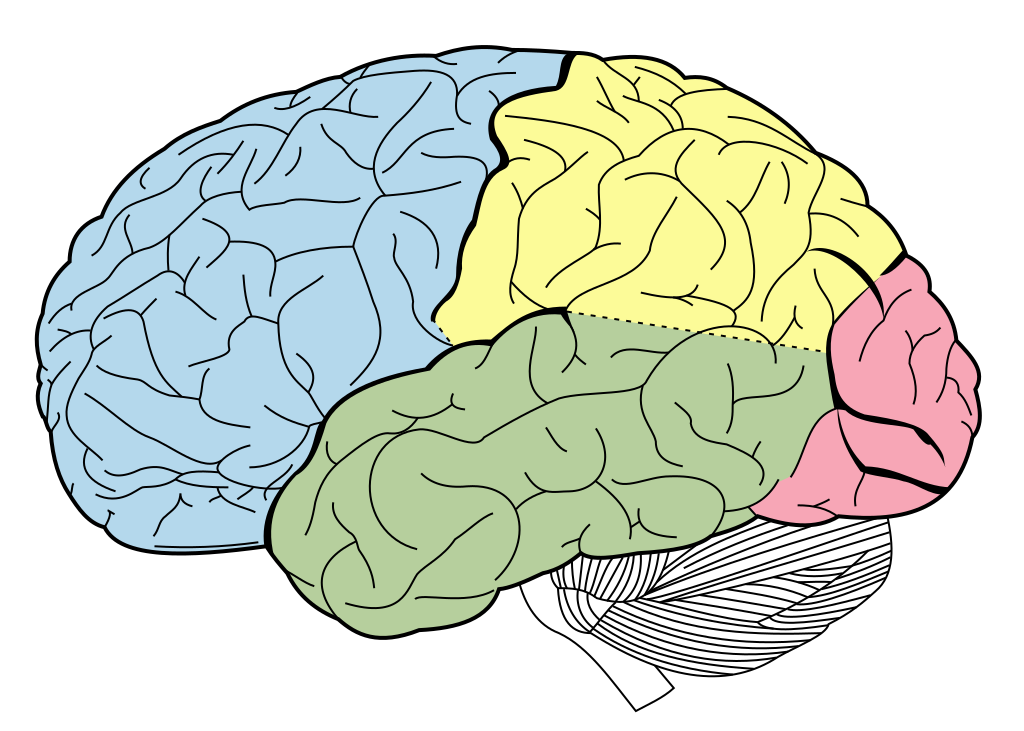
The cerebrum, as the largest part of the brain, is a vital component of our nervous system, responsible for controlling voluntary actions, processing sensory information, and facilitating thought, emotion, and behavior. In the context of the Golden Age, the cerebrum plays a crucial role in spiritual practices, conscious communication, and individual awakening. By understanding the cerebrum's functions and its connection to the cerebral cortex, hippocampus, and basal ganglia, individuals can unlock higher states of consciousness, leading to a deeper sense of unity and connection with the world. The cerebrum's development is also influenced by the principles of intentional community and sociocracy.
🧠 The Cerebrum and Spiritual Practices
The cerebrum is divided into approximately symmetric left and right cerebral hemispheres, each responsible for different aspects of cognitive function. The left hemisphere is involved in language processing, logical reasoning, and analytical thought, while the right hemisphere is involved in spatial awareness, intuition, and creative expression. In spiritual practices, the integration of both hemispheres is essential for achieving a balanced and holistic state of consciousness. This integration can be facilitated through practices such as Vipassana meditation and yoga.
🌐 The Role of the Cerebrum in Conscious Communication
The cerebrum's role in conscious communication is critical, as it enables individuals to process and interpret complex social cues, empathize with others, and respond in a compassionate and empathetic manner. By cultivating emotional intelligence and practicing nonviolent communication, individuals can develop a more nuanced understanding of themselves and others, leading to more harmonious and effective relationships. The cerebrum's connection to the heart and gut is also essential for conscious communication, as it allows individuals to tap into their intuition and emotional intelligence.
👥 The Connection between the Cerebrum and Collective Consciousness
The connection between the cerebrum and collective consciousness is a complex and multifaceted one. As individuals awaken to their true nature and connect with others on a deeper level, the collective consciousness of humanity begins to shift. This shift is characterized by a growing sense of unity, cooperation, and compassion, and is facilitated by the development of a more integrated and holistic cerebrum. The cerebrum's connection to the collective unconscious is also essential for understanding the collective consciousness.
💆♀️ The Impact of Meditation and Mindfulness on the Cerebrum
Meditation and mindfulness practices have been shown to have a profound impact on the cerebrum. By cultivating a regular practice of meditation and mindfulness, individuals can develop a greater sense of awareness, clarity, and purpose, leading to a more fulfilling and meaningful life.
🌈 The Future of the Cerebrum in the Golden Age
As we look to the future, it is clear that the cerebrum will play an increasingly important role in shaping the course of human evolution. By continuing to develop our understanding of the cerebrum and its functions, we can unlock new potential for growth, creativity, and innovation, leading to a brighter, more compassionate, and more enlightened future for all. The cerebrum's connection to the Golden Age principles of regenerative culture and conscious governance is essential for creating a more sustainable and equitable world.
🤝 The Relationship between the Cerebrum and Emotional Intelligence
The relationship between the cerebrum and emotional intelligence is a critical one, as it enables individuals to develop a deeper understanding of themselves and others. By cultivating emotional intelligence, individuals can develop a more nuanced understanding of their own emotions and needs, as well as those of others, leading to more harmonious and effective relationships. The cerebrum's connection to the emotional body is also essential for understanding emotional intelligence.
📚 Resources for Further Learning
For those seeking to learn more about the cerebrum and its role in spiritual practices, there are many resources available. From books and online courses to workshops and retreats, individuals can find a wealth of information and guidance to support their journey. The cerebrum's connection to the spiritual practices of shamanism and Sufism is also essential for understanding the cerebrum's role in spiritual growth.
👋 Conclusion
In conclusion, the cerebrum is a vital component of our nervous system, playing a crucial role in spiritual practices, conscious communication, and individual awakening. By understanding the cerebrum's functions and its connection to the cerebral cortex, hippocampus, and basal ganglia, individuals can unlock higher states of consciousness, leading to a deeper sense of unity and connection with the world. The cerebrum's connection to the Golden Age principles of unity and cooperation is essential for creating a more harmonious and equitable world.
Key Facts
- Year
- 2020
- Origin
- Global
- Category
- consciousness
- Type
- concept
Frequently Asked Questions
What is the role of the cerebrum in spiritual practices?
The cerebrum plays a crucial role in spiritual practices, enabling individuals to access higher states of consciousness and connect with their true nature. This is facilitated by the development of a more integrated and holistic cerebrum, which can be achieved through practices such as meditation and mindfulness.
How does the cerebrum connect to collective consciousness?
The cerebrum's connection to collective consciousness is a complex and multifaceted one, involving the integration of individual consciousness with the collective unconscious. This connection is facilitated by the development of a more holistic and compassionate cerebrum, which can be achieved through practices such as meditation and mindfulness.
What is the impact of meditation and mindfulness on the cerebrum?
Meditation and mindfulness practices have been shown to have a profound impact on the cerebrum. By cultivating a regular practice of meditation and mindfulness, individuals can develop a greater sense of awareness, clarity, and purpose, leading to a more fulfilling and meaningful life.