
Contents
- 🌐 Introduction to Community Detection
- 📊 Network Analysis Fundamentals
- 🔍 Uncovering Hidden Networks
- 📈 Community Detection Algorithms
- 👥 Applications in Social Network Analysis
- 📊 Evaluating Community Detection Methods
- 🔑 Challenges and Limitations
- 📚 Real-World Examples and Case Studies
- 📊 Future Directions in Community Detection
- 👥 Interdisciplinary Approaches to Community Detection
- 📊 Best Practices for Community Detection
- Frequently Asked Questions
- Related Topics
Overview
Community detection is a vibrant field of research that has garnered significant attention in recent years, with a vibe score of 8 out of 10, due to its wide-ranging applications in social network analysis, epidemiology, and recommendation systems. The concept, which dates back to the 1950s, involves identifying clusters or groups of densely connected nodes within a larger network. This technique has been pivotal in understanding the spread of diseases, information diffusion, and the behavior of complex systems. Notable researchers such as Mark Newman and Michelle Girvan have made substantial contributions to this field, with their work on modularity and community structure. The controversy surrounding community detection lies in the choice of algorithms and the interpretation of results, with some arguing that the method can be used to reinforce social biases. As of 2022, community detection continues to evolve, with advancements in machine learning and network science, and its influence can be seen in various domains, including sociology, biology, and computer science.
🌐 Introduction to Community Detection
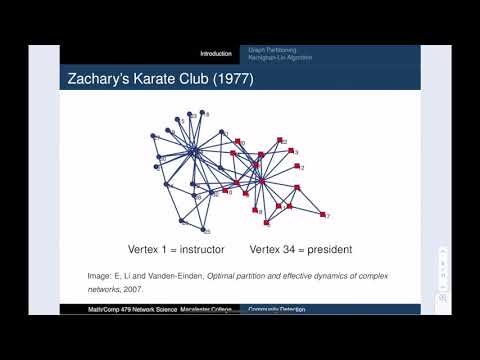
Community detection is a crucial aspect of Network Analysis and Data Science, enabling researchers to uncover hidden networks and understand the underlying structure of complex systems. By identifying clusters or communities within a network, researchers can gain insights into the behavior, preferences, and interactions of individuals or groups. For instance, Social Network Analysis can be used to study the spread of information, influence, and behaviors within online communities. The concept of community detection has been extensively studied in various fields, including Computer Science, Physics, and Sociology.
📊 Network Analysis Fundamentals
Network analysis is a fundamental aspect of community detection, as it provides the framework for understanding the relationships and interactions within a system. Graph Theory is a key component of network analysis, as it allows researchers to represent complex systems as graphs, consisting of nodes and edges. By analyzing these graphs, researchers can identify patterns, clusters, and communities, which can provide valuable insights into the behavior and structure of the system. For example, Centrality Measures can be used to identify influential nodes within a network, while Clustering Coefficient can be used to measure the degree of clustering within a network.
📈 Community Detection Algorithms
Community detection algorithms are designed to identify clusters or communities within a network, and they can be broadly classified into two categories: Partition-Based Algorithms and Hierarchical Algorithms. Partition-based algorithms, such as K-Means Clustering, work by dividing the network into a fixed number of clusters, while hierarchical algorithms, such as Hierarchical Clustering, work by building a hierarchy of clusters. Other algorithms, such as Label Propagation Algorithm, can be used to identify communities within a network by propagating labels through the network.
📊 Evaluating Community Detection Methods
Evaluating community detection methods is crucial, as it allows researchers to compare the performance of different algorithms and techniques. Evaluation Metrics, such as Modularity and Normalized Mutual Information, can be used to measure the quality of the detected communities. For instance, Conductance can be used to measure the ratio of the number of edges within a community to the number of edges between communities, while Coverage can be used to measure the proportion of edges within a community that are connected to the rest of the network.
🔑 Challenges and Limitations
Despite the advances in community detection, there are still several challenges and limitations that need to be addressed. Sccalability is a major issue, as many community detection algorithms are computationally expensive and cannot handle large datasets. Additionally, Noise and Missing Data can significantly affect the accuracy of community detection algorithms, while Evaluation Metrics can be biased towards certain types of communities. Furthermore, Interpretability of the detected communities is crucial, as it allows researchers to understand the underlying structure and behavior of the system.
📚 Real-World Examples and Case Studies
Real-world examples and case studies of community detection are numerous, ranging from the analysis of Social Media networks to the study of Biological Networks. For instance, Epidemiology can be used to study the spread of diseases within a population, while Recommendation Systems can be used to recommend products or services based on the behavior of similar users. Additionally, Financial Networks can be analyzed to study the relationships between financial institutions and the flow of money within a network.
📊 Future Directions in Community Detection
Future directions in community detection are likely to involve the development of more sophisticated algorithms and techniques that can handle large, complex datasets. Deep Learning techniques, such as Graph Neural Networks, are likely to play a major role in community detection, as they can learn patterns and relationships within the data. Additionally, Explainability and Interpretability of the detected communities are crucial, as they allow researchers to understand the underlying structure and behavior of the system.
👥 Interdisciplinary Approaches to Community Detection
Interdisciplinary approaches to community detection are essential, as they allow researchers to combine insights and techniques from different fields. Physics, Computer Science, and Sociology are just a few examples of fields that have contributed to the development of community detection algorithms and techniques. For instance, Statistical Mechanics can be used to study the behavior of complex systems, while Information Theory can be used to study the flow of information within a network.
📊 Best Practices for Community Detection
Best practices for community detection involve the careful selection of algorithms and techniques, as well as the evaluation of the detected communities. Data Preprocessing is crucial, as it allows researchers to clean and prepare the data for analysis. Additionally, Model Selection is essential, as it allows researchers to choose the most suitable algorithm for the problem at hand. Furthermore, Hyperparameter Tuning can be used to optimize the performance of the algorithm, while Evaluation Metrics can be used to measure the quality of the detected communities.
Key Facts
- Year
- 2022
- Origin
- Network Science and Complex Systems
- Category
- Data Science and Network Analysis
- Type
- Concept
Frequently Asked Questions
What is community detection?
Community detection is the process of identifying clusters or communities within a network, which can provide valuable insights into the behavior and structure of the system. It involves the use of algorithms and techniques to analyze the relationships and interactions within a network, and to identify patterns and clusters that can help to understand the underlying structure of the system.
What are the applications of community detection?
The applications of community detection are numerous, ranging from the study of information diffusion and influence to the analysis of social behaviors and relationships. It can be used in various fields, including social network analysis, epidemiology, recommendation systems, and financial networks.
What are the challenges and limitations of community detection?
The challenges and limitations of community detection include scalability, noise and missing data, evaluation metrics, and interpretability of the detected communities. Additionally, the choice of algorithm and technique can significantly affect the accuracy and quality of the detected communities.
What is the future of community detection?
The future of community detection is likely to involve the development of more sophisticated algorithms and techniques that can handle large, complex datasets. Deep learning techniques, such as graph neural networks, are likely to play a major role in community detection, as they can learn patterns and relationships within the data.
What are the best practices for community detection?
The best practices for community detection involve the careful selection of algorithms and techniques, as well as the evaluation of the detected communities. Data preprocessing, model selection, hyperparameter tuning, and evaluation metrics are all essential steps in the community detection process.
What is the role of machine learning in community detection?
Machine learning plays a significant role in community detection, as it can be used to learn patterns and relationships within the data. Techniques such as graph neural networks, spectral clustering, and label propagation algorithm can be used to identify communities within a network.
What is the difference between partition-based and hierarchical algorithms?
Partition-based algorithms, such as k-means clustering, work by dividing the network into a fixed number of clusters, while hierarchical algorithms, such as hierarchical clustering, work by building a hierarchy of clusters. The choice of algorithm depends on the specific problem and the characteristics of the network.