
Contents
- 📝 Introduction to Elementary Algebra
- 📊 Basic Concepts of Algebra
- 📈 Variables and Terms in Algebra
- 📊 Contrast with Arithmetic
- 📚 History of Elementary Algebra
- 📝 Abstract Algebra vs Elementary Algebra
- 📊 Real and Complex Numbers in Algebra
- 📈 Applications of Elementary Algebra
- 📝 Solving Equations and Inequalities
- 📊 Graphing and Functions in Algebra
- 📚 Educational Significance of Elementary Algebra
- 📈 Future of Elementary Algebra
- Frequently Asked Questions
- Related Topics
Overview
Elementary algebra, with a vibe rating of 8, is the study of variables and their relationships, expressed through equations and functions. It provides the foundation for more advanced mathematical disciplines, such as calculus and linear algebra. The origins of algebra date back to ancient civilizations, with significant contributions from mathematicians like Diophantus and Al-Khwarizmi. Today, elementary algebra is a crucial component of secondary education, with widespread applications in fields like science, engineering, and economics. Despite its importance, elementary algebra remains a subject of debate, with some arguing that its emphasis on procedural fluency overshadows deeper conceptual understanding. As we move forward, it's essential to consider how elementary algebra will evolve to meet the changing needs of students and the workforce, with potential influences from emerging technologies like AI and data science.
📝 Introduction to Elementary Algebra
Elementary algebra, also known as high school algebra or college algebra, is a fundamental branch of mathematics that introduces numerical variables and their manipulation. It is often contrasted with Arithmetic, which deals with specified numbers, whilst algebra introduces numerical variables. In arithmetic, operations can only be performed on numbers, whereas in algebra, operations can be performed on numbers, variables, and terms. For a deeper understanding of algebra, it's essential to explore the History of Algebra and its development over time. The study of algebra has been influenced by various mathematicians, including Diophantus and Al-Khwarizmi.
📊 Basic Concepts of Algebra
The basic concepts of algebra include variables, constants, and mathematical operations such as addition, subtraction, multiplication, and division. These concepts are crucial in solving equations and inequalities, which are fundamental to algebra. To understand these concepts better, it's essential to explore the Types of Equations and how to solve them. Algebra also involves the study of Functions, which are relations between variables. The concept of functions is closely related to Graphing, which is a visual representation of functions.
📈 Variables and Terms in Algebra
In algebra, variables and terms are used to represent unknown values and mathematical expressions. Variables are often represented by letters such as x, y, and z, while terms are mathematical expressions that can be added, subtracted, multiplied, or divided. The manipulation of variables and terms is a critical aspect of algebra, and it's essential to understand the Rules of Exponents and how to apply them. For a deeper understanding of variables and terms, it's recommended to explore the Algebraic Expressions and how to simplify them. The study of algebraic expressions is closely related to the study of Polynomials.
📊 Contrast with Arithmetic
Elementary algebra is often contrasted with arithmetic, which deals with specified numbers. In arithmetic, operations can only be performed on numbers, whereas in algebra, operations can be performed on numbers, variables, and terms. This fundamental difference between arithmetic and algebra is crucial in understanding the basics of algebra. To appreciate this difference, it's essential to explore the Difference between Arithmetic and Algebra. The study of algebra has been influenced by various mathematicians, including Euclid and Archimedes. For a deeper understanding of arithmetic, it's recommended to explore the History of Arithmetic.
📚 History of Elementary Algebra
The history of elementary algebra dates back to ancient civilizations, with contributions from mathematicians such as Diophantus and Al-Khwarizmi. The development of algebra has been influenced by various cultures, including the Babylonians, Egyptians, and Greeks. To understand the history of algebra better, it's essential to explore the Timeline of Algebra and its development over time. The study of algebra has been influenced by various mathematicians, including René Descartes and Isaac Newton. For a deeper understanding of the history of algebra, it's recommended to explore the History of Mathematics.
📝 Abstract Algebra vs Elementary Algebra
Unlike Abstract Algebra, elementary algebra is not concerned with algebraic structures outside the realm of real and complex numbers. Abstract algebra deals with advanced mathematical concepts such as groups, rings, and fields, whereas elementary algebra focuses on the basics of algebra. To understand the difference between abstract algebra and elementary algebra, it's essential to explore the Difference between Abstract and Elementary Algebra. The study of abstract algebra has been influenced by various mathematicians, including David Hilbert and Emmy Noether. For a deeper understanding of abstract algebra, it's recommended to explore the Abstract Algebraic Structures.
📊 Real and Complex Numbers in Algebra
Real and complex numbers are fundamental to elementary algebra, and they are used to represent mathematical expressions and solve equations. Real numbers include rational and irrational numbers, while complex numbers include real and imaginary parts. To understand real and complex numbers better, it's essential to explore the Properties of Real and Complex Numbers. The study of real and complex numbers has been influenced by various mathematicians, including Leonhard Euler and Carl Friedrich Gauss. For a deeper understanding of real and complex numbers, it's recommended to explore the Real and Complex Number Systems.
📈 Applications of Elementary Algebra
Elementary algebra has numerous applications in various fields, including physics, engineering, economics, and computer science. Algebraic equations and functions are used to model real-world problems and make predictions. To understand the applications of algebra better, it's essential to explore the Applications of Algebra and how they are used in different fields. The study of algebra has been influenced by various mathematicians, including Galileo Galilei and Johannes Kepler. For a deeper understanding of the applications of algebra, it's recommended to explore the Mathematical Modeling.
📝 Solving Equations and Inequalities
Solving equations and inequalities is a fundamental aspect of elementary algebra. Equations can be linear or quadratic, and they can be solved using various methods such as factoring, graphing, or using the quadratic formula. To understand how to solve equations and inequalities better, it's essential to explore the Methods for Solving Equations and how to apply them. The study of equations and inequalities has been influenced by various mathematicians, including Pierre de Fermat and Blaise Pascal. For a deeper understanding of equations and inequalities, it's recommended to explore the Equations and Inequalities.
📊 Graphing and Functions in Algebra
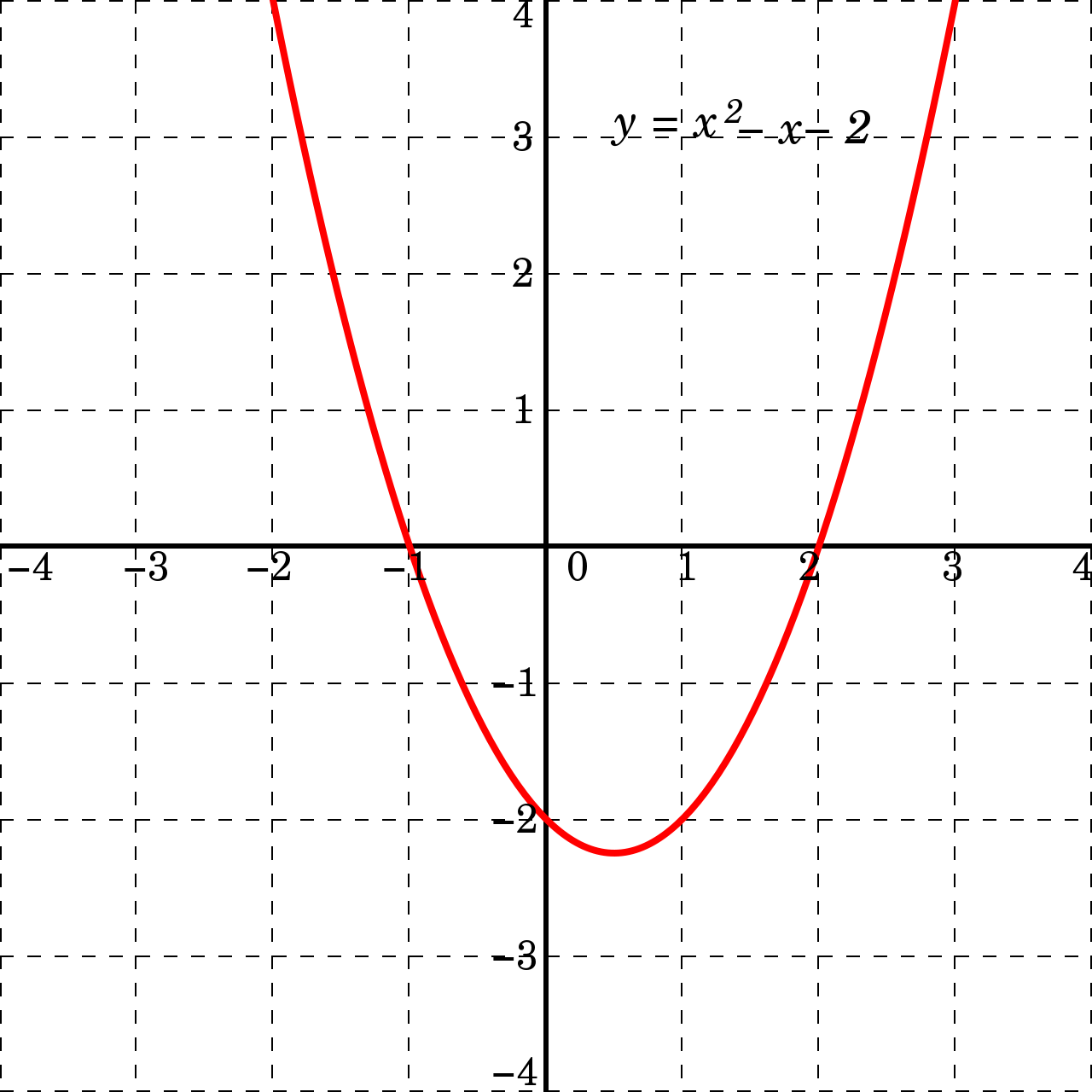
Graphing and functions are closely related in elementary algebra. Graphing is a visual representation of functions, and it is used to understand the behavior of functions. To understand graphing and functions better, it's essential to explore the Types of Functions and how to graph them. The study of graphing and functions has been influenced by various mathematicians, including René Descartes and Isaac Newton. For a deeper understanding of graphing and functions, it's recommended to explore the Graphing and Functions.
📚 Educational Significance of Elementary Algebra
Elementary algebra is a fundamental subject in mathematics education, and it is essential for students to understand the basics of algebra. Algebra is used in various fields, and it is a critical component of mathematical literacy. To understand the educational significance of algebra better, it's essential to explore the Importance of Algebra in Education and how it is used in different fields. The study of algebra has been influenced by various mathematicians, including Euclid and Archimedes. For a deeper understanding of the educational significance of algebra, it's recommended to explore the Mathematics Education.
📈 Future of Elementary Algebra
The future of elementary algebra is closely tied to the development of mathematics and its applications. As mathematics continues to evolve, algebra will remain a fundamental subject, and its applications will continue to grow. To understand the future of algebra better, it's essential to explore the Future of Algebra and how it will be used in different fields. The study of algebra has been influenced by various mathematicians, including Alan Turing and Stephen Hawking. For a deeper understanding of the future of algebra, it's recommended to explore the Mathematical Research.
Key Facts
- Year
- 1545
- Origin
- Italy, with contributions from ancient Greek, Chinese, and Islamic mathematicians
- Category
- Mathematics
- Type
- Mathematical Discipline
Frequently Asked Questions
What is elementary algebra?
Elementary algebra, also known as high school algebra or college algebra, is a fundamental branch of mathematics that introduces numerical variables and their manipulation. It is often contrasted with arithmetic, which deals with specified numbers. For a deeper understanding of algebra, it's essential to explore the History of Algebra and its development over time. The study of algebra has been influenced by various mathematicians, including Diophantus and Al-Khwarizmi.
What are the basic concepts of algebra?
The basic concepts of algebra include variables, constants, and mathematical operations such as addition, subtraction, multiplication, and division. These concepts are crucial in solving equations and inequalities, which are fundamental to algebra. To understand these concepts better, it's essential to explore the Types of Equations and how to solve them. Algebra also involves the study of Functions, which are relations between variables.
What is the difference between arithmetic and algebra?
Arithmetic deals with specified numbers, whilst algebra introduces numerical variables. In arithmetic, operations can only be performed on numbers, whereas in algebra, operations can be performed on numbers, variables, and terms. This fundamental difference between arithmetic and algebra is crucial in understanding the basics of algebra. To appreciate this difference, it's essential to explore the Difference between Arithmetic and Algebra.
What are the applications of elementary algebra?
Elementary algebra has numerous applications in various fields, including physics, engineering, economics, and computer science. Algebraic equations and functions are used to model real-world problems and make predictions. To understand the applications of algebra better, it's essential to explore the Applications of Algebra and how they are used in different fields. The study of algebra has been influenced by various mathematicians, including Galileo Galilei and Johannes Kepler.
Why is elementary algebra important in education?
Elementary algebra is a fundamental subject in mathematics education, and it is essential for students to understand the basics of algebra. Algebra is used in various fields, and it is a critical component of mathematical literacy. To understand the educational significance of algebra better, it's essential to explore the Importance of Algebra in Education and how it is used in different fields. The study of algebra has been influenced by various mathematicians, including Euclid and Archimedes.
What is the future of elementary algebra?
The future of elementary algebra is closely tied to the development of mathematics and its applications. As mathematics continues to evolve, algebra will remain a fundamental subject, and its applications will continue to grow. To understand the future of algebra better, it's essential to explore the Future of Algebra and how it will be used in different fields. The study of algebra has been influenced by various mathematicians, including Alan Turing and Stephen Hawking.
How does elementary algebra relate to other branches of mathematics?
Elementary algebra is closely related to other branches of mathematics, including geometry, trigonometry, and calculus. Algebraic equations and functions are used to model real-world problems and make predictions in these fields. To understand the relationships between algebra and other branches of mathematics better, it's essential to explore the Relationships between Algebra and other Branches of Mathematics. The study of algebra has been influenced by various mathematicians, including René Descartes and Isaac Newton.