
Contents
- 🏯 Introduction to Ancient Rome
- 📆 The Roman Kingdom: A City's Humble Beginnings
- 🏛️ The Roman Republic: Expansion and Governance
- 💪 The Roman Empire: Rise to Power and Dominance
- 🤝 Roman Society: Social Hierarchy and Culture
- 🏗️ Engineering and Architectural Marvels of Ancient Rome
- 📚 The Roman Legacy: Law, Language, and Governance
- 💔 The Fall of the Western Roman Empire: Internal Decline and External Pressures
- 🌎 The Eastern Roman Empire: Byzantium's Enduring Legacy
- 👑 Notable Figures in Ancient Roman History
- 📊 The Economy and Trade of Ancient Rome
- 🏛️ The Lasting Impact of Ancient Rome on Modern Society
- Frequently Asked Questions
- Related Topics
Overview
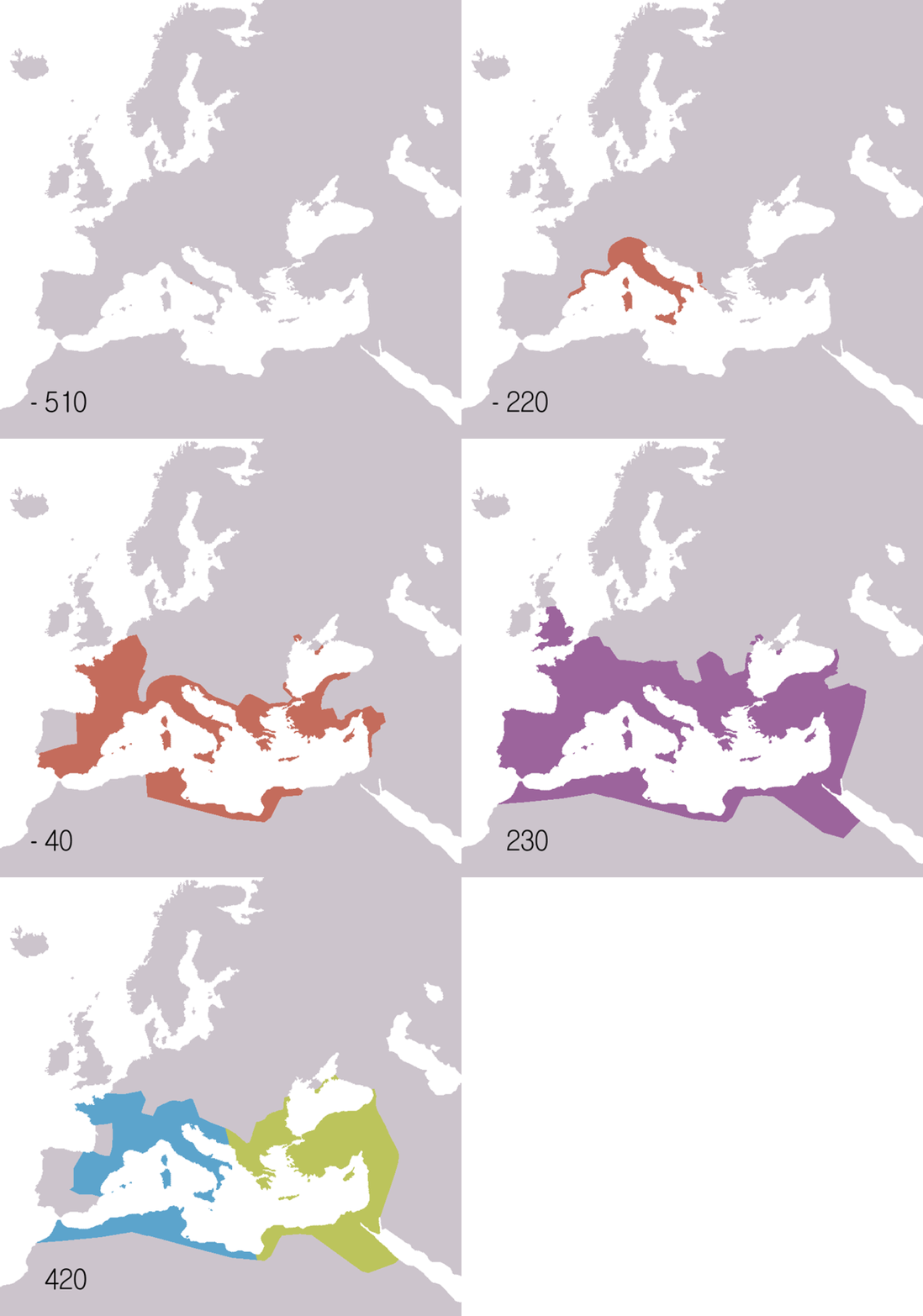
Ancient Rome, spanning over 12 centuries, was a civilization that left an indelible mark on the world. From its humble beginnings as a small city-state in 753 BCE to its rise as a dominant empire under Augustus in 27 BCE, Rome's influence extended far beyond its borders. The Roman Empire, at its peak, covered an area of approximately 5.9 million square miles, with a population of around 50-60 million people, and its legacy can be seen in modern law, architecture, governance, and language. However, Rome's success was not without its challenges, including internal power struggles, external pressures, and economic strain, which ultimately led to its decline and fall in 476 CE. The controversy surrounding Rome's impact, with some viewing it as a beacon of civilization and others as a symbol of oppression, continues to be debated among historians and scholars. As we look to the future, the question remains: what can we learn from Ancient Rome's triumphs and failures, and how can we apply those lessons to our own world?
🏯 Introduction to Ancient Rome
Ancient Rome, a civilization that spanned over 12 centuries, is a testament to the ingenuity, resilience, and ambition of the human spirit. From its humble beginnings as a small city-state in central Italy to its rise as a dominant world power, Rome's history is a complex tapestry of conquest, governance, and cultural achievement. The Roman Kingdom, established in 753 BC, laid the foundation for the Roman Republic, which would eventually give way to the Roman Empire. The Roman Empire's vast territories, administrative systems, and cultural legacy continue to influence modern society, with many regarding it as one of the greatest civilizations in human history.
📆 The Roman Kingdom: A City's Humble Beginnings
The Roman Kingdom, which lasted from 753 to 509 BC, was characterized by a system of governance where a monarch, known as the King of Rome, held supreme power. This period saw the establishment of the Roman Senate, an advisory body that would play a crucial role in Roman governance for centuries to come. The kingdom's early years were marked by conflicts with neighboring cities and the gradual expansion of Roman territory. The reign of Lucius Tarquinius Superbus, the last king of Rome, was marked by tyranny and excess, ultimately leading to the overthrow of the monarchy and the establishment of the Roman Republic.
🏛️ The Roman Republic: Expansion and Governance
The Roman Republic, which lasted from 509 to 27 BC, was a period of significant expansion and transformation for Rome. The republic was governed by a system of elected representatives, including consuls and tribunes, who were responsible for making laws and governing the state. This period saw the conquest of much of Italy, the Punic Wars against Carthage, and the eventual rise of Rome as a dominant Mediterranean power. The Roman Republic was also marked by significant social and cultural changes, including the development of Roman law and the emergence of a distinct Roman culture. The Roman Assembly, a gathering of citizens that elected representatives and passed laws, played a crucial role in the governance of the republic.
💪 The Roman Empire: Rise to Power and Dominance
The Roman Empire, which lasted from 27 BC to 476 AD, was a period of unparalleled power and dominance for Rome. The empire was established by Augustus Caesar, who became the first emperor of Rome and established a system of governance that would endure for centuries. The Roman Empire was marked by significant military conquests, including the conquest of Britain, the expansion of Roman territories in Europe and North Africa, and the establishment of a complex system of administration and governance. The empire was also characterized by significant cultural and economic achievements, including the development of Roman architecture, the construction of roads and public buildings, and the emergence of a distinct Roman culture. The Roman legions, the empire's military forces, played a crucial role in maintaining order and expanding Roman territories.
🏗️ Engineering and Architectural Marvels of Ancient Rome
The engineering and architectural marvels of ancient Rome are a testament to the ingenuity and skill of Roman engineers and architects. The construction of Roman roads, Roman aqueducts, and Roman bridges facilitated the expansion of Roman territories and the growth of trade and commerce. The development of Roman concrete and the use of the arch and vault in Roman architecture allowed for the construction of large and complex buildings, such as the Colosseum and the Pantheon. The Roman Forum, a public square in the heart of Rome, was a hub of activity and a symbol of Roman power and influence.
📚 The Roman Legacy: Law, Language, and Governance
The Roman legacy is a profound and lasting one, with significant contributions to law, language, and governance. The Twelve Tables, a set of laws established during the Roman Republic, provided a foundation for Roman law and influenced the development of law in Europe and beyond. The Latin language, which was the language of the Roman Empire, has had a profound impact on the development of modern languages, including French, Spanish, Italian, and Portuguese. The Roman system of governance, which included the use of senates and assemblies, has also influenced the development of modern systems of government. The Roman calendar, which was introduced during the Roman Republic, has also had a lasting impact on the way we measure time.
💔 The Fall of the Western Roman Empire: Internal Decline and External Pressures
The fall of the Western Roman Empire in 476 AD was a significant event in world history, marking the end of a period of Roman dominance that had lasted for centuries. The empire's decline was the result of a combination of internal and external factors, including corruption, mismanagement, and external pressures from barbarian tribes. The Visigoths, a Germanic tribe, played a significant role in the fall of the Western Roman Empire, sacking Rome in 410 AD and eventually establishing their own kingdom in Gaul. The Vandals, another Germanic tribe, also played a significant role in the decline of the Western Roman Empire, sacking Rome in 455 AD and establishing their own kingdom in North Africa.
🌎 The Eastern Roman Empire: Byzantium's Enduring Legacy
The Eastern Roman Empire, also known as the Byzantine Empire, survived for another thousand years, with its capital in Constantinople. The Byzantine Empire was marked by significant cultural and artistic achievements, including the development of Byzantine art and architecture. The empire was also characterized by significant conflicts with neighboring powers, including the Ottoman Empire. The Byzantine Senate, a gathering of nobles and clergy, played a crucial role in the governance of the empire. The Byzantine economy was also significant, with trade and commerce playing a crucial role in the empire's prosperity.
👑 Notable Figures in Ancient Roman History
Notable figures in ancient Roman history include Julius Caesar, who played a significant role in the transformation of the Roman Republic into the Roman Empire. Augustus Caesar, who established the Roman Empire and ruled as its first emperor, is also an important figure in Roman history. Cicero, a Roman statesman and philosopher, made significant contributions to Roman literature and philosophy. Virgil, a Roman poet, is best known for his epic poem, the Aeneid. The Roman emperors, who ruled the empire for centuries, played a crucial role in shaping Roman history and culture.
📊 The Economy and Trade of Ancient Rome
The economy and trade of ancient Rome were significant factors in the empire's prosperity and growth. The Roman taxation system, which included a range of taxes on land, property, and trade, provided a significant source of revenue for the empire. The Roman trade network, which spanned the Mediterranean and beyond, facilitated the exchange of goods and services between different regions. The Roman coinage system, which included the use of coins such as the denarius and the aureus, played a crucial role in facilitating trade and commerce. The Roman agriculture sector, which included the production of crops such as wheat, olives, and grapes, was also significant, with many Roman farms and estates producing food for the empire's population.
🏛️ The Lasting Impact of Ancient Rome on Modern Society
The lasting impact of ancient Rome on modern society is a profound and lasting one, with significant contributions to law, language, governance, and culture. The Roman system of governance, which included the use of senates and assemblies, has influenced the development of modern systems of government. The Latin language, which was the language of the Roman Empire, has had a profound impact on the development of modern languages. The Roman legacy can be seen in the many buildings, roads, and public structures that still exist today, a testament to the ingenuity and skill of Roman engineers and architects. The Roman influence can also be seen in the many modern institutions and practices that have their roots in ancient Rome, including the Roman Catholic Church and the Roman law tradition.
Key Facts
- Year
- 753
- Origin
- Italian Peninsula
- Category
- History
- Type
- Historical Civilization
Frequently Asked Questions
What was the significance of the Roman Kingdom in ancient Roman history?
The Roman Kingdom, which lasted from 753 to 509 BC, was a period of significant growth and development for Rome. During this time, the city-state of Rome was established, and the foundations of Roman governance, law, and culture were laid. The kingdom was marked by a system of governance where a monarch, known as the King of Rome, held supreme power. The Roman Kingdom played a crucial role in shaping the course of Roman history, and its legacy can still be seen in the many institutions and practices that have their roots in ancient Rome.
What were the main factors that contributed to the fall of the Western Roman Empire?
The fall of the Western Roman Empire in 476 AD was the result of a combination of internal and external factors. Internal factors, such as corruption, mismanagement, and economic decline, weakened the empire and made it vulnerable to external pressures. External factors, such as the barbarian invasions and the rise of neighboring powers, ultimately led to the fall of the Western Roman Empire. The empire's decline was a gradual process that occurred over several centuries, and it was marked by significant events, such as the sacking of Rome by the Visigoths in 410 AD and the establishment of the Vandals' kingdom in North Africa.
What was the significance of the Roman Empire in world history?
The Roman Empire, which lasted from 27 BC to 476 AD, was a period of unparalleled power and dominance for Rome. The empire was marked by significant military conquests, cultural achievements, and economic growth. The Roman Empire played a crucial role in shaping the course of world history, and its legacy can still be seen in the many institutions and practices that have their roots in ancient Rome. The empire's impact on law, language, governance, and culture has been profound and lasting, and it continues to influence modern society in many ways.
What were the main achievements of the Roman Republic?
The Roman Republic, which lasted from 509 to 27 BC, was a period of significant expansion and transformation for Rome. During this time, the city-state of Rome expanded its territories, established a system of governance, and developed a distinct culture. The Roman Republic was marked by significant achievements, including the conquest of Italy, the Punic Wars, and the development of Roman law. The republic was also characterized by significant social and cultural changes, including the emergence of a distinct Roman culture and the development of Roman architecture.
What was the significance of the Byzantine Empire in world history?
The Byzantine Empire, also known as the Eastern Roman Empire, survived for another thousand years after the fall of the Western Roman Empire. The empire was marked by significant cultural and artistic achievements, including the development of Byzantine art and architecture. The Byzantine Empire played a crucial role in preserving Roman culture and traditions, and it continued to influence the development of European society and culture. The empire's legacy can still be seen in the many institutions and practices that have their roots in ancient Rome, including the Roman Catholic Church and the Roman law tradition.
What were the main factors that contributed to the rise of the Roman Empire?
The rise of the Roman Empire was the result of a combination of internal and external factors. Internal factors, such as the development of Roman governance, law, and culture, provided a foundation for the empire's growth and expansion. External factors, such as the conquest of Italy and the Punic Wars, provided opportunities for the empire to expand its territories and establish its dominance. The Roman Empire's rise was also facilitated by the development of a complex system of administration and governance, which allowed the empire to maintain control over its vast territories and populations.
What was the significance of the Roman legacy in modern society?
The Roman legacy is a profound and lasting one, with significant contributions to law, language, governance, and culture. The Roman system of governance, which included the use of senates and assemblies, has influenced the development of modern systems of government. The Latin language, which was the language of the Roman Empire, has had a profound impact on the development of modern languages. The Roman legacy can be seen in the many institutions and practices that have their roots in ancient Rome, including the Roman Catholic Church and the Roman law tradition.