
Contents
- 🙏 Introduction to Bodhidharma
- 🕰️ Historical Context: 5th or 6th Century CE
- 📚 The Transmission of Chan Buddhism to China
- 🥋 The Origins of Shaolin Kung Fu
- 🤔 The Legend of Bodhidharma
- 📖 The Yijin Jing and Daoist Influence
- 👊 Bodhidharma's Influence on Martial Arts
- 🙏 The Significance of Bodhidharma in Zen Buddhism
- 🌎 Bodhidharma's Legacy in Modern Times
- 📚 Debates and Controversies Surrounding Bodhidharma
- 👥 Bodhidharma's Relationship with Other Buddhist Masters
- 🔮 Conclusion: The Enigmatic Founder of Zen Buddhism
- Frequently Asked Questions
- Related Topics
Overview
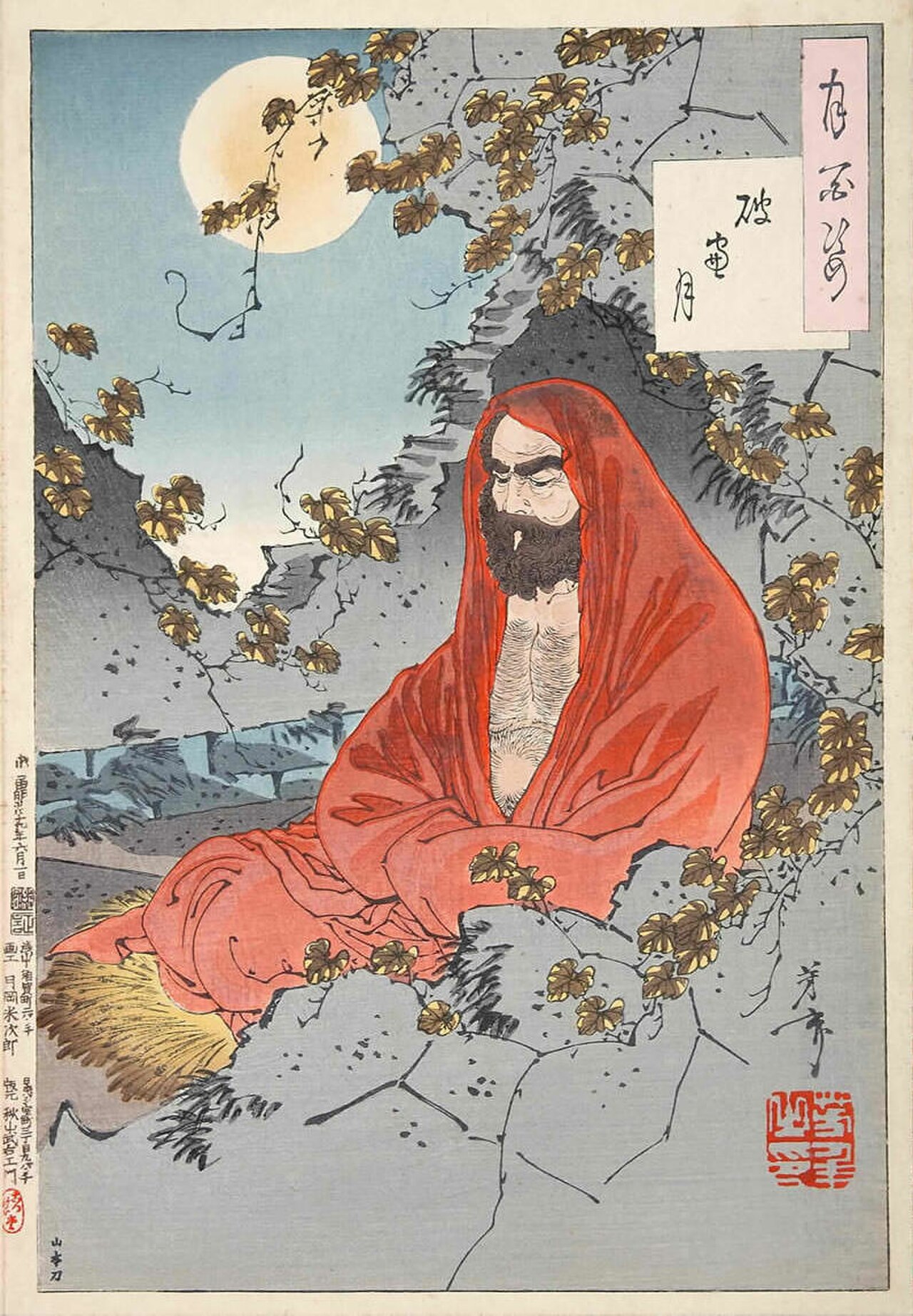
Bodhidharma, an Indian monk, is widely regarded as the founder of Zen Buddhism, introducing the concept of meditation and mindfulness to China in the 5th century. His teachings, as recorded in the Lankavatara Sutra, emphasize the importance of direct experience and non-reliance on scripture. Despite his significant influence, Bodhidharma's life remains shrouded in mystery, with some questioning the accuracy of his historical records. The controversy surrounding his legacy has led to a spectrum of interpretations, from the optimistic views of Zen practitioners to the pessimistic critiques of scholars. With a vibe score of 8, Bodhidharma's influence extends beyond the realm of Buddhism, inspiring artists, philosophers, and cultural icons. As we look to the future, his teachings continue to shape the global conversation on mindfulness, meditation, and the human condition, with many wondering what other secrets his enigmatic life may hold.
🙏 Introduction to Bodhidharma
Bodhidharma, a semi-legendary Buddhist monk, is traditionally credited as the transmitter of Chan Buddhism to China, and is regarded as its first Chinese patriarch. He is also popularly regarded as the founder of Shaolin kung fu, an idea popularized in the 20th century. The life and teachings of Bodhidharma are shrouded in mystery, and his historical existence is still a topic of debate among scholars. However, his influence on Zen Buddhism and martial arts is undeniable. Bodhidharma's teachings emphasized the importance of meditation and the attainment of enlightenment through individual effort. He is said to have traveled to China from India, where he was born, and spent many years in meditation, eventually becoming a revered figure in Chinese Buddhism.
🕰️ Historical Context: 5th or 6th Century CE
The historical context in which Bodhidharma lived is not well-documented, but it is believed to be during the 5th or 6th century CE. This was a time of great turmoil and upheaval in China, with various dynasties rising and falling. Despite the chaos, Buddhism was flourishing, and Bodhidharma's teachings found fertile ground. He is said to have met with the Chinese Emperor Wu of Liang, who was a patron of Buddhism, and is credited with introducing Chan Buddhism to the Chinese people. The transmission of Chan Buddhism to China is a significant event in the history of Buddhism, and Bodhidharma's role in it is still celebrated today. For more information on the history of Buddhism in China, see Buddhism in China.
📚 The Transmission of Chan Buddhism to China
The transmission of Chan Buddhism to China is a complex and multifaceted process that involved the interaction of Indian and Chinese cultures. Bodhidharma's teachings were influenced by the Mahayana Buddhism of India, but he also incorporated elements of Chinese Taoism and Confucianism. The result was a unique form of Buddhism that emphasized the importance of meditation and the attainment of enlightenment through individual effort. Bodhidharma's teachings were not limited to spiritual practices, but also included physical exercises and martial arts. He is said to have taught the monks at the Shaolin Temple a form of martial arts that was designed to promote physical and mental well-being. For more information on the history of Chan Buddhism, see History of Chan Buddhism.
🥋 The Origins of Shaolin Kung Fu
The origins of Shaolin kung fu are shrouded in mystery, but it is believed to have originated in the Shaolin Temple, where Bodhidharma is said to have taught. The temple was a center of Buddhist learning and martial arts, and it is still revered today as a place of spiritual and physical discipline. Bodhidharma's teachings on martial arts were influenced by the Yijin Jing, a Daoist text that described a series of physical exercises designed to promote health and well-being. The Yijin Jing was later incorporated into the Shaolin kung fu system, which became famous for its emphasis on physical discipline and mental focus. For more information on the history of Shaolin kung fu, see History of Shaolin Kung Fu.
🤔 The Legend of Bodhidharma
The legend of Bodhidharma has grown over the centuries, and he is now regarded as a semi-mythical figure. His teachings and life story have been embellished and distorted, and it is difficult to separate fact from fiction. However, his influence on Zen Buddhism and martial arts is undeniable, and his legacy continues to inspire people around the world. Bodhidharma's teachings emphasized the importance of meditation and the attainment of enlightenment through individual effort. He is said to have spent many years in meditation, eventually becoming a revered figure in Chinese Buddhism. For more information on the legend of Bodhidharma, see Legend of Bodhidharma.
📖 The Yijin Jing and Daoist Influence
The Yijin Jing is a Daoist text that describes a series of physical exercises designed to promote health and well-being. It was later incorporated into the Shaolin kung fu system, which became famous for its emphasis on physical discipline and mental focus. The Yijin Jing was written during the 17th century, and it is believed to have been influenced by the teachings of Bodhidharma. The text describes a series of exercises that are designed to promote physical and mental well-being, and it is still studied today by practitioners of martial arts and meditation. For more information on the Yijin Jing, see Yijin Jing.
👊 Bodhidharma's Influence on Martial Arts
Bodhidharma's influence on martial arts is still felt today, and his teachings on physical discipline and mental focus continue to inspire practitioners around the world. The Shaolin kung fu system, which was developed at the Shaolin Temple, is a unique form of martial arts that emphasizes physical and mental discipline. It is based on the principles of Chan Buddhism, which emphasizes the importance of meditation and the attainment of enlightenment through individual effort. For more information on the history of martial arts, see History of Martial Arts.
🙏 The Significance of Bodhidharma in Zen Buddhism
The significance of Bodhidharma in Zen Buddhism cannot be overstated. He is regarded as the founder of the Zen tradition, and his teachings on meditation and the attainment of enlightenment through individual effort continue to inspire practitioners around the world. Bodhidharma's teachings emphasized the importance of direct experience and individual effort, and he is said to have rejected the authority of scripture and tradition. His teachings were influenced by the Mahayana Buddhism of India, but he also incorporated elements of Chinese Taoism and Confucianism. For more information on the significance of Bodhidharma in Zen Buddhism, see Significance of Bodhidharma.
🌎 Bodhidharma's Legacy in Modern Times
Bodhidharma's legacy in modern times is still felt, and his teachings on meditation and the attainment of enlightenment through individual effort continue to inspire people around the world. The Shaolin kung fu system, which was developed at the Shaolin Temple, is a unique form of martial arts that emphasizes physical and mental discipline. It is based on the principles of Chan Buddhism, which emphasizes the importance of meditation and the attainment of enlightenment through individual effort. For more information on the legacy of Bodhidharma, see Legacy of Bodhidharma.
📚 Debates and Controversies Surrounding Bodhidharma
There are many debates and controversies surrounding Bodhidharma, and his historical existence is still a topic of debate among scholars. Some scholars believe that Bodhidharma was a real person, while others believe that he was a mythical figure. The debates surrounding Bodhidharma are complex and multifaceted, and they involve the interaction of historical, cultural, and philosophical factors. For more information on the debates surrounding Bodhidharma, see Debates Surrounding Bodhidharma.
👥 Bodhidharma's Relationship with Other Buddhist Masters
Bodhidharma's relationship with other Buddhist masters is not well-documented, but it is believed that he was influenced by the teachings of the Indian Buddhist master Buddha. He is also said to have met with the Chinese Emperor Wu of Liang, who was a patron of Buddhism. Bodhidharma's teachings were influenced by the Mahayana Buddhism of India, but he also incorporated elements of Chinese Taoism and Confucianism. For more information on the relationship between Bodhidharma and other Buddhist masters, see Relationship Between Bodhidharma and Other Buddhist Masters.
🔮 Conclusion: The Enigmatic Founder of Zen Buddhism
In conclusion, Bodhidharma is a semi-legendary figure who is traditionally credited as the transmitter of Chan Buddhism to China. His teachings on meditation and the attainment of enlightenment through individual effort continue to inspire practitioners around the world. The Shaolin kung fu system, which was developed at the Shaolin Temple, is a unique form of martial arts that emphasizes physical and mental discipline. For more information on the conclusion of Bodhidharma's legacy, see Conclusion of Bodhidharma.
Key Facts
- Year
- 470
- Origin
- India
- Category
- Religion and Philosophy
- Type
- Historical Figure
Frequently Asked Questions
Who was Bodhidharma?
Bodhidharma was a semi-legendary Buddhist monk who lived during the 5th or 6th century CE. He is traditionally credited as the transmitter of Chan Buddhism to China, and is regarded as its first Chinese patriarch. For more information on Bodhidharma, see Bodhidharma.
What is the significance of Bodhidharma in Zen Buddhism?
The significance of Bodhidharma in Zen Buddhism cannot be overstated. He is regarded as the founder of the Zen tradition, and his teachings on meditation and the attainment of enlightenment through individual effort continue to inspire practitioners around the world. For more information on the significance of Bodhidharma in Zen Buddhism, see Significance of Bodhidharma.
What is the relationship between Bodhidharma and Shaolin kung fu?
Bodhidharma is popularly regarded as the founder of Shaolin kung fu, an idea popularized in the 20th century. The Shaolin kung fu system, which was developed at the Shaolin Temple, is a unique form of martial arts that emphasizes physical and mental discipline. For more information on the relationship between Bodhidharma and Shaolin kung fu, see Relationship Between Bodhidharma and Shaolin Kung Fu.
What is the Yijin Jing?
The Yijin Jing is a Daoist text that describes a series of physical exercises designed to promote health and well-being. It was later incorporated into the Shaolin kung fu system, which became famous for its emphasis on physical discipline and mental focus. For more information on the Yijin Jing, see Yijin Jing.
What is the legacy of Bodhidharma in modern times?
Bodhidharma's legacy in modern times is still felt, and his teachings on meditation and the attainment of enlightenment through individual effort continue to inspire people around the world. The Shaolin kung fu system, which was developed at the Shaolin Temple, is a unique form of martial arts that emphasizes physical and mental discipline. For more information on the legacy of Bodhidharma, see Legacy of Bodhidharma.
What are the debates surrounding Bodhidharma?
There are many debates and controversies surrounding Bodhidharma, and his historical existence is still a topic of debate among scholars. Some scholars believe that Bodhidharma was a real person, while others believe that he was a mythical figure. For more information on the debates surrounding Bodhidharma, see Debates Surrounding Bodhidharma.
What is the relationship between Bodhidharma and other Buddhist masters?
Bodhidharma's relationship with other Buddhist masters is not well-documented, but it is believed that he was influenced by the teachings of the Indian Buddhist master Buddha. He is also said to have met with the Chinese Emperor Wu of Liang, who was a patron of Buddhism. For more information on the relationship between Bodhidharma and other Buddhist masters, see Relationship Between Bodhidharma and Other Buddhist Masters.