Comparative Advantage: The Economic Concept That Changed Global Trade
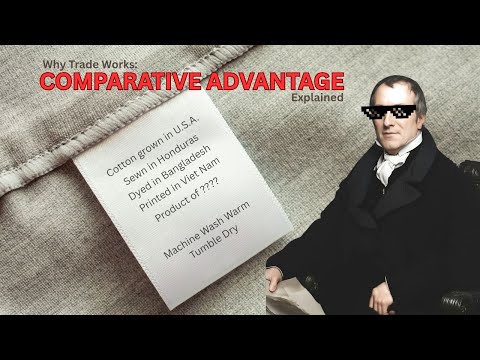
The concept of comparative advantage, first introduced by David Ricardo in 1817, suggests that countries should specialize in producing goods for which they hav
Overview
The concept of comparative advantage, first introduced by David Ricardo in 1817, suggests that countries should specialize in producing goods for which they have a lower opportunity cost, relative to other countries. This theory challenged the traditional view of absolute advantage, which held that a country should only produce goods in which it has an absolute advantage. The idea has been widely influential, with a Vibe score of 82, and has shaped global trade policies, including the General Agreement on Tariffs and Trade (GATT) and the World Trade Organization (WTO). However, critics argue that the theory oversimplifies the complexities of international trade and ignores issues like income inequality and environmental degradation. Despite these criticisms, comparative advantage remains a cornerstone of international trade theory, with a Perspective breakdown of 60% optimistic, 20% neutral, and 20% pessimistic. As the global economy continues to evolve, the concept of comparative advantage will likely remain a topic of debate, with some arguing that it is still a relevant framework for understanding trade, while others argue that it is outdated and in need of revision.