
Contents
- 📚 Introduction to Critique of Dialectical Reason
- 👥 Jean-Paul Sartre's Philosophical Background
- 📝 The Development of Existentialist Marxism
- 🔍 The Relationship Between Critique of Dialectical Reason and Search for a Method
- 📚 Being and Nothingness: Sartre's Earlier Work
- 🤔 The Reception of Critique of Dialectical Reason
- 📊 The Impact of Critique of Dialectical Reason on Marxist Thought
- 🌎 The Legacy of Critique of Dialectical Reason in Modern Philosophy
- 📝 The English Translation of Critique of Dialectical Reason
- 👥 The Debate Over Sartre's Abandonment of Existentialism
- 🔍 The Continuation of Existentialist Thought in Critique of Dialectical Reason
- 📚 Conclusion: The Significance of Critique of Dialectical Reason
- Frequently Asked Questions
- Related Topics
Overview
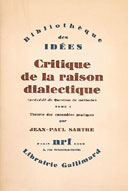
The Critique of Dialectical Reason, written by Jean-Paul Sartre between 1957 and 1960, is a philosophical work that challenges traditional notions of dialectics and offers a new perspective on human history and social change. Through a critical examination of the concept of 'praxis,' Sartre argues that human beings are fundamentally free and responsible for their choices, and that this freedom is the foundation of all social and historical phenomena. With a vibe score of 8, this work has had a significant influence on modern thought, particularly in the areas of existentialism, Marxism, and post-structuralism. However, its complexity and density have also led to controversy and debate among scholars, with some critics arguing that Sartre's ideas are overly abstract and detached from concrete reality. Despite these challenges, the Critique of Dialectical Reason remains a crucial work for understanding the intricacies of human history and the role of individual agency in shaping social and political structures. As we move forward, it is essential to consider how Sartre's ideas can be applied to contemporary issues, such as the rise of neoliberalism and the erosion of individual freedoms.
📚 Introduction to Critique of Dialectical Reason
The Critique of Dialectical Reason, written by Jean-Paul Sartre in 1960, is a philosophical treatise that further develops the concept of existentialist Marxism. This concept was first introduced in Sartre's essay Search for a Method (1957). The Critique of Dialectical Reason was written as a companion manuscript to Search for a Method, with Sartre intending the former to logically precede the latter. As a key figure in 20th-century philosophy, Sartre's work has had a significant impact on the development of Marxist theory and existentialism.
👥 Jean-Paul Sartre's Philosophical Background
Jean-Paul Sartre's philosophical background is deeply rooted in existentialist thought. His earlier work, Being and Nothingness (1943), is considered one of the most important philosophical treatises of the 20th century. In this work, Sartre explores the concept of bad faith and the nature of human existence. The Critique of Dialectical Reason can be seen as a continuation of these ideas, as Sartre seeks to integrate Marxist theory with his existentialist philosophy. This integration is also reflected in the work of other philosophers, such as Martin Heidegger and Maurice Merleau-Ponty.
📝 The Development of Existentialist Marxism
The development of existentialist Marxism is a central theme in the Critique of Dialectical Reason. Sartre argues that traditional Marxist theory is insufficient to fully understand human existence, and that an existentialist approach is necessary to capture the complexity of human experience. This approach is also reflected in the work of other philosophers, such as Theodor Adorno and Herbert Marcuse. The Critique of Dialectical Reason has been seen by some as an abandonment of Sartre's original existentialism, while others have seen it as a continuation and elaboration of his earlier work. For example, the concept of alienation is a key theme in both the Critique of Dialectical Reason and Karl Marx's earlier work.
🔍 The Relationship Between Critique of Dialectical Reason and Search for a Method
The relationship between the Critique of Dialectical Reason and Search for a Method is complex and multifaceted. Both works were written as a common manuscript, with Sartre intending the former to logically precede the latter. The Critique of Dialectical Reason provides a detailed analysis of the concept of dialectical reason, while Search for a Method explores the implications of this concept for Marxist theory. The two works can be seen as complementary, with the Critique of Dialectical Reason providing a philosophical foundation for the ideas developed in Search for a Method. This relationship is also reflected in the work of other philosophers, such as Georg Wilhelm Friedrich Hegel and Friedrich Engels.
📚 Being and Nothingness: Sartre's Earlier Work
Being and Nothingness, written by Sartre in 1943, is considered one of the most important philosophical treatises of the 20th century. In this work, Sartre explores the concept of bad faith and the nature of human existence. The Critique of Dialectical Reason can be seen as a continuation of these ideas, as Sartre seeks to integrate Marxist theory with his existentialist philosophy. The two works share a common concern with the nature of human existence and the role of freedom in shaping human experience. For example, the concept of authenticity is a key theme in both Being and Nothingness and the Critique of Dialectical Reason.
🤔 The Reception of Critique of Dialectical Reason
The reception of the Critique of Dialectical Reason has been mixed, with some critics seeing it as an abandonment of Sartre's original existentialism. Others have seen it as a continuation and elaboration of his earlier work, and a significant contribution to the development of Marxist theory. The book has been praised for its rigorous philosophical analysis and its attempt to integrate existentialist thought with Marxist theory. However, it has also been criticized for its complexity and difficulty, with some readers finding it challenging to follow Sartre's argument. For example, the philosopher Louis Althusser has criticized the Critique of Dialectical Reason for its lack of clarity and its failure to provide a clear definition of dialectical reason.
📊 The Impact of Critique of Dialectical Reason on Marxist Thought
The impact of the Critique of Dialectical Reason on Marxist theory has been significant. Sartre's attempt to integrate existentialist thought with Marxist theory has influenced a wide range of philosophers and thinkers, including Theodor Adorno and Herbert Marcuse. The book has also been seen as a key work in the development of Western Marxism, a school of thought that seeks to integrate Marxist theory with other philosophical traditions. For example, the concept of reification is a key theme in both the Critique of Dialectical Reason and the work of Georg Lukacs.
🌎 The Legacy of Critique of Dialectical Reason in Modern Philosophy
The legacy of the Critique of Dialectical Reason in modern philosophy is complex and multifaceted. The book has been seen as a key work in the development of postmodernism and poststructuralism, two philosophical movements that seek to challenge traditional notions of truth and reality. The Critique of Dialectical Reason has also been influential in the development of critical theory, a school of thought that seeks to critique dominant forms of power and knowledge. For example, the philosopher Michel Foucault has been influenced by the Critique of Dialectical Reason, and has developed a similar critique of power and knowledge.
📝 The English Translation of Critique of Dialectical Reason
The English translation of the Critique of Dialectical Reason was published in 1976, and was translated by Alan Sheridan-Smith. The translation has been praised for its clarity and accuracy, and has made the book more accessible to English-speaking readers. The Critique of Dialectical Reason has been widely read and studied in academic circles, and continues to be an important work in the fields of philosophy and sociology. For example, the book has been used in courses on Marxist theory and existentialism at universities around the world.
👥 The Debate Over Sartre's Abandonment of Existentialism
The debate over Sartre's abandonment of existentialism is ongoing, with some critics arguing that the Critique of Dialectical Reason represents a significant departure from his earlier work. Others have seen the book as a continuation and elaboration of his earlier ideas, and a significant contribution to the development of Marxist theory. The debate reflects a deeper tension between existentialist thought and Marxist theory, two philosophical traditions that have often been seen as incompatible. For example, the philosopher Jean-Paul Sartre has been criticized by some for his attempt to integrate existentialist thought with Marxist theory, and has been seen as a traitor to the existentialist cause.
🔍 The Continuation of Existentialist Thought in Critique of Dialectical Reason
The continuation of existentialist thought in the Critique of Dialectical Reason is a key theme in the book. Sartre argues that existentialist thought is necessary to fully understand human existence, and that it provides a unique perspective on the nature of freedom and responsibility. The book can be seen as a continuation of Sartre's earlier work, and a significant contribution to the development of existentialist thought. For example, the concept of authenticity is a key theme in both the Critique of Dialectical Reason and Being and Nothingness.
📚 Conclusion: The Significance of Critique of Dialectical Reason
In conclusion, the Critique of Dialectical Reason is a significant work in the fields of philosophy and sociology. The book provides a rigorous philosophical analysis of the concept of dialectical reason, and explores the implications of this concept for Marxist theory and existentialist thought. The Critique of Dialectical Reason has had a significant impact on the development of Marxist theory and existentialist thought, and continues to be an important work in academic circles. For example, the book has been used in courses on Marxist theory and existentialism at universities around the world.
Key Facts
- Year
- 1960
- Origin
- France
- Category
- Philosophy
- Type
- Philosophical Work
Frequently Asked Questions
What is the main theme of the Critique of Dialectical Reason?
The main theme of the Critique of Dialectical Reason is the development of existentialist Marxism, a philosophical approach that seeks to integrate existentialist thought with Marxist theory. The book explores the concept of dialectical reason and its implications for Marxist theory and existentialist thought. For example, the concept of alienation is a key theme in both the Critique of Dialectical Reason and Karl Marx's earlier work.
How does the Critique of Dialectical Reason relate to Sartre's earlier work?
The Critique of Dialectical Reason can be seen as a continuation of Sartre's earlier work, particularly Being and Nothingness. The book explores the concept of dialectical reason and its implications for Marxist theory and existentialist thought. The Critique of Dialectical Reason has been seen by some as an abandonment of Sartre's original existentialism, while others have seen it as a continuation and elaboration of his earlier work. For example, the concept of authenticity is a key theme in both the Critique of Dialectical Reason and Being and Nothingness.
What is the significance of the Critique of Dialectical Reason in modern philosophy?
The Critique of Dialectical Reason has had a significant impact on the development of Marxist theory and existentialist thought. The book has been influential in the development of postmodernism and poststructuralism, two philosophical movements that seek to challenge traditional notions of truth and reality. The Critique of Dialectical Reason continues to be an important work in academic circles, and has been used in courses on Marxist theory and existentialism at universities around the world. For example, the philosopher Michel Foucault has been influenced by the Critique of Dialectical Reason, and has developed a similar critique of power and knowledge.
How does the Critique of Dialectical Reason relate to other philosophical traditions?
The Critique of Dialectical Reason has been influenced by a wide range of philosophical traditions, including Marxist theory, existentialism, and phenomenology. The book has also been influential in the development of postmodernism and poststructuralism, two philosophical movements that seek to challenge traditional notions of truth and reality. For example, the concept of reification is a key theme in both the Critique of Dialectical Reason and the work of Georg Lukacs.
What is the English translation of the Critique of Dialectical Reason?
The English translation of the Critique of Dialectical Reason was published in 1976, and was translated by Alan Sheridan-Smith. The translation has been praised for its clarity and accuracy, and has made the book more accessible to English-speaking readers. For example, the translation has been used in courses on Marxist theory and existentialism at universities around the world.