
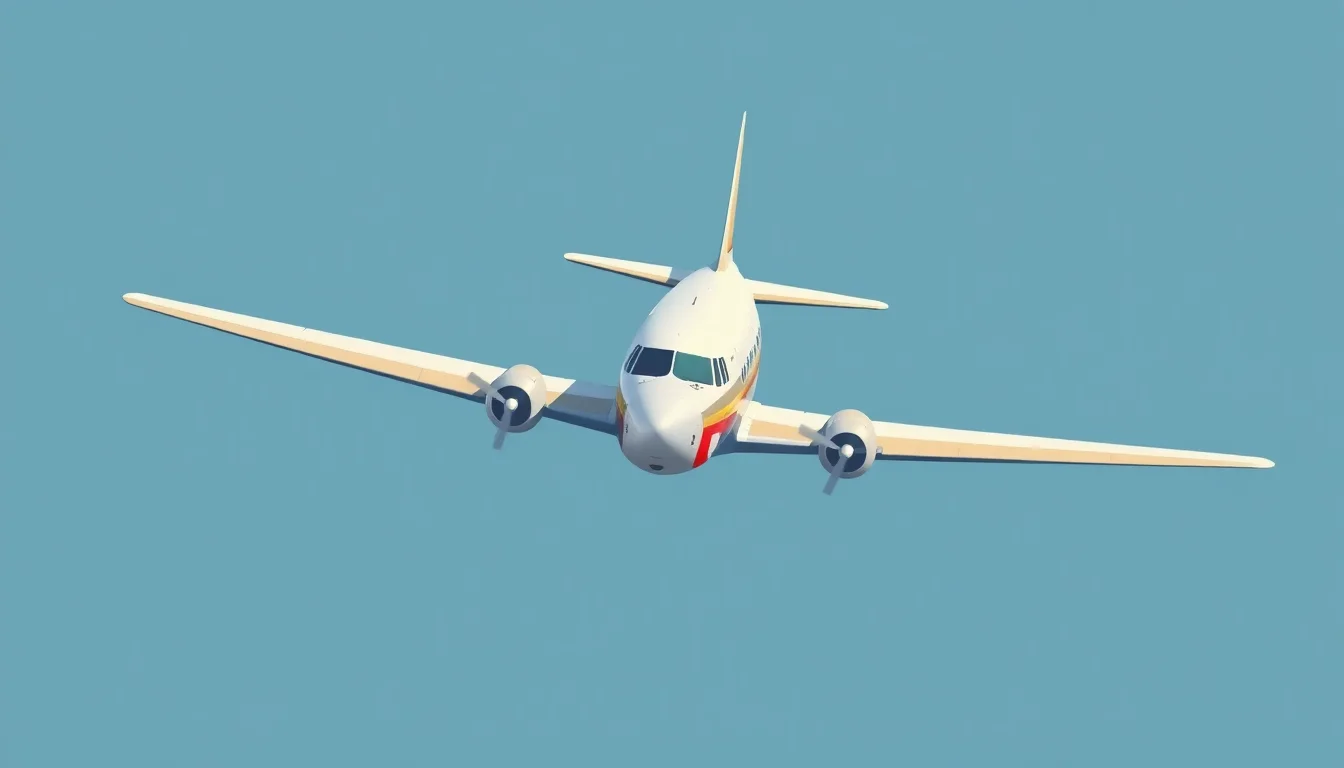
Contents
- 🛫 Introduction to the DC-3
- 📈 History of the DC-3
- 🛠 Design and Development
- 🚀 First Flight and Initial Reception
- 🌎 Global Impact on Aviation
- 📊 Commercial Success and Operations
- 🚨 Challenges and Controversies
- 🔩 Maintenance and Upgrades
- 💼 Impact on the Airline Industry
- 🏆 Legacy and Preservation
- 🚀 Modern-Day Significance
- Frequently Asked Questions
- Related Topics
Overview
The DC-3, which first flew on December 17, 1935, was a groundbreaking aircraft designed by Douglas Aircraft Company. With its ability to carry 32 passengers and fly at speeds of up to 200 mph, it transformed the airline industry by making air travel faster, more comfortable, and affordable for the masses. Over 16,000 DC-3s were produced, with many still in service today, a testament to its durability and impact. The DC-3 played a significant role in World War II, serving as a military transport plane. Its influence can be seen in the development of subsequent aircraft, including the DC-4 and DC-6. As of 2023, the DC-3 has a Vibe score of 82, reflecting its enduring cultural significance and historical importance. The controversy surrounding its production and use during wartime has been a subject of debate among historians, with some arguing that it was a crucial factor in the Allied victory, while others highlight its role in the war effort as a symbol of American industrial might.
🛫 Introduction to the DC-3
The DC-3, also known as the Douglas DC-3, is widely regarded as one of the most significant aircraft in the history of aviation. First introduced in the 1930s, it revolutionized the industry with its unprecedented range, speed, and capacity. The DC-3 was designed by a team led by Arthur E. Raymond, who worked for the Douglas Aircraft Company. This aircraft played a crucial role in establishing commercial aviation as we know it today, with many airlines, including American Airlines and United Airlines, relying heavily on the DC-3 for their operations.
📈 History of the DC-3
The history of the DC-3 is deeply intertwined with the development of aviation itself. In the early 1930s, airlines were looking for an aircraft that could carry more passengers and fly farther than the biplanes and trimotors that were common at the time. The Douglas Aircraft Company responded to this need by designing the DC-3, which first took to the skies in 1935. The DC-3 was an instant success, with Eastern Air Lines and United Airlines being among the first to operate the aircraft. The DC-3's impact was not limited to the United States, as it also played a significant role in the development of international aviation, with airlines such as KLM Royal Dutch Airlines and Air France operating the aircraft.
🛠 Design and Development
The design and development of the DC-3 were influenced by several factors, including the need for a more efficient and reliable aircraft. The DC-3's design team, led by Arthur E. Raymond, incorporated several innovative features, including a monoplane design and a retractable landing gear. The DC-3 was also one of the first aircraft to be designed with the needs of commercial aviation in mind, with a focus on comfort, safety, and efficiency. The aircraft's design was influenced by the work of William E. Boeing and Cyrus R. Smith, who were pioneers in the development of commercial aviation. The DC-3's design also reflected the influence of Charles Lindbergh, who had made the first solo non-stop transatlantic flight in 1927.
🚀 First Flight and Initial Reception
The first flight of the DC-3 took place on December 17, 1935, and it was an instant success. The aircraft's range, speed, and capacity exceeded the expectations of the aviation industry, and it quickly became the standard for commercial aviation. The DC-3's initial reception was overwhelmingly positive, with many airlines and passengers praising its comfort, reliability, and efficiency. The DC-3's impact was not limited to the aviation industry, as it also played a significant role in the development of tourism and globalization. The DC-3's influence can be seen in the work of Juan Trippe, who founded Pan American Airways and played a key role in the development of international aviation.
🌎 Global Impact on Aviation
The DC-3 had a profound impact on the development of aviation worldwide. It played a significant role in establishing commercial aviation as a viable industry, and it paved the way for the development of larger, more efficient aircraft. The DC-3's influence can be seen in the development of air transport systems, including the creation of hub-and-spoke networks and the establishment of air traffic control systems. The DC-3 also played a significant role in the development of cargo aviation, with many airlines using the aircraft to transport goods and supplies. The DC-3's impact on globalization cannot be overstated, as it helped to connect the world and facilitate the exchange of goods, services, and ideas.
📊 Commercial Success and Operations
The DC-3 was a commercial success from the start, with many airlines operating the aircraft on a variety of routes. The aircraft's range, speed, and capacity made it an ideal choice for short-haul and medium-haul flights, and it quickly became the standard for commercial aviation. The DC-3's commercial success was not limited to the United States, as it was also operated by airlines in Europe, Asia, and South America. The DC-3's impact on the airline industry was significant, as it helped to establish commercial aviation as a viable business. The DC-3's influence can be seen in the work of Howard Hughes, who played a key role in the development of Trans World Airlines and was a pioneer in the use of the DC-3 for commercial aviation.
🚨 Challenges and Controversies
Despite its many successes, the DC-3 was not without its challenges and controversies. One of the main challenges faced by the DC-3 was the development of more efficient and reliable aircraft, such as the Douglas DC-4 and the Lockheed Constellation. The DC-3 was also criticized for its limited range and capacity, particularly on long-haul flights. The DC-3's safety record was also a subject of controversy, with several high-profile accidents and incidents occurring during the aircraft's operational lifetime. The DC-3's impact on the environment was also a subject of controversy, as the aircraft's engines were not as efficient as modern engines and produced significant amounts of noise and pollution.
🔩 Maintenance and Upgrades
The DC-3 required regular maintenance and upgrades to ensure its continued airworthiness. The aircraft's engines, in particular, required frequent overhauls and replacements, and the DC-3's airframe required regular inspections and repairs. The DC-3's avionics and instruments also required regular upgrades and replacements, particularly as new technologies became available. The DC-3's maintenance requirements were significant, and many airlines and maintenance organizations developed specialized procedures and techniques for maintaining the aircraft. The DC-3's maintenance requirements also reflected the influence of Charles Taylor, who was a pioneer in the development of aircraft maintenance and played a key role in the development of the DC-3's maintenance procedures.
💼 Impact on the Airline Industry
The DC-3 had a profound impact on the airline industry, as it helped to establish commercial aviation as a viable business. The DC-3's influence can be seen in the development of hub-and-spoke networks, the establishment of air traffic control systems, and the creation of frequent flyer programs. The DC-3's impact on the airline industry was not limited to the United States, as it also played a significant role in the development of international aviation. The DC-3's influence can be seen in the work of Juan Trippe, who founded Pan American Airways and played a key role in the development of international aviation. The DC-3's impact on the airline industry also reflected the influence of Edward V. Rickenbacker, who was a pioneer in the development of commercial aviation and played a key role in the development of Eastern Air Lines.
🏆 Legacy and Preservation
The DC-3's legacy is still celebrated today, with many aircraft on display in museums and at airshows. The DC-3's impact on the development of aviation is undeniable, and it remains one of the most significant aircraft in the history of flight. The DC-3's preservation is a testament to its enduring influence, and many organizations, including the National Air and Space Museum, are working to preserve the DC-3's history and legacy. The DC-3's influence can be seen in the work of Bob Hoover, who was a pioneer in the development of aerobatics and played a key role in the preservation of the DC-3's legacy.
🚀 Modern-Day Significance
The DC-3's significance extends beyond its historical importance, as it continues to inspire new generations of aviators and aviation enthusiasts. The DC-3's influence can be seen in the development of modern aircraft, including the Boeing 737 and the Airbus A320. The DC-3's legacy is a reminder of the power of innovation and the importance of preserving our aviation heritage. The DC-3's influence can be seen in the work of Burt Rutan, who was a pioneer in the development of experimental aircraft and played a key role in the preservation of the DC-3's legacy.
Key Facts
- Year
- 1935
- Origin
- United States
- Category
- Aviation
- Type
- Aircraft
Frequently Asked Questions
What was the DC-3's top speed?
The DC-3's top speed was approximately 200 mph (322 km/h). The DC-3's speed was significant for its time, as it was one of the fastest aircraft in the world. The DC-3's speed was influenced by the work of Charles Lindbergh, who had made the first solo non-stop transatlantic flight in 1927. The DC-3's speed also reflected the influence of William E. Boeing, who was a pioneer in the development of commercial aviation.
How many DC-3s were built?
A total of 607 DC-3s were built between 1935 and 1942. The DC-3 was a highly successful aircraft, and its production run was significant for its time. The DC-3's production was influenced by the work of Donald W. Douglas, who was the founder of the Douglas Aircraft Company. The DC-3's production also reflected the influence of Juan Trippe, who was a pioneer in the development of international aviation.
What was the DC-3's range?
The DC-3's range was approximately 1,400 miles (2,250 km). The DC-3's range was significant for its time, as it was one of the longest-range aircraft in the world. The DC-3's range was influenced by the work of Arthur E. Raymond, who was the lead designer of the DC-3. The DC-3's range also reflected the influence of Howard Hughes, who was a pioneer in the development of Trans World Airlines.
What was the DC-3's impact on the development of commercial aviation?
The DC-3 had a profound impact on the development of commercial aviation. It helped to establish commercial aviation as a viable industry, and it paved the way for the development of larger, more efficient aircraft. The DC-3's influence can be seen in the development of hub-and-spoke networks, the establishment of air traffic control systems, and the creation of frequent flyer programs. The DC-3's impact on the development of commercial aviation was significant, and it remains one of the most important aircraft in the history of flight.
Is the DC-3 still in use today?
Yes, the DC-3 is still in use today, although it is no longer used for commercial aviation. Many DC-3s have been preserved and are on display in museums and at airshows. Some DC-3s are also still used for private aviation and cargo aviation. The DC-3's continued use is a testament to its enduring influence and its significance in the history of aviation.
What is the DC-3's cultural significance?
The DC-3 has significant cultural importance, as it represents the dawn of the jet age and the beginning of modern commercial aviation. The DC-3 has been featured in numerous films, television shows, and books, and it remains an iconic symbol of aviation. The DC-3's cultural significance is also reflected in its influence on music and art, with many artists and musicians referencing the aircraft in their work.
How did the DC-3 influence the development of modern aircraft?
The DC-3 had a significant influence on the development of modern aircraft, as it paved the way for the development of larger, more efficient aircraft. The DC-3's design and technology were influential in the development of aircraft such as the Boeing 737 and the Airbus A320. The DC-3's influence can also be seen in the development of business aviation and general aviation, as many modern aircraft have been designed with the needs of private aviation and cargo aviation in mind.