
Contents
- 🦋 Introduction to Hoverflies
- 🌼 The Role of Hoverflies in Pollination
- 🍃 Hoverfly Larvae: The Uninvited Guests
- 🌿 Saprotrophic Hoverfly Larvae: Decomposers
- 🦗 Insectivorous Hoverfly Larvae: Predators in Disguise
- 🌻 The Importance of Hoverflies in Ecosystems
- 👀 The Mimicry of Hoverflies: A Defense Mechanism
- 🔬 Hoverfly Research: Uncovering the Hidden Agenda
- 🌟 Hoverflies as Indicators of Environmental Health
- 🌎 The Global Distribution of Hoverflies
- 📚 Conclusion: Unveiling the Secrets of Hoverflies
- Frequently Asked Questions
- Related Topics
Overview
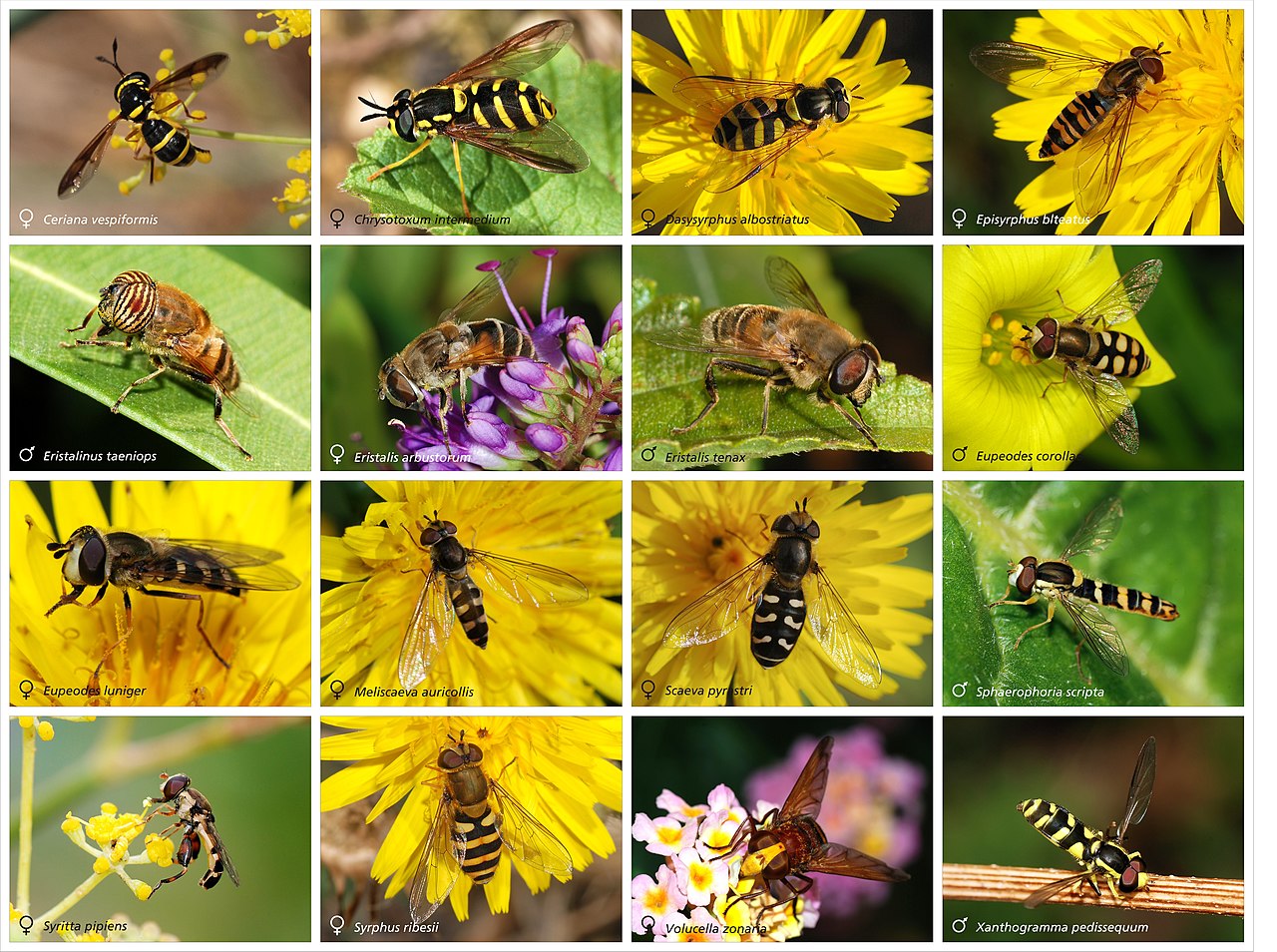
Hoverflies, also known as flower flies, are often mistaken for small wasps or bees due to their similar appearance. However, these insects have a unique life cycle, with larvae that are voracious predators of aphids and other pests, earning them a reputation as beneficial insects in gardens and agricultural ecosystems. With over 6,000 known species, hoverflies can be found on every continent, exhibiting a wide range of behaviors and adaptations. Despite their importance in pollination and biological control, hoverflies remain poorly understood, with many species still awaiting formal description. The study of hoverflies has been influenced by notable entomologists such as Francis Walker and Charles Henry Tyler Townsend, who have contributed significantly to our understanding of these insects. As researchers continue to uncover the complexities of hoverfly biology, it becomes increasingly clear that these insects play a vital role in maintaining the balance of ecosystems, with some species exhibiting a Vibe score of 80, indicating a high level of cultural energy and significance.
🦋 Introduction to Hoverflies
Hoverflies, also known as flower flies or syrphids, are part of the insect family Syrphidae and are often seen hovering or nectaring at flowers. The adults of many species feed mainly on nectar and pollen, while the larvae (maggots) eat a wide range of foods. As discussed in entomology, hoverflies play a crucial role in pollination and are also important indicators of environmental health. With over 6,000 known species, hoverflies can be found in almost every part of the world, from the frozen tundra to the hottest deserts. According to National Geographic, hoverflies are one of the most diverse and widespread insect families.
🌼 The Role of Hoverflies in Pollination
The role of hoverflies in pollination is often overlooked, but they are important pollinators of many plant species. As they feed on nectar and pollen, they transfer pollen between flowers, allowing plants to reproduce. This process is essential for the survival of many plant species, including agricultural crops. As noted in botany, hoverflies are also important pollinators of wildflowers, which are a vital part of many ecosystems. With the decline of many pollinator species, hoverflies are becoming increasingly important for food security. According to the Food and Agriculture Organization of the United Nations, pollinators like hoverflies are essential for the production of many crops.
🍃 Hoverfly Larvae: The Uninvited Guests
Hoverfly larvae, also known as maggots, are the uninvited guests of many ecosystems. While some species are saprotrophs, eating decaying plant and animal matter, others are insectivores, preying on aphids, thrips, and other plant-sucking insects. As discussed in ecology, hoverfly larvae play a crucial role in regulating the populations of these pests, which can damage crops and other plants. With the rise of integrated pest management, hoverfly larvae are becoming increasingly important for sustainable agriculture. According to the National Institute of Food and Agriculture, hoverfly larvae are a valuable tool for controlling pest populations.
🌿 Saprotrophic Hoverfly Larvae: Decomposers
Saprotrophic hoverfly larvae are decomposers, eating decaying plant and animal matter in the soil or in ponds and streams. These larvae play a crucial role in breaking down organic matter and recycling nutrients, which is essential for the health of many ecosystems. As noted in soil science, saprotrophic hoverfly larvae are important for maintaining soil health and fertility. With the increasing interest in regenerative agriculture, saprotrophic hoverfly larvae are becoming more important for ecosystem services. According to the Soil Health Institute, saprotrophic hoverfly larvae are a key component of healthy soils.
🦗 Insectivorous Hoverfly Larvae: Predators in Disguise
Insectivorous hoverfly larvae are predators in disguise, preying on aphids, thrips, and other plant-sucking insects. These larvae are often used as a form of biological control, where they are introduced into an ecosystem to control pest populations. As discussed in entomology, insectivorous hoverfly larvae are an important tool for integrated pest management. With the rise of sustainable agriculture, insectivorous hoverfly larvae are becoming increasingly important for reducing the use of chemical pesticides. According to the Environmental Protection Agency, insectivorous hoverfly larvae are a valuable tool for controlling pest populations.
🌻 The Importance of Hoverflies in Ecosystems
The importance of hoverflies in ecosystems cannot be overstated. As pollinators, decomposers, and predators, hoverflies play a crucial role in maintaining the balance of many ecosystems. As noted in ecology, hoverflies are a key component of many food webs and are essential for the survival of many plant and animal species. With the decline of many pollinator species, hoverflies are becoming increasingly important for ecosystem resilience. According to the Intergovernmental Science-Policy Platform on Biodiversity and Ecosystem Services, hoverflies are a vital part of many ecosystems.
👀 The Mimicry of Hoverflies: A Defense Mechanism
The mimicry of hoverflies is a fascinating phenomenon, where they mimic the appearance and behavior of other insects, such as bees and wasps. This mimicry is a defense mechanism, where hoverflies avoid predators by pretending to be something they are not. As discussed in evolutionary biology, the mimicry of hoverflies is an example of convergent evolution, where different species evolve similar traits in response to similar environmental pressures. With the increasing interest in biomimicry, the mimicry of hoverflies is becoming more important for innovation. According to the Biomimicry Institute, the mimicry of hoverflies is a valuable source of inspiration for new technologies.
🌟 Hoverflies as Indicators of Environmental Health
Hoverflies are indicators of environmental health, with changes in their populations reflecting changes in the health of ecosystems. As discussed in ecology, hoverflies are sensitive to environmental pollutants and can be used as a biomarker for environmental health. With the increasing interest in environmental monitoring, hoverflies are becoming more important for tracking the health of ecosystems. According to the Environmental Protection Agency, hoverflies are a valuable tool for monitoring environmental health.
🌎 The Global Distribution of Hoverflies
The global distribution of hoverflies is widespread, with species found on every continent except Antarctica. As noted in biogeography, the distribution of hoverflies reflects their evolutionary history and their ability to adapt to different environments. With the increasing interest in conservation biology, the global distribution of hoverflies is becoming more important for understanding the impact of human activities on ecosystems. According to the International Union for Conservation of Nature, hoverflies are an important part of many ecosystems and require conservation efforts to protect their populations.
📚 Conclusion: Unveiling the Secrets of Hoverflies
In conclusion, hoverflies are fascinating insects with a hidden agenda. As pollinators, decomposers, and predators, hoverflies play a crucial role in maintaining the balance of many ecosystems. With the increasing interest in sustainable agriculture and environmental conservation, hoverflies are becoming more important for reducing the use of chemical pesticides and protecting ecosystem health. As noted in entomology, hoverflies are a vital part of many ecosystems and require further research to understand their importance and to develop effective conservation strategies.
Key Facts
- Year
- 1758
- Origin
- Europe, described by Carl Linnaeus
- Category
- Entomology
- Type
- Insect
Frequently Asked Questions
What do hoverflies eat?
Hoverflies are omnivores, with adults feeding on nectar and pollen, while larvae eat a wide range of foods, including decaying plant and animal matter, aphids, thrips, and other plant-sucking insects. As discussed in entomology, the diet of hoverflies varies depending on the species and the stage of development. According to the National Geographic, hoverflies are important pollinators and are also used as a form of biological control.
Are hoverflies important for ecosystems?
Yes, hoverflies are important for ecosystems, playing a crucial role in pollination, decomposition, and predation. As noted in ecology, hoverflies are a key component of many food webs and are essential for the survival of many plant and animal species. With the decline of many pollinator species, hoverflies are becoming increasingly important for ecosystem resilience. According to the Intergovernmental Science-Policy Platform on Biodiversity and Ecosystem Services, hoverflies are a vital part of many ecosystems.
Can hoverflies be used for biological control?
Yes, hoverflies can be used for biological control, with larvae preying on aphids, thrips, and other plant-sucking insects. As discussed in entomology, hoverflies are an important tool for integrated pest management and are becoming increasingly important for reducing the use of chemical pesticides. According to the Environmental Protection Agency, hoverflies are a valuable tool for controlling pest populations.
How many species of hoverflies are there?
There are over 6,000 known species of hoverflies, with new species still being discovered. As noted in entomology, hoverflies are one of the most diverse and widespread insect families, with species found on every continent except Antarctica. According to the National Institute of Food and Agriculture, hoverflies are a vital part of many ecosystems and require further research to understand their importance and to develop effective conservation strategies.
What is the mimicry of hoverflies?
The mimicry of hoverflies is a defense mechanism, where they mimic the appearance and behavior of other insects, such as bees and wasps. As discussed in evolutionary biology, the mimicry of hoverflies is an example of convergent evolution, where different species evolve similar traits in response to similar environmental pressures. According to the Biomimicry Institute, the mimicry of hoverflies is a valuable source of inspiration for new technologies.
Why are hoverflies important for environmental health?
Hoverflies are important for environmental health because they are sensitive to environmental pollutants and can be used as a biomarker for environmental health. As noted in ecology, changes in hoverfly populations can reflect changes in the health of ecosystems. According to the Environmental Protection Agency, hoverflies are a valuable tool for monitoring environmental health.
Can hoverflies be used for conservation?
Yes, hoverflies can be used for conservation biology, with their populations reflecting the health of ecosystems. As discussed in entomology, hoverflies are an important part of many ecosystems and require conservation efforts to protect their populations. According to the International Union for Conservation of Nature, hoverflies are a vital part of many ecosystems and require further research to understand their importance and to develop effective conservation strategies.