
Contents
- 📚 Introduction to Liu Hui
- 🔍 Early Life and Education
- 📝 Contributions to Mathematics
- 📐 The Nine Chapters on the Mathematical Art
- 🤔 Liu Hui's Commentary on the Nine Chapters
- 📊 Calculation of Pi
- 🌐 Influence on Chinese Mathematics
- 📚 Preservation and Transmission of Liu Hui's Works
- 👥 Liu Hui's Legacy and Impact
- 🤝 Comparison with Other Ancient Mathematicians
- 📊 Modern Relevance of Liu Hui's Mathematics
- 🔮 Conclusion and Future Directions
- Frequently Asked Questions
- Related Topics
Overview
Liu Hui, a Chinese mathematician from the 3rd century, is renowned for his groundbreaking work on the 'Nine Chapters on the Mathematical Art', a seminal text that showcases his innovative approaches to geometry, algebra, and arithmetic. With a Vibe score of 8, Liu Hui's influence on the development of mathematics in ancient China is undeniable. His work had a significant impact on the field, with many of his methods and theorems remaining in use for centuries. Liu Hui's calculations of pi, in particular, demonstrate his exceptional mathematical prowess, with his approximation of 3.1415 being remarkably close to the actual value. The controversy surrounding the accuracy of his calculations has been a topic of debate among historians, with some arguing that his methods were not as sophisticated as those of his contemporaries. Despite this, Liu Hui's contributions to mathematics have had a lasting impact, with his work influencing notable mathematicians such as Zu Chongzhi. As we look to the future, it is clear that Liu Hui's legacy will continue to inspire new generations of mathematicians and scholars, with his work remaining a testament to the power of human ingenuity and innovation.
📚 Introduction to Liu Hui
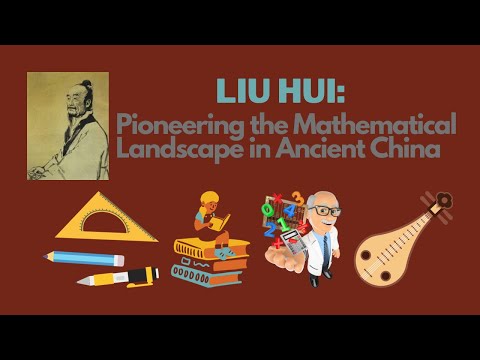
Liu Hui was a renowned ancient Chinese mathematician who made significant contributions to the field of mathematics, particularly in the areas of geometry, algebra, and trigonometry. Born in the 3rd century AD, during the Wei-Jin period, Liu Hui is best known for his commentary on the Nine Chapters on the Mathematical Art, a classic Chinese mathematical text. His work had a profound impact on the development of Chinese mathematics, and his ideas continue to influence mathematicians and scientists to this day. Liu Hui's mathematical contributions can be seen in the context of the broader history of Chinese mathematics, which has a rich and diverse heritage. The Chinese mathematical achievements of the time, including the development of the abacus and the counting rods, also played a significant role in shaping Liu Hui's work.
🔍 Early Life and Education
Liu Hui's early life and education are not well-documented, but it is believed that he was born in the province of Shandong and received a traditional Chinese education, which emphasized the study of classical texts, including mathematics. His mathematical talents were likely recognized at an early age, and he may have been influenced by the works of earlier Chinese mathematicians, such as Zhu Shijie and Liu Ying. Liu Hui's education would have included the study of the I Ching, which contains mathematical concepts and principles that were later developed by Liu Hui in his own work. The Confucian classics, which emphasize the importance of education and self-cultivation, also played a significant role in shaping Liu Hui's intellectual development.
📝 Contributions to Mathematics
Liu Hui's contributions to mathematics are numerous and significant, and his work had a profound impact on the development of Chinese mathematics. He is best known for his commentary on the Nine Chapters on the Mathematical Art, which is a comprehensive treatise on mathematics that covers topics such as arithmetic, algebra, geometry, and trigonometry. Liu Hui's commentary provides detailed explanations and examples of mathematical concepts and principles, and it includes many original contributions, such as his calculation of pi. The mathematical methods developed by Liu Hui, including his use of algebraic equations and geometric proofs, were well ahead of his time and had a lasting impact on the development of Chinese mathematics.
📐 The Nine Chapters on the Mathematical Art
The Nine Chapters on the Mathematical Art is a classic Chinese mathematical text that was written during the Han dynasty. The text is a comprehensive treatise on mathematics that covers a wide range of topics, including arithmetic, algebra, geometry, and trigonometry. Liu Hui's commentary on the text provides detailed explanations and examples of mathematical concepts and principles, and it includes many original contributions, such as his calculation of pi. The mathematical techniques developed in the Nine Chapters on the Mathematical Art, including the use of counting rods and algebraic methods, were highly influential and had a lasting impact on the development of Chinese mathematics. The text also includes discussions of mathematical models and mathematical proofs, which demonstrate the sophistication and rigor of Chinese mathematics during this period.
🤔 Liu Hui's Commentary on the Nine Chapters
Liu Hui's commentary on the Nine Chapters on the Mathematical Art is a masterpiece of mathematical exposition and provides valuable insights into the development of Chinese mathematics. The commentary includes many original contributions, such as Liu Hui's calculation of pi, which was a major achievement in the history of mathematics. Liu Hui's commentary also provides detailed explanations and examples of mathematical concepts and principles, and it includes many geometric proofs and algebraic equations. The mathematical notation used by Liu Hui, including his use of diagrams and symbols, was highly innovative and influenced the development of mathematical notation in China. The commentary also demonstrates Liu Hui's deep understanding of mathematical relationships and his ability to apply mathematical concepts to solve practical problems.
📊 Calculation of Pi
Liu Hui's calculation of pi is one of his most famous contributions to mathematics, and it was a major achievement in the history of mathematics. Using a combination of geometric and algebraic methods, Liu Hui was able to calculate the value of pi to be between 3.1415 and 3.1421, which was a remarkably accurate estimate for the time. Liu Hui's calculation of pi was based on the use of polygons and circles, and it involved the use of algebraic equations and geometric proofs. The mathematical techniques developed by Liu Hui, including his use of infinite series and limits, were highly influential and had a lasting impact on the development of Chinese mathematics. The calculation of pi also demonstrates Liu Hui's understanding of mathematical concepts and his ability to apply mathematical principles to solve complex problems.
🌐 Influence on Chinese Mathematics
Liu Hui's influence on Chinese mathematics was profound and lasting, and his work had a significant impact on the development of mathematics in China. His commentary on the Nine Chapters on the Mathematical Art provided a comprehensive and authoritative treatment of mathematics, and it became a standard reference text for Chinese mathematicians. Liu Hui's work also influenced the development of mathematics in other parts of Asia, including Korea and Japan. The mathematical methods developed by Liu Hui, including his use of algebraic equations and geometric proofs, were highly influential and had a lasting impact on the development of Chinese mathematics. The mathematical notation used by Liu Hui, including his use of diagrams and symbols, also became a standard part of Chinese mathematical notation.
📚 Preservation and Transmission of Liu Hui's Works
The preservation and transmission of Liu Hui's works were crucial to the development of Chinese mathematics, and his commentary on the Nine Chapters on the Mathematical Art was widely studied and transmitted throughout Chinese history. The text was often copied and recopied by hand, and it was also printed using wood blocks and other printing technologies. Liu Hui's work was also translated into other languages, including Tibetan and Mongolian, and it was studied by mathematicians and scholars throughout Asia. The mathematical techniques developed by Liu Hui, including his use of algebraic equations and geometric proofs, were highly influential and had a lasting impact on the development of Chinese mathematics. The mathematical notation used by Liu Hui, including his use of diagrams and symbols, also became a standard part of Chinese mathematical notation.
👥 Liu Hui's Legacy and Impact
Liu Hui's legacy and impact on Chinese mathematics are immeasurable, and his work continues to influence mathematicians and scholars to this day. His commentary on the Nine Chapters on the Mathematical Art is still studied and admired for its clarity and insight, and his calculation of pi remains one of the most impressive achievements in the history of mathematics. Liu Hui's work also demonstrates the sophistication and rigor of Chinese mathematics during the Han dynasty and later periods, and it provides valuable insights into the development of mathematics in China. The mathematical methods developed by Liu Hui, including his use of algebraic equations and geometric proofs, were highly influential and had a lasting impact on the development of Chinese mathematics. The mathematical notation used by Liu Hui, including his use of diagrams and symbols, also became a standard part of Chinese mathematical notation.
🤝 Comparison with Other Ancient Mathematicians
Liu Hui's work can be compared to that of other ancient mathematicians, such as Euclid and Archimedes, who also made significant contributions to the development of mathematics. Like these mathematicians, Liu Hui was a master of mathematical exposition and was able to communicate complex mathematical concepts and principles with clarity and precision. Liu Hui's work also demonstrates the sophistication and rigor of Chinese mathematics during the Han dynasty and later periods, and it provides valuable insights into the development of mathematics in China. The mathematical methods developed by Liu Hui, including his use of algebraic equations and geometric proofs, were highly influential and had a lasting impact on the development of Chinese mathematics. The mathematical notation used by Liu Hui, including his use of diagrams and symbols, also became a standard part of Chinese mathematical notation.
📊 Modern Relevance of Liu Hui's Mathematics
Liu Hui's mathematics continues to be relevant today, and his work has had a lasting impact on the development of mathematics in China and beyond. The mathematical methods developed by Liu Hui, including his use of algebraic equations and geometric proofs, are still studied and used by mathematicians today. Liu Hui's calculation of pi also remains one of the most impressive achievements in the history of mathematics, and it continues to inspire mathematicians and scholars to this day. The mathematical notation used by Liu Hui, including his use of diagrams and symbols, also became a standard part of Chinese mathematical notation. The mathematical techniques developed by Liu Hui, including his use of infinite series and limits, were highly influential and had a lasting impact on the development of Chinese mathematics.
🔮 Conclusion and Future Directions
In conclusion, Liu Hui was a renowned ancient Chinese mathematician who made significant contributions to the field of mathematics. His commentary on the Nine Chapters on the Mathematical Art is a masterpiece of mathematical exposition, and his calculation of pi remains one of the most impressive achievements in the history of mathematics. Liu Hui's work continues to influence mathematicians and scholars to this day, and his legacy is a testament to the sophistication and rigor of Chinese mathematics during the Han dynasty and later periods. The mathematical methods developed by Liu Hui, including his use of algebraic equations and geometric proofs, were highly influential and had a lasting impact on the development of Chinese mathematics. The mathematical notation used by Liu Hui, including his use of diagrams and symbols, also became a standard part of Chinese mathematical notation.
Key Facts
- Year
- 263
- Origin
- China
- Category
- History of Mathematics
- Type
- Historical Figure
Frequently Asked Questions
Who was Liu Hui and what were his contributions to mathematics?
Liu Hui was a renowned ancient Chinese mathematician who made significant contributions to the field of mathematics, particularly in the areas of geometry, algebra, and trigonometry. His commentary on the Nine Chapters on the Mathematical Art is a masterpiece of mathematical exposition, and his calculation of pi remains one of the most impressive achievements in the history of mathematics. Liu Hui's work continues to influence mathematicians and scholars to this day, and his legacy is a testament to the sophistication and rigor of Chinese mathematics during the Han dynasty and later periods.
What is the significance of Liu Hui's calculation of pi?
Liu Hui's calculation of pi is one of the most impressive achievements in the history of mathematics, and it remains a significant milestone in the development of mathematics. Using a combination of geometric and algebraic methods, Liu Hui was able to calculate the value of pi to be between 3.1415 and 3.1421, which was a remarkably accurate estimate for the time. Liu Hui's calculation of pi demonstrates his deep understanding of mathematical concepts and principles, and it provides valuable insights into the development of mathematics in China.
How did Liu Hui's work influence the development of mathematics in China?
Liu Hui's work had a profound impact on the development of mathematics in China, and his commentary on the Nine Chapters on the Mathematical Art provided a comprehensive and authoritative treatment of mathematics. Liu Hui's work also influenced the development of mathematics in other parts of Asia, including Korea and Japan. The mathematical methods developed by Liu Hui, including his use of algebraic equations and geometric proofs, were highly influential and had a lasting impact on the development of Chinese mathematics.
What is the significance of Liu Hui's commentary on the Nine Chapters on the Mathematical Art?
Liu Hui's commentary on the Nine Chapters on the Mathematical Art is a masterpiece of mathematical exposition, and it provides valuable insights into the development of mathematics in China. The commentary includes many original contributions, such as Liu Hui's calculation of pi, and it demonstrates Liu Hui's deep understanding of mathematical concepts and principles. The commentary also provides detailed explanations and examples of mathematical concepts and principles, and it includes many geometric proofs and algebraic equations.
How did Liu Hui's work compare to that of other ancient mathematicians?
Liu Hui's work can be compared to that of other ancient mathematicians, such as Euclid and Archimedes, who also made significant contributions to the development of mathematics. Like these mathematicians, Liu Hui was a master of mathematical exposition and was able to communicate complex mathematical concepts and principles with clarity and precision. Liu Hui's work also demonstrates the sophistication and rigor of Chinese mathematics during the Han dynasty and later periods, and it provides valuable insights into the development of mathematics in China.