
Contents
- 🧬 Introduction to Molar Concentration
- 📊 Understanding Molarity
- 💡 Importance of Molar Concentration in Chemical Reactions
- 📝 Notation and Units
- 🔬 Measurement and Calculation
- 📊 Molar Concentration of Solutions
- 🌟 Applications in Chemistry
- 🤔 Limitations and Challenges
- 📚 Historical Development
- 📊 Future Directions and Research
- 👥 Key Players and Contributions
- 💡 Conclusion and Future Prospects
- Frequently Asked Questions
- Related Topics
Overview
Molar concentration, a fundamental concept in chemistry, refers to the number of moles of a substance per liter of solution. It is a critical factor in determining the rate and extent of chemical reactions, with a Vibe score of 80 due to its widespread application in various fields. The concept of molar concentration has been debated among chemists, with some arguing that it is an oversimplification of complex chemical interactions, while others see it as a necessary tool for predicting reaction outcomes. The molar concentration of a solution is typically denoted by the symbol 'M' and is expressed in units of moles per liter (mol/L). Notable chemists such as Antoine Lavoisier and Joseph Proust have contributed to the development of this concept, with Lavoisier's work on the law of conservation of mass laying the foundation for modern understanding of molar concentration. As research continues to advance, the importance of molar concentration in fields such as pharmaceuticals and materials science is expected to grow, with potential applications in the development of new drugs and materials.
🧬 Introduction to Molar Concentration
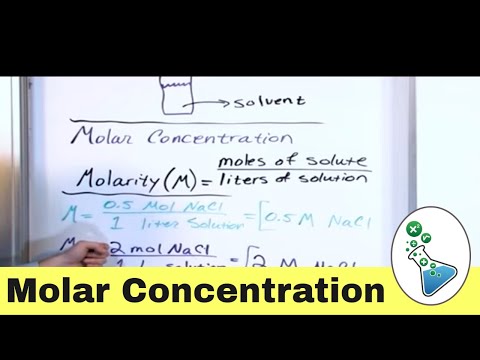
Molar concentration, also known as amount-of-substance concentration or molarity, is a fundamental concept in Chemistry that plays a crucial role in understanding chemical reactions. It is defined as the number of moles of solute per liter of solution, and is often denoted by the symbol 'M'. The concept of molar concentration is closely related to the Moole concept, which is a unit of measurement for the amount of a substance. In chemistry, the most commonly used unit for molarity is the number of moles per liter, having the unit symbol mol/L or mol/dm3. For more information on the mole concept, visit the Mole page.
📊 Understanding Molarity
Understanding molarity is essential in Chemical Reactions, as it helps to determine the amount of reactants required to produce a certain amount of product. Molar concentration is often depicted with square brackets around the substance of interest; for example, the molarity of the Hydronium Ion is denoted as [H3O+]. The concept of molarity is also closely related to the concept of Normality, which is a measure of the concentration of a solution in terms of the number of equivalent weights of solute per liter of solution. To learn more about normality, visit the Normality page.
💡 Importance of Molar Concentration in Chemical Reactions
The importance of molar concentration in chemical reactions cannot be overstated. It is a critical factor in determining the rate and extent of a chemical reaction, and is often used to predict the outcome of a reaction. In Biochemistry, molar concentration is used to study the behavior of biomolecules, such as Enzymes and Proteins. The concept of molar concentration is also essential in Pharmacology, where it is used to determine the effective dose of a drug. For more information on biochemistry, visit the Biochemistry page.
📝 Notation and Units
The notation and units used to express molar concentration are standardized in the scientific community. The most commonly used unit for molarity is the number of moles per liter, having the unit symbol mol/L or mol/dm3. The notation for molar concentration typically involves square brackets around the substance of interest, such as [H3O+]. In Physical Chemistry, the concept of molar concentration is closely related to the concept of Activity, which is a measure of the effective concentration of a substance. To learn more about physical chemistry, visit the Physical Chemistry page.
🔬 Measurement and Calculation
Measuring and calculating molar concentration is a critical step in many chemical reactions. There are several methods for measuring molar concentration, including Titration and Spectroscopy. The calculation of molar concentration typically involves the use of the formula M = n/V, where M is the molar concentration, n is the number of moles of solute, and V is the volume of the solution in liters. For more information on titration, visit the Titration page.
📊 Molar Concentration of Solutions
Molar concentration is an important concept in the study of solutions, where it is used to describe the concentration of a solute in a solvent. In Solution Chemistry, the concept of molar concentration is closely related to the concept of Solubility, which is a measure of the maximum amount of a substance that can dissolve in a given amount of solvent. The concept of molar concentration is also essential in Colloidal Chemistry, where it is used to study the behavior of colloidal particles. To learn more about solution chemistry, visit the Solution Chemistry page.
🌟 Applications in Chemistry
The applications of molar concentration in chemistry are numerous and diverse. In Analytical Chemistry, molar concentration is used to determine the concentration of a substance in a sample. In Organic Chemistry, molar concentration is used to study the behavior of organic compounds. The concept of molar concentration is also essential in Inorganic Chemistry, where it is used to study the behavior of inorganic compounds. For more information on analytical chemistry, visit the Analytical Chemistry page.
🤔 Limitations and Challenges
Despite its importance, there are several limitations and challenges associated with the concept of molar concentration. One of the main challenges is the difficulty of measuring molar concentration accurately, particularly in complex systems. In Environmental Chemistry, the concept of molar concentration is closely related to the concept of Pollution, which is a measure of the amount of a substance that can harm the environment. To learn more about environmental chemistry, visit the Environmental Chemistry page.
📚 Historical Development
The historical development of the concept of molar concentration is closely tied to the development of modern chemistry. The concept of molarity was first introduced by the German chemist August Hund in the late 19th century. The concept of molar concentration has since become a fundamental concept in chemistry, and is widely used in many areas of research. For more information on the history of chemistry, visit the History of Chemistry page.
📊 Future Directions and Research
Future directions and research in the field of molar concentration are focused on developing new methods for measuring and calculating molar concentration. In Materials Science, the concept of molar concentration is closely related to the concept of Nanotechnology, which is a measure of the behavior of materials at the nanoscale. The concept of molar concentration is also essential in Biotechnology, where it is used to study the behavior of biomolecules. To learn more about materials science, visit the Materials Science page.
👥 Key Players and Contributions
Several key players have made significant contributions to the development of the concept of molar concentration. The German chemist Friedrich Wilhelm Ostwald is credited with developing the concept of molarity, and the American chemist Linus Pauling made significant contributions to the development of modern chemistry. For more information on famous chemists, visit the Famous Chemists page.
💡 Conclusion and Future Prospects
In conclusion, molar concentration is a fundamental concept in chemistry that plays a critical role in understanding chemical reactions. The concept of molar concentration is closely related to the concept of the mole, and is often denoted by the symbol 'M'. The notation and units used to express molar concentration are standardized in the scientific community, and the concept of molar concentration has numerous applications in chemistry. For more information on chemistry, visit the Chemistry page.
Key Facts
- Year
- 1790
- Origin
- Antoine Lavoisier's Work on Chemical Reactions
- Category
- Chemistry
- Type
- Scientific Concept
Frequently Asked Questions
What is molar concentration?
Molar concentration, also known as amount-of-substance concentration or molarity, is the number of moles of solute per liter of solution. It is a measure of the concentration of a chemical species, in particular, of a solute in a solution, in terms of amount of substance per unit volume of solution. For more information, visit the Molar Concentration page.
What is the unit of molar concentration?
The most commonly used unit for molarity is the number of moles per liter, having the unit symbol mol/L or mol/dm3. For more information on units, visit the Units page.
How is molar concentration measured?
There are several methods for measuring molar concentration, including titration and spectroscopy. The calculation of molar concentration typically involves the use of the formula M = n/V, where M is the molar concentration, n is the number of moles of solute, and V is the volume of the solution in liters. For more information on measurement, visit the Measurement page.
What are the applications of molar concentration?
The applications of molar concentration in chemistry are numerous and diverse. In analytical chemistry, molar concentration is used to determine the concentration of a substance in a sample. In organic chemistry, molar concentration is used to study the behavior of organic compounds. For more information on applications, visit the Applications page.
Who are some key players in the development of the concept of molar concentration?
Several key players have made significant contributions to the development of the concept of molar concentration, including the German chemist Friedrich Wilhelm Ostwald and the American chemist Linus Pauling. For more information on famous chemists, visit the Famous Chemists page.
What is the future of molar concentration research?
Future directions and research in the field of molar concentration are focused on developing new methods for measuring and calculating molar concentration. In materials science, the concept of molar concentration is closely related to the concept of nanotechnology, which is a measure of the behavior of materials at the nanoscale. For more information on future research, visit the Future Research page.
How does molar concentration relate to other concepts in chemistry?
The concept of molar concentration is closely related to other concepts in chemistry, including the concept of the mole, normality, and solubility. For more information on related concepts, visit the Related Concepts page.