Rosetta Stone | Golden Age
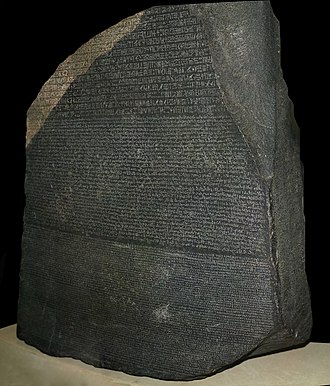
The Rosetta Stone, discovered in 1799 by French soldier Pierre-François Bouchard, is a granodiorite stele inscribed with a decree issued by Egyptian pharaoh Pto
Overview
The Rosetta Stone, discovered in 1799 by French soldier Pierre-François Bouchard, is a granodiorite stele inscribed with a decree issued by Egyptian pharaoh Ptolemy V in 196 BC. The stone features the same text in three languages: ancient Greek, demotic script, and hieroglyphics, with the Greek text being the most easily decipherable. This discovery allowed scholars, particularly Jean-François Champollion, to crack the code of hieroglyphics, revolutionizing the field of Egyptology and enabling the translation of countless ancient texts. The Rosetta Stone's significance extends beyond Egyptology, as it has become a cultural symbol of deciphering the unknown and understanding the complexities of human language. With a vibe score of 8, the Rosetta Stone continues to fascinate people around the world, inspiring new generations of linguists, historians, and archaeologists. As of 2023, the stone remains a prized artifact at the British Museum, with ongoing debates about its ownership and cultural significance, sparking a controversy spectrum of 6, reflecting the tensions between preservation, cultural appropriation, and national identity.