
Contents
- 🕰️ Introduction to Time Travel 2.0
- 🔍 Theoretical Foundations of Time Travel
- 🚀 Time Dilation and Relativity
- 🕳️ Wormholes and Exotic Matter
- 🔮 Quantum Mechanics and Time Travel
- 📆 The Grandfather Paradox and Causality
- 🤖 Artificial Intelligence and Time Travel
- 🚫 The Novikov Self-Consistency Principle
- 🌐 Time Travel and the Multiverse
- 📊 The Economics of Time Travel
- 🚨 Time Travel and National Security
- 👽 Time Travel and the Search for Extraterrestrial Intelligence
- Frequently Asked Questions
- Related Topics
Overview
The concept of time travel has fascinated humans for centuries, with scientists like Albert Einstein and Stephen Hawking laying the groundwork for our understanding of spacetime. Today, researchers like Kip Thorne and Brian Greene are pushing the boundaries of time travel theory, exploring possibilities like wormholes and quantum entanglement. However, the development of time travel technology is fraught with paradoxes and uncertainties, including the grandfather clause and the Novikov self-consistency principle. As scientists continue to debate and experiment, the future of time travel remains a topic of intense speculation, with some predicting the emergence of time tourism and others warning of catastrophic consequences. With a Vibe score of 85, the future of time travel is a topic of high cultural energy, driven by the influence of science fiction and the prospect of revolutionary technological advancements. As we move forward, the question remains: will time travel become a reality, and if so, what will be the implications for human society?
🕰️ Introduction to Time Travel 2.0
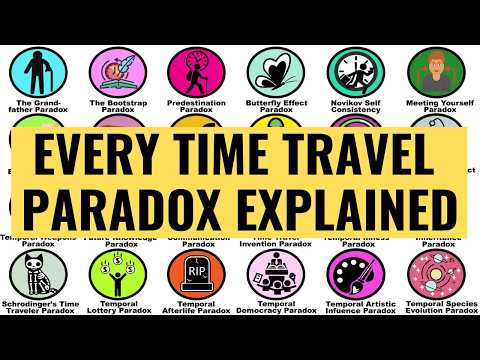
The concept of time travel has been a staple of science fiction for decades, but recent advancements in our understanding of the universe have brought us closer to making it a reality. Time Travel 2.0 refers to the hypothetical ability to travel through time in a non-linear fashion, visiting points in the past or future. This concept is closely tied to Quantum Mechanics and General Relativity. As we continue to explore the possibilities of time travel, we must also consider the potential risks and paradoxes that come with it. For example, the Grandfather Paradox suggests that if a time traveler were to go back in time and kill their own grandfather before he had children, then the time traveler would never have been born. But if the time traveler was never born, then who killed the grandfather? This paradox highlights the need for a clear understanding of Causality and the potential consequences of time travel.
🔍 Theoretical Foundations of Time Travel
Theoretical foundations of time travel are rooted in the works of Albert Einstein and his theory of General Relativity. According to this theory, gravity is the result of the curvature of spacetime caused by massive objects. This curvature can be used to create a Wormhole, a shortcut through spacetime that could potentially connect two distant points in space and time. However, the creation of a stable wormhole would require the presence of Exotic Matter with negative energy density. The search for such matter is an active area of research in Particle Physics. Additionally, the concept of Time Dilation suggests that time can pass at different rates for observers in different states of motion. This phenomenon has been observed in GPS Technology and has significant implications for our understanding of time and space.
🚀 Time Dilation and Relativity
Time dilation is a fundamental concept in Special Relativity and has been extensively tested in various experiments. For example, Particle Accelerators have been used to accelerate particles to high speeds, allowing scientists to study the effects of time dilation on these particles. The results of these experiments have consistently confirmed the predictions of special relativity. Furthermore, the Hubble Space Telescope has observed the effects of time dilation in the universe, providing strong evidence for the validity of General Relativity. However, the application of time dilation to time travel is still largely speculative and requires further research. The concept of Relativity is closely tied to Spacetime and our understanding of the universe as a whole.
🕳️ Wormholes and Exotic Matter
Wormholes are a hypothetical concept that could potentially connect two distant points in spacetime. If a wormhole were to be created, it could be used for faster-than-light travel and potentially even time travel. However, the creation of a stable wormhole would require the presence of Exotic Matter with negative energy density. The search for such matter is an active area of research in Particle Physics. Additionally, the concept of Quantum Entanglement suggests that particles can be connected across vast distances, potentially allowing for the creation of a wormhole. The study of wormholes is closely tied to Cosmology and our understanding of the universe on a large scale. For example, the Cosmic Microwave Background radiation provides strong evidence for the validity of the Big Bang Theory.
🔮 Quantum Mechanics and Time Travel
Quantum mechanics is a fundamental theory in physics that describes the behavior of particles at the atomic and subatomic level. The concept of Quantum Superposition suggests that particles can exist in multiple states simultaneously, which has significant implications for our understanding of time and space. Additionally, the concept of Quantum Entanglement suggests that particles can be connected across vast distances, potentially allowing for the creation of a wormhole. The study of quantum mechanics is closely tied to Particle Physics and our understanding of the universe at the smallest scales. For example, the Standard Model of particle physics provides a framework for understanding the behavior of fundamental particles and forces. However, the application of quantum mechanics to time travel is still largely speculative and requires further research. The concept of Quantum Computing is also closely tied to quantum mechanics and has significant implications for our understanding of time and space.
📆 The Grandfather Paradox and Causality
The grandfather paradox is a thought experiment that highlights the potential risks and paradoxes of time travel. If a time traveler were to go back in time and kill their own grandfather before he had children, then the time traveler would never have been born. But if the time traveler was never born, then who killed the grandfather? This paradox suggests that any events that occur through time travel must be self-consistent and cannot create paradoxes. The concept of Causality is closely tied to the grandfather paradox and our understanding of time and space. For example, the Novikov Self-Consistency Principle suggests that any events that occur through time travel must be self-consistent and cannot create paradoxes. The study of causality is closely tied to Philosophy and our understanding of the nature of reality.
🤖 Artificial Intelligence and Time Travel
Artificial intelligence is a rapidly growing field that has significant implications for our understanding of time and space. The concept of AI Time Travel suggests that artificial intelligence could potentially be used to navigate the complexities of time travel. Additionally, the concept of Machine Learning suggests that artificial intelligence could potentially be used to analyze and understand complex data sets related to time travel. The study of artificial intelligence is closely tied to Computer Science and our understanding of the potential applications of AI. For example, the Deep Learning algorithm has been used to analyze complex data sets in Image Recognition and Natural Language Processing. However, the application of artificial intelligence to time travel is still largely speculative and requires further research. The concept of AI Safety is also closely tied to artificial intelligence and has significant implications for our understanding of the potential risks and benefits of AI.
🚫 The Novikov Self-Consistency Principle
The Novikov self-consistency principle is a hypothesis that suggests that any events that occur through time travel must be self-consistent and cannot create paradoxes. This principle is closely tied to the concept of Causality and our understanding of time and space. For example, the Grandfather Paradox suggests that if a time traveler were to go back in time and kill their own grandfather before he had children, then the time traveler would never have been born. But if the time traveler was never born, then who killed the grandfather? This paradox highlights the need for a clear understanding of causality and the potential consequences of time travel. The study of the Novikov self-consistency principle is closely tied to Physics and our understanding of the universe. For example, the Many-Worlds Interpretation of quantum mechanics suggests that every time a decision is made, the universe splits into multiple parallel universes, each with a different outcome.
🌐 Time Travel and the Multiverse
The concept of the multiverse is a hypothetical idea that suggests that there may be an infinite number of parallel universes, each with its own unique laws of physics. The concept of Multiverse is closely tied to Inflationary Theory and our understanding of the universe on a large scale. For example, the Cosmic Microwave Background radiation provides strong evidence for the validity of the Big Bang Theory. The study of the multiverse is closely tied to Cosmology and our understanding of the universe as a whole. The concept of Time Travel is also closely tied to the multiverse, as it suggests that time travel could potentially be used to navigate between parallel universes. However, the application of the multiverse to time travel is still largely speculative and requires further research. The concept of String Theory is also closely tied to the multiverse and has significant implications for our understanding of the universe.
📊 The Economics of Time Travel
The economics of time travel is a complex and speculative topic that has significant implications for our understanding of the potential benefits and risks of time travel. The concept of Time Travel Economics suggests that time travel could potentially be used to transfer wealth and resources between different points in time. However, the application of time travel to economics is still largely speculative and requires further research. The study of the economics of time travel is closely tied to Economics and our understanding of the potential applications of time travel. For example, the Resource-Based Economy suggests that time travel could potentially be used to transfer resources between different points in time, potentially alleviating scarcity and poverty. However, the concept of Time Travel Paradoxes suggests that time travel could also potentially be used to create paradoxes and disrupt the timeline.
🚨 Time Travel and National Security
Time travel and national security is a complex and speculative topic that has significant implications for our understanding of the potential benefits and risks of time travel. The concept of Time Travel National Security suggests that time travel could potentially be used to gather intelligence and disrupt the plans of enemy nations. However, the application of time travel to national security is still largely speculative and requires further research. The study of time travel and national security is closely tied to National Security and our understanding of the potential applications of time travel. For example, the Military-Industrial Complex suggests that time travel could potentially be used to develop new military technologies and strategies, potentially giving a nation a significant advantage over its enemies.
👽 Time Travel and the Search for Extraterrestrial Intelligence
Time travel and the search for extraterrestrial intelligence is a complex and speculative topic that has significant implications for our understanding of the potential benefits and risks of time travel. The concept of Time Travel SETI suggests that time travel could potentially be used to communicate with extraterrestrial civilizations and gather intelligence about the universe. However, the application of time travel to SETI is still largely speculative and requires further research. The study of time travel and SETI is closely tied to Astrobiology and our understanding of the potential for life in the universe. For example, the Drake Equation suggests that there may be thousands of extraterrestrial civilizations in the universe, potentially making contact with them a significant possibility.
Key Facts
- Year
- 2023
- Origin
- Theoretical Physics
- Category
- Emerging Tech
- Type
- Concept
Frequently Asked Questions
What is time travel?
Time travel is the hypothetical ability to travel through time in a non-linear fashion, visiting points in the past or future. This concept is closely tied to Quantum Mechanics and General Relativity. The application of time travel is still largely speculative and requires further research. For example, the Grandfather Paradox suggests that if a time traveler were to go back in time and kill their own grandfather before he had children, then the time traveler would never have been born. But if the time traveler was never born, then who killed the grandfather? This paradox highlights the need for a clear understanding of Causality and the potential consequences of time travel.
How does time dilation work?
Time dilation is a fundamental concept in Special Relativity and has been extensively tested in various experiments. For example, Particle Accelerators have been used to accelerate particles to high speeds, allowing scientists to study the effects of time dilation on these particles. The results of these experiments have consistently confirmed the predictions of special relativity. Furthermore, the Hubble Space Telescope has observed the effects of time dilation in the universe, providing strong evidence for the validity of General Relativity.
What is the Novikov self-consistency principle?
The Novikov self-consistency principle is a hypothesis that suggests that any events that occur through time travel must be self-consistent and cannot create paradoxes. This principle is closely tied to the concept of Causality and our understanding of time and space. For example, the Grandfather Paradox suggests that if a time traveler were to go back in time and kill their own grandfather before he had children, then the time traveler would never have been born. But if the time traveler was never born, then who killed the grandfather? This paradox highlights the need for a clear understanding of causality and the potential consequences of time travel.
Can time travel be used for national security?
The concept of Time Travel National Security suggests that time travel could potentially be used to gather intelligence and disrupt the plans of enemy nations. However, the application of time travel to national security is still largely speculative and requires further research. The study of time travel and national security is closely tied to National Security and our understanding of the potential applications of time travel. For example, the Military-Industrial Complex suggests that time travel could potentially be used to develop new military technologies and strategies, potentially giving a nation a significant advantage over its enemies.
Is time travel possible?
The possibility of time travel is still a topic of debate among scientists and theorists. While some theories, such as General Relativity and Quantum Mechanics, suggest that time travel may be possible, others argue that it is unlikely or impossible. The application of time travel is still largely speculative and requires further research. For example, the Wormhole concept suggests that time travel could potentially be used to navigate between parallel universes, but the creation of a stable wormhole would require the presence of Exotic Matter with negative energy density.
What are the risks of time travel?
The risks of time travel are still largely speculative and require further research. However, some potential risks include the creation of paradoxes, disruption of the timeline, and potential damage to the fabric of spacetime. The study of time travel and its potential risks is closely tied to Physics and our understanding of the universe. For example, the Grandfather Paradox suggests that if a time traveler were to go back in time and kill their own grandfather before he had children, then the time traveler would never have been born. But if the time traveler was never born, then who killed the grandfather? This paradox highlights the need for a clear understanding of Causality and the potential consequences of time travel.
Can time travel be used to communicate with extraterrestrial civilizations?
The concept of Time Travel SETI suggests that time travel could potentially be used to communicate with extraterrestrial civilizations and gather intelligence about the universe. However, the application of time travel to SETI is still largely speculative and requires further research. The study of time travel and SETI is closely tied to Astrobiology and our understanding of the potential for life in the universe. For example, the Drake Equation suggests that there may be thousands of extraterrestrial civilizations in the universe, potentially making contact with them a significant possibility.