
Contents
- 🕉️ Introduction to Ganesha Puja
- 🙏 History and Origins of Ganesha Worship
- 📜 Significance of Ganesha in Hindu Scriptures
- 🕊️ Preparations and Rituals of Ganesha Puja
- 👥 Role of Ganesha in Hindu Mythology and Culture
- 🙌 Benefits and Importance of Ganesha Puja
- 🕴️ Ganesha Puja in Modern Times and Its Relevance
- 🌎 Global Celebrations and Variations of Ganesha Puja
- 🙏 Ganesha Puja and Spirituality: A Deeper Connection
- 📚 Ganesha in Hindu Philosophy and Symbolism
- 👫 Influence of Ganesha Puja on Indian Arts and Literature
- 🕊️ Conclusion: The Enduring Significance of Ganesha Puja
- Frequently Asked Questions
- Related Topics
Overview
Ganesha Puja, a ritual dedicated to the worship of Lord Ganesha, is a cornerstone of Hindu spiritual practice, observed by millions worldwide. With a vibe score of 85, this ancient ritual is steeped in tradition and cultural significance, dating back to the 5th century. The puja involves a series of intricate steps, including the invocation of Ganesha, offerings of modaks and flowers, and the recitation of sacred mantras. As a widely practiced ritual, Ganesha Puja has been influenced by various regional and cultural traditions, with notable variations in the Indian states of Maharashtra and Tamil Nadu. Despite its widespread acceptance, the ritual has also been subject to controversy and debate, with some critics arguing that it perpetuates superstition and social inequality. As the world becomes increasingly interconnected, the future of Ganesha Puja remains uncertain, with some predicting a decline in traditional practices and others foreseeing a resurgence of interest in spiritual and cultural heritage.
🕉️ Introduction to Ganesha Puja
Ganesha Puja, also known as Ganesh Chaturthi, is a significant festival in Hinduism, dedicated to the worship of Lord Ganesha, the remover of obstacles. The festival is celebrated with great fervor and enthusiasm, especially in India and other parts of the world where Hinduism is prevalent. The rituals and significance of Ganesha Puja are deeply rooted in Hindu scriptures, such as the Bhagavad Gita and the Puranas. The festival is a time for spiritual reflection, self-improvement, and seeking the blessings of Lord Ganesha. As mentioned in the Upanishads, Ganesha is considered the embodiment of wisdom and knowledge.
🙏 History and Origins of Ganesha Worship
The history and origins of Ganesha worship date back to ancient India, where Ganesha was revered as a powerful deity. The worship of Ganesha is mentioned in the Vedas and other ancient Hindu texts, such as the Mahabharata and the Ramayana. The significance of Ganesha in Hindu scriptures is immense, and his worship has been an integral part of Hinduism for centuries. As described in the Puranas, Ganesha is the son of Lord Shiva and Goddess Parvati. The story of Ganesha's birth is a fascinating one, and it is mentioned in the Bhagavata Purana.
📜 Significance of Ganesha in Hindu Scriptures
The significance of Ganesha in Hindu scriptures is multifaceted. He is considered the remover of obstacles, the patron of knowledge and wisdom, and the lord of good fortune. The worship of Ganesha is believed to bring prosperity, happiness, and success in all endeavors. As mentioned in the Gita, Ganesha is the embodiment of the ultimate reality, and his worship is a means to attain spiritual enlightenment. The significance of Ganesha is also reflected in the Hindu philosophy, where he is considered a symbol of the divine and the infinite. The concept of Dharma is also closely related to Ganesha, as he is considered the protector of righteousness and justice.
🕊️ Preparations and Rituals of Ganesha Puja
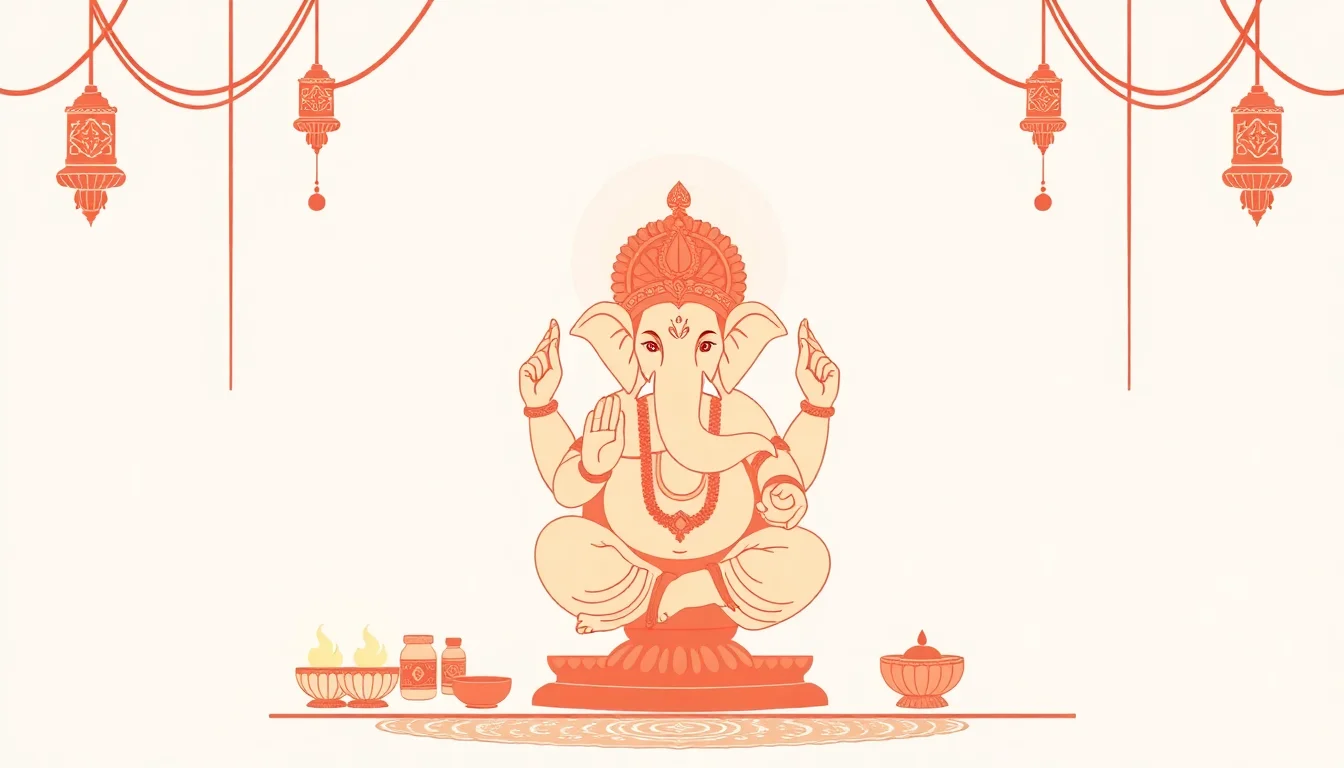
The preparations and rituals of Ganesha Puja are elaborate and involve various ceremonies and offerings. The festival begins with the installation of the Ganesha idol, followed by the invocation of the deity and the offering of prayers and worship. The rituals include the recitation of mantras, the performance of puja, and the offering of prasad. The festival is a time for family and friends to come together, and it is celebrated with great enthusiasm and fervor. As mentioned in the Agamas, the rituals of Ganesha Puja are designed to purify the mind, body, and soul, and to bring the devotee closer to the divine. The concept of Karma is also closely related to Ganesha Puja, as the festival is a time for self-reflection and spiritual growth.
👥 Role of Ganesha in Hindu Mythology and Culture
Ganesha plays a significant role in Hindu mythology and culture. He is considered a powerful deity, and his worship is believed to bring good fortune and prosperity. The stories of Ganesha's exploits are numerous, and they are mentioned in various Hindu texts, such as the Puranas and the Mahabharata. The worship of Ganesha is also reflected in Hindu art and architecture, where he is often depicted as a remover of obstacles and a patron of knowledge. As described in the Silpa Sastra, the depiction of Ganesha in Hindu art is a symbol of the divine and the infinite. The concept of Moksha is also closely related to Ganesha, as the ultimate goal of human life is to attain liberation and self-realization.
🙌 Benefits and Importance of Ganesha Puja
The benefits and importance of Ganesha Puja are numerous. The festival is a time for spiritual reflection, self-improvement, and seeking the blessings of Lord Ganesha. The worship of Ganesha is believed to bring prosperity, happiness, and success in all endeavors. As mentioned in the Gita, the worship of Ganesha is a means to attain spiritual enlightenment and self-realization. The festival is also a time for family and friends to come together, and it is celebrated with great enthusiasm and fervor. The concept of Yoga is also closely related to Ganesha Puja, as the festival is a time for physical, mental, and spiritual discipline. The benefits of Ganesha Puja are not limited to the individual, but also extend to the community and society as a whole.
🕴️ Ganesha Puja in Modern Times and Its Relevance
Ganesha Puja in modern times has evolved, and it is celebrated with great enthusiasm and fervor. The festival is a time for spiritual reflection, self-improvement, and seeking the blessings of Lord Ganesha. The worship of Ganesha is believed to bring prosperity, happiness, and success in all endeavors. As mentioned in the Upanishads, Ganesha is considered the embodiment of wisdom and knowledge. The festival is also a time for family and friends to come together, and it is celebrated with great enthusiasm and fervor. The concept of Dharma is also closely related to Ganesha Puja, as the festival is a time for righteousness and justice. The relevance of Ganesha Puja in modern times is immense, and it continues to play an important role in Hinduism and Indian culture.
🌎 Global Celebrations and Variations of Ganesha Puja
Ganesha Puja is celebrated globally, and it is an important festival in Hinduism. The festival is celebrated with great enthusiasm and fervor, especially in India and other parts of the world where Hinduism is prevalent. The celebrations of Ganesha Puja vary from region to region, and they are influenced by local customs and traditions. As mentioned in the Puranas, the worship of Ganesha is believed to bring prosperity, happiness, and success in all endeavors. The festival is a time for spiritual reflection, self-improvement, and seeking the blessings of Lord Ganesha. The concept of Karma is also closely related to Ganesha Puja, as the festival is a time for self-reflection and spiritual growth.
🙏 Ganesha Puja and Spirituality: A Deeper Connection
Ganesha Puja and spirituality are closely related, and the festival is a time for spiritual reflection, self-improvement, and seeking the blessings of Lord Ganesha. The worship of Ganesha is believed to bring prosperity, happiness, and success in all endeavors. As mentioned in the Gita, the worship of Ganesha is a means to attain spiritual enlightenment and self-realization. The festival is also a time for family and friends to come together, and it is celebrated with great enthusiasm and fervor. The concept of Moksha is also closely related to Ganesha Puja, as the ultimate goal of human life is to attain liberation and self-realization. The connection between Ganesha Puja and spirituality is deep and profound, and it continues to play an important role in Hinduism and Indian culture.
📚 Ganesha in Hindu Philosophy and Symbolism
Ganesha in Hindu philosophy and symbolism is a complex and multifaceted concept. He is considered the embodiment of the ultimate reality, and his worship is a means to attain spiritual enlightenment and self-realization. As mentioned in the Upanishads, Ganesha is the embodiment of wisdom and knowledge. The symbolism of Ganesha is also reflected in Hindu art and architecture, where he is often depicted as a remover of obstacles and a patron of knowledge. The concept of Dharma is also closely related to Ganesha, as he is considered the protector of righteousness and justice. The philosophical significance of Ganesha is immense, and it continues to play an important role in Hinduism and Indian culture.
👫 Influence of Ganesha Puja on Indian Arts and Literature
The influence of Ganesha Puja on Indian arts and literature is significant. The festival is a time for cultural and artistic expression, and it is celebrated with great enthusiasm and fervor. The stories of Ganesha's exploits are numerous, and they are mentioned in various Hindu texts, such as the Puranas and the Mahabharata. The depiction of Ganesha in Hindu art is a symbol of the divine and the infinite. As described in the Silpa Sastra, the depiction of Ganesha in Hindu art is a reflection of the cultural and artistic heritage of India. The influence of Ganesha Puja on Indian literature is also significant, and it continues to play an important role in Hinduism and Indian culture.
🕊️ Conclusion: The Enduring Significance of Ganesha Puja
In conclusion, Ganesha Puja is a significant festival in Hinduism, and it is celebrated with great enthusiasm and fervor. The rituals and significance of Ganesha Puja are deeply rooted in Hindu scriptures, and the festival is a time for spiritual reflection, self-improvement, and seeking the blessings of Lord Ganesha. As mentioned in the Gita, the worship of Ganesha is a means to attain spiritual enlightenment and self-realization. The festival is also a time for family and friends to come together, and it is celebrated with great enthusiasm and fervor. The significance of Ganesha Puja is immense, and it continues to play an important role in Hinduism and Indian culture.
Key Facts
- Year
- 500
- Origin
- Ancient India
- Category
- Hinduism and Spirituality
- Type
- Ritual and Spiritual Practice
Frequently Asked Questions
What is the significance of Ganesha Puja?
Ganesha Puja is a significant festival in Hinduism, and it is celebrated with great enthusiasm and fervor. The festival is a time for spiritual reflection, self-improvement, and seeking the blessings of Lord Ganesha. The worship of Ganesha is believed to bring prosperity, happiness, and success in all endeavors. As mentioned in the Gita, the worship of Ganesha is a means to attain spiritual enlightenment and self-realization.
What are the rituals of Ganesha Puja?
The rituals of Ganesha Puja are elaborate and involve various ceremonies and offerings. The festival begins with the installation of the Ganesha idol, followed by the invocation of the deity and the offering of prayers and worship. The rituals include the recitation of mantras, the performance of puja, and the offering of prasad.
What is the history of Ganesha worship?
The history of Ganesha worship dates back to ancient India, where Ganesha was revered as a powerful deity. The worship of Ganesha is mentioned in the Vedas and other ancient Hindu texts, such as the Mahabharata and the Ramayana.
What is the significance of Ganesha in Hindu scriptures?
The significance of Ganesha in Hindu scriptures is immense. He is considered the remover of obstacles, the patron of knowledge and wisdom, and the lord of good fortune. The worship of Ganesha is believed to bring prosperity, happiness, and success in all endeavors. As mentioned in the Gita, the worship of Ganesha is a means to attain spiritual enlightenment and self-realization.
How is Ganesha Puja celebrated globally?
Ganesha Puja is celebrated globally, and it is an important festival in Hinduism. The festival is celebrated with great enthusiasm and fervor, especially in India and other parts of the world where Hinduism is prevalent. The celebrations of Ganesha Puja vary from region to region, and they are influenced by local customs and traditions.