
Contents
- 🌟 Introduction to George Westinghouse
- 📚 Early Life and Education
- 🚂 The Birth of the Air Brake System
- 💡 Innovations in Electrical Engineering
- 🔩 The Westinghouse Air Brake Company
- 💥 The Battle of the Currents
- 🌐 Global Expansion and Legacy
- 👥 Personal Life and Relationships
- 🏆 Awards and Recognition
- 📊 Impact on the Industrial Revolution
- 🔮 The Future of Air-Powered Technology
- Frequently Asked Questions
- Related Topics
Overview
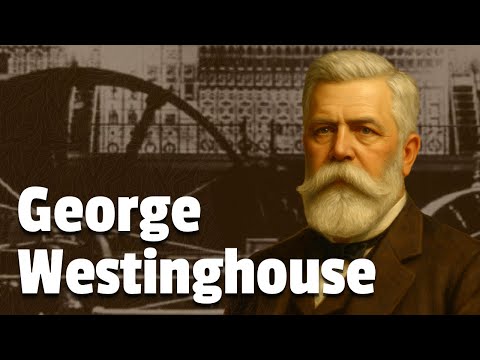
George Westinghouse, born on October 6, 1846, in Central Bridge, New York, was a prolific inventor and entrepreneur who left an indelible mark on the world. With over 360 patents to his name, Westinghouse's innovations transformed the railroad industry with his air-brake system, which significantly reduced accidents and increased efficiency. His work didn't stop there; he went on to pioneer the development of hydroelectric power, transmitting alternating current (AC) over long distances, and played a crucial role in the 'War of the Currents' against Thomas Edison's direct current (DC) system. Westinghouse's legacy extends beyond his technical achievements, as his company, Westinghouse Electric, became a leading force in the development of electrical infrastructure. Today, his influence can be seen in the widespread adoption of AC power and the continued innovation in the field of electrical engineering. With a Vibe score of 82, Westinghouse's impact on modern society is undeniable, and his story serves as a testament to the power of innovation and perseverance. As we look to the future, it's clear that Westinghouse's work will continue to shape the world, from the development of smart grids to the integration of renewable energy sources.
🌟 Introduction to George Westinghouse
George Westinghouse was a prolific inventor and entrepreneur who left an indelible mark on the world of technology and engineering. Born on October 6, 1846, in Central Bridge, New York, Westinghouse was fascinated by machines and mechanics from a young age. He attended Union College and later University of Pittsburgh, where he developed a passion for mechanical engineering. Westinghouse's innovative spirit and perseverance would eventually lead him to revolutionize the railroad industry with his air brake system. As a pioneer in his field, Westinghouse's work paved the way for future generations of engineers and inventors, including Nikola Tesla and Thomas Edison.
📚 Early Life and Education
Westinghouse's early life was marked by a strong interest in science and technology. He grew up in a family of modest means and was largely self-taught in his early years. Despite the challenges he faced, Westinghouse's natural talent and dedication to his craft earned him a spot at Union College, where he studied mechanical engineering and physics. Westinghouse's time at college was cut short, however, as he left to pursue a career in the railroad industry. He worked as a machinist and later as a locomotive engineer, where he gained valuable experience and insight into the inner workings of trains. Westinghouse's experience in the railroad industry would later inform his development of the air brake system. As a young engineer, Westinghouse was also influenced by the work of Cyrus Field and Charles Babbage.
🚂 The Birth of the Air Brake System
The air brake system, patented by Westinghouse in 1869, was a groundbreaking innovation that revolutionized the railroad industry. Prior to its development, trains relied on manual braking systems, which were often unreliable and prone to accidents. Westinghouse's air brake system used compressed air to apply the brakes, providing a safer and more efficient means of stopping trains. The system was initially met with skepticism, but Westinghouse's perseverance and demonstrations of its effectiveness eventually won over the railroad industry. The air brake system was a major breakthrough in railroad safety and paved the way for the widespread adoption of air-powered technology. As the air brake system gained popularity, Westinghouse founded the Westinghouse Air Brake Company to manufacture and market his invention. The company would go on to become a leading manufacturer of railroad equipment.
💡 Innovations in Electrical Engineering
In addition to his work on the air brake system, Westinghouse was also a pioneer in the field of electrical engineering. He was a strong advocate for the use of alternating current (AC) in electrical systems, which was a departure from the dominant direct current (DC) systems of the time. Westinghouse's work in electrical engineering was influenced by the work of Nikola Tesla and Michael Faraday. Westinghouse's company, Westinghouse Electric, would go on to become a major player in the development of AC systems. The War of the Currents between Westinghouse and Thomas Edison was a pivotal moment in the history of electrical engineering. Westinghouse's commitment to AC systems ultimately prevailed, and his work paved the way for the widespread adoption of electrical power.
🔩 The Westinghouse Air Brake Company
The Westinghouse Air Brake Company, founded by Westinghouse in 1869, was a major manufacturer of railroad equipment. The company's primary product was the air brake system, which was used by railroads across the United States. The company's success was due in large part to Westinghouse's innovative spirit and his commitment to improving railroad safety. The Westinghouse Air Brake Company would go on to become a leading manufacturer of air-powered technology, and its products were used in a variety of industries, including mining and construction. As the company grew, Westinghouse expanded its product line to include other railroad equipment, such as signals and switches. The company's success was also due to the work of other innovators, such as Eli Janney and Charles Babbage.
💥 The Battle of the Currents
The Battle of the Currents was a period of intense competition between Westinghouse and Thomas Edison over the future of electrical power. Edison was a strong advocate for direct current (DC) systems, while Westinghouse believed in the superiority of alternating current (AC) systems. The battle between the two men was fierce, with each side trying to outdo the other in terms of technological advancements and marketing. Ultimately, Westinghouse's commitment to AC systems prevailed, and his work paved the way for the widespread adoption of electrical power. The War of the Currents was a pivotal moment in the history of electrical engineering, and it had a lasting impact on the development of electrical technology. As the War of the Currents came to an end, Westinghouse emerged as a leading figure in the field of electrical engineering.
🌐 Global Expansion and Legacy
Westinghouse's legacy extends far beyond his work on the air brake system and electrical engineering. He was a true pioneer and innovator, and his work paved the way for countless other inventors and engineers. Today, the Westinghouse Electric company is a leading manufacturer of nuclear power equipment, and its products are used in power plants around the world. Westinghouse's commitment to innovation and safety has had a lasting impact on the world, and his legacy continues to inspire new generations of engineers and inventors. As a testament to his enduring legacy, Westinghouse was posthumously inducted into the National Inventors Hall of Fame. Westinghouse's work also influenced other innovators, such as Alan Turing and Steve Jobs.
👥 Personal Life and Relationships
Despite his many accomplishments, Westinghouse's personal life was marked by tragedy and hardship. He married Marguerite Walker in 1867, and the couple had one son, George Westinghouse III. Westinghouse was known for his generosity and philanthropy, and he was a major supporter of the University of Pittsburgh. He was also a close friend and mentor to Nikola Tesla, who worked for Westinghouse Electric. Westinghouse's relationships with other inventors and engineers, such as Thomas Edison and Alexander Graham Bell, were often complex and multifaceted. Despite their differences, Westinghouse and Edison maintained a deep respect for one another, and their rivalry drove innovation in the field of electrical engineering.
🏆 Awards and Recognition
Westinghouse received numerous awards and recognition for his contributions to science and technology. He was awarded the John Scott Legacy Medal in 1886 for his work on the air brake system. He was also awarded the Edison Medal in 1911 for his contributions to the development of electrical power. Westinghouse was a fellow of the American Academy of Arts and Sciences and a member of the National Academy of Sciences. He was also a recipient of the Perkin Medal for his contributions to the field of chemical engineering. As a testament to his enduring legacy, Westinghouse was posthumously inducted into the National Inventors Hall of Fame.
📊 Impact on the Industrial Revolution
Westinghouse's impact on the Industrial Revolution was profound. His innovations in railroad safety and electrical power helped to drive the growth of industry and commerce. The air brake system, in particular, was a major breakthrough in railroad safety, and it paved the way for the widespread adoption of air-powered technology. Westinghouse's work in electrical engineering also helped to establish the United States as a leader in the field of electrical technology. As the Industrial Revolution continued to shape the world, Westinghouse's legacy served as a reminder of the power of innovation and entrepreneurship. The Industrial Revolution was a transformative period in human history, and Westinghouse's contributions played a significant role in shaping its trajectory.
🔮 The Future of Air-Powered Technology
As we look to the future, it is clear that Westinghouse's legacy will continue to inspire new generations of engineers and inventors. The development of air-powered technology is an area of ongoing research and innovation, with potential applications in fields such as renewable energy and transportation. The work of Westinghouse and other pioneers in the field of electrical engineering has paved the way for the widespread adoption of electrical power, and it will be exciting to see how future innovators build upon their discoveries. As we continue to push the boundaries of what is possible with air-powered technology, we would do well to remember the pioneering spirit and innovative genius of George Westinghouse. The future of air-powered technology is bright, and it will be shaped by the work of innovators like Westinghouse.
Key Facts
- Year
- 1846
- Origin
- Central Bridge, New York, USA
- Category
- Biography, Technology, Engineering
- Type
- Person
Frequently Asked Questions
What was George Westinghouse's most notable invention?
George Westinghouse's most notable invention was the air brake system, which revolutionized the railroad industry by providing a safer and more efficient means of stopping trains. The air brake system used compressed air to apply the brakes, and it was a major breakthrough in railroad safety. Westinghouse's work on the air brake system paved the way for the widespread adoption of air-powered technology. As a testament to its significance, the air brake system is still used in some form today. The development of the air brake system was a complex process that involved the work of many individuals, including Eli Janney and Charles Babbage.
What was the Battle of the Currents?
The Battle of the Currents was a period of intense competition between George Westinghouse and Thomas Edison over the future of electrical power. Edison was a strong advocate for direct current (DC) systems, while Westinghouse believed in the superiority of alternating current (AC) systems. The battle between the two men was fierce, with each side trying to outdo the other in terms of technological advancements and marketing. Ultimately, Westinghouse's commitment to AC systems prevailed, and his work paved the way for the widespread adoption of electrical power. The War of the Currents was a pivotal moment in the history of electrical engineering, and it had a lasting impact on the development of electrical technology.
What was George Westinghouse's role in the development of electrical power?
George Westinghouse played a major role in the development of electrical power. He was a strong advocate for the use of alternating current (AC) in electrical systems, and his work helped to establish the United States as a leader in the field of electrical technology. Westinghouse's company, Westinghouse Electric, was a major player in the development of AC systems, and its products were used in power plants around the world. Westinghouse's commitment to innovation and safety has had a lasting impact on the world, and his legacy continues to inspire new generations of engineers and inventors. As a testament to his enduring legacy, Westinghouse was posthumously inducted into the National Inventors Hall of Fame.
What was George Westinghouse's personal life like?
George Westinghouse's personal life was marked by tragedy and hardship. He married Marguerite Walker in 1867, and the couple had one son, George Westinghouse III. Westinghouse was known for his generosity and philanthropy, and he was a major supporter of the University of Pittsburgh. He was also a close friend and mentor to Nikola Tesla, who worked for Westinghouse Electric. Westinghouse's relationships with other inventors and engineers, such as Thomas Edison and Alexander Graham Bell, were often complex and multifaceted. Despite their differences, Westinghouse and Edison maintained a deep respect for one another, and their rivalry drove innovation in the field of electrical engineering.
What is George Westinghouse's legacy?
George Westinghouse's legacy is one of innovation and entrepreneurship. He was a true pioneer and innovator, and his work paved the way for countless other inventors and engineers. Today, the Westinghouse Electric company is a leading manufacturer of nuclear power equipment, and its products are used in power plants around the world. Westinghouse's commitment to innovation and safety has had a lasting impact on the world, and his legacy continues to inspire new generations of engineers and inventors. As a testament to his enduring legacy, Westinghouse was posthumously inducted into the National Inventors Hall of Fame. Westinghouse's legacy serves as a reminder of the power of innovation and entrepreneurship to shape the world.
How did George Westinghouse's work impact the Industrial Revolution?
George Westinghouse's work had a profound impact on the Industrial Revolution. His innovations in railroad safety and electrical power helped to drive the growth of industry and commerce. The air brake system, in particular, was a major breakthrough in railroad safety, and it paved the way for the widespread adoption of air-powered technology. Westinghouse's work in electrical engineering also helped to establish the United States as a leader in the field of electrical technology. As the Industrial Revolution continued to shape the world, Westinghouse's legacy served as a reminder of the power of innovation and entrepreneurship to shape the world. The Industrial Revolution was a transformative period in human history, and Westinghouse's contributions played a significant role in shaping its trajectory.
What is the current state of air-powered technology?
The current state of air-powered technology is one of ongoing research and innovation. The development of air-powered technology is an area of ongoing research and innovation, with potential applications in fields such as renewable energy and transportation. The work of Westinghouse and other pioneers in the field of electrical engineering has paved the way for the widespread adoption of electrical power, and it will be exciting to see how future innovators build upon their discoveries. As we continue to push the boundaries of what is possible with air-powered technology, we would do well to remember the pioneering spirit and innovative genius of George Westinghouse. The future of air-powered technology is bright, and it will be shaped by the work of innovators like Westinghouse.