
Contents
- 🚀 Introduction to Otto Lilienthal
- 📚 Early Life and Education
- 🎯 The Birth of Modern Gliding
- 📈 The Lilienthal Glider
- 🌟 Flight Experiments and Records
- 📊 Aerodynamic Research and Publications
- 🌍 Influence on Aviation Pioneers
- 💔 Tragic Accident and Legacy
- 🏆 Tributes and Commemorations
- 🚁 Modern-Day Implications
- 🤔 Controversies and Debates
- Frequently Asked Questions
- Related Topics
Overview
Otto Lilienthal was a German engineer and aviation pioneer who made significant contributions to the development of human flight. Between 1891 and 1896, Lilienthal conducted over 2,000 glider flights, achieving remarkable distances and heights. His work heavily influenced the Wright brothers, who credited Lilienthal as a major inspiration for their own flying machine. Lilienthal's research and experiments focused on wing design, lift, and control, laying the foundation for modern aerodynamics. Despite his tragic death in 1896, Lilienthal's legacy continues to inspire innovation in aviation and beyond. With a Vibe score of 82, Lilienthal's story represents a fascinating intersection of engineering, adventure, and perseverance, with influence flows connecting him to the Wright brothers, Octave Chanute, and other key figures in aviation history.
🚀 Introduction to Otto Lilienthal
Otto Lilienthal, known as the Aviation History pioneer, was a German engineer and Glider pilot who made significant contributions to the development of Aerodynamics and Aviation. Born on May 23, 1848, in Anklam, Prussia, Lilienthal was fascinated by the concept of Flight from an early age. He spent most of his life studying and experimenting with gliders, earning him the nickname 'The Glider King.' His work laid the foundation for modern Aircraft Design and inspired many aviation pioneers, including the Wright Brothers. Lilienthal's legacy extends beyond his achievements in aviation, as he also made significant contributions to the field of Engineering.
📚 Early Life and Education
Lilienthal's Education began at the Royal Technical School in Potsdam, where he studied Machine Construction. He later moved to Berlin to work as a Mechanical Engineer, but his true passion remained in the field of Aeronautical Engineering. In his free time, Lilienthal conducted extensive research on the subject of Bird Flight, which ultimately led to the development of his glider designs. His work was heavily influenced by the studies of Sir George Cayley, a British engineer and aviation pioneer. Lilienthal's understanding of Aerodynamic Principles was also shaped by his collaboration with other notable figures in the field, including Octave Chanute.
🎯 The Birth of Modern Gliding
The modern concept of Gliding was born out of Lilienthal's experiments with wing designs and Airfoil shapes. His gliders were designed to mimic the flight patterns of birds, with a focus on Lift and Drag. Lilienthal's work in this area paved the way for the development of modern Aircraft, including Gliders, Paragliders, and Hang Gliders. The principles of gliding are still applied in various forms of aviation today, including Parachuting and Skydiving. Lilienthal's contributions to the field of Aerodynamics have had a lasting impact on the design of Aircraft and Wind Turbines. His work has also influenced the development of Sailplanes and Motor Gliders.
📈 The Lilienthal Glider
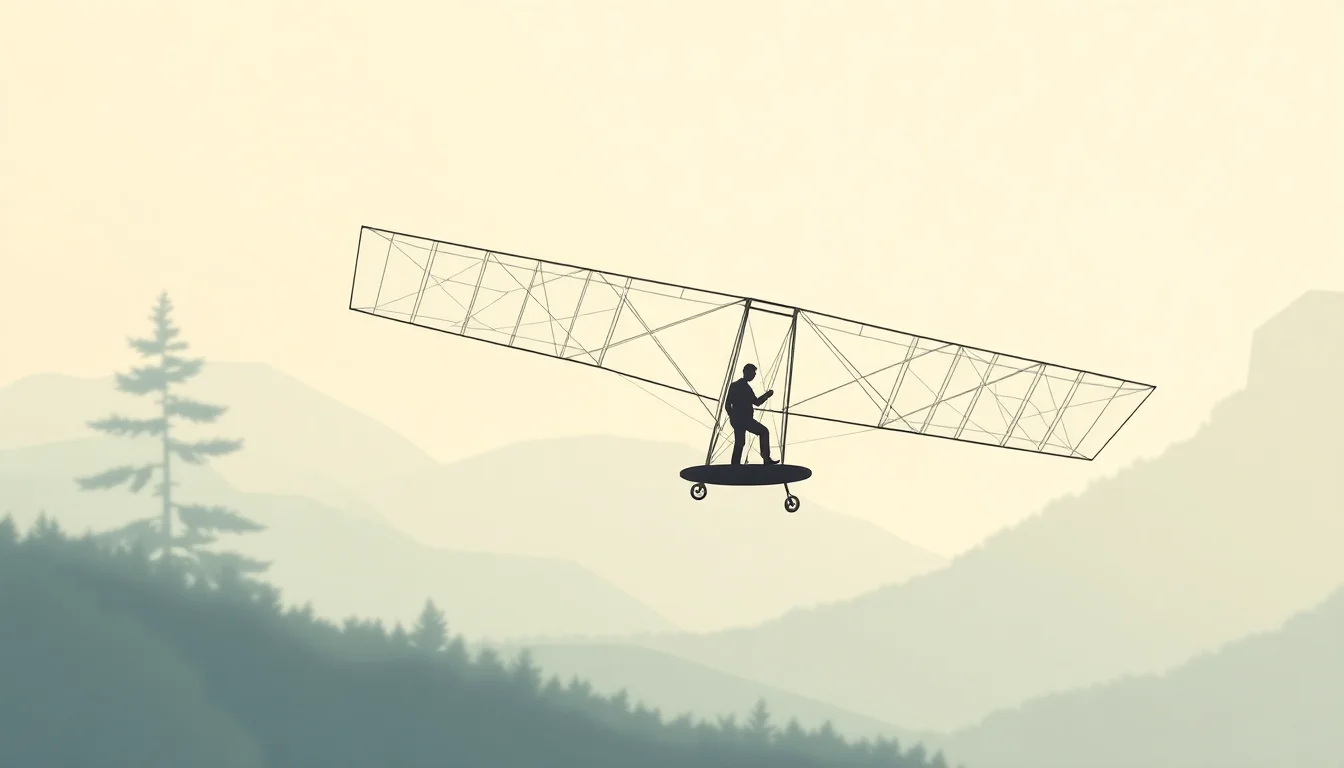
The Lilienthal Glider, designed and built by Otto Lilienthal, was a significant innovation in the field of Aviation. The glider featured a unique wing design, with a curved upper surface and a flat lower surface. This design allowed for greater Lift and stability, making it possible for Lilienthal to achieve longer and more controlled flights. The Lilienthal Glider was also equipped with a system of Control Surfaces, including Ailerons and Elevators, which enabled Lilienthal to steer and maneuver the glider with greater precision. The design of the Lilienthal Glider has influenced the development of modern Gliders and Sailplanes. Lilienthal's work on the glider was also influenced by his study of Bird Wings and the principles of Aerodynamic Efficiency.
🌟 Flight Experiments and Records
Lilienthal's flight experiments and records are a testament to his dedication and perseverance in the pursuit of Flight. Between 1891 and 1896, Lilienthal made over 2,000 flights, achieving a maximum distance of 820 feet and a maximum altitude of 80 feet. His flights were carefully documented, with detailed notes on Weather Conditions, Wind Speed, and Air Density. Lilienthal's records provide valuable insights into the early days of Aviation and the challenges faced by pioneers in the field. His work has inspired generations of Aviation Pioneers, including the Wright Brothers, who credited Lilienthal as a major influence on their own work. Lilienthal's experiments also laid the foundation for modern Flight Testing and Aerodynamic Research.
📊 Aerodynamic Research and Publications
Lilienthal's aerodynamic research and publications have had a lasting impact on the field of Aerodynamics. His book, 'Birdflight as the Basis of Aviation,' published in 1889, is considered a seminal work in the field. The book provides a detailed analysis of Bird Flight and its application to Aeronautical Engineering. Lilienthal's research on Airfoil shapes and Wing Design has influenced the development of modern Aircraft and Wind Turbines. His work has also been applied in the field of Biomechanical Engineering, where researchers study the movement and behavior of living organisms. Lilienthal's publications have been widely cited and have inspired numerous Aerodynamic Studies. His research has also been influential in the development of Aerodynamic Simulation tools and Computational Fluid Dynamics models.
🌍 Influence on Aviation Pioneers
Lilienthal's influence on aviation pioneers is immeasurable. His work and writings inspired a generation of Aviation Pioneers, including the Wright Brothers, who credited Lilienthal as a major influence on their own work. The Wright Brothers' Flyer design was heavily influenced by Lilienthal's glider designs and Aerodynamic Principles. Other notable aviation pioneers, such as Octave Chanute and Clément Ader, were also influenced by Lilienthal's work. Lilienthal's legacy extends beyond the field of Aviation, as his work has also influenced the development of Wind Energy and Renewable Energy. His research on Aerodynamic Efficiency has been applied in various fields, including Automotive Engineering and Aerospace Engineering.
💔 Tragic Accident and Legacy
On August 16, 1896, Lilienthal suffered a tragic accident while flying one of his gliders. He crashed to the ground, suffering severe injuries, including a broken spine. Lilienthal died the next day, at the age of 48, leaving behind a legacy that would inspire generations of Aviation Pioneers. Despite his untimely death, Lilienthal's work continued to influence the development of Aviation, and his name became synonymous with the concept of Gliding. Lilienthal's accident was a significant setback for the field of Aviation, but it also led to important advances in Safety Protocol and Emergency Procedures. His legacy serves as a reminder of the importance of Safety and Risk Management in the pursuit of Innovation.
🏆 Tributes and Commemorations
Lilienthal's legacy has been honored through various tributes and commemorations. In 1933, the Lilienthal Society was established in Germany to promote the development of Gliding and Aeronautics. The society has since become a leading organization in the field of Aviation, with a focus on Aerodynamic Research and Flight Testing. Lilienthal's contributions to the field of Aerodynamics have also been recognized through the establishment of the Lilienthal Medal, which is awarded annually to individuals who have made significant contributions to the field. The medal is considered one of the most prestigious awards in the field of Aeronautical Engineering.
🚁 Modern-Day Implications
The implications of Lilienthal's work extend far beyond the field of Aviation. His research on Aerodynamic Principles has been applied in various fields, including Wind Energy and Renewable Energy. The design of modern Wind Turbines owes a debt to Lilienthal's work on Airfoil shapes and Wing Design. Additionally, Lilienthal's work on Gliding has inspired the development of new Recreational Activities, such as Paragliding and Hang Gliding. His legacy serves as a reminder of the importance of Innovation and Experimentation in the pursuit of Progress.
🤔 Controversies and Debates
Despite the many achievements of Lilienthal, there are also controversies and debates surrounding his legacy. Some have questioned the accuracy of his flight records, while others have criticized his methods and Safety Protocol. Additionally, there are debates about the extent to which Lilienthal's work influenced the development of modern Aviation. Some argue that his contributions have been overstated, while others believe that his work was instrumental in the development of modern Aircraft. The controversy surrounding Lilienthal's legacy serves as a reminder of the complexities and challenges of Historical Research and the importance of Critical Thinking in the pursuit of Knowledge.
Key Facts
- Year
- 1848
- Origin
- Anklam, Prussia (now Germany)
- Category
- Aviation History
- Type
- Person
Frequently Asked Questions
Who was Otto Lilienthal?
Otto Lilienthal was a German engineer and glider pilot who made significant contributions to the development of aerodynamics and aviation. He is known as the 'Glider King' and is credited with making over 2,000 flights in his gliders. Lilienthal's work laid the foundation for modern aircraft design and inspired many aviation pioneers, including the Wright Brothers.
What were Lilienthal's major contributions to aviation?
Lilienthal's major contributions to aviation include his work on glider design, aerodynamic research, and flight testing. He developed a unique wing design that allowed for greater lift and stability, and his flights provided valuable insights into the behavior of airfoils and wing designs. Lilienthal's research and publications have had a lasting impact on the field of aerodynamics and have influenced the development of modern aircraft.
How did Lilienthal's work influence the Wright Brothers?
The Wright Brothers credited Lilienthal as a major influence on their own work. They studied Lilienthal's glider designs and aerodynamic principles, and applied them to their own aircraft designs. The Wright Brothers' Flyer design was heavily influenced by Lilienthal's glider designs, and their successful flights in 1903 owed a debt to Lilienthal's pioneering work in the field of aviation.
What is the significance of Lilienthal's legacy?
Lilienthal's legacy is significant because it highlights the importance of innovation, experimentation, and perseverance in the pursuit of progress. His work on gliding and aerodynamics has inspired generations of aviation pioneers, and his research has been applied in various fields, including wind energy and renewable energy. Lilienthal's legacy serves as a reminder of the power of human ingenuity and the importance of pushing the boundaries of what is possible.
How has Lilienthal's work been recognized and commemorated?
Lilienthal's work has been recognized and commemorated through various tributes and awards. The Lilienthal Society was established in Germany to promote the development of gliding and aeronautics, and the Lilienthal Medal is awarded annually to individuals who have made significant contributions to the field of aerodynamics. Lilienthal's legacy has also been honored through the establishment of museums and memorials, and his work continues to inspire new generations of aviation pioneers and enthusiasts.
What are some of the controversies surrounding Lilienthal's legacy?
There are controversies surrounding the accuracy of Lilienthal's flight records, as well as debates about the extent to which his work influenced the development of modern aviation. Some have criticized Lilienthal's methods and safety protocol, while others have argued that his contributions have been overstated. The controversy surrounding Lilienthal's legacy serves as a reminder of the complexities and challenges of historical research and the importance of critical thinking in the pursuit of knowledge.
How has Lilienthal's work influenced the development of modern aircraft?
Lilienthal's work on glider design and aerodynamic research has had a lasting impact on the development of modern aircraft. His research on airfoil shapes and wing designs has influenced the development of modern aircraft, including gliders, sailplanes, and wind turbines. Lilienthal's work has also been applied in the field of aerospace engineering, where researchers study the behavior of airfoils and wing designs in various flight regimes.