
Contents
- 🌐 Introduction to Philosophical Realism
- 📚 Historical Background of Realism
- 🔍 Mind-Independent Existence
- 👀 Perception and Reality
- 🤔 Epistemology and Metaphysics
- 📊 Mathematical and Moral Realism
- 👥 Other Minds and the Self
- 🚫 Criticisms and Challenges
- 🔀 Variations of Realism
- 📈 Influence and Impact
- 👾 Future Directions
- Frequently Asked Questions
- Related Topics
Overview
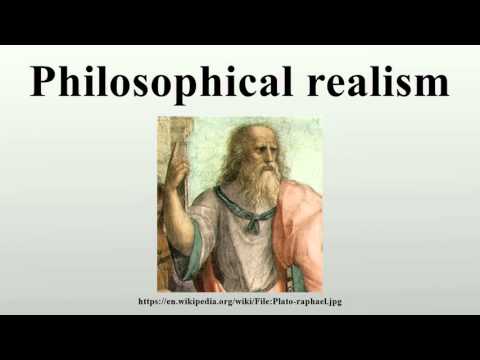
Philosophical realism is a stance that asserts the existence of certain things independently of the mind. This perspective is often applied to various subject matters, including the physical world, the past and future, other minds, and the self. As discussed in Epistemology, realism is closely related to the nature of knowledge and how it is acquired. Realists argue that knowledge is a reflection of an independent reality, rather than a construction of the mind. For instance, Plato's theory of forms is a classic example of realism, where abstract concepts like justice and beauty are thought to have a mind-independent existence. In contrast, Kant's transcendental idealism posits that the human mind plays an active role in shaping our understanding of reality.
📚 Historical Background of Realism
The historical background of realism dates back to ancient Greek philosophers such as Aristotle and Plato. They argued that the world exists independently of our perceptions and that knowledge can be acquired through reason and observation. This perspective was later developed by medieval philosophers like Thomas Aquinas, who integrated Aristotelian realism with Christian theology. The concept of realism has evolved over time, with various philosophers contributing to its development, including Descartes and Locke. As discussed in History of Philosophy, the evolution of realism is closely tied to the development of Epistemology and Metaphysics.
🔍 Mind-Independent Existence
The concept of mind-independent existence is central to philosophical realism. Realists argue that certain things exist regardless of whether they are perceived or thought about. This includes the physical world, which is thought to exist independently of our observations. For example, Newton's laws of motion describe the behavior of physical objects, regardless of whether anyone is observing them. As discussed in Physics, the laws of motion are a fundamental aspect of our understanding of the physical world. In contrast, Berkeley's subjective idealism posits that the physical world exists only as a perception in the mind of God. This perspective is closely related to Idealism, which argues that reality is fundamentally mental or spiritual.
👀 Perception and Reality
The relationship between perception and reality is a key aspect of philosophical realism. Realists argue that our perceptions of the world are a reflection of an independent reality, rather than a construction of the mind. This perspective is closely related to Perception and Cognition. For instance, Kant's transcendental idealism posits that the human mind plays an active role in shaping our understanding of reality. As discussed in Cognitive Science, the study of perception and cognition is essential to understanding how we acquire knowledge about the world. In contrast, Russell's neutral monism argues that both mind and matter are manifestations of a more fundamental substance.
🤔 Epistemology and Metaphysics
Philosophical realism has significant implications for epistemology and metaphysics. Realists argue that knowledge is a reflection of an independent reality, rather than a construction of the mind. This perspective is closely related to Epistemology and Metaphysics. For example, Quine's naturalized epistemology posits that knowledge is a product of natural processes, rather than a reflection of an independent reality. As discussed in Philosophy of Science, the nature of knowledge and reality is a fundamental aspect of scientific inquiry. In contrast, Putnam's internal realism argues that truth is a matter of rational acceptability, rather than a reflection of an independent reality.
📊 Mathematical and Moral Realism
Mathematical and moral realism are two areas where philosophical realism has significant implications. Mathematical realists argue that mathematical truths exist independently of human thought, while moral realists argue that moral truths exist independently of human opinion. For instance, Frege's logicism posits that mathematical truths are a product of logical reasoning, rather than a reflection of an independent reality. As discussed in Mathematics, the nature of mathematical truth is a fundamental aspect of mathematical inquiry. In contrast, Mackie's moral error theory argues that moral statements are not descriptive of an independent reality, but rather a product of human opinion.
👥 Other Minds and the Self
The concept of other minds and the self is also closely related to philosophical realism. Realists argue that other minds exist independently of our perceptions, and that the self is a real entity that exists independently of our thoughts and feelings. For example, Descartes' famous statement 'I think, therefore I am' is a classic expression of realism, where the self is thought to exist independently of external perceptions. As discussed in Philosophy of Mind, the nature of the self and other minds is a fundamental aspect of philosophical inquiry. In contrast, Hume's skepticism argues that we can never be certain of the existence of other minds or the self.
🚫 Criticisms and Challenges
Despite its significance, philosophical realism has faced various criticisms and challenges. Some argue that realism is incompatible with the findings of modern physics, which suggest that reality is fundamentally probabilistic and relative. Others argue that realism is incompatible with the nature of human perception, which is always subjective and relative. For instance, Bohr's Copenhagen interpretation of quantum mechanics posits that reality is fundamentally probabilistic, rather than a reflection of an independent reality. As discussed in Quantum Mechanics, the nature of reality is a fundamental aspect of physical inquiry. In contrast, Einstein's realism argues that reality exists independently of human perception, and that the laws of physics are a reflection of this independent reality.
🔀 Variations of Realism
There are various variations of realism, each with its own strengths and weaknesses. For example, Critical Realism argues that reality exists independently of human perception, but that our understanding of reality is always filtered through our social and cultural context. As discussed in Social Philosophy, the nature of reality is closely tied to the social and cultural context in which we live. In contrast, Scientific Realism argues that reality exists independently of human perception, and that the laws of physics are a reflection of this independent reality.
📈 Influence and Impact
Philosophical realism has had a significant influence on various fields, including science, philosophy, and politics. Realism has shaped our understanding of the natural world, and has informed our approach to scientific inquiry. For example, Darwin's theory of evolution is a classic expression of realism, where the natural world is thought to exist independently of human perception. As discussed in Biology, the nature of the natural world is a fundamental aspect of scientific inquiry. In contrast, Marx's dialectical materialism argues that reality is fundamentally social and economic, rather than a reflection of an independent natural world.
👾 Future Directions
The future of philosophical realism is uncertain, but it is likely to continue to shape our understanding of the world and our place within it. As our understanding of the natural world evolves, so too will our understanding of realism. For instance, String Theory posits that reality is fundamentally composed of strings, rather than particles. As discussed in Theoretical Physics, the nature of reality is a fundamental aspect of physical inquiry. In contrast, Postmodernism argues that reality is fundamentally fragmented and relative, rather than a reflection of an independent reality.
Key Facts
- Category
- topic
- Type
- topic
Frequently Asked Questions
What is philosophical realism?
Philosophical realism is the view that a certain kind of thing has mind-independent existence, i.e. that it exists even in the absence of any mind perceiving it or that its existence is not just a mere appearance in the eye of the beholder. This includes a number of positions within epistemology and metaphysics which express that a given thing instead exists independently of knowledge, thought, or understanding. As discussed in Epistemology, realism is closely related to the nature of knowledge and how it is acquired. For example, Plato's theory of forms is a classic example of realism, where abstract concepts like justice and beauty are thought to have a mind-independent existence.
What are the implications of philosophical realism for epistemology and metaphysics?
Philosophical realism has significant implications for epistemology and metaphysics. Realists argue that knowledge is a reflection of an independent reality, rather than a construction of the mind. This perspective is closely related to Epistemology and Metaphysics. For instance, Quine's naturalized epistemology posits that knowledge is a product of natural processes, rather than a reflection of an independent reality. As discussed in Philosophy of Science, the nature of knowledge and reality is a fundamental aspect of scientific inquiry.
What are the different types of realism?
There are various types of realism, including critical realism, scientific realism, and moral realism. Each of these types of realism has its own strengths and weaknesses, and they are often used to address different aspects of reality. For example, Critical Realism argues that reality exists independently of human perception, but that our understanding of reality is always filtered through our social and cultural context. As discussed in Social Philosophy, the nature of reality is closely tied to the social and cultural context in which we live.
What are the criticisms of philosophical realism?
Despite its significance, philosophical realism has faced various criticisms and challenges. Some argue that realism is incompatible with the findings of modern physics, which suggest that reality is fundamentally probabilistic and relative. Others argue that realism is incompatible with the nature of human perception, which is always subjective and relative. For instance, Bohr's Copenhagen interpretation of quantum mechanics posits that reality is fundamentally probabilistic, rather than a reflection of an independent reality. As discussed in Quantum Mechanics, the nature of reality is a fundamental aspect of physical inquiry.
What is the relationship between philosophical realism and other philosophical positions?
Philosophical realism is closely related to other philosophical positions, such as idealism, nominalism, and pragmatism. Realism is often seen as a response to idealism, which argues that reality is fundamentally mental or spiritual. As discussed in Idealism, the nature of reality is a fundamental aspect of philosophical inquiry. In contrast, Nominalism argues that reality is fundamentally composed of individual objects, rather than abstract concepts or universals.
What are the implications of philosophical realism for our understanding of the world?
Philosophical realism has significant implications for our understanding of the world. Realism argues that the world exists independently of our perceptions, and that our understanding of the world is a reflection of this independent reality. For example, Darwin's theory of evolution is a classic expression of realism, where the natural world is thought to exist independently of human perception. As discussed in Biology, the nature of the natural world is a fundamental aspect of scientific inquiry.
What is the future of philosophical realism?
The future of philosophical realism is uncertain, but it is likely to continue to shape our understanding of the world and our place within it. As our understanding of the natural world evolves, so too will our understanding of realism. For instance, String Theory posits that reality is fundamentally composed of strings, rather than particles. As discussed in Theoretical Physics, the nature of reality is a fundamental aspect of physical inquiry.