
Contents
- 🌎 Introduction to Sewage Overflows
- 🚽 Causes and Consequences
- 🌈 Impact on Holistic Health
- 🏙️ Role in Regenerative Culture
- 📊 Key Facts and Statistics
- 👥 Key People and Organizations
- 🌍 Cultural and Environmental Significance
- ⚡ Current State and Latest Developments
- 🤔 Controversies and Debates
- 🔮 Future Outlook and Predictions
- References
Overview
Sewage overflows can contaminate waterways with pathogens, nutrients, and pollutants, leading to harmful algal blooms, fish kills, and the spread of waterborne diseases. The United States Environmental Protection Agency (EPA) has implemented initiatives to address sewage overflows. In the context of the Golden Age, addressing sewage overflows is crucial for achieving regenerative culture, holistic health, and conscious governance. This requires a multifaceted approach, including the implementation of green infrastructure, the promotion of sustainable urban planning, and the adoption of innovative technologies for wastewater management. By understanding the causes and consequences of sewage overflows, we can work towards creating more resilient, equitable, and environmentally conscious communities.
🌎 Introduction to Sewage Overflows
Sewage overflows can contaminate waterways with pathogens, nutrients, and pollutants, leading to harmful algal blooms, fish kills, and the spread of waterborne diseases. The United States Environmental Protection Agency (EPA) has implemented initiatives to address sewage overflows. For instance, the city of New York City has implemented a comprehensive plan to reduce sewage overflows, including the construction of green infrastructure and the promotion of sustainable urban planning.
🚽 Causes and Consequences
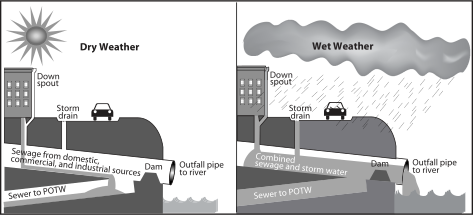
The causes of sewage overflows are multifaceted, involving a combination of factors such as heavy rainfall, inadequate infrastructure, and poor urban planning. During intense precipitation events, the capacity of combined sewer systems can be exceeded, leading to the discharge of untreated sewage and stormwater into nearby waterways. This can have devastating consequences for aquatic ecosystems, including the spread of waterborne diseases and the degradation of water quality. For example, the Chicago River has experienced numerous sewage overflows in recent years, resulting in the closure of beaches and the issuance of public health warnings. The Natural Resources Defense Council (NRDC) has been instrumental in advocating for policy changes to address sewage overflows, including the implementation of green infrastructure and the promotion of sustainable urban planning.
🌈 Impact on Holistic Health
The impact of sewage overflows on holistic health is a critical concern, as contaminated waterways can pose significant risks to human health. Waterborne diseases such as cholera, typhoid, and dysentery can spread rapidly in communities with inadequate access to clean water and sanitation. Moreover, the presence of pollutants and toxins in waterways can have long-term consequences for human health, including increased risk of cancer, neurological damage, and reproductive problems. The World Health Organization (WHO) has emphasized the importance of addressing sewage overflows as a key component of achieving holistic health and well-being. According to Dr. Maria Neira, Director of the WHO Department of Environment, Climate Change and Health, 'access to safe and clean water is a fundamental human right, and it is essential that we take immediate action to address the issue of sewage overflows and ensure that all communities have access to clean and safe water.'
🏙️ Role in Regenerative Culture
Sewage overflows also have significant implications for regenerative culture, as they can undermine efforts to create more sustainable and resilient communities. The discharge of untreated sewage and stormwater into waterways can damage aquatic ecosystems, harm wildlife, and degrade water quality, ultimately threatening the long-term viability of ecosystems. The Regenerative Culture Institute has been working to promote sustainable urban planning and green infrastructure as key strategies for addressing sewage overflows and achieving regenerative culture. According to John Gerard, Executive Director of the Regenerative Culture Institute, 'regenerative culture is about creating a new paradigm for human existence, one that is based on reciprocity, mutualism, and a deep respect for the natural world. Addressing sewage overflows is a critical component of this effort, as it requires us to rethink our relationship with water and our impact on the environment.'
📊 Key Facts and Statistics
The EPA's Green Infrastructure Program has provided funding and technical assistance to communities to implement green infrastructure projects, such as green roofs, rain gardens, and permeable pavement. The Environmental Protection Agency (EPA) has been working to address sewage overflows through a range of initiatives, including the implementation of green infrastructure and the promotion of sustainable urban planning.
👥 Key People and Organizations
Key people and organizations involved in addressing sewage overflows include the EPA, the NRDC, and the WHO. These organizations have been instrumental in advocating for policy changes, promoting sustainable urban planning, and implementing green infrastructure to reduce sewage overflows. The United Nations has also played a critical role in addressing sewage overflows, particularly through the Sustainable Development Goals (SDGs), which emphasize the importance of achieving universal access to clean water and sanitation. According to Antonio Guterres, Secretary-General of the United Nations, 'the SDGs provide a framework for achieving a more sustainable and equitable world, and addressing sewage overflows is a critical component of this effort.'
🌍 Cultural and Environmental Significance
The cultural and environmental significance of sewage overflows cannot be overstated, as they have far-reaching consequences for ecosystems, human health, and community well-being. The discharge of untreated sewage and stormwater into waterways can damage aquatic ecosystems, harm wildlife, and degrade water quality, ultimately threatening the long-term viability of ecosystems. The National Oceanic and Atmospheric Administration (NOAA) has been working to address sewage overflows through a range of initiatives, including the implementation of green infrastructure and the promotion of sustainable urban planning. According to Dr. Kathryn Sullivan, Administrator of NOAA, 'addressing sewage overflows is a critical component of our efforts to protect and preserve the nation's waterways and ensure that all communities have access to clean and safe water.'
⚡ Current State and Latest Developments
The current state of sewage overflows is one of ongoing concern, with many communities struggling to address the issue. Despite efforts to implement green infrastructure and promote sustainable urban planning, sewage overflows continue to pose significant risks to public health and environmental sustainability. The American Public Works Association (APWA) has been working to address sewage overflows through a range of initiatives, including the implementation of green infrastructure and the promotion of sustainable urban planning. According to Scott Grayson, Executive Director of APWA, 'addressing sewage overflows requires a multifaceted approach that involves not only the implementation of green infrastructure, but also the promotion of sustainable urban planning and the adoption of innovative technologies for wastewater management.'
🤔 Controversies and Debates
Controversies and debates surrounding sewage overflows center on the most effective strategies for addressing the issue. Some argue that green infrastructure is the most effective solution, while others advocate for the use of traditional gray infrastructure. The Water Environment Federation has been working to promote sustainable solutions for addressing sewage overflows, including the implementation of green infrastructure and the promotion of innovative technologies for wastewater management.
🔮 Future Outlook and Predictions
The future outlook for addressing sewage overflows is one of hope and opportunity, as communities and organizations work together to implement effective solutions and promote sustainable practices. By prioritizing green infrastructure, sustainable urban planning, and innovative technologies for wastewater management, we can create more resilient, equitable, and environmentally conscious communities, and ensure that all people have access to clean and safe water.
Key Facts
- Category
- environment
- Type
- topic