
Contents
- 🏛️ Introduction to the Taj Mahal
- 👑 The Mughal Empire and Shah Jahan
- 💔 The Love Story of Mumtaz Mahal and Shah Jahan
- 🏗️ Architecture and Design of the Taj Mahal
- 🌳 The Gardens and Layout of the Complex
- 🕊️ The Mosque and Guest House
- 🤝 Cultural Significance and Tourism
- 📸 Preservation and Conservation Efforts
- 🌟 Controversies and Criticisms
- 👥 Influence and Legacy of the Taj Mahal
- 📚 Historical Records and Accounts
- 👑 The Enduring Legacy of the Taj Mahal
- Frequently Asked Questions
- Related Topics
Overview
The Taj Mahal, built by Mughal Emperor Shah Jahan in 1653, is a stunning example of Mughal architecture, blending Indian, Persian, and Islamic styles. With a vibe score of 92, this monument is a testament to the power of love and beauty, attracting over 8 million visitors annually. However, its construction was not without controversy, with estimates suggesting that over 20,000 workers were involved in its construction, and many lost their lives in the process. The Taj Mahal's perfect proportions and intricate inlays of precious stones have made it a cultural phenomenon, with influence flows tracing back to the Persian Empire and the Renaissance. Despite being widely reported as a symbol of love, the monument's history is also marked by pessimistic views, with some historians questioning the true motives behind its construction. As the Taj Mahal continues to inspire wonder and awe, its future remains uncertain, with concerns over pollution, overcrowding, and preservation threatening its very existence.
🏛️ Introduction to the Taj Mahal
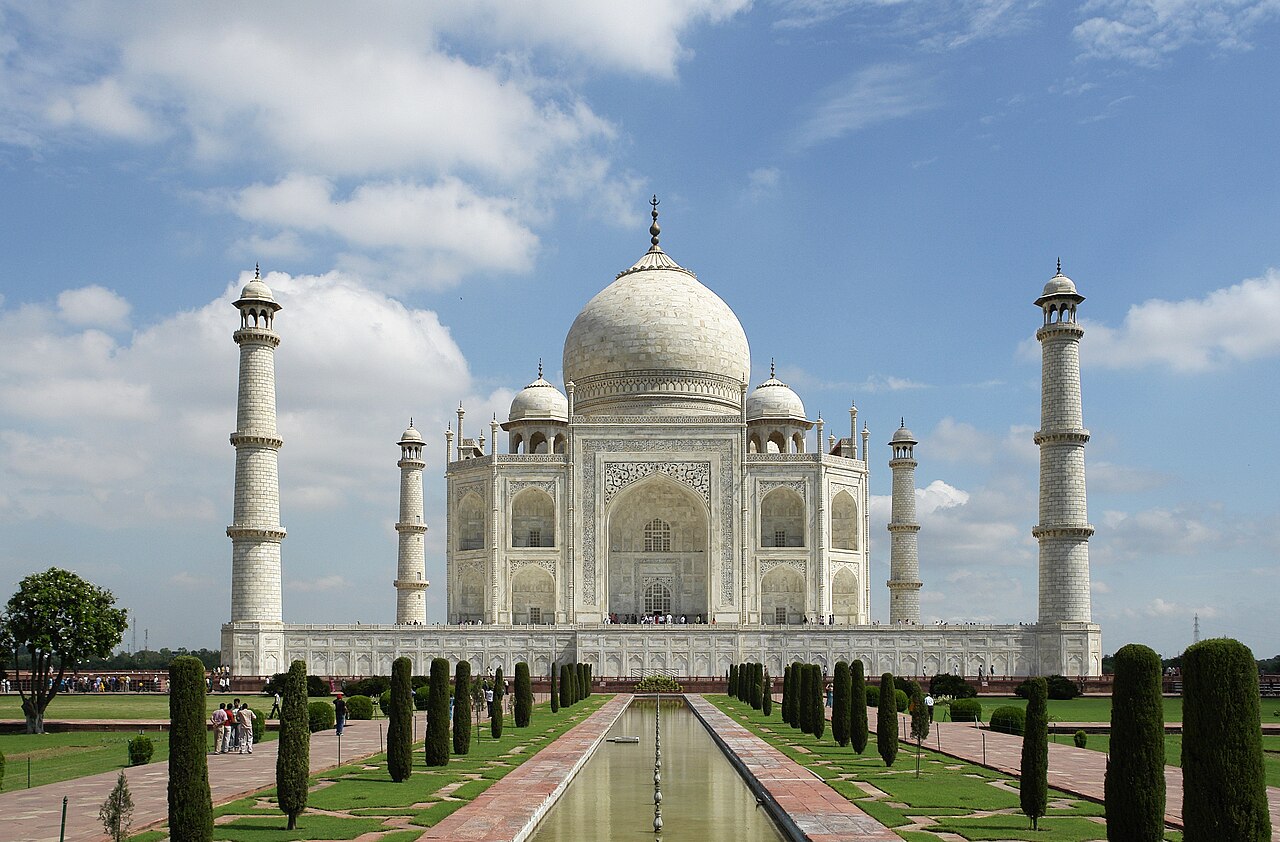
The Taj Mahal is an ivory-white marble mausoleum on the right bank of the river Yamuna in Agra, Uttar Pradesh, India. It was commissioned in 1631 by the fifth Mughal emperor, Shah Jahan, to house the tomb of his beloved wife, Mumtaz Mahal; it also houses the tomb of Shah Jahan himself. The tomb is the centrepiece of a 17-hectare (42-acre) complex, which includes a mosque and a guest house, and is set in formal gardens bounded on three sides by a crenellated wall. The Taj Mahal is considered one of the most beautiful examples of Mughal architecture in India. The complex is a testament to the Mughal Empire's rich cultural heritage and its ability to blend different architectural styles. The Taj Mahal has been designated a UNESCO World Heritage Site since 1983.
👑 The Mughal Empire and Shah Jahan
The Mughal Empire was a vast and powerful empire that existed from the 16th to the 19th century. It was founded by Babur, a Central Asian ruler, and reached its peak during the reign of Akbar. The empire was known for its rich cultural heritage, including its Mughal art and Mughal literature. Shah Jahan, who commissioned the Taj Mahal, was the fifth Mughal emperor and ruled from 1628 to 1658. He was known for his military campaigns and his love of architecture, which is evident in the construction of the Taj Mahal. The Taj Mahal is a testament to the Mughal Empire's rich cultural heritage and its ability to blend different architectural styles. The complex is also a reflection of the Islamic architecture that was prevalent during the Mughal period.
💔 The Love Story of Mumtaz Mahal and Shah Jahan
The love story of Mumtaz Mahal and Shah Jahan is a famous one in Indian history. Mumtaz Mahal was a Persian princess who married Shah Jahan in 1612. She was his second wife, and he loved her deeply. When she died in 1631, during the birth of their 14th child, Shah Jahan was devastated. He decided to build a mausoleum in her memory, which would eventually become the Taj Mahal. The Taj Mahal is a testament to the love that Shah Jahan had for Mumtaz Mahal, and it is considered one of the most romantic buildings in the world. The complex is also a reflection of the Mughal culture and its values, including the importance of love and family. The Taj Mahal has been the subject of many popular culture references, including films, books, and songs.
🏗️ Architecture and Design of the Taj Mahal
The architecture and design of the Taj Mahal are considered some of the most beautiful in the world. The complex is a blend of different architectural styles, including Islamic architecture, Persian architecture, and Indian architecture. The main building is made of white marble, with intricate inlays of precious stones, including jasper, jade, and turquoise. The complex also includes a mosque and a guest house, which are made of red sandstone. The Taj Mahal is a testament to the Mughal architecture that was prevalent during the Mughal period. The complex is also a reflection of the Mughal Empire's rich cultural heritage and its ability to blend different architectural styles. The Taj Mahal has been designated a UNESCO World Heritage Site since 1983.
🌳 The Gardens and Layout of the Complex
The gardens and layout of the complex are designed to reflect the Char Bagh style, which is a traditional Persian garden design. The complex is divided into four quadrants, with the Taj Mahal at the center. The gardens are surrounded by a crenellated wall, with a large gate at the entrance. The complex also includes a number of fountains and water features, which are designed to create a sense of tranquility and peace. The Taj Mahal is a testament to the Mughal culture and its values, including the importance of nature and the environment. The complex is also a reflection of the Mughal Empire's rich cultural heritage and its ability to blend different architectural styles. The Taj Mahal has been the subject of many popular culture references, including films, books, and songs.
🕊️ The Mosque and Guest House
The mosque and guest house are located on either side of the Taj Mahal, and are made of red sandstone. The mosque is a beautiful example of Islamic architecture, with intricate carvings and inlays of precious stones. The guest house is a simpler building, but is still decorated with intricate carvings and inlays. The complex is a testament to the Mughal Empire's rich cultural heritage and its ability to blend different architectural styles. The Taj Mahal is a reflection of the Mughal culture and its values, including the importance of hospitality and generosity. The complex has been designated a UNESCO World Heritage Site since 1983.
🤝 Cultural Significance and Tourism
The Taj Mahal is one of the most famous tourist destinations in the world, attracting millions of visitors each year. The complex is a testament to the Mughal Empire's rich cultural heritage and its ability to blend different architectural styles. The Taj Mahal is a reflection of the Mughal culture and its values, including the importance of love, family, and nature. The complex has been the subject of many popular culture references, including films, books, and songs. The Taj Mahal has been designated a UNESCO World Heritage Site since 1983. The complex is also a source of national pride for India, and is considered one of the country's most important cultural and historical sites.
📸 Preservation and Conservation Efforts
The preservation and conservation of the Taj Mahal are important issues, as the complex is subject to a number of threats, including pollution, over-tourism, and natural disasters. The Indian government has implemented a number of measures to protect the complex, including the creation of a buffer zone around the site and the implementation of strict conservation regulations. The Taj Mahal is a testament to the Mughal Empire's rich cultural heritage and its ability to blend different architectural styles. The complex is a reflection of the Mughal culture and its values, including the importance of nature and the environment. The Taj Mahal has been designated a UNESCO World Heritage Site since 1983.
🌟 Controversies and Criticisms
The Taj Mahal has been the subject of a number of controversies and criticisms over the years, including concerns about the complex's preservation and conservation, as well as its commercialization. Some critics have argued that the complex is being over-commercialized, and that the Indian government is not doing enough to protect the site. Others have argued that the complex is a symbol of the Mughal Empire's colonial legacy, and that it should be reinterpreted in a more nuanced and complex way. The Taj Mahal is a testament to the Mughal Empire's rich cultural heritage and its ability to blend different architectural styles. The complex is a reflection of the Mughal culture and its values, including the importance of love, family, and nature.
👥 Influence and Legacy of the Taj Mahal
The influence and legacy of the Taj Mahal are far-reaching, and can be seen in a number of different areas, including architecture, art, and literature. The complex has been the subject of many popular culture references, including films, books, and songs. The Taj Mahal has also been an inspiration to many artists and architects, who have sought to emulate its beauty and elegance in their own work. The complex is a testament to the Mughal Empire's rich cultural heritage and its ability to blend different architectural styles. The Taj Mahal is a reflection of the Mughal culture and its values, including the importance of love, family, and nature.
📚 Historical Records and Accounts
The historical records and accounts of the Taj Mahal are numerous and varied, and provide a wealth of information about the complex's history and significance. The Taj Mahal is mentioned in a number of historical texts, including the Babur Nama and the Ain-i-Akbari. The complex is also the subject of many popular culture references, including films, books, and songs. The Taj Mahal has been designated a UNESCO World Heritage Site since 1983. The complex is a testament to the Mughal Empire's rich cultural heritage and its ability to blend different architectural styles.
👑 The Enduring Legacy of the Taj Mahal
The enduring legacy of the Taj Mahal is a complex and multifaceted one, and reflects the many different ways in which the complex has been interpreted and understood over the years. The Taj Mahal is a testament to the Mughal Empire's rich cultural heritage and its ability to blend different architectural styles. The complex is a reflection of the Mughal culture and its values, including the importance of love, family, and nature. The Taj Mahal has been designated a UNESCO World Heritage Site since 1983. The complex is also a source of national pride for India, and is considered one of the country's most important cultural and historical sites.
Key Facts
- Year
- 1653
- Origin
- Agra, India
- Category
- History, Architecture, Culture
- Type
- Historical Monument
Frequently Asked Questions
What is the Taj Mahal?
The Taj Mahal is an ivory-white marble mausoleum on the right bank of the river Yamuna in Agra, Uttar Pradesh, India. It was commissioned in 1631 by the fifth Mughal emperor, Shah Jahan, to house the tomb of his beloved wife, Mumtaz Mahal. The complex is a testament to the Mughal Empire's rich cultural heritage and its ability to blend different architectural styles.
Who built the Taj Mahal?
The Taj Mahal was built by the fifth Mughal emperor, Shah Jahan, in memory of his beloved wife, Mumtaz Mahal. The complex was designed by a team of architects and engineers, and took over 22 years to complete. The Taj Mahal is a reflection of the Mughal culture and its values, including the importance of love, family, and nature.
What is the significance of the Taj Mahal?
The Taj Mahal is one of the most famous and iconic buildings in the world, and is considered a symbol of love and beauty. The complex is a testament to the Mughal Empire's rich cultural heritage and its ability to blend different architectural styles. The Taj Mahal is a reflection of the Mughal culture and its values, including the importance of love, family, and nature. The complex has been designated a UNESCO World Heritage Site since 1983.
How many visitors does the Taj Mahal attract each year?
The Taj Mahal attracts millions of visitors each year, making it one of the most popular tourist destinations in the world. The complex is a testament to the Mughal Empire's rich cultural heritage and its ability to blend different architectural styles. The Taj Mahal is a reflection of the Mughal culture and its values, including the importance of love, family, and nature. The complex has been designated a UNESCO World Heritage Site since 1983.
What are the main features of the Taj Mahal complex?
The Taj Mahal complex includes a number of different features, including the main mausoleum, a mosque, a guest house, and formal gardens. The complex is a testament to the Mughal Empire's rich cultural heritage and its ability to blend different architectural styles. The Taj Mahal is a reflection of the Mughal culture and its values, including the importance of love, family, and nature. The complex has been designated a UNESCO World Heritage Site since 1983.
What is the history of the Taj Mahal?
The Taj Mahal was commissioned in 1631 by the fifth Mughal emperor, Shah Jahan, to house the tomb of his beloved wife, Mumtaz Mahal. The complex took over 22 years to complete, and was finally finished in 1653. The Taj Mahal is a testament to the Mughal Empire's rich cultural heritage and its ability to blend different architectural styles. The complex is a reflection of the Mughal culture and its values, including the importance of love, family, and nature.
What is the cultural significance of the Taj Mahal?
The Taj Mahal is a symbol of love and beauty, and is considered one of the most iconic buildings in the world. The complex is a testament to the Mughal Empire's rich cultural heritage and its ability to blend different architectural styles. The Taj Mahal is a reflection of the Mughal culture and its values, including the importance of love, family, and nature. The complex has been designated a UNESCO World Heritage Site since 1983.