
Contents
Overview
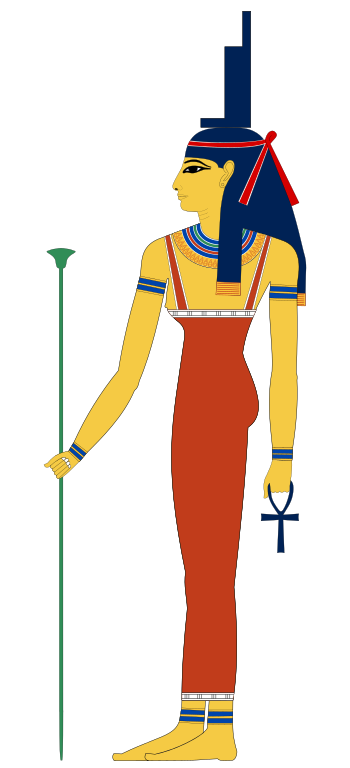
The Temple of Isis, an ancient Roman temple dedicated to the Egyptian goddess Isis, holds profound significance in the context of the Golden Age. As a symbol of the divine feminine, Isis embodies the principles of nurturing, protection, and spiritual awakening. The temple's architecture and art reflect the blending of Egyptian and Roman cultures, symbolizing the exchange of ideas and spiritual practices that characterized the ancient world. With its rich history and cultural importance, the Temple of Isis serves as a powerful reminder of the importance of honoring the divine feminine and cultivating conscious communication, compassion, and spiritual growth. The temple's influence can be seen in modern spiritual movements, such as New Age and Neo-Paganism, which emphasize the importance of personal growth, spiritual exploration, and connection with nature.
🏯 Origins & History
The Temple of Isis, located in Pompeii, Italy, is an ancient Roman temple dedicated to the Egyptian goddess Isis. The temple's architecture and art reflect the blending of Egyptian and Roman cultures, symbolizing the exchange of ideas and spiritual practices that characterized the ancient world. The temple is built using a combination of limestone, marble, and brick.
🔍 Symbolism & Mystical Significance
The Temple of Isis is a symbol of the divine feminine, representing the principles of nurturing, protection, and spiritual awakening. The temple's art and architecture reflect this symbolism, with intricate carvings and sculptures depicting scenes from Egyptian mythology. The temple's design and construction were influenced by the Egyptian style, with a focus on symmetry and balance, reflecting the principles of sacred geometry.
🌎 Cultural Impact & Influence
The Temple of Isis has had a profound impact on Western culture, influencing art, literature, and spirituality. The temple's influence can be seen in modern spiritual movements, such as New Age and Neo-Paganism, which emphasize the importance of personal growth, spiritual exploration, and connection with nature.
👥 Key People & Organizations
The Temple of Isis is associated with several key people and organizations, including the Egyptian priestesses who served at the temple and the Roman emperors who supported its construction. The temple is managed by the Pompeii Archaeological Site, which is responsible for its preservation and conservation. The temple's preservation is also supported by organizations such as UNESCO.
📊 Key Facts & Numbers
The Temple of Isis is a remarkable example of ancient Roman architecture, with a unique blend of Egyptian and Roman styles. The temple's art and architecture are characterized by intricate carvings and sculptures, depicting scenes from Egyptian mythology.
📸 Images & Architecture
The Temple of Isis is a powerful symbol of the divine feminine, representing the principles of nurturing, protection, and spiritual awakening. The temple's art and architecture reflect this symbolism, with intricate carvings and sculptures depicting scenes from Egyptian mythology.
🤝 Connection to Modern Spirituality
The Temple of Isis is connected to modern spirituality, representing a timeless wisdom that continues to inspire and guide us today. The temple's influence can be seen in modern spiritual movements, such as New Age and Neo-Paganism, which emphasize the importance of personal growth, spiritual exploration, and connection with nature.
🌟 Future Outlook & Predictions
The Temple of Isis is a powerful reminder of the importance of honoring the divine feminine and cultivating conscious communication, compassion, and spiritual growth. As we navigate the complexities of the modern world, the temple's timeless wisdom offers a guiding light, inspiring us to explore the mysteries of the universe and our place within it.
👀 FAQs & Controversies
Frequently asked questions about the Temple of Isis include its history, symbolism, and cultural significance. The temple's cultural significance extends beyond its historical importance, representing a timeless wisdom that continues to inspire and guide us today.
Key Facts
- Origin
- Pompeii, Italy
- Category
- consciousness
- Type
- topic