
Contents
- 🌟 Introduction to the Thymus
- 🔍 Anatomy of the Thymus
- 👥 The Role of the Thymus in the Immune System
- 🔬 T Cell Maturation in the Thymus
- 📊 Structure and Function of the Thymus
- 💡 The Importance of the Thymus in Adaptive Immunity
- 👀 Thymus Disorders and Diseases
- 🔮 Thymus Research and Future Directions
- 📚 Historical Perspectives on the Thymus
- 👩🔬 Current Research and Developments
- 🤝 The Thymus and Other Immune Organs
- 🌐 Conclusion and Future Outlook
- Frequently Asked Questions
- Related Topics
Overview
The thymus, a small gland located in the chest, plays a vital role in the development and maturation of immune cells, particularly T-lymphocytes. Despite its importance, the thymus remains somewhat of an enigma, with its functions and mechanisms not fully understood. Research has shown that the thymus is responsible for the production of thymosin, a hormone that stimulates the development of immune cells. However, the thymus is also susceptible to damage and dysfunction, which can lead to immunodeficiency disorders. For instance, thymic hypoplasia, a condition where the thymus is underdeveloped, can increase the risk of infections and autoimmune diseases. Furthermore, studies have found that the thymus is connected to other organs and systems, such as the spleen and the gut-associated lymphoid tissue (GALT), highlighting the complexity of the immune system. With a vibe score of 8, the thymus is an area of ongoing research, with scientists working to uncover its secrets and develop new treatments for immune-related disorders.
🌟 Introduction to the Thymus
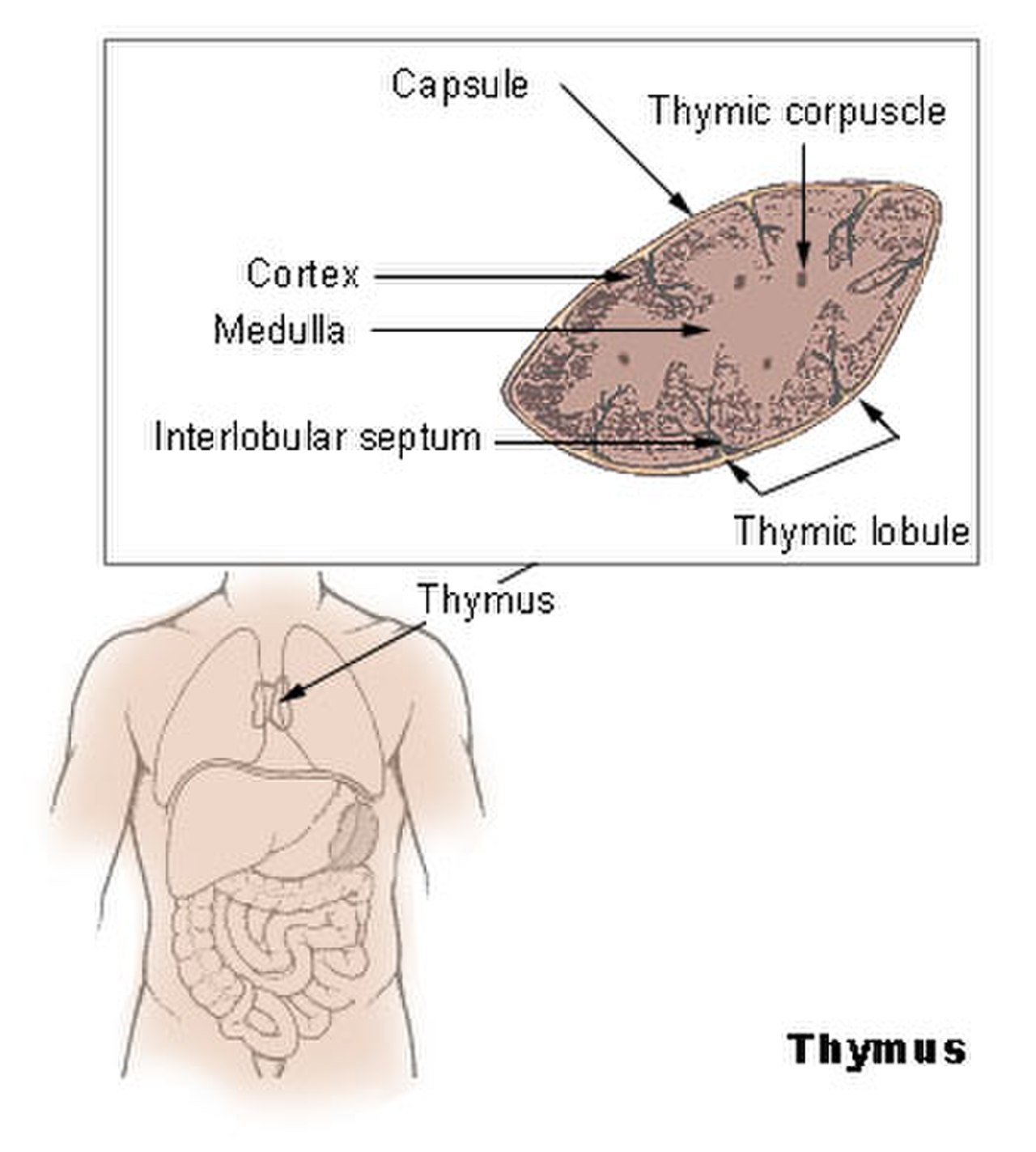
The thymus is a vital organ in the human body, playing a crucial role in the development of the immune system. As a primary lymphoid organ, the thymus is responsible for the maturation of T cells, which are essential for the adaptive immune response. The thymus is located in the upper front part of the chest, in the anterior superior mediastinum, behind the sternum and in front of the heart. This strategic location allows the thymus to interact with other immune organs, such as the spleen and lymph nodes. The thymus is made up of two lobes, each consisting of a central medulla and an outer cortex, surrounded by a capsule.
🔍 Anatomy of the Thymus
The anatomy of the thymus is complex and highly specialized. The thymus is divided into two main regions: the cortex and the medulla. The cortex is the outer layer of the thymus, where T cells undergo maturation and selection. The medulla is the inner layer, where mature T cells are released into the bloodstream. The thymus is also surrounded by a capsule, which provides support and protection to the organ. Understanding the anatomy of the thymus is essential for understanding its function in the immune system, and how it interacts with other organs such as the liver and kidneys.
👥 The Role of the Thymus in the Immune System
The thymus plays a critical role in the development of the immune system, particularly in the maturation of T cells. T cells are a type of lymphocyte that is essential for the adaptive immune response. The thymus provides a unique environment for T cells to mature and develop, allowing them to recognize and respond to specific antigens. The thymus also produces hormones that help to regulate the immune response, such as thymosin. The thymus works closely with other immune organs, such as the bone marrow and lymph nodes, to ensure a coordinated immune response.
🔬 T Cell Maturation in the Thymus
T cell maturation in the thymus is a complex and highly regulated process. T cells undergo a series of developmental stages, including progenitor cell formation, thymocyte development, and maturation. During this process, T cells undergo positive and negative selection, which ensures that only functional and self-tolerant T cells are released into the bloodstream. The thymus also produces dendritic cells, which help to activate T cells and initiate an immune response. Understanding T cell maturation in the thymus is essential for understanding how the immune system develops and functions, and how it interacts with other systems such as the nervous system.
📊 Structure and Function of the Thymus
The structure and function of the thymus are closely linked. The thymus is made up of two lobes, each consisting of a central medulla and an outer cortex. The cortex is the site of T cell maturation and selection, while the medulla is the site of mature T cell release. The thymus is also surrounded by a capsule, which provides support and protection to the organ. The thymus produces hormones that help to regulate the immune response, such as thymosin. The thymus works closely with other immune organs, such as the spleen and lymph nodes, to ensure a coordinated immune response. The thymus also interacts with other systems, such as the endocrine system and the digestive system.
💡 The Importance of the Thymus in Adaptive Immunity
The thymus plays a critical role in adaptive immunity, which is the body's ability to adapt to specific foreign invaders. The thymus produces T cells that are essential for the adaptive immune response. T cells recognize and respond to specific antigens, allowing the body to mount a targeted immune response. The thymus also produces hormones that help to regulate the immune response, such as thymosin. The thymus works closely with other immune organs, such as the bone marrow and lymph nodes, to ensure a coordinated immune response. Understanding the importance of the thymus in adaptive immunity is essential for understanding how the immune system develops and functions, and how it interacts with other systems such as the nervous system.
👀 Thymus Disorders and Diseases
Thymus disorders and diseases can have significant consequences for the immune system. Thymoma is a type of cancer that affects the thymus, and can lead to immune system dysfunction. Myasthenia gravis is an autoimmune disease that affects the thymus, and can lead to muscle weakness and fatigue. DiGeorge syndrome is a genetic disorder that affects the development of the thymus, and can lead to immune system dysfunction. Understanding thymus disorders and diseases is essential for understanding how the immune system develops and functions, and how it interacts with other systems such as the endocrine system.
🔮 Thymus Research and Future Directions
Thymus research and future directions are focused on understanding the development and function of the thymus, and how it interacts with other immune organs. Researchers are using genomics and proteomics to study the thymus and its role in the immune system. They are also using animal models to study thymus development and function. Understanding the thymus and its role in the immune system is essential for developing new treatments for immune system disorders and diseases, such as cancer and autoimmune diseases.
📚 Historical Perspectives on the Thymus
Historical perspectives on the thymus are essential for understanding its development and function. The thymus was first described by Galen in the 2nd century AD, and was initially thought to be a non-essential organ. However, in the 20th century, researchers discovered that the thymus plays a critical role in the development of the immune system. Today, the thymus is recognized as a vital organ that is essential for the development and function of the immune system. Understanding the history of the thymus is essential for understanding its role in the immune system, and how it interacts with other systems such as the nervous system.
👩🔬 Current Research and Developments
Current research and developments in thymus research are focused on understanding the development and function of the thymus, and how it interacts with other immune organs. Researchers are using stem cell biology to study thymus development and function. They are also using bioinformatics to study the thymus and its role in the immune system. Understanding the thymus and its role in the immune system is essential for developing new treatments for immune system disorders and diseases, such as cancer and autoimmune diseases.
🤝 The Thymus and Other Immune Organs
The thymus and other immune organs work together to ensure a coordinated immune response. The thymus produces T cells that are essential for the adaptive immune response. The spleen and lymph nodes filter the blood and lymphatic fluid, removing pathogens and other foreign substances. The bone marrow produces B cells and other immune cells that are essential for the immune response. Understanding how the thymus and other immune organs interact is essential for understanding how the immune system develops and functions, and how it interacts with other systems such as the endocrine system.
🌐 Conclusion and Future Outlook
In conclusion, the thymus is a vital organ that plays a critical role in the development and function of the immune system. The thymus produces T cells that are essential for the adaptive immune response, and works closely with other immune organs to ensure a coordinated immune response. Understanding the thymus and its role in the immune system is essential for developing new treatments for immune system disorders and diseases, such as cancer and autoimmune diseases. Future research directions include studying the development and function of the thymus, and how it interacts with other immune organs.
Key Facts
- Year
- 1961
- Origin
- Ancient Greece, where the thymus was first described by Galen
- Category
- Human Biology
- Type
- Biological Organ
Frequently Asked Questions
What is the thymus and what is its function?
The thymus is a primary lymphoid organ that plays a critical role in the development and function of the immune system. It produces T cells that are essential for the adaptive immune response, and works closely with other immune organs to ensure a coordinated immune response. The thymus is located in the upper front part of the chest, in the anterior superior mediastinum, behind the sternum and in front of the heart.
What are T cells and how do they develop?
T cells are a type of lymphocyte that is essential for the adaptive immune response. They develop in the thymus, where they undergo a series of developmental stages, including progenitor cell formation, thymocyte development, and maturation. During this process, T cells undergo positive and negative selection, which ensures that only functional and self-tolerant T cells are released into the bloodstream.
What are some disorders and diseases that affect the thymus?
Thymus disorders and diseases can have significant consequences for the immune system. Thymoma is a type of cancer that affects the thymus, and can lead to immune system dysfunction. Myasthenia gravis is an autoimmune disease that affects the thymus, and can lead to muscle weakness and fatigue. DiGeorge syndrome is a genetic disorder that affects the development of the thymus, and can lead to immune system dysfunction.
How does the thymus interact with other immune organs?
The thymus works closely with other immune organs, such as the spleen and lymph nodes, to ensure a coordinated immune response. The thymus produces T cells that are essential for the adaptive immune response, while the spleen and lymph nodes filter the blood and lymphatic fluid, removing pathogens and other foreign substances. The bone marrow produces B cells and other immune cells that are essential for the immune response.
What is the current state of thymus research and what are the future directions?
Current research and developments in thymus research are focused on understanding the development and function of the thymus, and how it interacts with other immune organs. Researchers are using genomics and proteomics to study the thymus and its role in the immune system. They are also using animal models to study thymus development and function. Future research directions include studying the development and function of the thymus, and how it interacts with other immune organs.
How does the thymus contribute to the development of the immune system?
The thymus plays a critical role in the development of the immune system, particularly in the maturation of T cells. T cells are a type of lymphocyte that is essential for the adaptive immune response. The thymus provides a unique environment for T cells to mature and develop, allowing them to recognize and respond to specific antigens. The thymus also produces hormones that help to regulate the immune response, such as thymosin.
What are the implications of thymus dysfunction for the immune system?
Thymus dysfunction can have significant consequences for the immune system. It can lead to immune system disorders and diseases, such as cancer and autoimmune diseases. Thymus dysfunction can also lead to impaired immune function, making it more difficult for the body to fight off infections and diseases. Understanding the thymus and its role in the immune system is essential for developing new treatments for immune system disorders and diseases.