
Contents
- 🌐 Introduction to Weak Ties
- 📈 The Strength of Weak Ties
- 👥 Types of Interpersonal Ties
- 💡 Information Transmission
- 📊 The Role of Acquaintances
- 🌈 Novel Information and Weak Ties
- 📚 Historical Context of Weak Ties
- 👥 The Impact of Weak Ties on Social Networks
- 💻 The Digital Age and Weak Ties
- 📊 Measuring the Effectiveness of Weak Ties
- 🔍 Controversies and Debates Surrounding Weak Ties
- Frequently Asked Questions
- Related Topics
Overview
The concept of weak ties, first introduced by sociologist Mark Granovetter in 1973, refers to the relationships we have with acquaintances, as opposed to close friends and family. These ties, though not as intense or frequent, play a crucial role in our social networks, often serving as bridges between different social groups and providing access to new information, opportunities, and perspectives. With a vibe score of 8, weak ties have been found to be essential for job searches, innovation, and social mobility. However, they can also be a source of tension and conflict, particularly when they involve people from different cultural or socioeconomic backgrounds. The influence of weak ties can be seen in the work of sociologists like Duncan Watts and Nicholas Christakis, who have studied how these relationships impact our behavior and decision-making. As social media continues to evolve, the role of weak ties in shaping our online interactions and relationships will likely become even more significant, with potential implications for social cohesion and inequality.
🌐 Introduction to Weak Ties
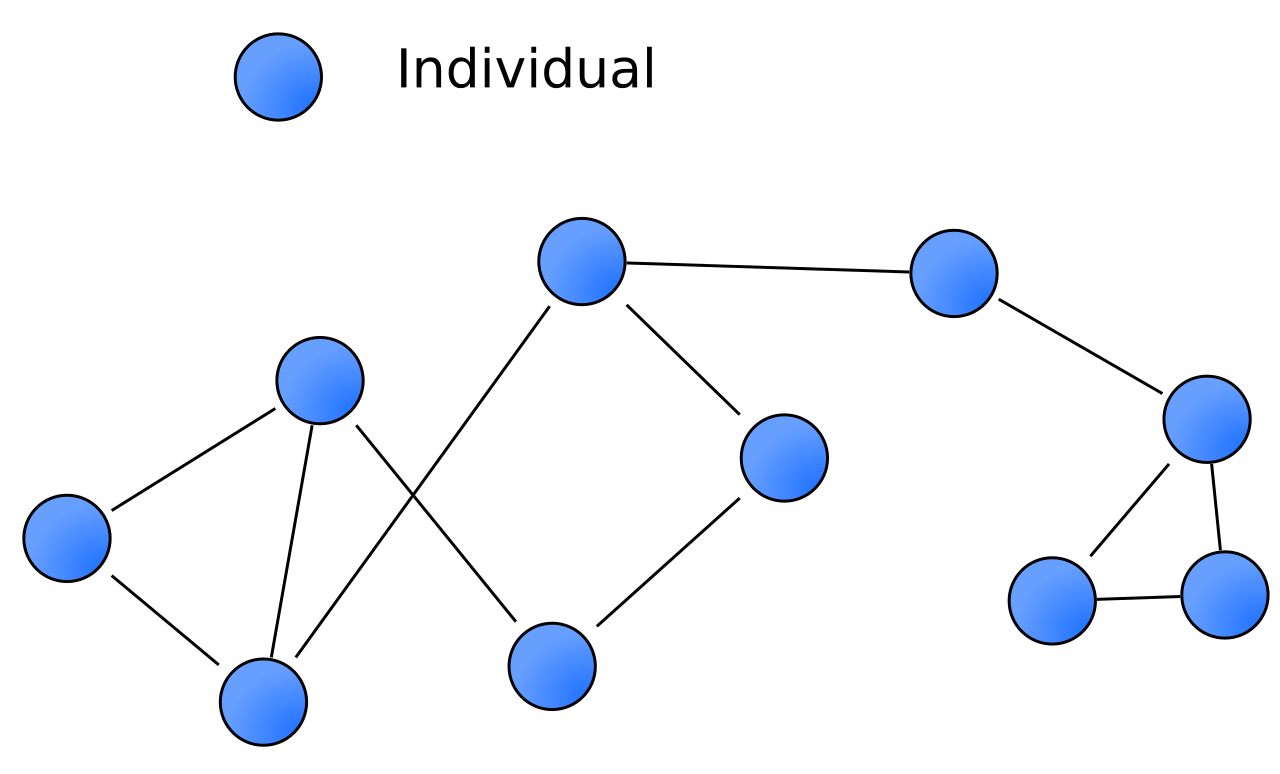
The concept of weak ties, first introduced by sociologist Mark Granovetter, has revolutionized our understanding of social networks and information transmission. In the context of social network analysis, weak ties refer to the connections between individuals who are not close friends or family members, but rather acquaintances or colleagues. These ties, although seemingly insignificant, play a crucial role in the structure and embeddedness of social networks. For instance, a study by Stanley Milgram demonstrated that it only takes six degrees of separation to connect any two individuals in the world, highlighting the importance of weak ties in bridging social gaps.
📈 The Strength of Weak Ties
The strength of weak ties lies in their ability to facilitate the transmission of novel information. As Everett Rogers noted, weak ties are more effective in disseminating new ideas and information than strong ties. This is because our close friends and family members tend to move in the same social circles, resulting in a significant overlap of information. In contrast, acquaintances and weak ties know people we do not, and thus receive more novel information. This concept is closely related to the idea of diffusion of innovations, where new ideas and technologies are adopted through social networks.
👥 Types of Interpersonal Ties
Interpersonal ties can be categorized into three types: strong, weak, or absent. Strong ties refer to close relationships, such as those between family members or close friends. Weak ties, on the other hand, are characterized by a lower level of intimacy and emotional investment. Absent ties refer to the lack of connection between individuals. Understanding these different types of ties is essential in analyzing social networks and information transmission. For example, a study on small-world networks demonstrated that weak ties play a crucial role in connecting disparate groups and facilitating information exchange.
💡 Information Transmission
The transmission of information through weak ties is a critical aspect of social networks. As Manuel Castells argued, weak ties are essential for the dissemination of information and the creation of social capital. This is because weak ties provide access to new information, resources, and opportunities that may not be available through strong ties. Furthermore, weak ties can facilitate the transmission of information across different social groups, contributing to the creation of a more diverse and inclusive social network. For instance, the concept of social capital highlights the importance of weak ties in building bridges between different social groups.
📊 The Role of Acquaintances
Acquaintances and weak ties play a vital role in social networks. As Barry Wellman noted, acquaintances are more likely to provide novel information and introduce us to new people than close friends. This is because acquaintances are more likely to have diverse social connections and access to different social networks. Moreover, weak ties can provide a sense of community and social support, even if they are not as emotionally intense as strong ties. For example, a study on online communities demonstrated that weak ties can provide a sense of belonging and connection among individuals with shared interests.
🌈 Novel Information and Weak Ties
Novel information and weak ties are closely linked. As Duncan Watts demonstrated, weak ties are more effective in transmitting novel information than strong ties. This is because weak ties are more likely to have access to new information and resources, which can be shared with others. Moreover, weak ties can facilitate the transmission of information across different social groups, contributing to the creation of a more diverse and inclusive social network. For instance, the concept of information diffusion highlights the importance of weak ties in spreading new ideas and innovations.
📚 Historical Context of Weak Ties
The concept of weak ties has a rich historical context. As Georg Simmel noted, the idea of weak ties dates back to the early 20th century, when sociologists began to study the structure of social networks. Since then, the concept of weak ties has evolved significantly, with researchers such as Mark Granovetter and Barry Wellman making significant contributions to the field. For example, a study on urban sociology demonstrated that weak ties play a crucial role in shaping urban social networks and communities.
💻 The Digital Age and Weak Ties
The digital age has transformed the way we interact with each other, and weak ties are no exception. As Sherry Turkle noted, social media platforms have made it easier to connect with acquaintances and weak ties, facilitating the transmission of information and the creation of social capital. However, the digital age has also raised concerns about the nature of weak ties and their impact on social networks. For example, a study on social media demonstrated that weak ties can be both beneficial and detrimental to social relationships, depending on the context and nature of the interaction.
📊 Measuring the Effectiveness of Weak Ties
Measuring the effectiveness of weak ties is a complex task. As Duncan Watts demonstrated, weak ties can be difficult to quantify and analyze, particularly in large and complex social networks. However, researchers have developed various methods to study weak ties, including social network analysis and simulation modeling. For instance, a study on network analysis demonstrated that weak ties can be identified and analyzed using techniques such as centrality measures and community detection algorithms.
🔍 Controversies and Debates Surrounding Weak Ties
The concept of weak ties is not without controversy. As James Surowiecki noted, some researchers have argued that weak ties are not as effective in transmitting information as strong ties. Moreover, the digital age has raised concerns about the nature of weak ties and their impact on social networks. For example, a study on social isolation demonstrated that an over-reliance on weak ties can lead to social isolation and decreased social cohesion.
Key Facts
- Year
- 1973
- Origin
- Mark Granovetter's paper 'The Strength of Weak Ties'
- Category
- Sociology
- Type
- Concept
Frequently Asked Questions
What are weak ties?
Weak ties refer to the connections between individuals who are not close friends or family members, but rather acquaintances or colleagues. These ties play a crucial role in the structure and embeddedness of social networks, facilitating the transmission of novel information and the creation of social capital.
How do weak ties differ from strong ties?
Weak ties differ from strong ties in terms of their level of intimacy and emotional investment. Strong ties refer to close relationships, such as those between family members or close friends, while weak ties are characterized by a lower level of intimacy and emotional investment.
What is the role of weak ties in information transmission?
Weak ties play a critical role in information transmission, facilitating the dissemination of novel information and the creation of social capital. This is because weak ties provide access to new information, resources, and opportunities that may not be available through strong ties.
How have social media platforms impacted weak ties?
Social media platforms have transformed the way we interact with each other, making it easier to connect with acquaintances and weak ties. This has facilitated the transmission of information and the creation of social capital, but has also raised concerns about the nature of weak ties and their impact on social networks.
What are the benefits and drawbacks of weak ties?
The benefits of weak ties include the transmission of novel information, the creation of social capital, and the facilitation of diverse and inclusive social networks. However, the drawbacks of weak ties include the potential for social isolation, decreased social cohesion, and the over-reliance on weak ties at the expense of strong ties.
How can weak ties be measured and analyzed?
Weak ties can be measured and analyzed using various methods, including social network analysis and simulation modeling. These methods can help identify and analyze weak ties, particularly in large and complex social networks.
What is the future of weak ties in the digital age?
The future of weak ties in the digital age is uncertain, with some researchers arguing that weak ties will become even more important in the transmission of information and the creation of social capital. However, others have raised concerns about the potential negative impacts of weak ties, such as social isolation and decreased social cohesion.