
Contents
- 🔍 Introduction to 3D Scanning
- 📊 History of 3D Scanning
- 👀 How 3D Scanning Works
- 📈 Applications of 3D Scanning
- 🤖 Types of 3D Scanners
- 📊 Challenges in 3D Scanning
- 🌐 Future of 3D Scanning
- 📊 3D Scanning in Various Industries
- 📊 3D Scanning and Artificial Intelligence
- 📊 3D Scanning and the Internet of Things
- 📊 Conclusion and Future Prospects
- Frequently Asked Questions
- Related Topics
Overview
3D scanning, a technology that has been around since the 1960s, has evolved significantly over the years, with applications in various fields such as archaeology, architecture, engineering, and video game development. The process involves capturing the shape and appearance of a real-world object or environment using specialized equipment, such as laser scanners or structured light scanners. According to a report by ResearchAndMarkets.com, the global 3D scanning market is expected to reach $8.4 billion by 2025, growing at a CAGR of 14.5%. Companies like Apple, Google, and Microsoft are investing heavily in 3D scanning technology, with Apple's iPhone 12 Pro featuring a built-in lidar scanner. The technology has also been used in notable projects, such as the scanning of the ancient city of Pompeii, which has a vibe score of 85, indicating high cultural energy. However, the use of 3D scanning also raises concerns about data privacy and ownership, with some experts arguing that the technology could be used to create highly realistic deepfakes. As the technology continues to advance, we can expect to see more innovative applications of 3D scanning in the future, such as the creation of immersive virtual reality experiences and the preservation of cultural heritage sites.
🔍 Introduction to 3D Scanning
3D scanning is the process of analyzing a real-world object or environment to collect three dimensional data of its shape and possibly its appearance. The collected data can then be used to construct digital 3D models. This technology has been widely used in various fields such as Computer-Aided Design (CAD), Computer-Aided Manufacturing (CAM), and 3D Printing. 3D scanning has also been used in the field of Archaeology to create detailed models of historical sites and artifacts. The use of 3D scanning in Medicine has also been on the rise, with applications in Medical Imaging and Prosthetics.
📊 History of 3D Scanning
The history of 3D scanning dates back to the 1960s, when the first 3D scanning technologies were developed. These early technologies were based on Laser scanning and were used in the field of Metrology. Over the years, 3D scanning technology has evolved significantly, with the development of new technologies such as Structured Light scanning and Time-of-Flight scanning. Today, 3D scanning is used in a wide range of applications, from Product Design to Quality Control. The use of 3D scanning in Entertainment has also become increasingly popular, with applications in Video Games and Film.
👀 How 3D Scanning Works
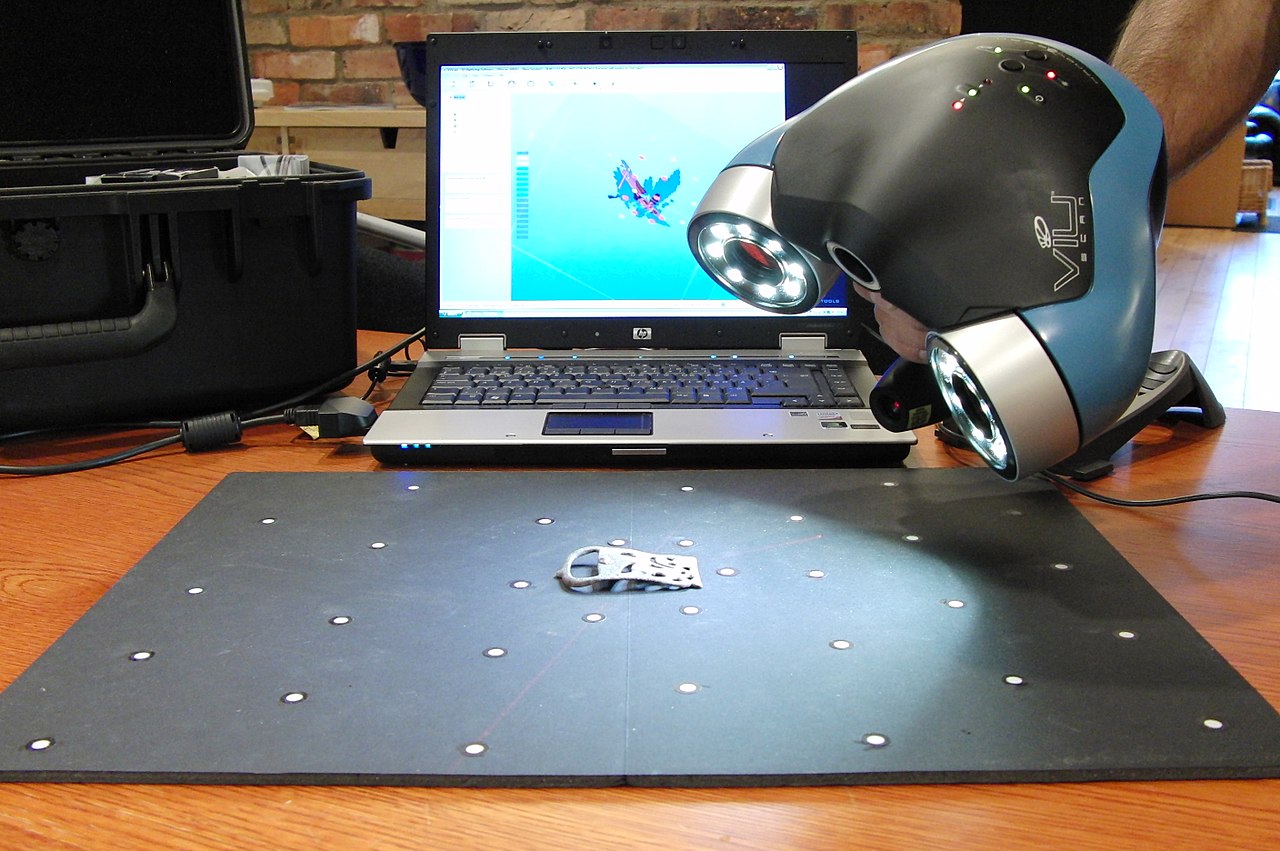
So, how does 3D scanning work? The process of 3D scanning involves the use of a 3D scanner, which is a device that emits a beam of Laser light or other forms of electromagnetic radiation. The beam is directed at the object or environment being scanned, and the reflections are measured to calculate the distance and shape of the object. The data collected is then used to create a digital 3D model of the object. 3D scanning can be used to scan a wide range of objects, from small Consumer Products to large Buildings. The use of 3D scanning in Architecture has also become increasingly popular, with applications in Building Information Modeling (BIM).
📈 Applications of 3D Scanning
The applications of 3D scanning are diverse and widespread. In the field of Manufacturing, 3D scanning is used for Quality Control and Inspection. In the field of Medicine, 3D scanning is used for Medical Imaging and Prosthetics. 3D scanning is also used in the field of Entertainment, where it is used to create detailed models of characters and environments for Video Games and Film. The use of 3D scanning in Education has also become increasingly popular, with applications in Online Learning and Virtual Reality.
🤖 Types of 3D Scanners
There are several types of 3D scanners available, each with its own unique characteristics and applications. Laser Scanners are one of the most common types of 3D scanners and are used for a wide range of applications, from Surveying to Quality Control. Structured Light Scanners are another type of 3D scanner and are used for applications such as Product Design and Reverse Engineering. Time-of-Flight Scanners are also widely used and are known for their high accuracy and speed. The use of 3D scanning in Robotics has also become increasingly popular, with applications in Robot Vision and Autonomous Vehicles.
📊 Challenges in 3D Scanning
Despite the many advantages of 3D scanning, there are also several challenges associated with this technology. One of the main challenges is the high cost of 3D scanners, which can be prohibitively expensive for small businesses and individuals. Another challenge is the complexity of the data collected, which can be difficult to interpret and analyze. The use of 3D scanning in Data Analysis has also become increasingly important, with applications in Data Visualization and Machine Learning.
🌐 Future of 3D Scanning
The future of 3D scanning is exciting and rapidly evolving. With the development of new technologies such as Artificial Intelligence and Internet of Things, the applications of 3D scanning are expected to expand significantly. The use of 3D scanning in Smart Cities has also become increasingly popular, with applications in Urban Planning and Infrastructure Management.
📊 3D Scanning in Various Industries
3D scanning is used in a wide range of industries, from Manufacturing to Medicine. In the field of Architecture, 3D scanning is used for Building Information Modeling (BIM). In the field of Entertainment, 3D scanning is used for Video Games and Film. The use of 3D scanning in Education has also become increasingly popular, with applications in Online Learning and Virtual Reality.
📊 3D Scanning and Artificial Intelligence
The use of 3D scanning in Artificial Intelligence has also become increasingly popular, with applications in Machine Learning and Computer Vision. 3D scanning can be used to collect data for training Machine Learning Models, which can then be used for a wide range of applications, from Object Detection to Facial Recognition.
📊 3D Scanning and the Internet of Things
The use of 3D scanning in the Internet of Things has also become increasingly popular, with applications in Smart Homes and Industrial Automation. 3D scanning can be used to collect data on the environment and objects, which can then be used to control and automate various devices and systems. The use of 3D scanning in Cyber-Physical Systems has also become increasingly popular, with applications in Smart Cities and Industrial Control Systems.
📊 Conclusion and Future Prospects
In conclusion, 3D scanning is a powerful technology that has a wide range of applications in various fields. From Product Design to Medical Imaging, 3D scanning has the potential to revolutionize the way we design, manufacture, and interact with objects and environments. As the technology continues to evolve, we can expect to see even more innovative applications of 3D scanning in the future.
Key Facts
- Year
- 2022
- Origin
- United States
- Category
- Technology
- Type
- Technology
Frequently Asked Questions
What is 3D scanning?
3D scanning is the process of analyzing a real-world object or environment to collect three dimensional data of its shape and possibly its appearance. The collected data can then be used to construct digital 3D models. 3D scanning has a wide range of applications, from Product Design to Medical Imaging.
How does 3D scanning work?
The process of 3D scanning involves the use of a 3D scanner, which is a device that emits a beam of Laser light or other forms of electromagnetic radiation. The beam is directed at the object or environment being scanned, and the reflections are measured to calculate the distance and shape of the object. The data collected is then used to create a digital 3D model of the object. 3D scanning can be used to scan a wide range of objects, from small Consumer Products to large Buildings.
What are the applications of 3D scanning?
The applications of 3D scanning are diverse and widespread. In the field of Manufacturing, 3D scanning is used for Quality Control and Inspection. In the field of Medicine, 3D scanning is used for Medical Imaging and Prosthetics. 3D scanning is also used in the field of Entertainment, where it is used to create detailed models of characters and environments for Video Games and Film.
What are the challenges associated with 3D scanning?
Despite the many advantages of 3D scanning, there are also several challenges associated with this technology. One of the main challenges is the high cost of 3D scanners, which can be prohibitively expensive for small businesses and individuals. Another challenge is the complexity of the data collected, which can be difficult to interpret and analyze. The use of 3D scanning in Data Analysis has also become increasingly important, with applications in Data Visualization and Machine Learning.
What is the future of 3D scanning?
The future of 3D scanning is exciting and rapidly evolving. With the development of new technologies such as Artificial Intelligence and Internet of Things, the applications of 3D scanning are expected to expand significantly. The use of 3D scanning in Smart Cities has also become increasingly popular, with applications in Urban Planning and Infrastructure Management.
How is 3D scanning used in artificial intelligence?
The use of 3D scanning in Artificial Intelligence has also become increasingly popular, with applications in Machine Learning and Computer Vision. 3D scanning can be used to collect data for training Machine Learning Models, which can then be used for a wide range of applications, from Object Detection to Facial Recognition.
How is 3D scanning used in the internet of things?
The use of 3D scanning in the Internet of Things has also become increasingly popular, with applications in Smart Homes and Industrial Automation. 3D scanning can be used to collect data on the environment and objects, which can then be used to control and automate various devices and systems. The use of 3D scanning in Cyber-Physical Systems has also become increasingly popular, with applications in Smart Cities and Industrial Control Systems.