
Contents
- 🤖 Introduction to Artificial Intelligence
- 💻 History of AI: From Rule-Based Systems to Deep Learning
- 📊 AI Applications: Transforming Industries and Lives
- 🚨 The Dark Side of AI: Job Displacement and Bias
- 🤝 Human-AI Collaboration: The Future of Work
- 📚 AI and Education: Revolutionizing Learning
- 🚫 AI Ethics: The Need for Responsible Innovation
- 🌐 AI and Society: The Impact on Global Economies
- 📊 AI and Healthcare: Saving Lives with Predictive Analytics
- 💸 AI and Finance: The Rise of Algorithmic Trading
- 🔒 AI Security: Protecting Against Cyber Threats
- Frequently Asked Questions
- Related Topics
Overview
Artificial intelligence, a concept born out of Alan Turing's 1950 paper 'Computing Machinery and Intelligence,' has evolved significantly over the decades, navigating through periods of optimism and disillusionment, known as the AI winters. The field has seen the rise of various approaches, from rule-based expert systems to machine learning, with the latter dominating the current landscape. Companies like Google, with its AlphaGo victory in 2016, and Microsoft, with its acquisition of Nuance Communications in 2021, have been at the forefront of AI research and application. However, AI's rapid advancement has also sparked debates on job displacement, ethical considerations, and the potential for an intelligence explosion. As of 2023, the global AI market is projected to reach $190 billion by 2025, with a growth rate of 38.1% from 2020 to 2027. Despite these advancements, the controversy surrounding AI's impact on society continues, with a controversy spectrum rating of 60, indicating a highly contested topic. The influence flow of AI can be seen in its applications across industries, from healthcare to finance, with key entities like the Allen Institute for Artificial Intelligence and the MIT-IBM Watson AI Lab driving innovation. With a vibe score of 8, reflecting its significant cultural energy, AI remains a pivotal force in shaping the future, with potential applications in areas like sustainable development and space exploration, yet also raising questions about who wins or loses in an AI-driven world.
🤖 Introduction to Artificial Intelligence
Artificial intelligence (AI) is the capability of computational systems to perform tasks typically associated with human intelligence, such as learning, reasoning, problem-solving, perception, and decision-making. It is a field of research in engineering, mathematics, and computer science that develops and studies methods and software that enable machines to perceive their environment and use learning and intelligence to take actions that maximize their chances of achieving defined goals. For more information on AI, visit the Artificial Intelligence page. The development of AI has been influenced by various fields, including Computer Science, Mathematics, and Engineering. AI has the potential to transform various industries, including Healthcare, Finance, and Education.
💻 History of AI: From Rule-Based Systems to Deep Learning
The history of AI dates back to the mid-20th century, when the first AI program, called Logical Theorist, was developed in 1956. Since then, AI has undergone significant transformations, from rule-based systems to Deep Learning. The development of AI has been driven by the availability of large datasets and advances in computing power. For more information on the history of AI, visit the History of Artificial Intelligence page. AI has been influenced by various researchers, including Alan Turing, Marvin Minsky, and John McCarthy. The development of AI has also been shaped by various Artificial Intelligence Conferences.
📊 AI Applications: Transforming Industries and Lives
AI has numerous applications across various industries, including Healthcare, Finance, and Education. AI-powered systems can analyze large amounts of data, identify patterns, and make predictions. For example, AI-powered systems can be used to diagnose diseases, predict stock prices, and personalize learning experiences. For more information on AI applications, visit the Artificial Intelligence Applications page. AI has the potential to transform various industries, including Manufacturing, Transportation, and Energy. The development of AI has been driven by the availability of large datasets and advances in computing power. AI has been influenced by various researchers, including Yann LeCun, Fei-Fei Li, and Andrew Ng.
🚨 The Dark Side of AI: Job Displacement and Bias
Despite the numerous benefits of AI, there are also concerns about its impact on society. One of the main concerns is job displacement, as AI-powered systems can automate various tasks, potentially replacing human workers. For more information on the impact of AI on jobs, visit the Job Displacement page. Another concern is bias, as AI systems can perpetuate existing biases and discrimination. For more information on AI bias, visit the AI Bias page. The development of AI has been influenced by various researchers, including Cynthia Breazeal, Rodney Brooks, and Jordi Casas. AI has the potential to transform various industries, including Customer Service, Marketing, and Sales.
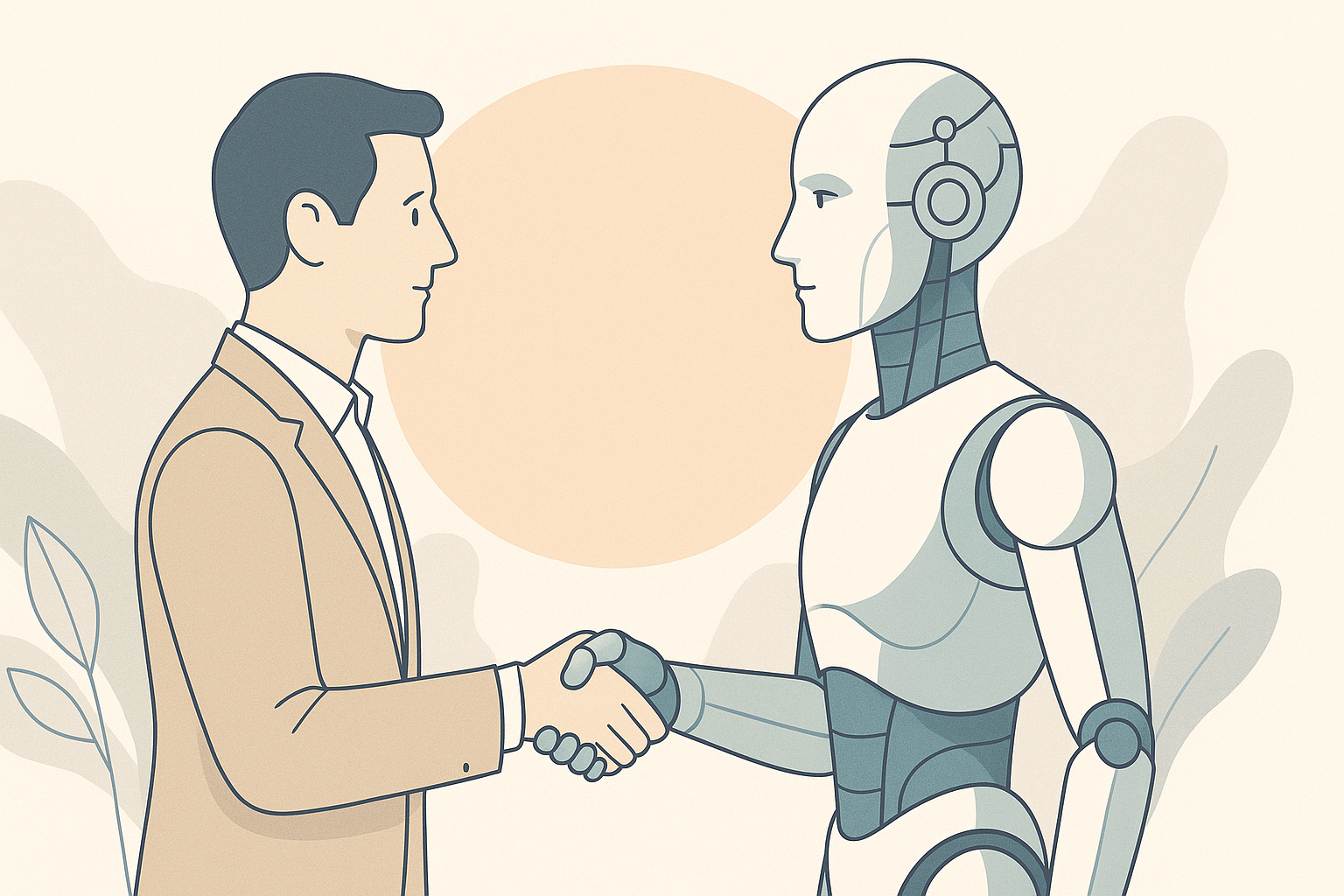
🤝 Human-AI Collaboration: The Future of Work
Human-AI collaboration is the future of work, as AI systems can augment human capabilities and enhance productivity. For more information on human-AI collaboration, visit the Human-AI Collaboration page. AI-powered systems can analyze large amounts of data, identify patterns, and make predictions, freeing up human workers to focus on higher-level tasks. The development of AI has been driven by the availability of large datasets and advances in computing power. AI has been influenced by various researchers, including David Silver, Richard Sutton, and Andrew Barto. AI has the potential to transform various industries, including Finance, Healthcare, and Education.
📚 AI and Education: Revolutionizing Learning
AI and education is a rapidly growing field, as AI-powered systems can personalize learning experiences and improve student outcomes. For more information on AI and education, visit the AI and Education page. AI-powered systems can analyze large amounts of data, identify patterns, and make predictions, allowing for more effective teaching and learning. The development of AI has been influenced by various researchers, including Sebastian Thrun, [[Peter_Norvig|Peter Norvig], and Kai-Fu Lee. AI has the potential to transform various industries, including Corporate Training, Language Learning, and Special Education.
🚫 AI Ethics: The Need for Responsible Innovation
AI ethics is a critical area of research, as AI systems can have significant impacts on society. For more information on AI ethics, visit the AI Ethics page. AI systems can perpetuate existing biases and discrimination, and can also be used to manipulate and deceive. The development of AI has been driven by the availability of large datasets and advances in computing power. AI has been influenced by various researchers, including Nick Bostrom, [[Stuart_Russell|Stuart Russell], and [[Murray_Campbell|Murray Campbell]. AI has the potential to transform various industries, including Law, Governance, and Social Welfare.
🌐 AI and Society: The Impact on Global Economies
AI and society is a complex and multifaceted topic, as AI systems can have significant impacts on global economies. For more information on AI and society, visit the AI and Society page. AI systems can automate various tasks, potentially replacing human workers, and can also be used to manipulate and deceive. The development of AI has been driven by the availability of large datasets and advances in computing power. AI has been influenced by various researchers, including Erik Brynjolfsson, [[Andrew_McAfee|Andrew McAfee], and [[Tyler_Cowen|Tyler Cowen]. AI has the potential to transform various industries, including Manufacturing, Transportation, and Energy.
📊 AI and Healthcare: Saving Lives with Predictive Analytics
AI and healthcare is a rapidly growing field, as AI-powered systems can analyze large amounts of data, identify patterns, and make predictions. For more information on AI and healthcare, visit the AI and Healthcare page. AI-powered systems can be used to diagnose diseases, predict patient outcomes, and personalize treatment plans. The development of AI has been influenced by various researchers, including Fei-Fei Li, [[Daphne_Koller|Daphne Koller], and [[Suchi_Saria|Suchi Saria]. AI has the potential to transform various industries, including Medical Imaging, Clinical Trials, and Personalized Medicine.
💸 AI and Finance: The Rise of Algorithmic Trading
AI and finance is a rapidly growing field, as AI-powered systems can analyze large amounts of data, identify patterns, and make predictions. For more information on AI and finance, visit the AI and Finance page. AI-powered systems can be used to predict stock prices, identify investment opportunities, and optimize portfolios. The development of AI has been driven by the availability of large datasets and advances in computing power. AI has been influenced by various researchers, including Yann LeCun, [[David_Silver|David Silver], and [[Satya_Nadella|Satya Nadella]. AI has the potential to transform various industries, including Algorithmic Trading, Risk Management, and Portfolio Optimization.
🔒 AI Security: Protecting Against Cyber Threats
AI security is a critical area of research, as AI systems can be vulnerable to cyber threats. For more information on AI security, visit the AI Security page. AI systems can be used to detect and prevent cyber attacks, and can also be used to launch attacks. The development of AI has been driven by the availability of large datasets and advances in computing power. AI has been influenced by various researchers, including Bruce Schneier, [[Whitfield_Diffie|Whitfield Diffie], and [[Martin_Hellman|Martin Hellman]. AI has the potential to transform various industries, including Cybersecurity, Network Security, and Cloud Security.
Key Facts
- Year
- 1950
- Origin
- United Kingdom
- Category
- Technology
- Type
- Concept
Frequently Asked Questions
What is artificial intelligence?
Artificial intelligence (AI) is the capability of computational systems to perform tasks typically associated with human intelligence, such as learning, reasoning, problem-solving, perception, and decision-making. For more information on AI, visit the Artificial Intelligence page. AI has numerous applications across various industries, including Healthcare, Finance, and Education. The development of AI has been driven by the availability of large datasets and advances in computing power.
What are the benefits of AI?
The benefits of AI include improved efficiency, enhanced productivity, and better decision-making. AI-powered systems can analyze large amounts of data, identify patterns, and make predictions, allowing for more effective teaching and learning. For more information on AI benefits, visit the Artificial Intelligence Benefits page. AI has the potential to transform various industries, including Manufacturing, Transportation, and Energy. The development of AI has been influenced by various researchers, including Yann LeCun, [[Fei-Fei_Li|Fei-Fei Li], and Andrew Ng.
What are the risks of AI?
The risks of AI include job displacement, bias, and cyber threats. AI systems can automate various tasks, potentially replacing human workers, and can also be used to manipulate and deceive. For more information on AI risks, visit the Artificial Intelligence Risks page. AI has the potential to transform various industries, including Customer Service, Marketing, and Sales. The development of AI has been driven by the availability of large datasets and advances in computing power. AI has been influenced by various researchers, including Nick Bostrom, [[Stuart_Russell|Stuart Russell], and [[Murray_Campbell|Murray Campbell].
How is AI used in healthcare?
AI is used in healthcare to analyze large amounts of data, identify patterns, and make predictions. AI-powered systems can be used to diagnose diseases, predict patient outcomes, and personalize treatment plans. For more information on AI in healthcare, visit the AI and Healthcare page. AI has the potential to transform various industries, including Medical Imaging, Clinical Trials, and Personalized Medicine. The development of AI has been influenced by various researchers, including Fei-Fei Li, [[Daphne_Koller|Daphne Koller], and [[Suchi_Saria|Suchi Saria].
How is AI used in finance?
AI is used in finance to analyze large amounts of data, identify patterns, and make predictions. AI-powered systems can be used to predict stock prices, identify investment opportunities, and optimize portfolios. For more information on AI in finance, visit the AI and Finance page. AI has the potential to transform various industries, including Algorithmic Trading, Risk Management, and Portfolio Optimization. The development of AI has been driven by the availability of large datasets and advances in computing power. AI has been influenced by various researchers, including Yann LeCun, [[David_Silver|David Silver], and [[Satya_Nadella|Satya Nadella].
What is the future of AI?
The future of AI is rapidly evolving, with significant advancements in areas such as Deep Learning, Natural Language Processing, and Computer Vision. AI has the potential to transform various industries, including Manufacturing, Transportation, and Energy. For more information on the future of AI, visit the Future of Artificial Intelligence page. The development of AI has been driven by the availability of large datasets and advances in computing power. AI has been influenced by various researchers, including Erik Brynjolfsson, [[Andrew_McAfee|Andrew McAfee], and [[Tyler_Cowen|Tyler Cowen].
How can I learn more about AI?
There are numerous resources available to learn more about AI, including online courses, books, and research papers. For more information on AI resources, visit the Artificial Intelligence Resources page. AI has the potential to transform various industries, including Healthcare, Finance, and Education. The development of AI has been driven by the availability of large datasets and advances in computing power. AI has been influenced by various researchers, including Sebastian Thrun, [[Peter_Norvig|Peter Norvig], and [[Kai_Fu_Lee|Kai-Fu Lee].