
Contents
- 🌎 Introduction to Aquitards
- 💧 Understanding Aquifers and Aquitards
- 🔍 The Role of Hydrogeology
- 🌈 Classification of Aquifers and Aquitards
- 🚧 Saturated vs Unsaturated Aquifers
- 🔩 Confined vs Unconfined Aquifers
- 🌐 Isotropic vs Anisotropic Aquifers
- 🏞️ Porous, Karst, Fractured, and Transboundary Aquifers
- 🌟 The Importance of Aquitards in Groundwater Flow
- 🌈 Case Studies of Aquitard Systems
- 🌎 Conclusion and Future Directions
- Frequently Asked Questions
- Related Topics
Overview
An aquitard is a geological formation that restricts the flow of groundwater, playing a crucial role in maintaining the delicate balance of our hydrological systems. Composed of layers of low-permeability materials such as clay or shale, aquitards act as barriers, controlling the movement of water between aquifers. The presence of aquitards can significantly impact the quality and quantity of groundwater, making them a key factor in the management of water resources. With a Vibe score of 6, aquitards may not be the most glamorous topic, but their influence on the environment and human activities is undeniable. As we continue to face challenges related to water scarcity and pollution, understanding the role of aquitards is essential for developing effective strategies for sustainable water management. According to the United States Geological Survey (USGS), aquitards can store significant amounts of water, with some estimates suggesting that they can hold up to 10 times more water than aquifers, highlighting the need for further research into their properties and behavior.
🌎 Introduction to Aquitards
Aquitards are a crucial component of groundwater flow systems, acting as a gatekeeper that regulates the movement of water through the subsurface. To understand the role of aquitards, it's essential to first grasp the concept of aquifers and how they interact with these low-permeability beds. Aquifers are underground layers of water-bearing material, consisting of permeable or fractured rock, or unconsolidated materials, and are the primary source of freshwater for many communities around the world. The study of water flow in aquifers and the characterization of aquifers is called hydrogeology, a field that has become increasingly important in recent years due to the growing demand for clean water. Aquitards, on the other hand, are beds of low permeability that can be found along an aquifer, and can have a significant impact on the flow of water through the system.
💧 Understanding Aquifers and Aquitards
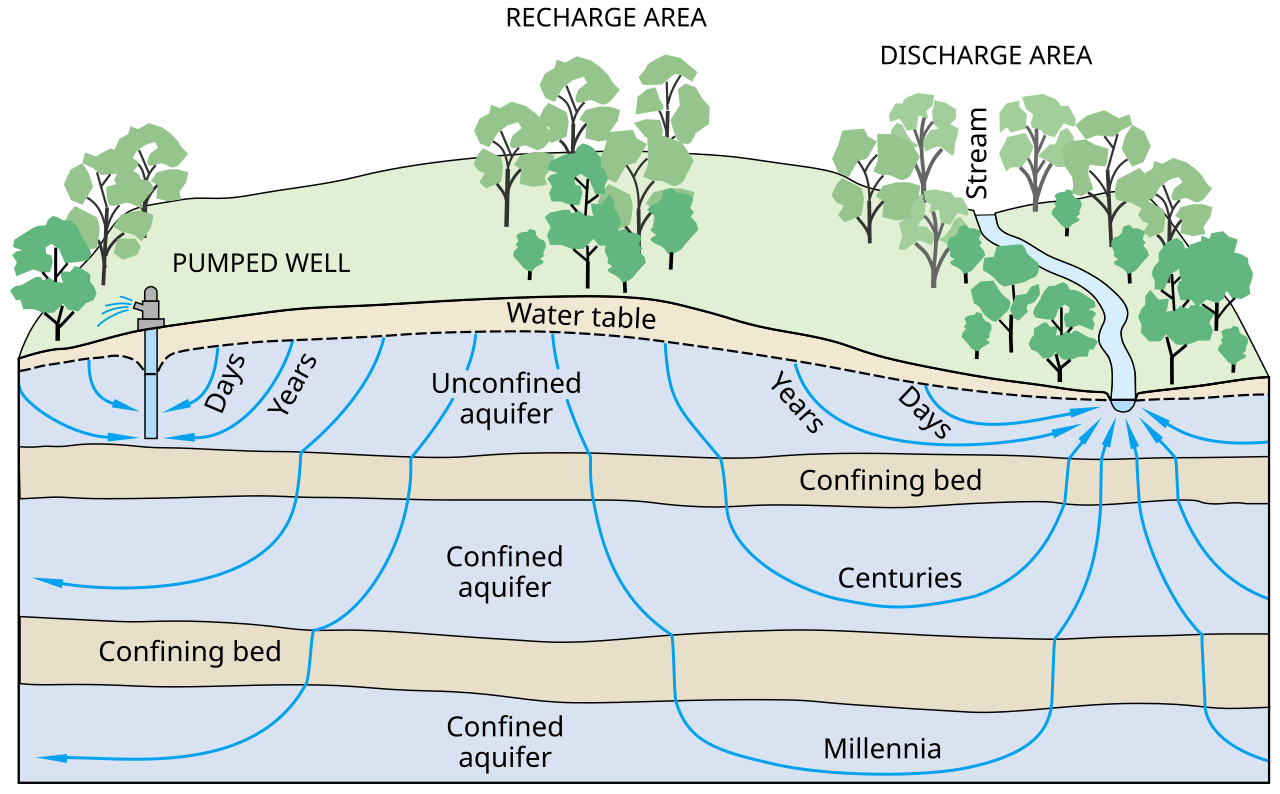
The relationship between aquifers and aquitards is complex and multifaceted. While aquifers are capable of storing and transmitting large amounts of water, aquitards can restrict the flow of water, creating a barrier that can affect the overall hydraulic properties of the system. This is particularly important in confined aquifer systems, where the pressure of the water can lead to the formation of a confined aquifer. In contrast, unconfined aquifers are not restricted by a confining layer and are typically found near the surface. The study of aquifers and aquitards is closely tied to the field of hydrogeology, which seeks to understand the movement of water through the subsurface and the factors that affect it.
🔍 The Role of Hydrogeology
Hydrogeology is a critical component of understanding aquitards and their role in groundwater flow systems. By studying the movement of water through the subsurface, hydrogeologists can gain insights into the hydraulic properties of aquifers and aquitards, including their permeability, porosity, and storage capacity. This information is essential for managing groundwater resources, particularly in areas where groundwater contamination is a concern. Hydrogeologists use a variety of techniques, including pumping tests and water level measurements, to characterize aquifers and aquitards and understand their behavior. Additionally, the study of hydrogeology is closely tied to the concept of aquicludes, which are solid and impermeable regions that can underlie or overlie an aquifer.
🌈 Classification of Aquifers and Aquitards
Aquifers can be classified in a variety of ways, including saturated versus unsaturated, aquifers versus aquitards, confined versus unconfined, isotropic versus anisotropic, and porous, karst, fractured, or transboundary. Each of these classifications provides valuable information about the characteristics of the aquifer and how it will behave under different conditions. For example, saturated aquifers are fully saturated with water, while unsaturated aquifers contain both water and air. Similarly, confined aquifers are restricted by a confining layer, while unconfined aquifers are not. The classification of aquifers is closely tied to the concept of aquitards, which can have a significant impact on the flow of water through the system.
🚧 Saturated vs Unsaturated Aquifers
The distinction between saturated and unsaturated aquifers is critical in understanding the behavior of groundwater flow systems. Saturated aquifers are fully saturated with water, meaning that all of the pore spaces are filled with water. In contrast, unsaturated aquifers contain both water and air, and the water table is typically found at a lower elevation. The movement of water through saturated and unsaturated aquifers is governed by different physical laws, and understanding these differences is essential for managing groundwater resources. Additionally, the concept of aquitards is closely tied to the study of hydrogeology, which seeks to understand the movement of water through the subsurface and the factors that affect it. The relationship between aquifers and aquitards is also important, as aquitards can restrict the flow of water and create a barrier that can affect the overall hydraulic properties of the system.
🔩 Confined vs Unconfined Aquifers
Confined and unconfined aquifers are two distinct types of aquifers that are classified based on the presence or absence of a confining layer. Confined aquifers are restricted by a confining layer, which can be a layer of low-permeability rock or soil that restricts the flow of water. In contrast, unconfined aquifers are not restricted by a confining layer and are typically found near the surface. The pressure of the water in confined aquifers can lead to the formation of a confined aquifer, which can have significant implications for groundwater flow and quality. The study of confined aquifers and unconfined aquifers is closely tied to the concept of aquitards, which can have a significant impact on the flow of water through the system. Furthermore, the classification of aquifers is also related to the concept of aquicludes, which are solid and impermeable regions that can underlie or overlie an aquifer.
🌐 Isotropic vs Anisotropic Aquifers
Isotropic and anisotropic aquifers are classified based on the hydraulic properties of the aquifer. Isotropic aquifers have the same hydraulic properties in all directions, while anisotropic aquifers have different hydraulic properties in different directions. This can have significant implications for groundwater flow and quality, as the movement of water through the aquifer can be affected by the orientation of the hydraulic properties. The study of isotropic aquifers and anisotropic aquifers is closely tied to the concept of hydrogeology, which seeks to understand the movement of water through the subsurface and the factors that affect it. Additionally, the relationship between aquifers and aquitards is also important, as aquitards can restrict the flow of water and create a barrier that can affect the overall hydraulic properties of the system.
🏞️ Porous, Karst, Fractured, and Transboundary Aquifers
Porous, karst, fractured, and transboundary aquifers are all distinct types of aquifers that are classified based on their geological characteristics. Porous aquifers are composed of porous rock or soil, while karst aquifers are composed of soluble rock that has been dissolved by groundwater. Fractured aquifers are composed of rock that has been fractured by tectonic activity, while transboundary aquifers are aquifers that cross international boundaries. Each of these types of aquifers has its own unique characteristics and challenges, and understanding these differences is essential for managing groundwater resources. The study of porous aquifers, karst aquifers, fractured aquifers, and transboundary aquifers is closely tied to the concept of aquitards, which can have a significant impact on the flow of water through the system. Furthermore, the classification of aquifers is also related to the concept of hydrogeology, which seeks to understand the movement of water through the subsurface and the factors that affect it.
🌟 The Importance of Aquitards in Groundwater Flow
Aquitards play a critical role in regulating the flow of water through groundwater systems. By restricting the flow of water, aquitards can create a barrier that can affect the overall hydraulic properties of the system. This can have significant implications for groundwater flow and quality, particularly in areas where groundwater contamination is a concern. The study of aquitards is closely tied to the concept of hydrogeology, which seeks to understand the movement of water through the subsurface and the factors that affect it. Additionally, the relationship between aquifers and aquitards is also important, as aquitards can restrict the flow of water and create a barrier that can affect the overall hydraulic properties of the system. The importance of aquitards is also related to the concept of aquicludes, which are solid and impermeable regions that can underlie or overlie an aquifer.
🌈 Case Studies of Aquitard Systems
There are many case studies of aquitard systems around the world, each with its own unique characteristics and challenges. For example, the Oak Ridge aquifer in Tennessee is a confined aquifer that is restricted by a layer of low-permeability rock. The Edwards aquifer in Texas is a porous aquifer that is composed of porous rock and is an important source of freshwater for the region. The Nubian Sandstone aquifer in North Africa is a transboundary aquifer that crosses international boundaries and is an important source of freshwater for the region. Each of these case studies highlights the importance of understanding aquitards and their role in regulating the flow of water through groundwater systems. The study of aquitards is closely tied to the concept of hydrogeology, which seeks to understand the movement of water through the subsurface and the factors that affect it. Furthermore, the relationship between aquifers and aquitards is also important, as aquitards can restrict the flow of water and create a barrier that can affect the overall hydraulic properties of the system.
🌎 Conclusion and Future Directions
In conclusion, aquitards are a critical component of groundwater flow systems, acting as a gatekeeper that regulates the movement of water through the subsurface. Understanding the role of aquitards is essential for managing groundwater resources, particularly in areas where groundwater contamination is a concern. The study of aquitards is closely tied to the concept of hydrogeology, which seeks to understand the movement of water through the subsurface and the factors that affect it. Additionally, the relationship between aquifers and aquitards is also important, as aquitards can restrict the flow of water and create a barrier that can affect the overall hydraulic properties of the system. As the demand for clean water continues to grow, it is essential that we continue to study and understand the complex relationships between aquifers, aquitards, and the subsurface environment. The future of groundwater management will depend on our ability to understand and manage these complex systems, and to develop new technologies and strategies for protecting and conserving our groundwater resources.
Section 12
The future of aquitard research is exciting and rapidly evolving. New technologies and techniques are being developed to study and understand the complex relationships between aquifers, aquitards, and the subsurface environment. For example, ground penetrating radar is being used to image the subsurface and understand the distribution of aquitards and aquifers. Numerical modeling is being used to simulate the flow of water through complex aquifer systems and to understand the impact of aquitards on groundwater flow and quality. As our understanding of aquitards and their role in groundwater flow systems continues to grow, we will be better equipped to manage and protect our groundwater resources for future generations. The study of aquitards is closely tied to the concept of hydrogeology, which seeks to understand the movement of water through the subsurface and the factors that affect it. Furthermore, the relationship between aquifers and aquitards is also important, as aquitards can restrict the flow of water and create a barrier that can affect the overall hydraulic properties of the system.
Key Facts
- Year
- 2022
- Origin
- The concept of aquitards was first introduced by the American geologist, Charles V. Theis, in the 1930s, as part of his work on groundwater flow and aquifer systems.
- Category
- Geology
- Type
- Geological Formation
Frequently Asked Questions
What is an aquitard?
An aquitard is a bed of low permeability that can be found along an aquifer, and can have a significant impact on the flow of water through the system. Aquitards are composed of low-permeability rock or soil that can restrict the flow of water, creating a barrier that can affect the overall hydraulic properties of the system. The study of aquitards is closely tied to the concept of hydrogeology, which seeks to understand the movement of water through the subsurface and the factors that affect it. Additionally, the relationship between aquifers and aquitards is also important, as aquitards can restrict the flow of water and create a barrier that can affect the overall hydraulic properties of the system.
What is the difference between an aquifer and an aquitard?
An aquifer is an underground layer of water-bearing material, while an aquitard is a bed of low permeability that can be found along an aquifer. Aquifers are capable of storing and transmitting large amounts of water, while aquitards can restrict the flow of water, creating a barrier that can affect the overall hydraulic properties of the system. The study of aquifers and aquitards is closely tied to the concept of hydrogeology, which seeks to understand the movement of water through the subsurface and the factors that affect it. Furthermore, the classification of aquifers is also related to the concept of aquicludes, which are solid and impermeable regions that can underlie or overlie an aquifer.
What is the importance of aquitards in groundwater flow systems?
Aquitards play a critical role in regulating the flow of water through groundwater systems. By restricting the flow of water, aquitards can create a barrier that can affect the overall hydraulic properties of the system. This can have significant implications for groundwater flow and quality, particularly in areas where groundwater contamination is a concern. The study of aquitards is closely tied to the concept of hydrogeology, which seeks to understand the movement of water through the subsurface and the factors that affect it. Additionally, the relationship between aquifers and aquitards is also important, as aquitards can restrict the flow of water and create a barrier that can affect the overall hydraulic properties of the system.
How are aquitards classified?
Aquitards are classified based on their hydraulic properties, including their permeability and porosity. They can be further classified as confined or unconfined, depending on the presence or absence of a confining layer. The study of aquitards is closely tied to the concept of hydrogeology, which seeks to understand the movement of water through the subsurface and the factors that affect it. Furthermore, the classification of aquifers is also related to the concept of aquicludes, which are solid and impermeable regions that can underlie or overlie an aquifer.
What are some common types of aquitards?
Some common types of aquitards include clay, shale, and rock. These materials have low permeability and can restrict the flow of water, creating a barrier that can affect the overall hydraulic properties of the system. The study of aquitards is closely tied to the concept of hydrogeology, which seeks to understand the movement of water through the subsurface and the factors that affect it. Additionally, the relationship between aquifers and aquitards is also important, as aquitards can restrict the flow of water and create a barrier that can affect the overall hydraulic properties of the system.
How do aquitards affect groundwater flow and quality?
Aquitards can affect groundwater flow and quality by restricting the flow of water and creating a barrier that can affect the overall hydraulic properties of the system. This can have significant implications for groundwater flow and quality, particularly in areas where groundwater contamination is a concern. The study of aquitards is closely tied to the concept of hydrogeology, which seeks to understand the movement of water through the subsurface and the factors that affect it. Furthermore, the classification of aquifers is also related to the concept of aquicludes, which are solid and impermeable regions that can underlie or overlie an aquifer.
What are some challenges associated with managing aquitards?
Some challenges associated with managing aquitards include understanding the complex relationships between aquifers, aquitards, and the subsurface environment, as well as developing effective strategies for protecting and conserving groundwater resources. The study of aquitards is closely tied to the concept of hydrogeology, which seeks to understand the movement of water through the subsurface and the factors that affect it. Additionally, the relationship between aquifers and aquitards is also important, as aquitards can restrict the flow of water and create a barrier that can affect the overall hydraulic properties of the system.