
Contents
- 🕰️ Introduction to the Aztec Calendar
- 📆 Understanding the Mesoamerican Calendrical System
- 🌟 The Aztec Calendar's Basic Structure
- 🔍 Deciphering the Aztec Calendar's Symbols
- 🕊️ The Role of the Calendar in Aztec Religion
- 👑 The Aztec Calendar's Connection to Politics and Power
- 📚 Uncovering the History of the Aztec Calendar
- 🌐 The Aztec Calendar's Influence on Modern Culture
- 🤔 Controversies and Debates Surrounding the Aztec Calendar
- 📊 The Science Behind the Aztec Calendar's Accuracy
- 👥 The Aztec Calendar's Relationship to Other Mesoamerican Calendars
- Frequently Asked Questions
- Related Topics
Overview
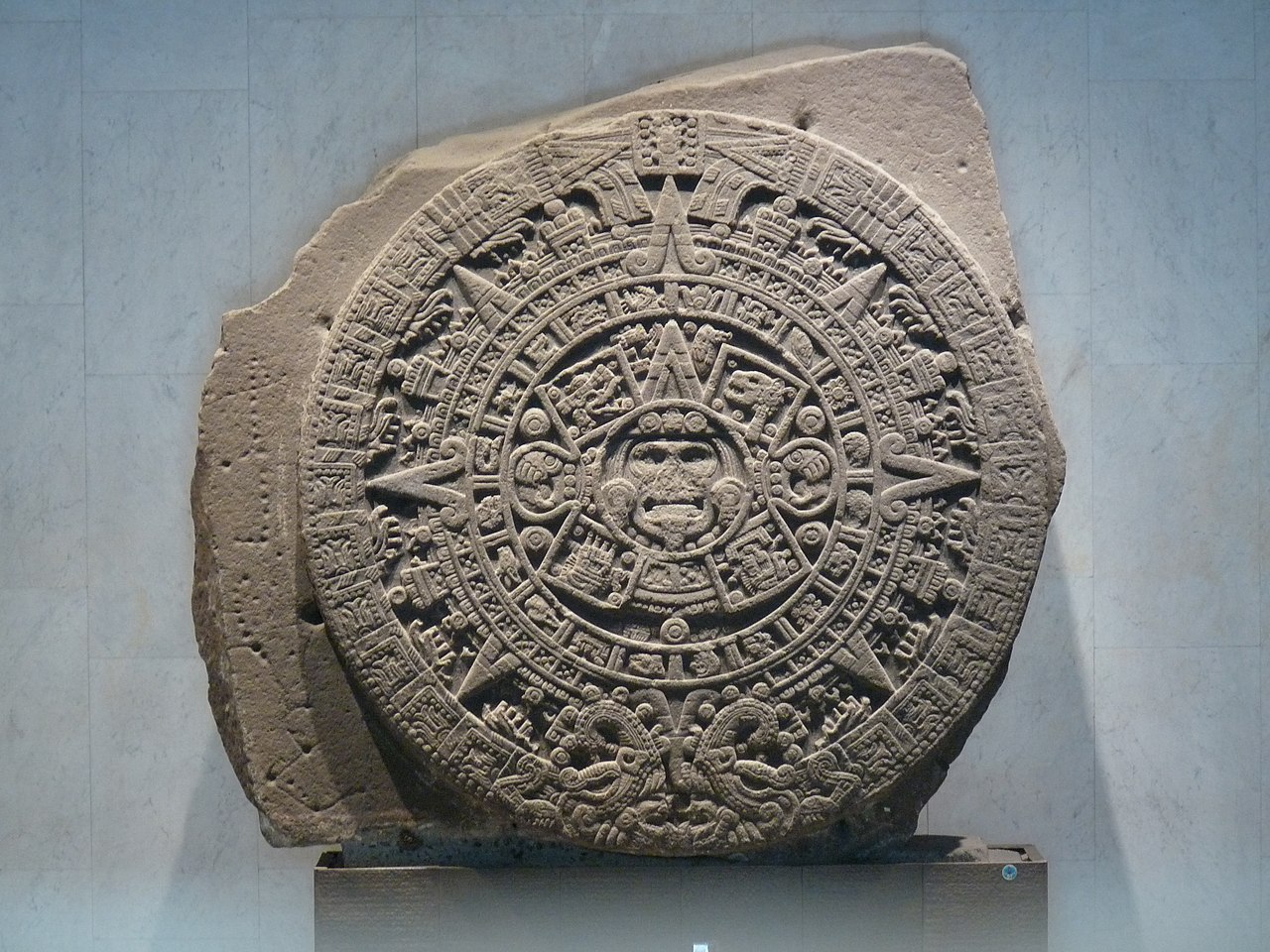
The Aztec calendar is a sophisticated system that weaves together mythological, astronomical, and mathematical knowledge. Developed by the Aztecs in the 15th century, it consists of three interlocking cycles: the Tonalpohualli (a 260-day cycle), the Xiuhpohualli (a 365-day solar year), and the Long Count (a system of measuring time in units of 20 cycles). This intricate system not only measured time but also influenced daily life, religious rituals, and agricultural practices. With a vibe score of 8, the Aztec calendar reflects the cultural energy and ingenuity of its creators. The controversy surrounding its interpretation and the influence of Spanish colonization on its preservation add layers of complexity to its study. As we continue to unravel the mysteries of the Aztec calendar, we are reminded of the ingenuity and astronomical knowledge of the Aztecs, and the calendar's influence can be seen in modern Mexican culture and beyond, with entities like the Mexican government and UNESCO working to preserve and promote this ancient knowledge.
🕰️ Introduction to the Aztec Calendar
The Aztec calendar, also known as the Mexica calendar, is a fascinating and complex system used by the Aztecs and other Pre-Columbian peoples of central Mexico. To understand the Aztec calendar, it's essential to explore its connection to the broader Mesoamerican calendrical system, which shares a basic structure with calendars from throughout the region. The Aztec calendar is composed of multiple interlocking cycles, including the Tonalpohualli and the Xiuhpohualli. These cycles were used to measure time, predict astronomical events, and guide religious and cultural practices. For example, the Aztecs used the calendar to plan their agricultural cycles and to schedule their festivals and ceremonies.
📆 Understanding the Mesoamerican Calendrical System
The Mesoamerican calendrical system, which includes the Aztec calendar, is a sophisticated and intricate system that has been studied by scholars for centuries. The system is based on a combination of solar, lunar, and astronomical observations, and is composed of multiple cycles that intersect and overlap. The Mayans, for example, used a similar calendrical system, which included the Tzolkin and the Haab. Understanding the Aztec calendar requires a deep understanding of the cultural and historical context in which it was used, including the Aztec mythology and the Aztec cosmology. By studying the Aztec calendar, we can gain insights into the daily life and spiritual practices of the Aztecs, including their art and architecture.
🌟 The Aztec Calendar's Basic Structure
The Aztec calendar's basic structure is composed of multiple interlocking cycles, including the Tonalpohualli and the Xiuhpohualli. The Tonalpohualli is a 260-day cycle that consists of 20 daysigns and 13 numbers, while the Xiuhpohualli is a 365-day cycle that consists of 18 months of 20 days each, plus a 5-day extra period. The Aztecs used these cycles to measure time, predict astronomical events, and guide religious and cultural practices. For example, the Aztecs used the Tonalpohualli to plan their marriage ceremonies and to schedule their human sacrifice rituals. The Xiuhpohualli, on the other hand, was used to plan their agricultural cycles and to schedule their festivals and ceremonies.
🔍 Deciphering the Aztec Calendar's Symbols
The Aztec calendar's symbols are a key part of its structure and meaning. The calendar includes a range of symbols, including day signs, numbers, and glyphs, which were used to represent different concepts and ideas. For example, the day sign Cipactli represents the crocodile, while the number Tonatiuh represents the sun. The Aztecs used these symbols to convey complex ideas and concepts, including their cosmology and mythology. By deciphering these symbols, we can gain a deeper understanding of the Aztec calendar and its significance in Aztec culture. The symbols were also used in art and architecture to convey spiritual and cultural messages.
🕊️ The Role of the Calendar in Aztec Religion
The Aztec calendar played a central role in Aztec religion, guiding the timing of rituals, ceremonies, and sacrifices. The Aztecs believed that the calendar held the key to understanding the will of the gods and the balance of the universe. The calendar was used to plan and schedule a range of religious activities, including human sacrifice rituals and festivals. The Aztecs also believed that the calendar held the power to predict the future and to guide decision-making. For example, the Aztecs used the calendar to plan their warfare campaigns and to schedule their trade expeditions. By studying the Aztec calendar, we can gain insights into the spiritual practices and beliefs of the Aztecs, including their mythology and cosmology.
👑 The Aztec Calendar's Connection to Politics and Power
The Aztec calendar was also closely tied to politics and power in Aztec society. The calendar was used to legitimize the rule of the Aztec elite and to reinforce their power and authority. The Aztecs believed that the calendar held the key to understanding the will of the gods and the balance of the universe, and that those who controlled the calendar held the power to shape the destiny of the empire. The calendar was used to plan and schedule a range of political activities, including coronations and state visits. For example, the Aztecs used the calendar to plan their diplomacy efforts and to schedule their warfare campaigns. By studying the Aztec calendar, we can gain insights into the political structures and power dynamics of Aztec society, including the role of the emperor and the nobility.
📚 Uncovering the History of the Aztec Calendar
The history of the Aztec calendar is complex and multifaceted, spanning centuries and multiple cultures. The calendar is believed to have originated in the Olmec civilization, which flourished in southern Mexico from around 1500 to 400 BCE. From there, the calendar spread to other Mesoamerican cultures, including the Mayans and the Aztecs. The Aztecs adopted and adapted the calendar, incorporating their own unique symbols and meanings. By studying the history of the Aztec calendar, we can gain insights into the cultural and historical context in which it was used, including the Aztec mythology and the Aztec cosmology. The calendar was also influenced by other Mesoamerican cultures, including the Mixtecs and the Zapotecs.
🌐 The Aztec Calendar's Influence on Modern Culture
The Aztec calendar has had a profound influence on modern culture, inspiring a range of artistic, literary, and musical works. The calendar's unique symbols and structure have been incorporated into a range of creative projects, from art and literature to music and film. The calendar has also been the subject of numerous exhibitions and publications, which have helped to raise awareness and appreciation of its significance and beauty. For example, the Aztec calendar has been featured in video games and documentaries. By studying the Aztec calendar, we can gain insights into the cultural and historical context in which it was used, including the Aztec mythology and the Aztec cosmology.
🤔 Controversies and Debates Surrounding the Aztec Calendar
Despite its significance and beauty, the Aztec calendar is also the subject of controversy and debate. Some scholars have questioned the accuracy and reliability of the calendar, arguing that it is based on incomplete or inaccurate information. Others have criticized the calendar's association with human sacrifice and other violent practices. Additionally, the calendar's cultural and historical context has been the subject of debate, with some arguing that it is a unique and valuable part of Aztec culture, while others see it as a symbol of colonialism and oppression. For example, the Aztec calendar has been the subject of controversy in mexico, where some have argued that it is a symbol of national pride, while others see it as a reminder of the country's complex and often painful history.
📊 The Science Behind the Aztec Calendar's Accuracy
The science behind the Aztec calendar's accuracy is a topic of ongoing research and debate. The calendar is based on a combination of solar, lunar, and astronomical observations, and is composed of multiple cycles that intersect and overlap. Scholars have used a range of methods to test the accuracy of the calendar, including astronomical observations and mathematical modeling. While the calendar's accuracy is not universally accepted, many scholars believe that it is a sophisticated and accurate system that reflects a deep understanding of astronomy and mathematics. For example, the Aztecs used the calendar to predict eclipses and other astronomical events. By studying the science behind the Aztec calendar, we can gain insights into the Aztecs' understanding of the natural world and their place within it.
👥 The Aztec Calendar's Relationship to Other Mesoamerican Calendars
The Aztec calendar's relationship to other Mesoamerican calendars is a topic of ongoing research and debate. The calendar is part of a broader Mesoamerican calendrical system, which includes the Mayans and other cultures. Scholars have identified a range of similarities and differences between the Aztec calendar and other Mesoamerican calendars, including the Tzolkin and the Haab. By studying these relationships, we can gain insights into the cultural and historical context in which the Aztec calendar was used, including the Aztec mythology and the Aztec cosmology. The Aztec calendar was also influenced by other Mesoamerican cultures, including the Olmec and the Mixtecs.
Key Facts
- Year
- 1428
- Origin
- Tenochtitlán, Mexico
- Category
- History, Culture, and Science
- Type
- Historical Artifact
Frequently Asked Questions
What is the Aztec calendar?
The Aztec calendar is a calendrical system used by the Aztecs and other Pre-Columbian peoples of central Mexico. It is composed of multiple interlocking cycles, including the Tonalpohualli and the Xiuhpohualli. The calendar was used to measure time, predict astronomical events, and guide religious and cultural practices. For example, the Aztecs used the calendar to plan their agricultural cycles and to schedule their festivals and ceremonies.
How does the Aztec calendar work?
The Aztec calendar is based on a combination of solar, lunar, and astronomical observations, and is composed of multiple cycles that intersect and overlap. The calendar includes a range of symbols, including day signs, numbers, and glyphs, which were used to represent different concepts and ideas. The Aztecs used these symbols to convey complex ideas and concepts, including their cosmology and mythology. By deciphering these symbols, we can gain a deeper understanding of the Aztec calendar and its significance in Aztec culture.
What is the significance of the Aztec calendar?
The Aztec calendar is a significant and beautiful calendrical system that reflects the Aztecs' deep understanding of astronomy, mathematics, and culture. The calendar has had a profound influence on modern culture, inspiring a range of artistic, literary, and musical works. The calendar is also an important part of Aztec cultural heritage, and continues to be studied and celebrated by scholars and enthusiasts around the world. For example, the Aztec calendar has been featured in art and literature.
How accurate is the Aztec calendar?
The accuracy of the Aztec calendar is a topic of ongoing research and debate. While some scholars have questioned the accuracy and reliability of the calendar, others believe that it is a sophisticated and accurate system that reflects a deep understanding of astronomy and mathematics. The calendar's accuracy has been tested using a range of methods, including astronomical observations and mathematical modeling. For example, the Aztecs used the calendar to predict eclipses and other astronomical events.
What is the relationship between the Aztec calendar and other Mesoamerican calendars?
The Aztec calendar is part of a broader Mesoamerican calendrical system, which includes the Mayans and other cultures. The calendar shares similarities and differences with other Mesoamerican calendars, including the Tzolkin and the Haab. By studying these relationships, we can gain insights into the cultural and historical context in which the Aztec calendar was used, including the Aztec mythology and the Aztec cosmology. The Aztec calendar was also influenced by other Mesoamerican cultures, including the Olmec and the Mixtecs.
How has the Aztec calendar influenced modern culture?
The Aztec calendar has had a profound influence on modern culture, inspiring a range of artistic, literary, and musical works. The calendar's unique symbols and structure have been incorporated into a range of creative projects, from art and literature to music and film. The calendar has also been the subject of numerous exhibitions and publications, which have helped to raise awareness and appreciation of its significance and beauty. For example, the Aztec calendar has been featured in video games and documentaries.
What are some of the controversies surrounding the Aztec calendar?
The Aztec calendar is the subject of controversy and debate, with some scholars questioning its accuracy and reliability. Others have criticized the calendar's association with human sacrifice and other violent practices. Additionally, the calendar's cultural and historical context has been the subject of debate, with some arguing that it is a unique and valuable part of Aztec culture, while others see it as a symbol of colonialism and oppression. For example, the Aztec calendar has been the subject of controversy in mexico, where some have argued that it is a symbol of national pride, while others see it as a reminder of the country's complex and often painful history.