
Contents
- 🔍 Introduction to Difference Engine
- 📝 History of Difference Engine
- 🤖 Design and Construction
- 📊 Mathematical Background
- 📈 Applications and Uses
- 👥 Key People Involved
- 📚 Influence on Modern Computing
- 🔗 Connections to Other Technologies
- 📊 Limitations and Challenges
- 🔮 Legacy and Preservation
- 📈 Future Prospects and Revivals
- Frequently Asked Questions
- Related Topics
Overview
The difference engine, conceived by Charles Babbage in 1822, was a mechanical computer designed to automate mathematical calculations, reducing the likelihood of human error. This innovation, although never fully built during Babbage's lifetime, laid the foundation for the development of modern computers. The engine's design was based on the method of differences, a mathematical technique used for calculating polynomial functions. Babbage's work on the difference engine was influenced by his collaboration with mathematician and astronomer John Herschel, and it sparked a series of improvements and ideas that would eventually lead to the creation of the Analytical Engine, a more advanced mechanical computer. The difference engine's significance extends beyond its mechanical capabilities, as it represents a pivotal moment in the history of computing, highlighting the tension between the potential for machines to perform complex calculations and the limitations of technology at the time. With a vibe score of 8, reflecting its significant cultural and historical impact, the difference engine remains an important precursor to modern computing, influencing figures such as Ada Lovelace, who is often considered the first computer programmer.
🔍 Introduction to Difference Engine
The Difference Engine is an automatic mechanical calculator designed to tabulate polynomial functions, a concept that laid the foundation for modern computing. As described by Charles Babbage, the inventor of the Difference Engine, this machine was designed to reduce the amount of human labor required for mathematical calculations. The Difference Engine uses the method of finite differences to interpolate or tabulate functions by using a small set of polynomial coefficients. This method is crucial in various fields, including engineering, science, and navigation. The Difference Engine can compute many useful tables, including logarithmic and trigonometric functions, which are essential in these fields.
📝 History of Difference Engine
The history of the Difference Engine dates back to the 1820s, when Charles Babbage first conceived the idea. Babbage, an English mathematician and inventor, is often credited with designing the first mechanical computer. The Difference Engine was designed to automate the process of calculating mathematical tables, which was a time-consuming and error-prone task. Babbage's work on the Difference Engine was influenced by his earlier work on the Analytical Engine, a more advanced mechanical computer. The Difference Engine was also influenced by the work of other mathematicians, such as Ada Lovelace, who is often considered the first computer programmer.
🤖 Design and Construction
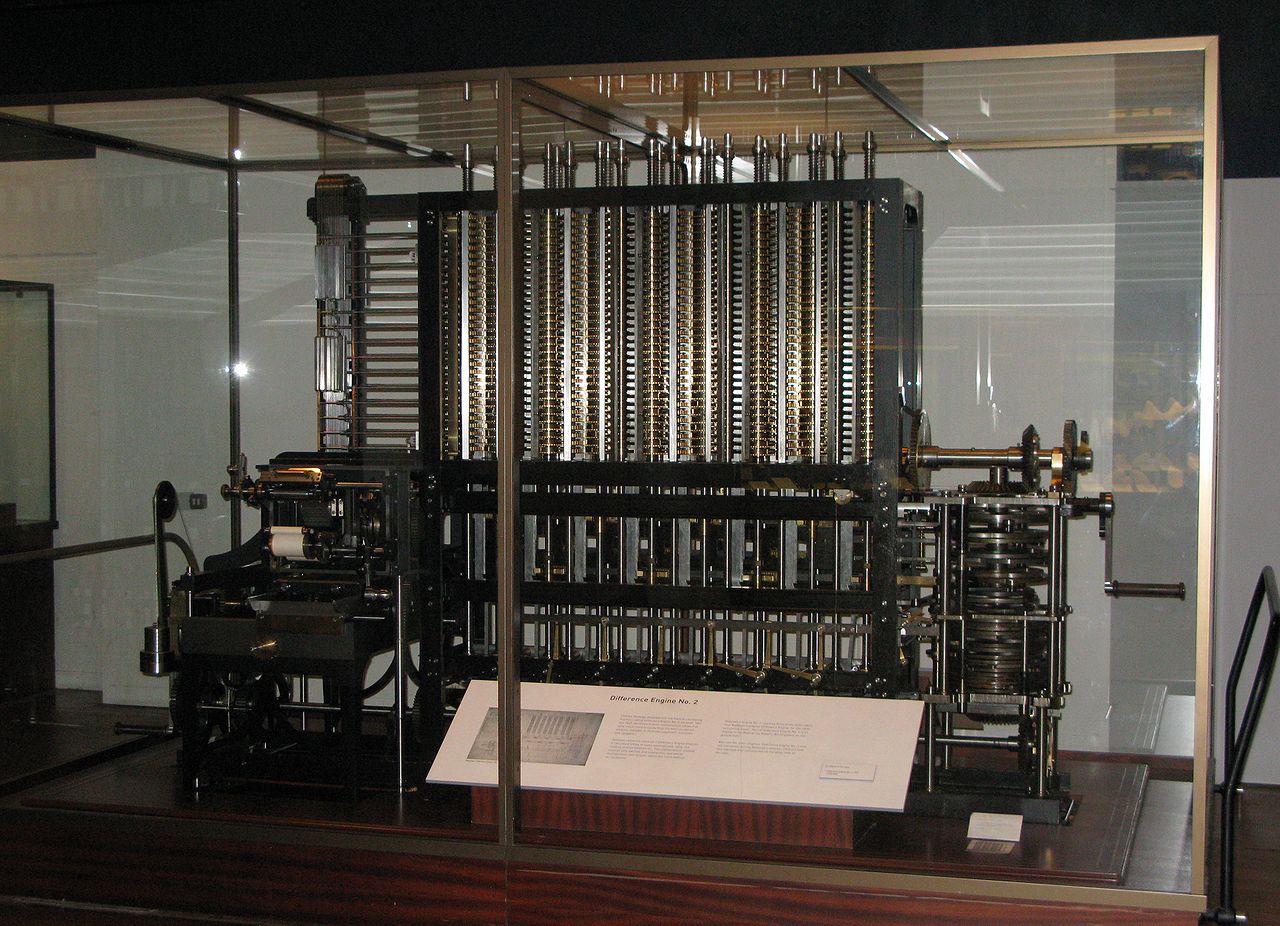
The design and construction of the Difference Engine were complex and challenging tasks. The machine consisted of a series of gears and levers that performed mathematical calculations using the method of finite differences. The Difference Engine was designed to be automatic, meaning that it could perform calculations without human intervention. The machine was also designed to be accurate, with a high degree of precision. However, the construction of the Difference Engine was never completed during Babbage's lifetime, and it wasn't until the 20th century that a working replica was built. The Difference Engine is an example of a mechanical computer, which is a type of computer that uses mechanical components to perform calculations.
📊 Mathematical Background
The mathematical background of the Difference Engine is based on the method of finite differences. This method involves using a small set of polynomial coefficients to interpolate or tabulate functions. The Difference Engine uses this method to compute mathematical tables, including logarithmic and trigonometric functions. The machine is designed to perform calculations using a series of additions and subtractions, which are the basic operations of arithmetic. The Difference Engine is also related to other mathematical concepts, such as calculus and algebra. The study of mathematical tables is also an important aspect of the Difference Engine, as it provides a way to organize and present mathematical data.
📈 Applications and Uses
The applications and uses of the Difference Engine are numerous and varied. The machine was designed to compute mathematical tables, which are essential in various fields, including engineering, science, and navigation. The Difference Engine can also be used to perform calculations in other areas, such as economics and finance. The machine is an example of a calculating machine, which is a type of machine that is designed to perform mathematical calculations. The Difference Engine is also related to other technologies, such as computing and information technology. The study of computer science is also an important aspect of the Difference Engine, as it provides a way to understand the principles and design of modern computers.
👥 Key People Involved
Charles Babbage is the key person involved in the development of the Difference Engine. Babbage was an English mathematician and inventor who is often credited with designing the first mechanical computer. He is also known for his work on the Analytical Engine, a more advanced mechanical computer. Other key people involved in the development of the Difference Engine include Ada Lovelace, who is often considered the first computer programmer. The work of these individuals has had a significant impact on the development of modern computing and information technology. The study of history of computing is also an important aspect of the Difference Engine, as it provides a way to understand the evolution of computers and computing technology.
📚 Influence on Modern Computing
The Difference Engine has had a significant influence on modern computing. The machine is an example of a mechanical computer, which is a type of computer that uses mechanical components to perform calculations. The Difference Engine is also related to other technologies, such as computing and information technology. The study of computer science is also an important aspect of the Difference Engine, as it provides a way to understand the principles and design of modern computers. The Difference Engine is also an example of a pioneering achievement in the field of computing, as it was one of the first mechanical computers to be designed. The work of Charles Babbage and other pioneers in the field of computing has had a lasting impact on the development of modern computers and computing technology.
🔗 Connections to Other Technologies
The Difference Engine is connected to other technologies, including computing and information technology. The machine is an example of a mechanical computer, which is a type of computer that uses mechanical components to perform calculations. The Difference Engine is also related to other mathematical concepts, such as calculus and algebra. The study of mathematical tables is also an important aspect of the Difference Engine, as it provides a way to organize and present mathematical data. The Difference Engine is also an example of a histic computer, which is a type of computer that is no longer in use. The study of computer history is also an important aspect of the Difference Engine, as it provides a way to understand the evolution of computers and computing technology.
📊 Limitations and Challenges
The Difference Engine has several limitations and challenges. The machine is a mechanical computer, which means that it is prone to mechanical failures and errors. The Difference Engine is also limited in its ability to perform calculations, as it can only perform additions and subtractions. The machine is also relatively slow, as it requires a series of manual inputs to perform calculations. Despite these limitations, the Difference Engine is an important example of a mechanical computer, and its design and construction have had a significant impact on the development of modern computing. The study of computer limitations is also an important aspect of the Difference Engine, as it provides a way to understand the limitations and challenges of early computers.
🔮 Legacy and Preservation
The legacy and preservation of the Difference Engine are important aspects of its history. The machine is an example of a mechanical computer, which is a type of computer that is no longer in use. The Difference Engine is also an example of a pioneering achievement in the field of computing, as it was one of the first mechanical computers to be designed. The machine has been preserved and is now on display at the Science Museum in London. The study of computer preservation is also an important aspect of the Difference Engine, as it provides a way to understand the importance of preserving historical computers and computing technology.
📈 Future Prospects and Revivals
The future prospects and revivals of the Difference Engine are uncertain. The machine is an example of a mechanical computer, which is a type of computer that is no longer in use. However, the design and construction of the Difference Engine have had a significant impact on the development of modern computing. The machine is also an example of a pioneering achievement in the field of computing, as it was one of the first mechanical computers to be designed. The study of computer revival is also an important aspect of the Difference Engine, as it provides a way to understand the potential for reviving and reusing historical computers and computing technology.
Key Facts
- Year
- 1822
- Origin
- London, England
- Category
- Technology
- Type
- Historical Invention
Frequently Asked Questions
What is the Difference Engine?
The Difference Engine is an automatic mechanical calculator designed to tabulate polynomial functions. It was designed in the 1820s by Charles Babbage and is an example of a mechanical computer. The machine uses the method of finite differences to interpolate or tabulate functions by using a small set of polynomial coefficients. The Difference Engine is an important example of a mechanical computer, and its design and construction have had a significant impact on the development of modern computing. For more information, see Difference Engine.
Who designed the Difference Engine?
The Difference Engine was designed by Charles Babbage, an English mathematician and inventor. Babbage is often credited with designing the first mechanical computer, and his work on the Difference Engine and the Analytical Engine has had a significant impact on the development of modern computing. For more information, see Charles Babbage.
What are the applications of the Difference Engine?
The Difference Engine has several applications, including computing mathematical tables, performing calculations in engineering, science, and navigation, and performing calculations in economics and finance. The machine is an example of a calculating machine, which is a type of machine that is designed to perform mathematical calculations. For more information, see Calculating Machine.
Is the Difference Engine still in use today?
No, the Difference Engine is no longer in use today. The machine is an example of a mechanical computer, which is a type of computer that is no longer in use. However, the design and construction of the Difference Engine have had a significant impact on the development of modern computing, and the machine is still studied and preserved as an important example of a pioneering achievement in the field of computing. For more information, see Mechanical Computer.
Where is the Difference Engine on display?
The Difference Engine is on display at the Science Museum in London. The machine is an example of a mechanical computer, and its design and construction have had a significant impact on the development of modern computing. The Science Museum is a popular destination for people interested in the history of science and technology, and the Difference Engine is one of the museum's most popular exhibits. For more information, see Science Museum.
What is the significance of the Difference Engine in the history of computing?
The Difference Engine is significant in the history of computing because it is an example of a mechanical computer, which is a type of computer that is no longer in use. The machine is also an example of a pioneering achievement in the field of computing, as it was one of the first mechanical computers to be designed. The design and construction of the Difference Engine have had a significant impact on the development of modern computing, and the machine is still studied and preserved as an important example of a pioneering achievement in the field of computing. For more information, see History of Computing.
How does the Difference Engine work?
The Difference Engine works by using the method of finite differences to interpolate or tabulate functions by using a small set of polynomial coefficients. The machine is an example of a mechanical computer, and its design and construction have had a significant impact on the development of modern computing. The Difference Engine is a complex machine that uses a series of gears and levers to perform mathematical calculations. For more information, see Mechanical Computer.