
Contents
- 📝 Introduction to Division
- 🤔 The Math Behind Division
- 📊 The Method of Division
- 📈 Division in Real-World Applications
- 📚 History of Division
- 👥 Division in Different Cultures
- 🤝 The Role of Division in Mathematics
- 📊 Division Algorithms and Techniques
- 📝 Notation and Representation of Division
- 📊 Division in Computer Science
- 📈 The Impact of Division on Society
- 🤔 Controversies and Debates Surrounding Division
- Frequently Asked Questions
- Related Topics
Overview
Division is a basic arithmetic operation that has been a cornerstone of mathematics since ancient times, with evidence of its use dating back to the Babylonians around 1800 BCE. However, its application and interpretation have evolved significantly over time, influenced by key figures such as Euclid and Isaac Newton. The concept of division has also been subject to various debates and controversies, particularly in the context of zero and negative numbers. For instance, the Indian mathematician Aryabhata is credited with being one of the first to use zero as a placeholder in division calculations around 500 CE. Despite its widespread use, division remains a topic of discussion among mathematicians, philosophers, and educators, with some arguing over its role in shaping our understanding of fractions, ratios, and proportions. With a vibe score of 8, division is a topic that resonates deeply with those interested in the foundations of mathematics and its far-reaching implications. As we move forward, it will be intriguing to see how division continues to influence fields such as computer science, cryptography, and data analysis, with potential applications in areas like artificial intelligence and machine learning.
📝 Introduction to Division
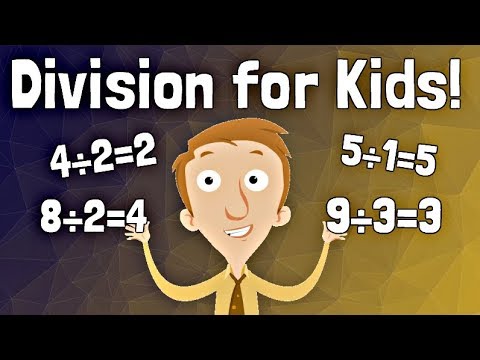
Division is a fundamental concept in mathematics, and it has numerous applications in various fields. The concept of division is closely related to Mathematics and Algebra. In simple terms, division is the process of sharing or grouping a certain quantity into equal parts. For instance, if we have 12 cookies and we want to share them equally among 4 people, we can use division to find out how many cookies each person will get. This concept is also closely related to Fractions and Ratios.
🤔 The Math Behind Division
The math behind division is based on the concept of inverse operations. In other words, division is the inverse operation of Multiplication. For example, if we have 12 cookies and we want to divide them among 4 people, we can think of it as finding the number of cookies each person will get if we multiply the number of people by the number of cookies each person will get. This concept is also closely related to Equations and Functions. The process of division involves Addition and Subtraction as well.
📊 The Method of Division
The method of division involves several steps, including Factoring, Simplifying, and Canceling. For instance, if we want to divide 12 by 4, we can simply cancel out the common factors between the numerator and the denominator. This concept is also closely related to Prime Numbers and Greatest Common Divisors. The method of division can be applied to various types of numbers, including Integers, Rational Numbers, and Complex Numbers.
📈 Division in Real-World Applications
Division has numerous real-world applications, including Science, Engineering, and Economics. For example, division is used in Physics to calculate the distance traveled by an object, and in Chemistry to calculate the amount of a substance required for a reaction. Division is also used in Finance to calculate the interest rate on a loan or the return on an investment. This concept is also closely related to Statistics and Data Analysis.
📚 History of Division
The history of division dates back to ancient civilizations, including the Babylonians and the Egyptians. These civilizations used division to calculate the area of land, the volume of water, and the number of people in a population. The concept of division was also developed by ancient Greek mathematicians, including Euclid and Archimedes. The modern concept of division was developed in the 16th century by European mathematicians, including John Napier and René Descartes.
👥 Division in Different Cultures
Division has been used in different cultures and civilizations throughout history. For example, the Mayans used a vigesimal (base-20) system to perform division, while the Hindus used a decimal (base-10) system. The concept of division was also developed by Chinese mathematicians, including Zu Chongzhi and Liu Hui. The use of division in different cultures and civilizations has contributed to the development of Mathematics Education and Cultural Diversity.
🤝 The Role of Division in Mathematics
The role of division in mathematics is crucial, as it provides a way to solve equations and inequalities. Division is also used to simplify expressions and to calculate the value of a function. The concept of division is closely related to Algebraic Equations and Transcendental Equations. The use of division in mathematics has contributed to the development of Calculus and Number Theory.
📊 Division Algorithms and Techniques
There are several division algorithms and techniques, including the Standard Division Algorithm and the Long Division Algorithm. These algorithms involve a series of steps, including Estimation, Calculation, and Verification. The use of division algorithms and techniques has contributed to the development of Computer Science and Information Technology.
📝 Notation and Representation of Division
The notation and representation of division have evolved over time. The modern notation for division, which involves the use of a horizontal line or a slash, was developed in the 16th century. The use of notation and representation in division has contributed to the development of Mathematical Notation and Symbolic Representation.
📊 Division in Computer Science
Division plays a crucial role in computer science, as it is used in Programming Languages and Algorithms. The use of division in computer science has contributed to the development of Artificial Intelligence and Machine Learning. The concept of division is also closely related to Data Structures and Software Engineering.
📈 The Impact of Division on Society
The impact of division on society is significant, as it has contributed to the development of Science and Technology. The use of division in science and technology has led to numerous innovations and discoveries, including the development of Medicine and Space Exploration. The concept of division has also contributed to the development of Economics and Finance, as it is used to calculate interest rates and investment returns.
🤔 Controversies and Debates Surrounding Division
There are several controversies and debates surrounding division, including the use of Decimal Division and the development of Alternative Division Algorithms. The use of division in mathematics education has also been a topic of debate, with some arguing that it should be taught earlier and others arguing that it should be taught later. The concept of division has also been the subject of philosophical debates, including the nature of Mathematical Truth and the role of Mathematics in Society.
Key Facts
- Year
- 1800
- Origin
- Babylon
- Category
- Mathematics
- Type
- Mathematical Concept
Frequently Asked Questions
What is division?
Division is a fundamental concept in mathematics that involves sharing or grouping a certain quantity into equal parts. It is closely related to Mathematics and Algebra. Division is used to solve equations and inequalities, and it has numerous real-world applications, including Science, Engineering, and Economics.
What are the different types of division?
There are several types of division, including Integer Division, Rational Division, and Complex Division. Each type of division has its own rules and applications, and they are used in different contexts, including Mathematics Education and Computer Science.
What is the history of division?
The history of division dates back to ancient civilizations, including the Babylonians and the Egyptians. The concept of division was developed by ancient Greek mathematicians, including Euclid and Archimedes. The modern concept of division was developed in the 16th century by European mathematicians, including John Napier and René Descartes.
What are the applications of division?
Division has numerous real-world applications, including Science, Engineering, and Economics. It is used to calculate the distance traveled by an object, the amount of a substance required for a reaction, and the interest rate on a loan or the return on an investment. Division is also used in Medicine and Space Exploration.
What are the controversies surrounding division?
There are several controversies and debates surrounding division, including the use of Decimal Division and the development of Alternative Division Algorithms. The use of division in mathematics education has also been a topic of debate, with some arguing that it should be taught earlier and others arguing that it should be taught later.
What is the role of division in mathematics?
The role of division in mathematics is crucial, as it provides a way to solve equations and inequalities. Division is also used to simplify expressions and to calculate the value of a function. The concept of division is closely related to Algebraic Equations and Transcendental Equations.
What are the different division algorithms and techniques?
There are several division algorithms and techniques, including the Standard Division Algorithm and the Long Division Algorithm. These algorithms involve a series of steps, including Estimation, Calculation, and Verification.