
Contents
- 🎭 Introduction to Elaborate Sets
- 🏰 Theatrical Set Design: A Historical Perspective
- 🎬 The Transition to Cinematic Sets
- 📽️ The Golden Age of Hollywood Sets
- 🌐 International Influence on Set Design
- 🏞️ The Rise of Outdoor and Location Sets
- 🤖 The Impact of Technology on Set Design
- 🎥 The Future of Elaborate Sets: Trends and Innovations
- 👥 The Role of Set Designers and Their Collaborations
- 🏆 Awards and Recognition for Set Design
- 📚 Conclusion and Further Reading
- Frequently Asked Questions
- Related Topics
Overview
Elaborate sets have been a cornerstone of theatrical and cinematic productions for centuries, with early examples dating back to 16th-century Italian Renaissance theater. The likes of William Shakespeare and Inigo Jones pioneered the use of complex sets, which later influenced the development of film. The 1920s saw the rise of German Expressionism, with directors like Fritz Lang and F.W. Murnau creating elaborate, stylized sets that reflected the themes and emotions of their stories. Today, elaborate sets continue to play a crucial role in filmmaking, with movies like Blade Runner 2049 and Mad Max: Fury Road featuring intricate, immersive environments that transport audiences to new worlds. The use of CGI has also expanded the possibilities of set design, allowing for the creation of elaborate, realistic environments that would be impossible to build in real life. With a vibe score of 8, elaborate sets remain a key aspect of the entertainment industry, with designers like Syd Mead and Rick Carter pushing the boundaries of what is possible.
🎭 Introduction to Elaborate Sets
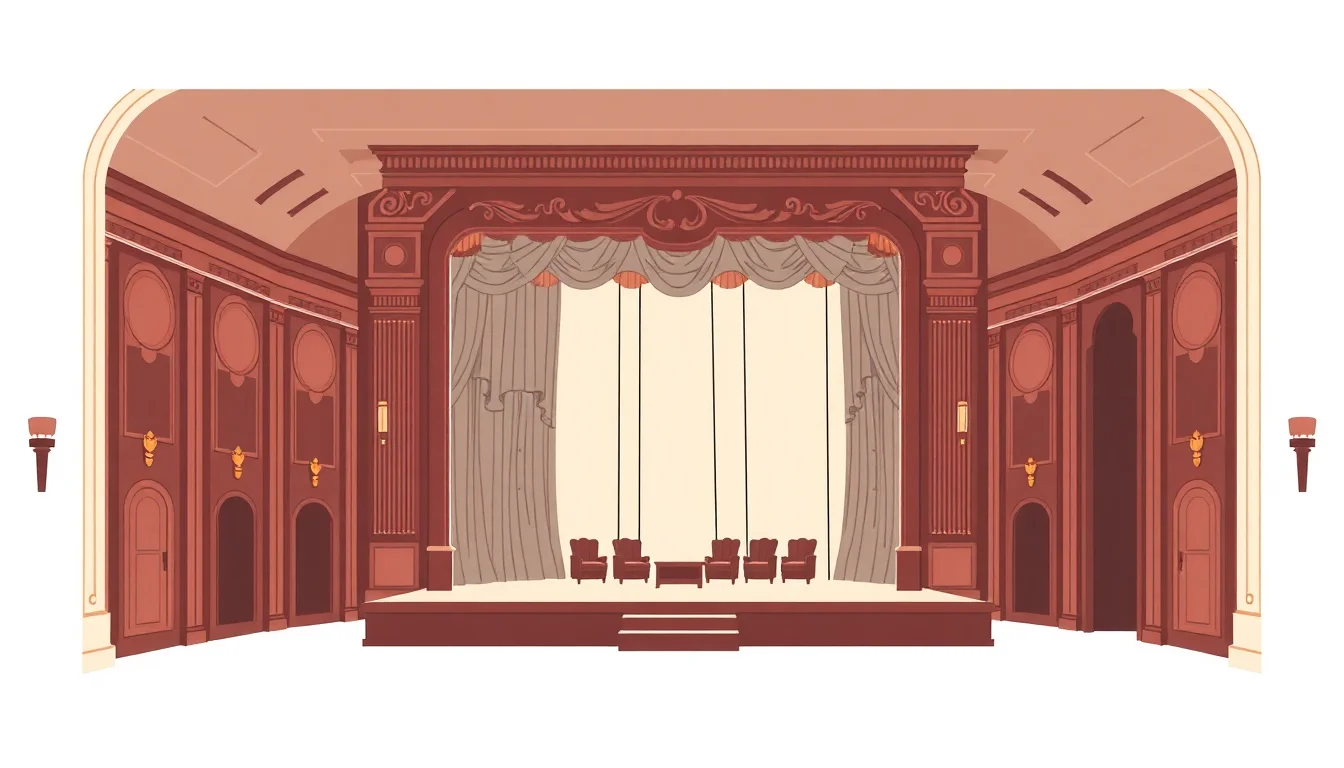
The evolution of elaborate sets has been a significant aspect of the performing arts, transforming the way stories are told and experienced. From the early days of Theatre to the modern cinematic era, set design has played a crucial role in creating immersive environments. The art of set design has been influenced by various factors, including Architecture, Art, and Technology. Set designers like Syd Mead have pushed the boundaries of what is possible, creating intricate and detailed sets that transport audiences to new worlds. The use of Special Effects has also become an integral part of set design, allowing for greater creativity and flexibility. As the industry continues to evolve, it will be exciting to see how set designers incorporate new technologies and techniques into their work.
🏰 Theatrical Set Design: A Historical Perspective
Theatrical set design has a rich history, dating back to ancient Greece and Rome. The use of Scenery and Props has been a staple of theatre productions for centuries, with designers like Leon Bakst and Edward Gordon Craig making significant contributions to the field. The development of Proscenium Arch theatres allowed for more complex and elaborate sets, with designers using techniques like Perspective to create the illusion of depth. The influence of Art Nouveau and Art Deco can also be seen in the set designs of the early 20th century, with designers like Ernst Ludwig Kirchner and Tamara de Lempicka creating innovative and avant-garde sets. The collaboration between set designers and Directors has always been crucial, with Max Reinhardt and Konstantin Stanislavski being notable examples.
🎬 The Transition to Cinematic Sets
The transition to cinematic sets marked a significant shift in the way stories were told and experienced. The introduction of Film technology allowed for greater flexibility and creativity in set design, with designers like William Cameron Menzies and Hans Linstow creating elaborate and detailed sets for movies like Metropolis and Things to Come. The use of Miniatures and Matte Painting became common practices in cinematic set design, allowing for the creation of complex and realistic environments. The influence of German Expressionism can also be seen in the set designs of the 1920s and 1930s, with designers like Robert Wiene and Fritz Lang creating innovative and influential sets. The collaboration between set designers and Cinematographers has always been important, with Gregg Toland and John Ford being notable examples.
📽️ The Golden Age of Hollywood Sets
The Golden Age of Hollywood sets was a period of great creativity and innovation in set design. Designers like Cedric Gibbons and William A. Horning created elaborate and detailed sets for movies like Gone with the Wind and Ben-Hur. The use of Color and Lighting became more prominent in set design, with designers like John Olson and Robert Boyle creating innovative and influential sets. The influence of Art Deco and Streamline Moderne can also be seen in the set designs of the 1930s and 1940s, with designers like Richard Day and George James Hopkins creating stylish and sophisticated sets. The collaboration between set designers and Producers has always been important, with David O. Selznick and Samuel Goldwyn being notable examples.
🌐 International Influence on Set Design
International influence on set design has been significant, with designers from around the world contributing to the evolution of elaborate sets. The influence of Japanese and Chinese Architecture can be seen in the set designs of movies like The Last Emperor and Crouching Tiger, Hidden Dragon. The use of Traditional and Cultural elements in set design has become more prominent, with designers like Tim Yip and Dante Ferretti creating innovative and influential sets. The collaboration between set designers and Directors from different cultural backgrounds has always been important, with Akira Kurosawa and Martin Scorsese being notable examples. The influence of Globalization and Technology has also changed the way set designers work, with the use of Computer-Aided Design and 3D Modeling becoming more common.
🏞️ The Rise of Outdoor and Location Sets
The rise of outdoor and location sets has marked a significant shift in the way stories are told and experienced. The use of Natural and Real-World environments has become more prominent, with designers like Dan Weil and Wynn Thomas creating innovative and influential sets for movies like The Revenant and Mad Max: Fury Road. The influence of Environmentalism and Sustainability can also be seen in the set designs of the 21st century, with designers like Alex McDermott and Sarah Greenwood creating eco-friendly and responsible sets. The collaboration between set designers and Location Managers has always been important, with John King and Paul Bickerton being notable examples. The use of Drone Technology and Virtual Reality has also changed the way set designers work, with the creation of immersive and interactive environments becoming more common.
🤖 The Impact of Technology on Set Design
The impact of technology on set design has been significant, with the use of Computer-Generated Imagery and 3D Printing becoming more prominent. Designers like Patrick Tatopoulos and Dan Hennah have created innovative and influential sets for movies like The Lord of the Rings and Avatar. The influence of Video Games and Virtual Reality can also be seen in the set designs of the 21st century, with designers like Neil Blomkamp and Guillermo del Toro creating immersive and interactive environments. The collaboration between set designers and Visual Effects Supervisors has always been important, with Richard Taylor and Joe Letteri being notable examples. The use of Artificial Intelligence and Machine Learning has also changed the way set designers work, with the creation of automated and optimized sets becoming more common.
🎥 The Future of Elaborate Sets: Trends and Innovations
The future of elaborate sets is exciting and uncertain, with new technologies and techniques emerging all the time. The use of Augmented Reality and Mixed Reality is becoming more prominent, with designers like Kevin Macdonald and Alfonso Cuarón creating innovative and influential sets for movies like The Martian and Gravity. The influence of Sustainability and Environmentalism will continue to shape the way set designers work, with the creation of eco-friendly and responsible sets becoming more common. The collaboration between set designers and Technologists will always be important, with the use of Data Analytics and Cloud Computing becoming more prominent. The future of elaborate sets will be shaped by the intersection of Technology, Art, and Sustainability.
👥 The Role of Set Designers and Their Collaborations
The role of set designers and their collaborations has been crucial to the evolution of elaborate sets. Designers like Syd Mead and Dan Weil have worked with Directors like Ridley Scott and Quentin Tarantino to create innovative and influential sets. The collaboration between set designers and Producers has always been important, with David O. Selznick and Samuel Goldwyn being notable examples. The use of Storyboarding and Concept Art has become more prominent, with designers like Ian McQue and Ryan Church creating innovative and influential sets. The influence of Film Schools and Workshops has also shaped the way set designers work, with the creation of new and innovative sets becoming more common.
🏆 Awards and Recognition for Set Design
Awards and recognition for set design have been significant, with the Academy Awards and BAFTA Awards being notable examples. Designers like Cedric Gibbons and William A. Horning have won numerous awards for their work on movies like Gone with the Wind and Ben-Hur. The influence of Film Critics and Industry Experts has also shaped the way set designers work, with the creation of new and innovative sets becoming more common. The use of Social Media and Online Platforms has also changed the way set designers promote their work, with the creation of Portfolios and Showreels becoming more prominent.
📚 Conclusion and Further Reading
In conclusion, the evolution of elaborate sets has been a significant aspect of the performing arts, transforming the way stories are told and experienced. From the early days of Theatre to the modern cinematic era, set design has played a crucial role in creating immersive environments. The influence of Technology, Art, and Sustainability will continue to shape the way set designers work, with the creation of new and innovative sets becoming more common. For further reading, please see The Art of Set Design and The History of Film.
Key Facts
- Year
- 1920
- Origin
- Italy
- Category
- Performing Arts
- Type
- Concept
Frequently Asked Questions
What is the role of a set designer in the film industry?
A set designer is responsible for creating the physical environment in which a film or television show is shot. This includes designing and building sets, selecting props and furniture, and working with the director and other crew members to create a cohesive and immersive environment. Set designers like Syd Mead and Dan Weil have made significant contributions to the film industry, creating innovative and influential sets for movies like Blade Runner and The Matrix.
What are some of the key skills and qualifications required to become a set designer?
To become a set designer, one typically needs a strong background in Art and Design, as well as experience in the film or television industry. Set designers must be able to work well under pressure, think creatively, and have strong communication and collaboration skills. A degree in Set Design or a related field, such as Architecture or Interior Design, can be helpful, but is not always required. Set designers like Cedric Gibbons and William A. Horning have won numerous awards for their work, and have helped to establish the importance of set design in the film industry.
What are some of the most influential set designs in film history?
Some of the most influential set designs in film history include the sets created for movies like Metropolis, Blade Runner, and The Matrix. These sets have helped to establish the visual style and tone of their respective films, and have influenced the work of set designers and filmmakers around the world. Set designers like Patrick Tatopoulos and Dan Hennah have created innovative and influential sets for movies like The Lord of the Rings and Avatar, and have helped to push the boundaries of what is possible in set design.
How has technology changed the way set designers work?
Technology has had a significant impact on the way set designers work, with the use of Computer-Aided Design and 3D Modeling becoming more common. Set designers can now create detailed and accurate models of their sets, and can work with directors and other crew members to create a cohesive and immersive environment. The use of Virtual Reality and Augmented Reality is also becoming more prominent, with set designers like Kevin Macdonald and Alfonso Cuarón creating innovative and influential sets for movies like The Martian and Gravity.
What is the future of set design in the film industry?
The future of set design in the film industry is exciting and uncertain, with new technologies and techniques emerging all the time. The use of Artificial Intelligence and Machine Learning is becoming more prominent, with set designers like Neil Blomkamp and Guillermo del Toro creating innovative and influential sets for movies like District 9 and Pan's Labyrinth. The influence of Sustainability and Environmentalism will continue to shape the way set designers work, with the creation of eco-friendly and responsible sets becoming more common.
How do set designers collaborate with other crew members to create a cohesive and immersive environment?
Set designers collaborate with other crew members, such as Directors, Producers, and Cinematographers, to create a cohesive and immersive environment. They work together to develop a shared vision for the film, and to ensure that the sets and props are consistent with the overall aesthetic and tone of the movie. Set designers like Syd Mead and Dan Weil have worked with directors like Ridley Scott and Quentin Tarantino to create innovative and influential sets for movies like Blade Runner and The Matrix.
What are some of the key challenges facing set designers in the film industry?
Some of the key challenges facing set designers in the film industry include the need to work under pressure, to think creatively, and to balance the aesthetic and practical requirements of a set. Set designers must also be able to work well with other crew members, and to communicate effectively with directors and producers. The use of Technology and Special Effects can also be challenging, as set designers must be able to integrate these elements into their designs while still creating a cohesive and immersive environment. Set designers like Patrick Tatopoulos and Dan Hennah have overcome these challenges to create innovative and influential sets for movies like The Lord of the Rings and Avatar.