
Contents
- 🖥️ Introduction to Main Memory
- 💻 Evolution of Main Memory
- 📈 Types of Main Memory
- 🔍 Main Memory Hierarchy
- 📊 Main Memory Performance Metrics
- 🔩 Main Memory Technologies
- 📈 Future of Main Memory
- 🤔 Challenges in Main Memory
- 📊 Main Memory Optimization Techniques
- 📈 Main Memory and Emerging Trends
- 📊 Conclusion
- Frequently Asked Questions
- Related Topics
Overview
Main memory, also known as Random Access Memory (RAM), is a fundamental component of modern computing, enabling fast data access and processing. With a history dating back to the 1940s, main memory has undergone significant transformations, from magnetic drums to dynamic RAM (DRAM) and synchronous DRAM (SDRAM). Today, main memory plays a critical role in determining system performance, with high-speed interfaces like DDR5 and emerging technologies like phase-change memory (PCM) and spin-transfer torque magnetic recording (STT-MRAM) promising even faster and more efficient data storage. However, the increasing demand for memory bandwidth and capacity has sparked debates about the future of main memory, with some advocating for novel architectures like hybrid memory cube (HMC) and others pushing for advancements in traditional DRAM. As the tech industry continues to evolve, the development of main memory will be shaped by the interplay between technological innovation, market demand, and economic factors. With a Vibe score of 8, indicating significant cultural energy, the main memory landscape is poised for disruption, with key players like Samsung, Micron, and Intel influencing the trajectory of this critical component.
🖥️ Introduction to Main Memory
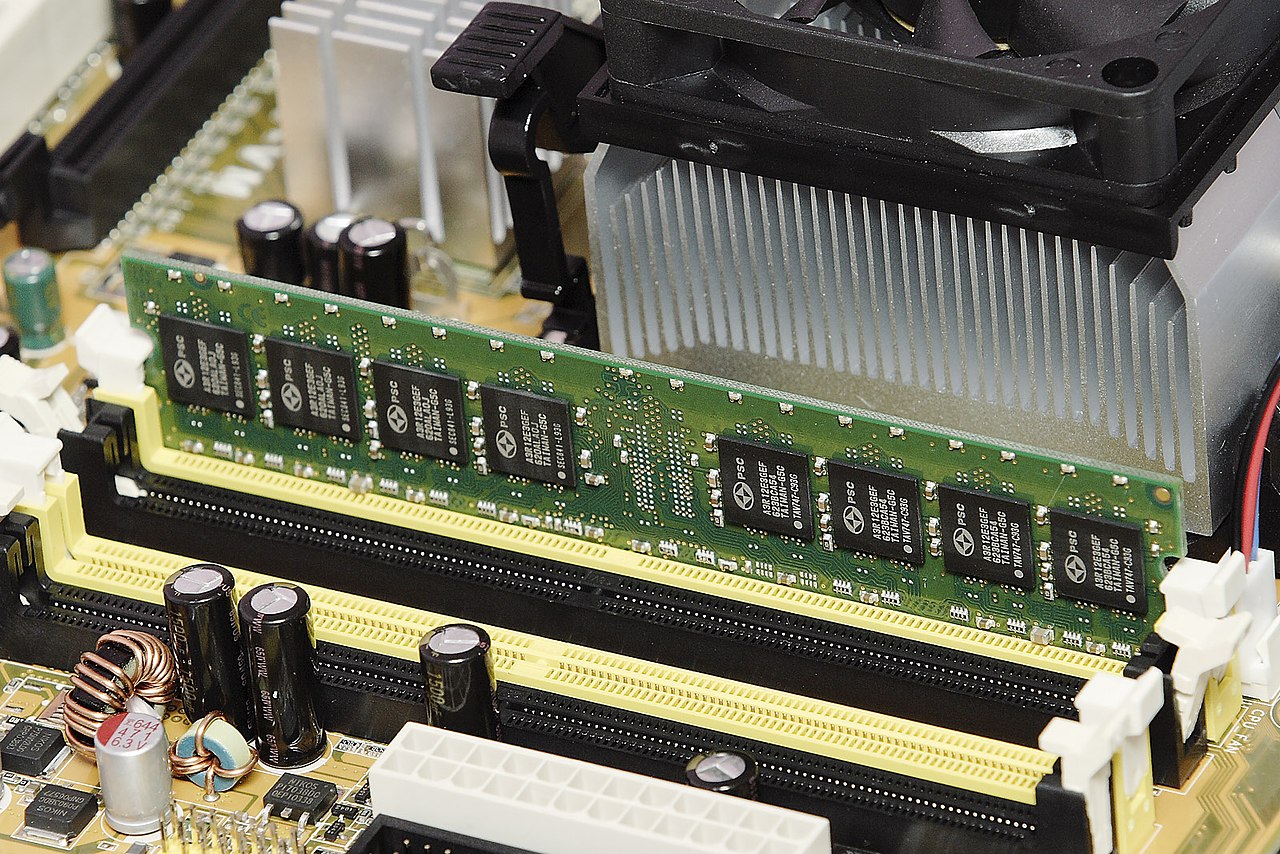
Main memory, also known as primary memory, is a crucial component of a computer system. It is a volatile memory technology that stores data temporarily while a computer is running. The Computer Architecture of a system plays a significant role in determining the main memory's performance. Main memory is responsible for storing data that the Central Processing Unit (CPU) uses to perform calculations and execute instructions. The Random Access Memory (RAM) is a type of main memory that allows data to be read and written quickly. In contrast, Read-Only Memory (ROM) is a type of non-volatile memory that stores data permanently.
💻 Evolution of Main Memory
The evolution of main memory has been significant over the years. The first computers used Magnetic Drums as main memory, which were later replaced by Magnetic Cores. The introduction of Integrated Circuits led to the development of Semiconductor Memory, which is still widely used today. The Dynamic Random Access Memory (DRAM) is a type of semiconductor memory that stores data in capacitors. The Static Random Access Memory (SRAM) is another type of semiconductor memory that stores data in flip-flops. The Double Data Rate SDRAM (DDR SDRAM) is a type of DRAM that transfers data on both the rising and falling edges of the clock signal.
📈 Types of Main Memory
There are several types of main memory, including Random Access Memory (RAM), Read-Only Memory (ROM), and Flash Memory. RAM is a volatile memory technology that loses its data when the power is turned off. ROM is a non-volatile memory technology that stores data permanently. Flash memory is a type of non-volatile memory that can be erased and reprogrammed. The Phase Change Memory (PCM) is a type of non-volatile memory that stores data by changing the phase of a material. The Spin-Transfer Torque MRAM (STT-MRAM) is a type of non-volatile memory that stores data by changing the magnetization of a material.
🔍 Main Memory Hierarchy
The main memory hierarchy is a concept that describes the different levels of memory in a computer system. The hierarchy consists of the Register File, Cache Memory, Main Memory, and Secondary Storage. The register file is a small amount of memory that stores data temporarily while it is being processed by the CPU. The cache memory is a small amount of memory that stores frequently used data. The main memory is a larger amount of memory that stores data that is not currently being used by the CPU. The secondary storage is a non-volatile memory technology that stores data permanently, such as a Hard Disk Drive (HDD) or a Solid State Drive (SSD).
📊 Main Memory Performance Metrics
The performance of main memory is measured using several metrics, including Access Time, Cycle Time, and Bandwidth. The access time is the time it takes for the CPU to access data in main memory. The cycle time is the time it takes for the CPU to complete one cycle of operation. The bandwidth is the amount of data that can be transferred between the CPU and main memory per unit of time. The Latency is the time it takes for the CPU to receive data from main memory. The Throughput is the amount of data that can be processed by the CPU per unit of time.
🔩 Main Memory Technologies
Several technologies are used to implement main memory, including Dynamic Random Access Memory (DRAM), Static Random Access Memory (SRAM), and Flash Memory. DRAM is a type of semiconductor memory that stores data in capacitors. SRAM is a type of semiconductor memory that stores data in flip-flops. Flash memory is a type of non-volatile memory that can be erased and reprogrammed. The Ferroelectric Random Access Memory (FeRAM) is a type of non-volatile memory that stores data by changing the polarization of a material.
📈 Future of Main Memory
The future of main memory is expected to be shaped by several emerging trends, including the increasing demand for Artificial Intelligence (AI) and Machine Learning (ML) applications. The High Bandwidth Memory (HBM) is a type of memory that provides high bandwidth and low latency. The Hybrid Memory Cube (HMC) is a type of memory that provides high bandwidth and low power consumption. The Three-Dimensional XPoint (3D XPoint) is a type of non-volatile memory that stores data in a three-dimensional structure.
🤔 Challenges in Main Memory
Several challenges are associated with main memory, including the Scalability of memory technology, the Power Consumption of memory devices, and the Cost of memory. The scalability of memory technology refers to the ability of memory devices to store increasing amounts of data. The power consumption of memory devices refers to the amount of power required to operate memory devices. The cost of memory refers to the cost of purchasing and maintaining memory devices. The Reliability of memory devices is also a significant challenge, as it refers to the ability of memory devices to store data correctly and retrieve it when needed.
📊 Main Memory Optimization Techniques
Several techniques are used to optimize the performance of main memory, including Cache Hierarchy optimization, Memory Compression, and Memory Prediction. The cache hierarchy optimization refers to the technique of optimizing the cache memory to minimize the number of cache misses. The memory compression refers to the technique of compressing data to reduce the amount of memory required to store it. The memory prediction refers to the technique of predicting the memory access pattern to minimize the number of cache misses. The Pre-fetching technique is used to pre-fetch data into the cache before it is actually needed.
📈 Main Memory and Emerging Trends
Main memory is closely related to several emerging trends, including Cloud Computing, Edge Computing, and Internet of Things (IoT). The cloud computing refers to the technique of providing computing resources over the internet. The edge computing refers to the technique of providing computing resources at the edge of the network. The IoT refers to the network of physical devices that are connected to the internet. The Fog Computing is a type of computing that provides computing resources at the edge of the network. The Neuromorphic Computing is a type of computing that is inspired by the structure and function of the brain.
📊 Conclusion
In conclusion, main memory is a critical component of a computer system that plays a significant role in determining the performance of the system. The evolution of main memory has been significant over the years, and several technologies are used to implement main memory. The future of main memory is expected to be shaped by several emerging trends, including the increasing demand for AI and ML applications. The challenges associated with main memory include the scalability of memory technology, the power consumption of memory devices, and the cost of memory. The techniques used to optimize the performance of main memory include cache hierarchy optimization, memory compression, and memory prediction.
Key Facts
- Year
- 2022
- Origin
- USA
- Category
- Computer Science
- Type
- Technology
Frequently Asked Questions
What is main memory?
Main memory, also known as primary memory, is a volatile memory technology that stores data temporarily while a computer is running. It is a crucial component of a computer system that plays a significant role in determining the performance of the system. The Computer Architecture of a system plays a significant role in determining the main memory's performance. Main memory is responsible for storing data that the Central Processing Unit (CPU) uses to perform calculations and execute instructions.
What are the different types of main memory?
There are several types of main memory, including Random Access Memory (RAM), Read-Only Memory (ROM), and Flash Memory. RAM is a volatile memory technology that loses its data when the power is turned off. ROM is a non-volatile memory technology that stores data permanently. Flash memory is a type of non-volatile memory that can be erased and reprogrammed. The Phase Change Memory (PCM) is a type of non-volatile memory that stores data by changing the phase of a material.
What is the main memory hierarchy?
The main memory hierarchy is a concept that describes the different levels of memory in a computer system. The hierarchy consists of the Register File, Cache Memory, Main Memory, and Secondary Storage. The register file is a small amount of memory that stores data temporarily while it is being processed by the CPU. The cache memory is a small amount of memory that stores frequently used data. The main memory is a larger amount of memory that stores data that is not currently being used by the CPU. The secondary storage is a non-volatile memory technology that stores data permanently, such as a Hard Disk Drive (HDD) or a Solid State Drive (SSD).
What are the challenges associated with main memory?
Several challenges are associated with main memory, including the Scalability of memory technology, the Power Consumption of memory devices, and the Cost of memory. The scalability of memory technology refers to the ability of memory devices to store increasing amounts of data. The power consumption of memory devices refers to the amount of power required to operate memory devices. The cost of memory refers to the cost of purchasing and maintaining memory devices. The Reliability of memory devices is also a significant challenge, as it refers to the ability of memory devices to store data correctly and retrieve it when needed.
What are the techniques used to optimize the performance of main memory?
Several techniques are used to optimize the performance of main memory, including Cache Hierarchy optimization, Memory Compression, and Memory Prediction. The cache hierarchy optimization refers to the technique of optimizing the cache memory to minimize the number of cache misses. The memory compression refers to the technique of compressing data to reduce the amount of memory required to store it. The memory prediction refers to the technique of predicting the memory access pattern to minimize the number of cache misses. The Pre-fetching technique is used to pre-fetch data into the cache before it is actually needed.
What is the future of main memory?
The future of main memory is expected to be shaped by several emerging trends, including the increasing demand for Artificial Intelligence (AI) and Machine Learning (ML) applications. The High Bandwidth Memory (HBM) is a type of memory that provides high bandwidth and low latency. The Hybrid Memory Cube (HMC) is a type of memory that provides high bandwidth and low power consumption. The Three-Dimensional XPoint (3D XPoint) is a type of non-volatile memory that stores data in a three-dimensional structure.
How does main memory relate to emerging trends?
Main memory is closely related to several emerging trends, including Cloud Computing, Edge Computing, and Internet of Things (IoT). The cloud computing refers to the technique of providing computing resources over the internet. The edge computing refers to the technique of providing computing resources at the edge of the network. The IoT refers to the network of physical devices that are connected to the internet. The Fog Computing is a type of computing that provides computing resources at the edge of the network. The Neuromorphic Computing is a type of computing that is inspired by the structure and function of the brain.