
Contents
- 📸 Introduction to No Photography
- 🔒 Intellectual Property Rights in Photography
- 🚫 Restrictions on Photography
- 👮 Civil and Criminal Law
- 🤐 Privacy Concerns
- 🚸 Protecting Children
- 🌎 Jurisdictional Variations
- 📊 The Impact of No Photography
- 📸 The Role of Technology
- 👥 Societal Implications
- 🔍 Conclusion
- Frequently Asked Questions
- Related Topics
Overview
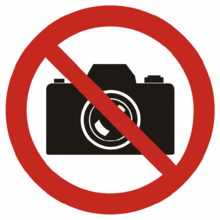
No photography, a phenomenon where individuals or institutions restrict or prohibit the act of taking pictures, has been a contentious issue throughout history. From museums and art galleries to government buildings and private properties, the reasons behind these restrictions vary widely, often reflecting deeper societal concerns about privacy, security, and intellectual property. The historian might note that such restrictions have been in place since the early days of photography, with the first camera restrictions appearing in the mid-19th century. The skeptic, however, might question the effectiveness and fairness of these restrictions, especially in an era where camera-equipped smartphones are ubiquitous. The fan of photography might lament the loss of creative opportunities, while the engineer might ponder the technical challenges of enforcing such bans. As we move forward, the futurist wonders how advancements in technology, such as drone photography and social media, will continue to challenge and redefine the concept of no photography. With a vibe score of 6, indicating a moderate level of cultural energy, the debate around no photography is likely to persist, influencing how we interact with our surroundings and each other.
📸 Introduction to No Photography
The concept of no photography is a complex and multifaceted issue that intersects with various aspects of society, including law, technology, and culture. As discussed in Sociology of Technology, the study of no photography requires an understanding of the social and cultural contexts in which photography is used and restricted. The Intellectual Property rights on photographs are protected in different jurisdictions by the laws governing Copyright and Moral Rights. For instance, the Berne Convention sets out the minimum standards for copyright protection, including the protection of photographic works.
🔒 Intellectual Property Rights in Photography
The protection of intellectual property rights in photography is crucial for photographers and creators who rely on their work for livelihood. However, the laws governing Copyright Infringement can be complex and nuanced, and photographers must be aware of their rights and responsibilities. As noted in Photography Law, the restrictions on photography can vary significantly depending on the jurisdiction. In some cases, photography may be restricted by Civil Law or Criminal Law, and photographers must be aware of these restrictions to avoid legal repercussions.
🚫 Restrictions on Photography
The restrictions on photography can be broadly categorized into several areas, including privacy concerns, protection of children, and public morality. As discussed in Privacy Laws, the publication of certain photographs can be restricted by Privacy or other laws. For example, the General Data Protection Regulation (GDPR) in the European Union sets out strict rules for the collection and use of personal data, including photographs. Photographers must be aware of these laws and regulations to avoid violating individuals' privacy rights.
👮 Civil and Criminal Law
The protection of children is a critical aspect of no photography, and photographers must be aware of the laws and regulations governing the photography of minors. As noted in Child Protection, the photography of children can be restricted in the interests of public morality and the protection of children. For instance, the Children's Online Privacy Protection Act (COPPA) in the United States sets out strict rules for the collection and use of personal data from children under the age of 13.
🤐 Privacy Concerns
The jurisdictional variations in no photography laws and regulations can be significant, and photographers must be aware of these variations to avoid legal repercussions. As discussed in Jurisdiction, the laws governing photography can vary significantly depending on the country, state, or region. For example, the Photography Laws in the United States are different from those in Photography Laws in the European Union. Photographers must be aware of these variations to ensure that they are complying with the relevant laws and regulations.
🚸 Protecting Children
The impact of no photography on society can be significant, and photographers must be aware of the potential consequences of their actions. As noted in Societal Implications, the restrictions on photography can have a significant impact on freedom of expression and the ability of photographers to document and report on important issues. For instance, the Freedom of the Press is an important aspect of a democratic society, and photographers play a critical role in documenting and reporting on important issues.
🌎 Jurisdictional Variations
The role of technology in no photography is complex and multifaceted, and photographers must be aware of the potential risks and benefits of using technology in their work. As discussed in Technology and Photography, the use of technology can facilitate the creation and dissemination of photographs, but it can also raise important questions about privacy and intellectual property rights. For example, the use of Drone Photography can raise important questions about privacy and surveillance, and photographers must be aware of these issues to avoid legal repercussions.
📊 The Impact of No Photography
The societal implications of no photography are significant, and photographers must be aware of the potential consequences of their actions. As noted in Social Implications, the restrictions on photography can have a significant impact on freedom of expression and the ability of photographers to document and report on important issues. For instance, the Importance of Photography in documenting and reporting on important issues cannot be overstated, and photographers play a critical role in shaping public opinion and awareness.
📸 The Role of Technology
In conclusion, the concept of no photography is complex and multifaceted, and photographers must be aware of the laws, regulations, and social implications of their work. As discussed in Conclusion, the restrictions on photography can have a significant impact on freedom of expression and the ability of photographers to document and report on important issues. Photographers must be aware of their rights and responsibilities, and must be mindful of the potential consequences of their actions. By understanding the laws and regulations governing no photography, photographers can ensure that they are complying with the relevant laws and regulations, and can avoid legal repercussions.
👥 Societal Implications
The future of no photography is uncertain, and photographers must be aware of the potential risks and benefits of using technology in their work. As noted in Future of Photography, the use of technology can facilitate the creation and dissemination of photographs, but it can also raise important questions about privacy and intellectual property rights. For instance, the use of Artificial Intelligence in photography can raise important questions about authorship and ownership, and photographers must be aware of these issues to avoid legal repercussions.
🔍 Conclusion
In the final analysis, the concept of no photography is complex and multifaceted, and photographers must be aware of the laws, regulations, and social implications of their work. As discussed in Final Thoughts, the restrictions on photography can have a significant impact on freedom of expression and the ability of photographers to document and report on important issues. By understanding the laws and regulations governing no photography, photographers can ensure that they are complying with the relevant laws and regulations, and can avoid legal repercussions.
Key Facts
- Year
- 2023
- Origin
- Global, with earliest recorded instances in Europe and North America
- Category
- Sociology of Technology
- Type
- Social Phenomenon
Frequently Asked Questions
What are the intellectual property rights on photographs?
The intellectual property rights on photographs are protected in different jurisdictions by the laws governing copyright and moral rights. The Berne Convention sets out the minimum standards for copyright protection, including the protection of photographic works. Photographers must be aware of their rights and responsibilities, and must be mindful of the potential consequences of their actions.
What are the restrictions on photography?
The restrictions on photography can be broadly categorized into several areas, including privacy concerns, protection of children, and public morality. The publication of certain photographs can be restricted by privacy or other laws, and photographers must be aware of these laws and regulations to avoid violating individuals' privacy rights.
How do jurisdictional variations affect no photography laws and regulations?
The jurisdictional variations in no photography laws and regulations can be significant, and photographers must be aware of these variations to avoid legal repercussions. The laws governing photography can vary significantly depending on the country, state, or region, and photographers must be aware of these variations to ensure that they are complying with the relevant laws and regulations.
What is the impact of no photography on society?
The impact of no photography on society can be significant, and photographers must be aware of the potential consequences of their actions. The restrictions on photography can have a significant impact on freedom of expression and the ability of photographers to document and report on important issues. Photographers play a critical role in shaping public opinion and awareness, and the restrictions on photography can have a significant impact on their ability to do so.
What is the role of technology in no photography?
The role of technology in no photography is complex and multifaceted, and photographers must be aware of the potential risks and benefits of using technology in their work. The use of technology can facilitate the creation and dissemination of photographs, but it can also raise important questions about privacy and intellectual property rights. Photographers must be aware of these issues to avoid legal repercussions.