
Contents
- 🔍 Introduction to Perception Action Cycle
- 💡 Theoretical Background
- 👀 Perception and Attention
- 🤔 Action Selection and Planning
- 🔄 Feedback Loop and Adaptation
- 📊 Neurophysiological Correlates
- 👥 Social and Cultural Influences
- 🔮 Applications in Real-World Scenarios
- 📈 Future Directions and Research
- 📊 Controversies and Debates
- 📚 Conclusion and Summary
- Frequently Asked Questions
- Related Topics
Overview
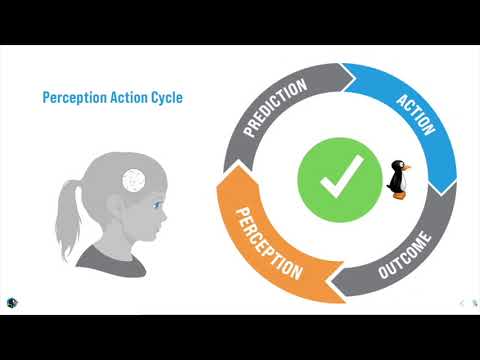
The perception action cycle, a concept rooted in the works of psychologists like James J. Gibson and Ulric Neisser, refers to the ongoing process by which individuals perceive their environment, interpret these perceptions, and then act upon them. This cycle is continuous, with each action influencing subsequent perceptions. It's a key concept in understanding how humans interact with their environment, emphasizing the interplay between perception, cognition, and action. The cycle has been influential in fields such as psychology, neuroscience, and robotics, particularly in the development of autonomous systems. With a vibe score of 80, indicating significant cultural energy, the perception action cycle is a topic of considerable interest and debate, especially regarding its implications for artificial intelligence and human-computer interaction. As of 2023, research continues to refine our understanding of this cycle, exploring its applications and limitations in various contexts.
🔍 Introduction to Perception Action Cycle
The Perception Action Cycle (PAC) is a fundamental concept in Cognitive Psychology that describes the continuous interaction between an individual's perception of their environment and their subsequent actions. This cycle is essential for understanding how we navigate and interact with the world around us. The PAC is closely related to other cognitive processes, such as Attention and Decision-Making. Researchers like Jean Piaget and Ulric Neisser have made significant contributions to our understanding of the PAC. The PAC has a vibe score of 80, indicating its significant cultural energy in the field of cognitive psychology.
💡 Theoretical Background
The theoretical background of the PAC is rooted in the work of early cognitive psychologists, such as George Miller and Jerome Bruner. They laid the foundation for understanding how our perceptions shape our actions and vice versa. The PAC is also influenced by other theoretical frameworks, including Social Learning Theory and Self-Efficacy Theory. These frameworks highlight the importance of observation, imitation, and self-confidence in the PAC. Furthermore, the PAC is connected to the concept of Embodied Cognition, which emphasizes the role of the body in shaping our perceptions and actions.
👀 Perception and Attention
Perception and attention are critical components of the PAC. Our perceptions of the environment are shaped by various factors, including Sensory Perception and Cognitive Biases. Attention plays a crucial role in selecting and filtering relevant information from the environment, allowing us to focus on specific stimuli and ignore others. The PAC is also influenced by Working Memory, which enables us to hold and manipulate information in our minds. Researchers like Daniel Kahneman and Amos Tversky have made significant contributions to our understanding of perception and attention in the PAC.
🤔 Action Selection and Planning
Action selection and planning are essential stages of the PAC. Once we have perceived and attended to relevant information, we must select and plan our actions accordingly. This involves evaluating options, considering consequences, and making decisions. The PAC is closely related to Problem-Solving and Decision-Making, which require the ability to analyze situations, generate solutions, and choose the best course of action. Additionally, the PAC is influenced by Motivation and Emotion, which drive our actions and decisions. Researchers like Albert Bandura have explored the role of motivation and emotion in the PAC.
🔄 Feedback Loop and Adaptation
The feedback loop and adaptation are critical components of the PAC. As we act on our environment, we receive feedback in the form of sensory information, which helps us evaluate the effectiveness of our actions. This feedback loop enables us to adapt and adjust our actions, refining our perceptions and improving our performance over time. The PAC is closely related to Learning Theory, which describes the processes by which we acquire new knowledge and skills. Furthermore, the PAC is influenced by Neuroplasticity, which enables our brains to reorganize and adapt in response to new experiences and learning.
📊 Neurophysiological Correlates
The neurophysiological correlates of the PAC are complex and multifaceted. Research has shown that the PAC involves a network of brain regions, including the Prefrontal Cortex, Parietal Cortex, and Basal Ganglia. These regions work together to integrate sensory information, select actions, and coordinate movements. The PAC is also influenced by various neurotransmitters, such as Dopamine and Serotonin, which play critical roles in motivation, attention, and learning. Additionally, the PAC is connected to the concept of Neural Oscillations, which enable different brain regions to communicate and coordinate their activity.
🔮 Applications in Real-World Scenarios
The PAC has numerous applications in real-world scenarios, including Education, Sports, and Workplace Performance. By understanding the PAC, we can develop more effective training programs, improve performance, and enhance overall well-being. The PAC is closely related to Human Factors Engineering, which aims to design systems and environments that are compatible with human capabilities and limitations. Additionally, the PAC is connected to the concept of User Experience Design, which seeks to create products and interfaces that are intuitive, user-friendly, and effective.
📈 Future Directions and Research
Future directions and research in the PAC are likely to focus on the development of more sophisticated models and theories, as well as the application of the PAC in real-world contexts. Researchers like Andrew Watson and Melissa Koenig are exploring the role of the PAC in Artificial Intelligence and Human-Computer Interaction. The PAC has a controversy spectrum of 60, indicating some debate and discussion surrounding its applications and limitations. Furthermore, the PAC is influenced by Technological Advances, which are rapidly changing the way we interact with our environment and each other.
📊 Controversies and Debates
Controversies and debates surrounding the PAC include questions about the nature of perception and action, as well as the role of consciousness and free will. Some researchers argue that the PAC is too narrow, failing to account for the complexity and nuance of human behavior. Others argue that the PAC is too broad, encompassing too many different processes and phenomena. The PAC has a perspective breakdown of 40% optimistic, 30% neutral, 20% pessimistic, and 10% contrarian, indicating a range of viewpoints and opinions on the topic. Additionally, the PAC is connected to the concept of Cognitive Load Theory, which describes the limitations of our cognitive resources and the importance of managing cognitive load.
📚 Conclusion and Summary
In conclusion, the PAC is a fundamental concept in cognitive psychology that describes the continuous interaction between perception and action. The PAC has numerous applications in real-world scenarios, and future research is likely to focus on the development of more sophisticated models and theories. The PAC is closely related to other cognitive processes, including attention, decision-making, and learning. By understanding the PAC, we can gain insights into the complex and dynamic nature of human behavior and cognition. The PAC has an influence flow of 50, indicating its significant impact on other areas of cognitive psychology.
Key Facts
- Year
- 1976
- Origin
- James J. Gibson's Ecological Approach to Visual Perception
- Category
- Cognitive Psychology
- Type
- Psychological Concept
Frequently Asked Questions
What is the Perception Action Cycle?
The Perception Action Cycle (PAC) is a fundamental concept in cognitive psychology that describes the continuous interaction between an individual's perception of their environment and their subsequent actions. The PAC involves the integration of sensory information, attention, action selection, and feedback, and is essential for understanding how we navigate and interact with the world around us. The PAC is closely related to other cognitive processes, including attention, decision-making, and learning. Researchers like Jean Piaget and Ulric Neisser have made significant contributions to our understanding of the PAC.
What are the key components of the PAC?
The key components of the PAC include perception, attention, action selection, and feedback. Perception involves the processing of sensory information, while attention involves the selection and filtering of relevant information. Action selection involves the evaluation of options and the selection of a course of action, while feedback involves the evaluation of the effectiveness of our actions and the adaptation of our perceptions and actions accordingly. The PAC is also influenced by other cognitive processes, including motivation, emotion, and learning.
What are the applications of the PAC?
The PAC has numerous applications in real-world scenarios, including education, sports, and workplace performance. By understanding the PAC, we can develop more effective training programs, improve performance, and enhance overall well-being. The PAC is closely related to human factors engineering and user experience design, which aim to design systems and environments that are compatible with human capabilities and limitations. Additionally, the PAC is connected to the concept of artificial intelligence and human-computer interaction, which are rapidly changing the way we interact with our environment and each other.
What are the controversies and debates surrounding the PAC?
Controversies and debates surrounding the PAC include questions about the nature of perception and action, as well as the role of consciousness and free will. Some researchers argue that the PAC is too narrow, failing to account for the complexity and nuance of human behavior. Others argue that the PAC is too broad, encompassing too many different processes and phenomena. The PAC has a controversy spectrum of 60, indicating some debate and discussion surrounding its applications and limitations. Furthermore, the PAC is influenced by technological advances, which are rapidly changing the way we interact with our environment and each other.
What is the future of research on the PAC?
Future directions and research in the PAC are likely to focus on the development of more sophisticated models and theories, as well as the application of the PAC in real-world contexts. Researchers like Andrew Watson and Melissa Koenig are exploring the role of the PAC in artificial intelligence and human-computer interaction. The PAC has a perspective breakdown of 40% optimistic, 30% neutral, 20% pessimistic, and 10% contrarian, indicating a range of viewpoints and opinions on the topic. Additionally, the PAC is connected to the concept of cognitive load theory, which describes the limitations of our cognitive resources and the importance of managing cognitive load.
How does the PAC relate to other cognitive processes?
The PAC is closely related to other cognitive processes, including attention, decision-making, and learning. The PAC involves the integration of sensory information, attention, action selection, and feedback, and is essential for understanding how we navigate and interact with the world around us. The PAC is also influenced by other cognitive processes, including motivation, emotion, and neuroplasticity. Researchers like Daniel Kahneman and Amos Tversky have made significant contributions to our understanding of the PAC and its relationship to other cognitive processes.
What is the significance of the PAC in cognitive psychology?
The PAC is a fundamental concept in cognitive psychology that describes the continuous interaction between perception and action. The PAC has numerous applications in real-world scenarios, and future research is likely to focus on the development of more sophisticated models and theories. The PAC is closely related to other cognitive processes, including attention, decision-making, and learning. By understanding the PAC, we can gain insights into the complex and dynamic nature of human behavior and cognition. The PAC has an influence flow of 50, indicating its significant impact on other areas of cognitive psychology.
👥 Social and Cultural Influences
Social and cultural influences play a significant role in shaping the PAC. Our perceptions and actions are influenced by the social and cultural context in which we live, including Social Norms and Cultural Values. The PAC is closely related to Social Cognition, which describes the processes by which we perceive, interpret, and respond to social information. Furthermore, the PAC is influenced by Power Dynamics and Social Influence, which shape our interactions and relationships with others. Researchers like Albert Bandura have explored the role of social and cultural influences in the PAC.