
Contents
- 👮 Introduction to Probation Officers
- 📚 History of Probation and Parole
- 👥 Roles and Responsibilities
- 🔍 Investigation and Reporting
- 📊 Supervision and Community Engagement
- 🚔 Law Enforcement Partnerships
- 📈 Challenges and Controversies
- 🌎 International Perspectives
- 📊 Best Practices and Reform
- 👥 Training and Professional Development
- 🔒 Technology and Innovation
- 👀 Future of Probation and Parole
- Frequently Asked Questions
- Related Topics
Overview
Probation officers play a crucial role in the criminal justice system, working with offenders to prevent recidivism and promote rehabilitation. With a caseload of approximately 3.9 million offenders in the United States alone, as of 2020, probation officers are responsible for conducting risk assessments, developing rehabilitation plans, and monitoring compliance with court-ordered conditions. The job requires a unique blend of social work, law enforcement, and counseling skills, with a median annual salary of $60,250, according to the Bureau of Labor Statistics. Despite the challenges, many probation officers find the work highly rewarding, with a job satisfaction rate of 4.2 out of 5, according to a survey by the American Probation and Parole Association. However, the profession is not without controversy, with debates surrounding the use of electronic monitoring, the impact of systemic bias, and the need for increased funding and resources. As the criminal justice system continues to evolve, the role of probation officers is likely to become even more critical in promoting community safety and reducing recidivism rates.
👮 Introduction to Probation Officers
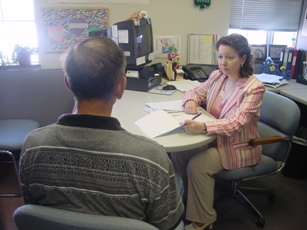
Probation officers play a crucial role in the criminal justice system, working with law enforcement agencies to ensure that offenders comply with the terms of their probation or parole. As part of their duties, they conduct regular check-ins with offenders, monitor their behavior, and provide support and guidance to help them reintegrate into society. According to the National Institute of Justice, there are over 60,000 probation and parole officers employed in the United States alone. These officers work closely with courts and corrections agencies to ensure that offenders receive the necessary support and supervision to become productive members of society.
📚 History of Probation and Parole
The concept of probation and parole has a long history, dating back to the 19th century. The first probation officers were appointed in Boston in 1878, and the practice quickly spread to other parts of the country. Today, probation and parole officers are employed by government agencies at the federal, state, and local levels, as well as by private companies that provide contracted services to the government. For example, the Federal Bureau of Prisons employs probation officers to supervise offenders who have been released from federal prison. In addition, many non-profit organizations provide support services to offenders, such as job training and counseling, to help them reintegrate into society.
👥 Roles and Responsibilities
The roles and responsibilities of probation officers are varied and complex. They must investigate the backgrounds of offenders, conduct risk assessments, and develop supervision plans that address the specific needs and circumstances of each individual. Probation officers also work closely with mental health professionals and substance abuse counselors to provide support and treatment to offenders who are struggling with mental health or addiction issues. Furthermore, they must stay up-to-date with the latest developments in criminology and corrections to ensure that they are providing the most effective supervision and support possible.
🔍 Investigation and Reporting
Investigation and reporting are critical components of a probation officer's job. They must gather information about an offender's background, including their criminal history, employment history, and personal relationships. This information is used to develop a supervision plan that addresses the specific needs and circumstances of each individual. Probation officers must also conduct regular check-ins with offenders, monitor their behavior, and report any violations of their probation or parole to the courts. In addition, they must work closely with law enforcement agencies to ensure that offenders are complying with the terms of their probation or parole.
📊 Supervision and Community Engagement
Supervision and community engagement are essential aspects of a probation officer's role. They must work with offenders to develop a plan for reintegrating into society, including finding employment, securing housing, and accessing support services. Probation officers must also engage with the community to build partnerships and collaborations that support the supervision and rehabilitation of offenders. For example, they may work with community organizations to provide job training and placement services, or with faith-based organizations to provide spiritual support and guidance.
🚔 Law Enforcement Partnerships
Probation officers often work in partnership with law enforcement agencies to ensure that offenders are complying with the terms of their probation or parole. They may conduct joint investigations, share intelligence, and coordinate responses to violations of probation or parole. For example, the New York City Police Department has a dedicated unit that works with probation officers to supervise high-risk offenders. In addition, probation officers may work with federal law enforcement agencies to supervise offenders who have been released from federal prison.
📈 Challenges and Controversies
Despite the importance of their work, probation officers often face significant challenges and controversies. They must navigate complex and often conflicting demands, including the need to provide support and supervision to offenders while also ensuring public safety. Probation officers may also face criticism and scrutiny from the public and the media, particularly in cases where offenders commit new crimes while on probation or parole. For example, the Los Angeles Times has reported on the challenges faced by probation officers in Los Angeles, where the probation department has been criticized for its handling of high-profile cases.
🌎 International Perspectives
International perspectives on probation and parole vary widely, reflecting different cultural, social, and economic contexts. In some countries, such as Sweden and Denmark, probation and parole are highly developed and well-resourced, with a strong focus on rehabilitation and reintegration. In other countries, such as China and Russia, probation and parole are less developed, and the focus is often on punishment and control. For example, the Chinese Ministry of Justice has implemented a system of community corrections that emphasizes punishment and control over rehabilitation and reintegration.
📊 Best Practices and Reform
Best practices and reform efforts in probation and parole are ongoing and evolving. Many jurisdictions are adopting evidence-based practices, such as risk-need-responsivity models, to improve the effectiveness of supervision and rehabilitation. Others are exploring innovative approaches, such as restorative justice and community justice, to promote healing and reparation. For example, the National Institute of Corrections has developed a framework for implementing evidence-based practices in probation and parole.
👥 Training and Professional Development
Training and professional development are essential for probation officers, who must stay up-to-date with the latest developments in criminology, corrections, and social work. Many jurisdictions provide specialized training programs for probation officers, including training in motivational interviewing and cognitive-behavioral therapy. In addition, probation officers may pursue advanced degrees, such as a master's degree in social work or a master's degree in criminology.
🔒 Technology and Innovation
Technology and innovation are transforming the field of probation and parole, with the use of electronic monitoring, GPS tracking, and data analytics to supervise and support offenders. Many jurisdictions are also exploring the use of artificial intelligence and machine learning to predict and prevent recidivism. For example, the New York State Department of Corrections has implemented a system of electronic monitoring that uses GPS tracking and data analytics to supervise high-risk offenders.
👀 Future of Probation and Parole
The future of probation and parole is likely to be shaped by a range of factors, including advances in technology, changes in public policy, and shifting societal attitudes towards crime and punishment. As the field continues to evolve, it is likely that probation officers will play an increasingly important role in promoting rehabilitation and reintegration, and in ensuring that offenders receive the support and supervision they need to become productive members of society. For example, the American Probation and Parole Association has called for increased investment in community-based supervision and rehabilitation programs, and for the development of more effective strategies for reducing recidivism.
Key Facts
- Year
- 2020
- Origin
- United States
- Category
- Law Enforcement and Corrections
- Type
- Occupation
Frequently Asked Questions
What is the role of a probation officer?
A probation officer is responsible for supervising and supporting offenders who have been released from prison or are serving a sentence in the community. They work with offenders to develop a plan for reintegrating into society, and provide support and guidance to help them comply with the terms of their probation or parole. Probation officers may also conduct investigations, gather information, and report any violations of probation or parole to the courts. For more information, see Probation Officer.
What is the difference between probation and parole?
Probation and parole are both forms of community supervision, but they serve different purposes. Probation is a sentence that is served in the community, rather than in prison, and is typically imposed for less serious offenses. Parole, on the other hand, is a period of supervision that follows a prison sentence, and is intended to help offenders transition back into society. For more information, see Parole.
How do probation officers work with law enforcement agencies?
Probation officers often work in partnership with law enforcement agencies to ensure that offenders are complying with the terms of their probation or parole. They may conduct joint investigations, share intelligence, and coordinate responses to violations of probation or parole. For example, the New York City Police Department has a dedicated unit that works with probation officers to supervise high-risk offenders. For more information, see Law Enforcement.
What are some of the challenges faced by probation officers?
Probation officers often face significant challenges, including the need to provide support and supervision to offenders while also ensuring public safety. They may also face criticism and scrutiny from the public and the media, particularly in cases where offenders commit new crimes while on probation or parole. Additionally, probation officers may struggle with heavy caseloads, limited resources, and the emotional demands of working with offenders who have complex needs and circumstances. For more information, see Corrections.
How are technology and innovation changing the field of probation and parole?
Technology and innovation are transforming the field of probation and parole, with the use of electronic monitoring, GPS tracking, and data analytics to supervise and support offenders. Many jurisdictions are also exploring the use of artificial intelligence and machine learning to predict and prevent recidivism. For example, the New York State Department of Corrections has implemented a system of electronic monitoring that uses GPS tracking and data analytics to supervise high-risk offenders. For more information, see Electronic Monitoring.
What is the future of probation and parole?
The future of probation and parole is likely to be shaped by a range of factors, including advances in technology, changes in public policy, and shifting societal attitudes towards crime and punishment. As the field continues to evolve, it is likely that probation officers will play an increasingly important role in promoting rehabilitation and reintegration, and in ensuring that offenders receive the support and supervision they need to become productive members of society. For more information, see Restorative Justice.
How can I become a probation officer?
To become a probation officer, you typically need to have a bachelor's degree in a field such as criminology, social work, or psychology. You may also need to complete a training program or earn a certification in probation or parole. Many jurisdictions also require probation officers to have experience working with offenders or in a related field, such as law enforcement or corrections. For more information, see Probation Officer.