
Contents
- 🌟 Introduction to Friedel-Crafts Reaction
- 🧬 Historical Background of the Friedel-Crafts Reaction
- 📈 Mechanism of the Friedel-Crafts Reaction
- 🔍 Types of Friedel-Crafts Reactions
- 💡 Applications of the Friedel-Crafts Reaction
- 🌈 Influence of the Friedel-Crafts Reaction on Organic Synthesis
- 📊 Industrial Applications of the Friedel-Crafts Reaction
- 👥 Key Players in the Development of the Friedel-Crafts Reaction
- 📚 Controversies and Debates Surrounding the Friedel-Crafts Reaction
- 🔮 Future Directions in Friedel-Crafts Reaction Research
- 📊 Conclusion: The Enduring Impact of the Friedel-Crafts Reaction
- Frequently Asked Questions
- Related Topics
Overview
The Friedel-Crafts reaction is a fundamental process in organic synthesis, allowing for the formation of complex molecules through the alkylation and acylation of aromatic compounds. This reaction, first discovered by Charles Friedel and James Crafts in 1877, has had a profound impact on the field of organic chemistry. The Friedel-Crafts reaction has been widely used in the synthesis of phenolic compounds, anilines, and other aromatic compounds. As a key step in many synthetic pathways, the Friedel-Crafts reaction has enabled the production of a wide range of chemicals, from dyes and pharmaceuticals to agrochemicals and polymers. The reaction's significance extends beyond its practical applications, as it has also played a crucial role in shaping our understanding of aromaticity and the mechanisms of organic reactions. For more information on the history of the Friedel-Crafts reaction, see History of Organic Chemistry.
🧬 Historical Background of the Friedel-Crafts Reaction
The historical background of the Friedel-Crafts reaction is closely tied to the development of organic chemistry as a field. In the late 19th century, chemists such as August Wilhelm von Hofmann and Adolf von Baeyer were working to understand the structure and properties of organic compounds. The discovery of the Friedel-Crafts reaction by Friedel and Crafts in 1877 marked a significant milestone in this effort, as it provided a powerful tool for the synthesis of complex molecules. The reaction's impact was quickly recognized, and it soon became a cornerstone of organic synthesis. For more information on the key players in the development of the Friedel-Crafts reaction, see Charles Friedel and James Crafts. The reaction's influence can also be seen in the work of later chemists, such as Robert Burns Woodward, who used the Friedel-Crafts reaction in his synthesis of Vitamin B12.
📈 Mechanism of the Friedel-Crafts Reaction
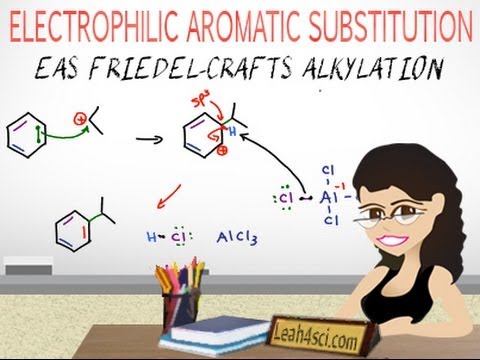
The mechanism of the Friedel-Crafts reaction involves the formation of a complex between the aromatic compound and a Lewis acid, such as aluminum chloride. This complex then undergoes a series of steps, including the formation of a carbocation and the loss of a leaving group, to produce the final alkylated or acylated product. The reaction's mechanism has been the subject of extensive study, and it is now well understood. For more information on the mechanism of the Friedel-Crafts reaction, see Mechanism of Organic Reactions. The reaction's mechanism is also closely related to other organic reactions, such as the electrophilic aromatic substitution reaction. The Friedel-Crafts reaction has also been used in the synthesis of heterocyclic compounds, which are an important class of compounds in organic chemistry.
🔍 Types of Friedel-Crafts Reactions
There are several types of Friedel-Crafts reactions, including alkylation, acylation, and arylation reactions. Each of these reactions involves the formation of a different type of bond between the aromatic compound and the electrophile. The choice of reaction conditions and catalysts can also affect the outcome of the reaction. For more information on the different types of Friedel-Crafts reactions, see Friedel-Crafts Reaction Types. The Friedel-Crafts reaction has also been used in the synthesis of natural products, which are an important area of research in organic chemistry. The reaction's versatility has made it a valuable tool in the synthesis of a wide range of compounds, from steroids to alkaloids.
💡 Applications of the Friedel-Crafts Reaction
The applications of the Friedel-Crafts reaction are diverse and widespread. The reaction has been used in the synthesis of a wide range of chemicals, from dyes and pharmaceuticals to agrochemicals and polymers. The reaction's importance extends beyond its practical applications, as it has also played a crucial role in shaping our understanding of aromaticity and the mechanisms of organic reactions. For more information on the applications of the Friedel-Crafts reaction, see Friedel-Crafts Reaction Applications. The reaction's influence can also be seen in the work of later chemists, such as Robert Burns Woodward, who used the Friedel-Crafts reaction in his synthesis of Vitamin B12. The Friedel-Crafts reaction has also been used in the synthesis of heterocyclic compounds, which are an important class of compounds in organic chemistry.
🌈 Influence of the Friedel-Crafts Reaction on Organic Synthesis
The influence of the Friedel-Crafts reaction on organic synthesis has been profound. The reaction has enabled the production of a wide range of chemicals, from dyes and pharmaceuticals to agrochemicals and polymers. The reaction's significance extends beyond its practical applications, as it has also played a crucial role in shaping our understanding of aromaticity and the mechanisms of organic reactions. For more information on the influence of the Friedel-Crafts reaction on organic synthesis, see Influence of Friedel-Crafts Reaction. The reaction's influence can also be seen in the work of later chemists, such as Robert Burns Woodward, who used the Friedel-Crafts reaction in his synthesis of Vitamin B12. The Friedel-Crafts reaction has also been used in the synthesis of natural products, which are an important area of research in organic chemistry.
📊 Industrial Applications of the Friedel-Crafts Reaction
The industrial applications of the Friedel-Crafts reaction are diverse and widespread. The reaction has been used in the synthesis of a wide range of chemicals, from dyes and pharmaceuticals to agrochemicals and polymers. The reaction's importance extends beyond its practical applications, as it has also played a crucial role in shaping our understanding of aromaticity and the mechanisms of organic reactions. For more information on the industrial applications of the Friedel-Crafts reaction, see Industrial Applications of Friedel-Crafts Reaction. The reaction's influence can also be seen in the work of later chemists, such as Robert Burns Woodward, who used the Friedel-Crafts reaction in his synthesis of Vitamin B12. The Friedel-Crafts reaction has also been used in the synthesis of heterocyclic compounds, which are an important class of compounds in organic chemistry.
👥 Key Players in the Development of the Friedel-Crafts Reaction
The key players in the development of the Friedel-Crafts reaction include Charles Friedel and James Crafts, who first discovered the reaction in 1877. Other important figures in the development of the reaction include August Wilhelm von Hofmann and Adolf von Baeyer, who worked to understand the structure and properties of organic compounds. The reaction's influence can also be seen in the work of later chemists, such as Robert Burns Woodward, who used the Friedel-Crafts reaction in his synthesis of Vitamin B12. For more information on the key players in the development of the Friedel-Crafts reaction, see Charles Friedel and James Crafts.
📚 Controversies and Debates Surrounding the Friedel-Crafts Reaction
The controversies and debates surrounding the Friedel-Crafts reaction are centered on the reaction's mechanism and the role of the Lewis acid catalyst. Some chemists have argued that the reaction proceeds through a carbocation intermediate, while others have proposed alternative mechanisms. For more information on the controversies and debates surrounding the Friedel-Crafts reaction, see Controversies and Debates. The reaction's influence can also be seen in the work of later chemists, such as Robert Burns Woodward, who used the Friedel-Crafts reaction in his synthesis of Vitamin B12. The Friedel-Crafts reaction has also been used in the synthesis of heterocyclic compounds, which are an important class of compounds in organic chemistry.
🔮 Future Directions in Friedel-Crafts Reaction Research
The future directions in Friedel-Crafts reaction research are focused on the development of new catalysts and reaction conditions that can improve the efficiency and selectivity of the reaction. Researchers are also exploring the use of the Friedel-Crafts reaction in the synthesis of complex molecules, such as natural products and pharmaceuticals. For more information on the future directions in Friedel-Crafts reaction research, see Future Directions. The reaction's influence can also be seen in the work of later chemists, such as Robert Burns Woodward, who used the Friedel-Crafts reaction in his synthesis of Vitamin B12. The Friedel-Crafts reaction has also been used in the synthesis of heterocyclic compounds, which are an important class of compounds in organic chemistry.
📊 Conclusion: The Enduring Impact of the Friedel-Crafts Reaction
In conclusion, the Friedel-Crafts reaction is a fundamental process in organic synthesis that has had a profound impact on the field of organic chemistry. The reaction's influence extends beyond its practical applications, as it has also played a crucial role in shaping our understanding of aromaticity and the mechanisms of organic reactions. For more information on the conclusion of the Friedel-Crafts reaction, see Conclusion. The reaction's influence can also be seen in the work of later chemists, such as Robert Burns Woodward, who used the Friedel-Crafts reaction in his synthesis of Vitamin B12. The Friedel-Crafts reaction has also been used in the synthesis of heterocyclic compounds, which are an important class of compounds in organic chemistry.
Key Facts
- Year
- 1877
- Origin
- University of Paris, France
- Category
- Organic Chemistry
- Type
- Chemical Reaction
Frequently Asked Questions
What is the Friedel-Crafts reaction?
The Friedel-Crafts reaction is a fundamental process in organic synthesis that involves the alkylation and acylation of aromatic compounds. The reaction is named after its discoverers, Charles Friedel and James Crafts, who first reported it in 1877. The reaction has had a profound impact on the field of organic chemistry, enabling the production of a wide range of chemicals, from dyes and pharmaceuticals to agrochemicals and polymers. For more information on the Friedel-Crafts reaction, see Friedel-Crafts Reaction.
What are the applications of the Friedel-Crafts reaction?
The applications of the Friedel-Crafts reaction are diverse and widespread. The reaction has been used in the synthesis of a wide range of chemicals, from dyes and pharmaceuticals to agrochemicals and polymers. The reaction's importance extends beyond its practical applications, as it has also played a crucial role in shaping our understanding of aromaticity and the mechanisms of organic reactions. For more information on the applications of the Friedel-Crafts reaction, see Friedel-Crafts Reaction Applications.
What are the key players in the development of the Friedel-Crafts reaction?
The key players in the development of the Friedel-Crafts reaction include Charles Friedel and James Crafts, who first discovered the reaction in 1877. Other important figures in the development of the reaction include August Wilhelm von Hofmann and Adolf von Baeyer, who worked to understand the structure and properties of organic compounds. For more information on the key players in the development of the Friedel-Crafts reaction, see Charles Friedel and James Crafts.
What are the controversies and debates surrounding the Friedel-Crafts reaction?
The controversies and debates surrounding the Friedel-Crafts reaction are centered on the reaction's mechanism and the role of the Lewis acid catalyst. Some chemists have argued that the reaction proceeds through a carbocation intermediate, while others have proposed alternative mechanisms. For more information on the controversies and debates surrounding the Friedel-Crafts reaction, see Controversies and Debates.
What are the future directions in Friedel-Crafts reaction research?
The future directions in Friedel-Crafts reaction research are focused on the development of new catalysts and reaction conditions that can improve the efficiency and selectivity of the reaction. Researchers are also exploring the use of the Friedel-Crafts reaction in the synthesis of complex molecules, such as natural products and pharmaceuticals. For more information on the future directions in Friedel-Crafts reaction research, see Future Directions.
What is the significance of the Friedel-Crafts reaction in organic synthesis?
The Friedel-Crafts reaction is a fundamental process in organic synthesis that has had a profound impact on the field of organic chemistry. The reaction's influence extends beyond its practical applications, as it has also played a crucial role in shaping our understanding of aromaticity and the mechanisms of organic reactions. For more information on the significance of the Friedel-Crafts reaction in organic synthesis, see Significance of Friedel-Crafts Reaction.
How has the Friedel-Crafts reaction influenced the development of organic chemistry?
The Friedel-Crafts reaction has had a profound influence on the development of organic chemistry, enabling the production of a wide range of chemicals, from dyes and pharmaceuticals to agrochemicals and polymers. The reaction's influence can also be seen in the work of later chemists, such as Robert Burns Woodward, who used the Friedel-Crafts reaction in his synthesis of Vitamin B12. For more information on the influence of the Friedel-Crafts reaction on the development of organic chemistry, see Influence of Friedel-Crafts Reaction.