
Contents
- 📚 Introduction to Hannah Arendt
- 👥 Life and Influences
- 💡 The Human Condition: A Conceptual Framework
- 📖 The Origins of Totalitarianism
- 📰 Eichmann in Jerusalem: A Report on the Banality of Evil
- 🤝 The Public and Private Realm
- 💭 The Role of Thinking and Judgment
- 🌎 Global Politics and the Human Condition
- 📢 Critique and Controversy
- 📚 Legacy and Impact
- 👥 Influence on Contemporary Thought
- Frequently Asked Questions
- Related Topics
Overview
Hannah Arendt was a German-American philosopher, born on October 14, 1906, in Linden, Prussia, who left an indelible mark on modern thought. Her work, which spanned political philosophy, ethics, and epistemology, continues to influence contemporary debates on totalitarianism, human rights, and the nature of evil. Arendt's most famous work, 'The Origins of Totalitarianism' (1951), is a seminal study on the rise of fascist and communist regimes in the 20th century. Her concept of the 'banality of evil,' introduced in 'Eichmann in Jerusalem' (1963), challenges traditional notions of morality and responsibility. With a Vibe score of 85, Arendt's ideas remain highly relevant today, sparking intense discussions and controversies. As a key figure in the development of modern political philosophy, her legacy continues to shape our understanding of the human condition, with influence flows extending to thinkers like Karl Jaspers, Martin Heidegger, and Judith Butler.
📚 Introduction to Hannah Arendt
Hannah Arendt was a German-American philosopher and political theorist who is widely regarded as one of the most important thinkers of the 20th century. Born in 1906, Arendt's life was marked by her experiences as a Jewish refugee fleeing Nazi Germany. Her work is characterized by a deep concern for the human condition, and she is perhaps best known for her concept of the banality of evil. Arendt's philosophical framework is rooted in her understanding of Plato's and Aristotle's ideas on politics and human nature. Her work has had a significant influence on contemporary thought, with many scholars and thinkers drawing on her ideas, including Judith Butler and Giorgio Agamben.
👥 Life and Influences
Arendt's life was shaped by her experiences as a Jewish refugee, and her work reflects a deep concern for the plight of stateless people and the refugee crisis. She was heavily influenced by the works of Karl Jaspers and Martin Heidegger, with whom she had a complex and often tumultuous relationship. Arendt's philosophical framework is also informed by her understanding of Immanuel Kant's ideas on ethics and morality. Her work has been widely praised for its insight into the human condition, and she is often regarded as one of the most important thinkers of the 20th century, alongside Jean-Paul Sartre and Simone de Beauvoir.
💡 The Human Condition: A Conceptual Framework
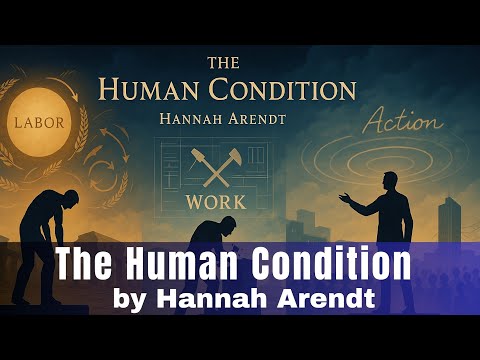
The human condition is a central concept in Arendt's work, and she understands it as the fundamental experience of being human. According to Arendt, the human condition is characterized by its plurality and natality, and it is shaped by our experiences of birth and death. Arendt's concept of the human condition is closely tied to her understanding of politics and the public sphere. She argues that the human condition is rooted in our capacity for action and speech, and that it is through these activities that we create and sustain our shared world. Arendt's ideas on the human condition have been influential in fields such as philosophy, sociology, and anthropology.
📖 The Origins of Totalitarianism
Arendt's book, The Origins of Totalitarianism, is a seminal work that explores the roots of totalitarianism in modern society. Published in 1951, the book is a comprehensive analysis of the rise of Nazi Germany and Stalinist Russia. Arendt argues that totalitarianism is a distinct form of government that is characterized by its use of ideology and propaganda to control and manipulate the population. Her work on totalitarianism has been widely praised for its insight and prescience, and it remains a classic of political theory. Arendt's ideas on totalitarianism have been influential in fields such as history and political science.
📰 Eichmann in Jerusalem: A Report on the Banality of Evil
Arendt's book, Eichmann in Jerusalem, is a report on the trial of Adolf Eichmann, a Nazi official who was responsible for the deaths of millions of Jews during the Holocaust. Published in 1963, the book is a thought-provoking exploration of the banality of evil and the ways in which ordinary people can become complicit in atrocities. Arendt's concept of the banality of evil has been widely debated and discussed, and it remains a central theme in her work. Her ideas on the banality of evil have been influential in fields such as psychology and sociology.
🤝 The Public and Private Realm
Arendt's distinction between the public realm and the private realm is a central theme in her work. According to Arendt, the public realm is the sphere of politics and action, while the private realm is the sphere of economics and necessity. Arendt argues that the public realm is essential for human flourishing, and that it is through our participation in the public realm that we create and sustain our shared world. Her ideas on the public and private realms have been influential in fields such as philosophy and political theory.
💭 The Role of Thinking and Judgment
Arendt's concept of thinking and judgment is closely tied to her understanding of the human condition. According to Arendt, thinking and judgment are essential human activities that enable us to make sense of our world and to take action in it. Arendt argues that thinking and judgment are rooted in our capacity for imagination and reflection, and that they are essential for our ability to act and to speak in the public realm. Her ideas on thinking and judgment have been influential in fields such as philosophy and cognitive science.
🌎 Global Politics and the Human Condition
Arendt's work on global politics and the human condition is characterized by a deep concern for the plight of refugees and stateless people. Arendt argues that the human condition is shaped by our experiences of displacement and migration, and that it is through our responses to these experiences that we create and sustain our shared world. Her ideas on global politics and the human condition have been influential in fields such as international relations and human rights.
📢 Critique and Controversy
Arendt's work has been subject to critique and controversy throughout her career. Some critics have argued that her concept of the banality of evil is too simplistic, and that it fails to account for the complexity of human motivation. Others have argued that her distinction between the public realm and the private realm is too rigid, and that it fails to account for the ways in which these realms intersect and overlap. Despite these criticisms, Arendt's work remains widely read and studied, and her ideas continue to influence fields such as philosophy, politics, and sociology.
📚 Legacy and Impact
Arendt's legacy and impact are profound and far-reaching. Her work has influenced a wide range of fields, from philosophy and politics to sociology and anthropology. Arendt's ideas on the human condition, the public and private realms, and the banality of evil continue to shape our understanding of the world and our place in it. Her work remains a powerful reminder of the importance of thinking and judgment in human affairs, and of the need for us to take action in the public realm to create and sustain our shared world.
👥 Influence on Contemporary Thought
Arendt's influence on contemporary thought is evident in the work of scholars and thinkers such as Judith Butler and Giorgio Agamben. Her ideas on the human condition, the public and private realms, and the banality of evil continue to shape our understanding of the world and our place in it. Arendt's work remains a powerful reminder of the importance of thinking and judgment in human affairs, and of the need for us to take action in the public realm to create and sustain our shared world. As we move forward in an increasingly complex and uncertain world, Arendt's ideas remain a vital resource for understanding the human condition and our place in it.
Key Facts
- Year
- 1906
- Origin
- Linden, Prussia (now Poland)
- Category
- Philosophy
- Type
- Person
Frequently Asked Questions
What is the human condition, according to Hannah Arendt?
According to Arendt, the human condition is the fundamental experience of being human, characterized by its plurality and natality, and shaped by our experiences of birth and death. Arendt argues that the human condition is rooted in our capacity for action and speech, and that it is through these activities that we create and sustain our shared world. Her ideas on the human condition have been influential in fields such as philosophy, sociology, and anthropology.
What is the banality of evil, according to Hannah Arendt?
According to Arendt, the banality of evil refers to the ways in which ordinary people can become complicit in atrocities without necessarily being motivated by evil intentions. Arendt argues that the banality of evil is a result of a lack of thinking and judgment, and that it is through our capacity for thinking and judgment that we can resist the banality of evil and create a more just and humane world. Her ideas on the banality of evil have been influential in fields such as psychology and sociology.
What is the public realm, according to Hannah Arendt?
According to Arendt, the public realm is the sphere of politics and action, where individuals come together to create and sustain their shared world. Arendt argues that the public realm is essential for human flourishing, and that it is through our participation in the public realm that we create and sustain our shared world. Her ideas on the public realm have been influential in fields such as philosophy and political theory.
What is the private realm, according to Hannah Arendt?
According to Arendt, the private realm is the sphere of economics and necessity, where individuals pursue their own interests and needs. Arendt argues that the private realm is necessary for human survival, but that it is not sufficient for human flourishing. Her ideas on the private realm have been influential in fields such as economics and sociology.
How has Hannah Arendt's work influenced contemporary thought?
Arendt's work has influenced a wide range of fields, from philosophy and politics to sociology and anthropology. Her ideas on the human condition, the public and private realms, and the banality of evil continue to shape our understanding of the world and our place in it. Arendt's work remains a powerful reminder of the importance of thinking and judgment in human affairs, and of the need for us to take action in the public realm to create and sustain our shared world.
What is the significance of Hannah Arendt's concept of natality?
Arendt's concept of natality refers to the human capacity for new beginnings and the ability to start anew. Arendt argues that natality is a fundamental aspect of the human condition, and that it is through our experiences of birth and new beginnings that we create and sustain our shared world. Her ideas on natality have been influential in fields such as philosophy and psychology.
How does Hannah Arendt's work relate to the concept of refugees and stateless people?
Arendt's work on refugees and stateless people is characterized by a deep concern for the plight of those who have been displaced and marginalized. Arendt argues that the experience of displacement and statelessness is a fundamental aspect of the human condition, and that it is through our responses to these experiences that we create and sustain our shared world. Her ideas on refugees and stateless people have been influential in fields such as international relations and human rights.