
Contents
- 🌞 Introduction to Helioseismology
- 🔍 History of Helioseismology
- 🌈 Types of Helioseismology
- 🔊 Sound Waves in the Sun
- 🌴 Convection and Oscillations
- 🔍 Global Helioseismology
- 🔎 Local Helioseismology
- 🌟 Applications of Helioseismology
- 📊 Challenges in Helioseismology
- 🌐 Future of Helioseismology
- Frequently Asked Questions
- Related Topics
Overview
Helioseismology, a field of study born in the 1960s, has revolutionized our understanding of the Sun's internal structure and dynamics. By analyzing the Sun's oscillations, scientists like Robert Leighton and Frank Press have been able to map the Sun's interior, revealing details about its temperature, composition, and rotation. The field has seen significant advancements with the launch of spacecraft like SOHO (Solar and Heliospheric Observatory) in 1995 and the SDO (Solar Dynamics Observatory) in 2010, which have provided high-resolution data on solar oscillations. With a vibe score of 8, helioseismology has become a crucial tool for understanding the Sun's impact on the solar system, including its influence on Earth's climate. As researchers continue to refine their models and techniques, helioseismology is poised to make further breakthroughs, potentially shedding light on the Sun's mysterious core and its role in the universe. The study of helioseismology has also sparked debates about the Sun's internal dynamics, with some scientists arguing that the Sun's core is rotating faster than its surface, while others propose alternative models, highlighting the ongoing tensions and uncertainties in the field.
🌞 Introduction to Helioseismology
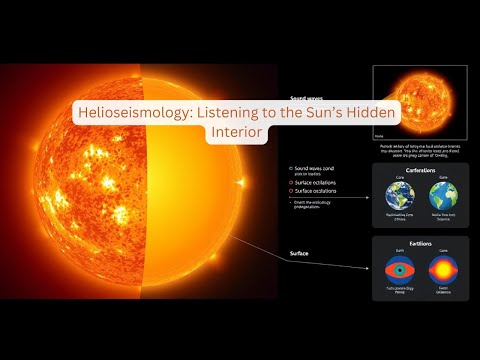
Helioseismology is the study of the structure and dynamics of the Sun through its oscillations, which are principally caused by sound waves that are continuously driven and damped by convection near the Sun's surface. This field of study is similar to geoseismology, or asteroseismology, which are respectively the studies of the Earth or stars through their oscillations. The term helioseismology was coined by Douglas Gough in the 1990s. Helioseismology has become a crucial tool for understanding the Sun's interior and its dynamics. By studying the Sun's oscillations, scientists can gain insights into the Sun's internal structure and composition. For more information on the Sun, visit the Sun page.
🔍 History of Helioseismology
The history of helioseismology dates back to the early 1960s, when the Sun's oscillations were first detected. However, it was only in the mid-1970s that it was realized that the oscillations propagated throughout the Sun and could allow scientists to study the Sun's deep interior. This discovery marked the beginning of a new era in solar physics. The development of helioseismology has been influenced by the work of many scientists, including Douglas Gough, who coined the term helioseismology. To learn more about the history of helioseismology, visit the history of astronomy page. The study of the Sun's oscillations has also been influenced by the field of asteroseismology.
🌈 Types of Helioseismology
The modern field of helioseismology is separated into two main branches: global helioseismology and local helioseismology. Global helioseismology studies the Sun's resonant modes directly, while local helioseismology studies the propagation of the component waves near the Sun's surface. Global helioseismology provides information about the Sun's internal structure and composition, while local helioseismology provides information about the Sun's surface dynamics and magnetic field. Both branches of helioseismology are essential for understanding the Sun's behavior and its impact on the solar system. For more information on the solar system, visit the solar system page. The study of the Sun's oscillations has also been influenced by the field of geoseismology.
🔊 Sound Waves in the Sun
Sound waves play a crucial role in helioseismology, as they are the primary mechanism for probing the Sun's interior. These sound waves are generated by convection near the Sun's surface and can travel thousands of kilometers through the Sun's interior. By studying the properties of these sound waves, scientists can gain insights into the Sun's internal structure and composition. The study of sound waves in the Sun is closely related to the field of asteroseismology, which studies the oscillations of stars. To learn more about sound waves, visit the sound waves page. The Sun's oscillations have also been influenced by the field of solar physics.
🌴 Convection and Oscillations
Convection and oscillations are closely linked in the Sun, as convection is the primary driver of the Sun's oscillations. Convection occurs when hot plasma rises to the Sun's surface, cools, and then sinks back down, creating a cycle of rising and falling material. This cycle generates sound waves that can travel through the Sun's interior, providing information about the Sun's internal structure and composition. The study of convection and oscillations is essential for understanding the Sun's behavior and its impact on the solar system. For more information on convection, visit the convection page. The Sun's oscillations have also been influenced by the field of geoseismology.
🔍 Global Helioseismology
Global helioseismology is a powerful tool for studying the Sun's internal structure and composition. By analyzing the Sun's resonant modes, scientists can gain insights into the Sun's internal dynamics and composition. Global helioseismology has been used to study the Sun's internal rotation, its internal temperature profile, and its composition. The results of global helioseismology have been influential in shaping our understanding of the Sun and its role in the solar system. To learn more about global helioseismology, visit the global helioseismology page. The study of the Sun's oscillations has also been influenced by the field of asteroseismology.
🔎 Local Helioseismology
Local helioseismology is a complementary approach to global helioseismology, focusing on the propagation of sound waves near the Sun's surface. By studying the properties of these sound waves, scientists can gain insights into the Sun's surface dynamics and magnetic field. Local helioseismology has been used to study the Sun's surface flows, its magnetic field, and its coronal heating. The results of local helioseismology have been influential in shaping our understanding of the Sun's surface dynamics and its impact on the solar system. For more information on local helioseismology, visit the local helioseismology page. The study of the Sun's oscillations has also been influenced by the field of geoseismology.
🌟 Applications of Helioseismology
The applications of helioseismology are diverse and far-reaching. By studying the Sun's oscillations, scientists can gain insights into the Sun's internal structure and composition, its surface dynamics, and its impact on the solar system. Helioseismology has been used to study the Sun's internal rotation, its internal temperature profile, and its composition. The results of helioseismology have been influential in shaping our understanding of the Sun and its role in the solar system. To learn more about the applications of helioseismology, visit the applications of helioseismology page. The study of the Sun's oscillations has also been influenced by the field of asteroseismology.
📊 Challenges in Helioseismology
Despite the many advances in helioseismology, there are still several challenges that need to be addressed. One of the main challenges is the complexity of the Sun's internal dynamics, which makes it difficult to interpret the results of helioseismology. Another challenge is the limited spatial resolution of helioseismology, which makes it difficult to study the Sun's surface dynamics in detail. To overcome these challenges, scientists are developing new techniques and instruments, such as the Solar Dynamics Observatory. For more information on the challenges in helioseismology, visit the challenges in helioseismology page. The study of the Sun's oscillations has also been influenced by the field of geoseismology.
🌐 Future of Helioseismology
The future of helioseismology is exciting and promising. With the development of new instruments and techniques, scientists will be able to study the Sun's oscillations in greater detail and gain new insights into the Sun's internal structure and composition. The study of the Sun's oscillations will also be influenced by the field of asteroseismology, which will provide new insights into the oscillations of stars. To learn more about the future of helioseismology, visit the future of helioseismology page. The Sun's oscillations have also been influenced by the field of solar physics.
Key Facts
- Year
- 1960
- Origin
- Stanford University, USA
- Category
- Astronomy
- Type
- Scientific Field
Frequently Asked Questions
What is helioseismology?
Helioseismology is the study of the structure and dynamics of the Sun through its oscillations. These oscillations are principally caused by sound waves that are continuously driven and damped by convection near the Sun's surface. Helioseismology is similar to geoseismology and asteroseismology, which are respectively the studies of the Earth or stars through their oscillations. For more information on helioseismology, visit the helioseismology page.
What are the applications of helioseismology?
The applications of helioseismology are diverse and far-reaching. By studying the Sun's oscillations, scientists can gain insights into the Sun's internal structure and composition, its surface dynamics, and its impact on the solar system. Helioseismology has been used to study the Sun's internal rotation, its internal temperature profile, and its composition. The results of helioseismology have been influential in shaping our understanding of the Sun and its role in the solar system. To learn more about the applications of helioseismology, visit the applications of helioseismology page.
What are the challenges in helioseismology?
Despite the many advances in helioseismology, there are still several challenges that need to be addressed. One of the main challenges is the complexity of the Sun's internal dynamics, which makes it difficult to interpret the results of helioseismology. Another challenge is the limited spatial resolution of helioseismology, which makes it difficult to study the Sun's surface dynamics in detail. To overcome these challenges, scientists are developing new techniques and instruments, such as the Solar Dynamics Observatory. For more information on the challenges in helioseismology, visit the challenges in helioseismology page.
What is the future of helioseismology?
The future of helioseismology is exciting and promising. With the development of new instruments and techniques, scientists will be able to study the Sun's oscillations in greater detail and gain new insights into the Sun's internal structure and composition. The study of the Sun's oscillations will also be influenced by the field of asteroseismology, which will provide new insights into the oscillations of stars. To learn more about the future of helioseismology, visit the future of helioseismology page.
How does helioseismology relate to other fields of study?
Helioseismology is closely related to other fields of study, such as geoseismology and asteroseismology. These fields of study all involve the use of oscillations to gain insights into the internal structure and composition of celestial bodies. Helioseismology has also been influenced by the field of solar physics, which provides a broader understanding of the Sun's behavior and its impact on the solar system. For more information on the relationships between helioseismology and other fields of study, visit the related fields page.
What are the benefits of studying helioseismology?
The benefits of studying helioseismology are numerous. By gaining a better understanding of the Sun's internal structure and composition, scientists can improve their understanding of the Sun's behavior and its impact on the solar system. Helioseismology has also been used to study the Sun's internal rotation, its internal temperature profile, and its composition. The results of helioseismology have been influential in shaping our understanding of the Sun and its role in the solar system. To learn more about the benefits of studying helioseismology, visit the benefits of helioseismology page.
How does helioseismology contribute to our understanding of the Sun?
Helioseismology has made significant contributions to our understanding of the Sun. By studying the Sun's oscillations, scientists can gain insights into the Sun's internal structure and composition, its surface dynamics, and its impact on the solar system. Helioseismology has been used to study the Sun's internal rotation, its internal temperature profile, and its composition. The results of helioseismology have been influential in shaping our understanding of the Sun and its role in the solar system. For more information on the contributions of helioseismology to our understanding of the Sun, visit the contributions of helioseismology page.