
Contents
- 📚 Introduction to Herbert Simon
- 🎓 Early Life and Education
- 💡 Theories of Decision-Making
- 📊 Artificial Intelligence and Computer Science
- 🏆 Awards and Honors
- 📝 Contributions to Economics
- 🤝 Interdisciplinary Approach
- 📊 Criticisms and Controversies
- 🌐 Influence and Legacy
- 📚 Selected Works and Publications
- 👥 Colleagues and Collaborations
- Frequently Asked Questions
- Related Topics
Overview
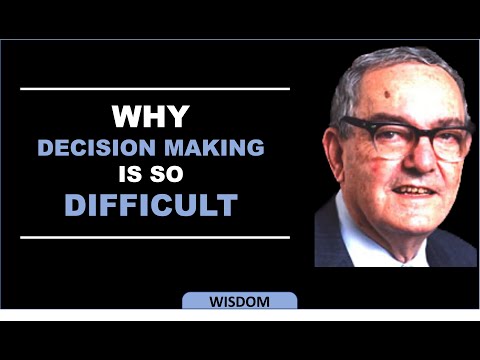
Herbert Simon was a true Renaissance man, making significant contributions to multiple fields, including economics, psychology, computer science, and philosophy. Born on June 15, 1916, in Milwaukee, Wisconsin, Simon's work challenged traditional notions of rationality and decision-making. His concept of 'bounded rationality' posits that humans make decisions based on limited information and cognitive biases, rather than optimal rationality. This idea has had a profound impact on fields such as economics, politics, and artificial intelligence. Simon's work also laid the foundation for the development of expert systems and decision-support systems. With a Vibe score of 8.2, Simon's influence extends beyond academia, with his ideas being applied in business, government, and everyday life. As a pioneer in multiple fields, Simon's legacy continues to shape our understanding of human decision-making and the limits of rationality. His work has been widely recognized, including the Nobel Memorial Prize in Economic Sciences in 1978. Simon's influence can be seen in the work of other notable thinkers, such as Daniel Kahneman and Amos Tversky, who have further developed his ideas on bounded rationality. The controversy surrounding Simon's ideas, particularly in the field of economics, has led to a deeper understanding of the complexities of human decision-making. With a controversy spectrum of 6.5, Simon's work has sparked intense debates and discussions, cementing his place as one of the most important thinkers of the 20th century.
📚 Introduction to Herbert Simon
Herbert Simon was a true polymath, making significant contributions to various fields, including economics, Artificial Intelligence, Computer Science, and Cognitive Psychology. Born on June 15, 1916, in Milwaukee, Wisconsin, Simon's early life was marked by a strong interest in Science and Mathematics. He went on to study at the University of Chicago, where he earned his Bachelor of Arts degree in 1936 and his Ph.D. in 1943. Simon's work had a profound impact on our understanding of Human Decision-Making and Problem Solving.
🎓 Early Life and Education
Simon's early life and education laid the foundation for his future success. He grew up in a family that valued Education and encouraged his curiosity. Simon's parents, Arthur and Edna Simon, were both Music lovers and introduced him to the world of Arts and Culture. He attended Milwaukee Washington High School, where he developed a strong interest in Social Science and Philosophy. Simon's academic excellence earned him a scholarship to the University of Chicago, where he studied under prominent scholars, including Frank Knight and Jacob Viner.
💡 Theories of Decision-Making
Simon's theories of decision-making revolutionized the field of Economics and beyond. He introduced the concept of Bounded Rationality, which suggests that individuals make decisions based on limited information and cognitive abilities. This idea challenged the traditional notion of Rational Choice Theory, which assumes that individuals make optimal decisions based on complete information. Simon's work on decision-making also influenced the development of Artificial Intelligence and Cognitive Science. He collaborated with Allen Newell on the development of the Logical Theorist program, which simulated human problem-solving abilities.
📊 Artificial Intelligence and Computer Science
Simon's contributions to Artificial Intelligence and Computer Science were groundbreaking. He, along with Allen Newell, developed the Information Processing Language (IPL), which was one of the first High-Level Programming Languages. Simon also worked on the development of the General Problem Solver (GPS), a program designed to simulate human problem-solving abilities. His work in this area laid the foundation for the development of Expert Systems and Machine Learning. Simon's research also explored the intersection of Cognitive Science and Computer Science, leading to a deeper understanding of Human-Computer Interaction.
🏆 Awards and Honors
Throughout his career, Simon received numerous awards and honors for his contributions to various fields. He was awarded the Nobel Prize in Economics in 1978 for his pioneering work on the theory of Firms and their decision-making processes. Simon also received the National Medal of Science in 1986 for his contributions to Economics and Computer Science. He was elected as a member of the National Academy of Sciences in 1967 and served as the president of the American Economic Association from 1968 to 1969.
📝 Contributions to Economics
Simon's contributions to Economics were significant, and his work continues to influence the field today. He is best known for his development of the Theory of the Firm, which explores the internal workings of organizations and their decision-making processes. Simon's work on Organizational Behavior also highlighted the importance of understanding the social and psychological factors that influence individual behavior within organizations. His research on Economies of Scale and Economies of Scope provided valuable insights into the nature of Industrial Organization. Simon's work in this area was influenced by his collaborations with Ronald Coase and Oliver Williamson.
🤝 Interdisciplinary Approach
Simon's interdisciplinary approach to research was a hallmark of his career. He drew on insights from Psychology, Sociology, Philosophy, and Computer Science to inform his work on decision-making and problem-solving. This approach allowed him to develop a more nuanced understanding of human behavior and the factors that influence decision-making. Simon's work also highlighted the importance of considering the social and organizational context in which decisions are made. His collaborations with scholars from diverse fields, including Allen Newell and John Muth, reflect his commitment to interdisciplinary research.
📊 Criticisms and Controversies
Despite the significance of Simon's contributions, his work was not without criticism and controversy. Some scholars have argued that his concept of Bounded Rationality is too narrow, as it fails to account for the role of Emotions and Intuition in decision-making. Others have criticized Simon's work on Artificial Intelligence for being too focused on Symbolic Reasoning and neglecting the importance of Connectionism. Simon's work on Economics has also been criticized for being too focused on the Microeconomics of individual decision-making, while neglecting the role of Macroeconomic factors. These criticisms reflect the ongoing debates in the fields of Economics, Artificial Intelligence, and Cognitive Science.
🌐 Influence and Legacy
Simon's influence and legacy extend far beyond his own research. His work has inspired generations of scholars, including Daniel Kahneman and Amos Tversky, who have built on his ideas to develop new theories of decision-making and Behavioral Economics. Simon's contributions to Artificial Intelligence have also had a lasting impact on the development of Machine Learning and Expert Systems. His work on Cognitive Science has influenced the development of Human-Computer Interaction and User Experience Design. As the field of Artificial Intelligence continues to evolve, Simon's ideas remain relevant, and his legacy serves as a reminder of the importance of interdisciplinary research and collaboration.
📚 Selected Works and Publications
Simon's published works include numerous books and articles on decision-making, problem-solving, and organizational behavior. Some of his most notable publications include Administrative Behavior (1947), Models of Man (1957), and The Sciences of the Artificial (1969). These works showcase Simon's ability to bridge the gap between theory and practice, and his commitment to developing a more nuanced understanding of human behavior and decision-making. Simon's writing style is characterized by its clarity, precision, and accessibility, making his work accessible to a broad audience.
👥 Colleagues and Collaborations
Simon's collaborations with other scholars were a key aspect of his research. He worked closely with Allen Newell on the development of the Logical Theorist program, and with John Muth on the development of the Theory of the Firm. Simon's collaborations with Ronald Coase and Oliver Williamson also reflect his commitment to interdisciplinary research. These collaborations not only advanced our understanding of decision-making and organizational behavior but also demonstrated the value of collaboration and knowledge-sharing in the pursuit of scientific progress.
Key Facts
- Year
- 1978
- Origin
- United States
- Category
- Biography, Economics, Artificial Intelligence
- Type
- Person
Frequently Asked Questions
What is Herbert Simon's most notable contribution to economics?
Herbert Simon's most notable contribution to economics is his development of the Theory of the Firm, which explores the internal workings of organizations and their decision-making processes. This work has had a lasting impact on our understanding of industrial organization and the behavior of firms. Simon's concept of Bounded Rationality, which suggests that individuals make decisions based on limited information and cognitive abilities, has also been highly influential in the field of economics.
How did Simon's work on artificial intelligence influence the development of machine learning?
Simon's work on artificial intelligence, particularly his development of the Logical Theorist program, laid the foundation for the development of machine learning. His focus on symbolic reasoning and problem-solving paved the way for the development of expert systems and machine learning algorithms. Simon's work also highlighted the importance of considering the social and organizational context in which decisions are made, which has become a key aspect of machine learning research.
What is the significance of Simon's concept of Bounded Rationality?
Simon's concept of Bounded Rationality is significant because it challenges the traditional notion of Rational Choice Theory, which assumes that individuals make optimal decisions based on complete information. Bounded Rationality suggests that individuals make decisions based on limited information and cognitive abilities, which is a more realistic representation of human decision-making. This concept has had a lasting impact on our understanding of decision-making and has influenced fields such as economics, psychology, and computer science.
How did Simon's interdisciplinary approach to research influence his work?
Simon's interdisciplinary approach to research allowed him to draw on insights from psychology, sociology, philosophy, and computer science to inform his work on decision-making and problem-solving. This approach enabled him to develop a more nuanced understanding of human behavior and the factors that influence decision-making. Simon's collaborations with scholars from diverse fields, including Allen Newell and John Muth, reflect his commitment to interdisciplinary research and demonstrate the value of collaboration and knowledge-sharing in the pursuit of scientific progress.
What is the legacy of Simon's work in the field of cognitive science?
Simon's work in the field of cognitive science has had a lasting impact on our understanding of human cognition and decision-making. His development of the Logical Theorist program and his work on problem-solving and artificial intelligence have influenced the development of cognitive science and have paved the way for further research in this field. Simon's legacy in cognitive science is a testament to the importance of interdisciplinary research and the value of considering the social and organizational context in which decisions are made.