
Contents
- 📊 Introduction to Inflation Targeting
- 💸 History of Inflation Targeting
- 📈 How Inflation Targeting Works
- 📊 Benefits of Inflation Targeting
- 🚨 Challenges of Inflation Targeting
- 🌎 Global Adoption of Inflation Targeting
- 📊 Criticisms of Inflation Targeting
- 📈 Alternatives to Inflation Targeting
- 📊 Case Studies of Inflation Targeting
- 📊 Future of Inflation Targeting
- 📊 Conclusion
- Frequently Asked Questions
- Related Topics
Overview
Inflation targeting, a monetary policy strategy adopted by over 25 countries, aims to keep inflation within a target range, typically between 1-3%, to promote economic growth and stability. Introduced by New Zealand in 1990, this approach has been influential in shaping modern central banking, with key figures like Mervyn King and Ben Bernanke contributing to its development. However, critics argue that inflation targeting can lead to neglect of other economic objectives, such as employment and financial stability, and that its implementation can be overly rigid. The strategy has been successful in countries like Canada, with a vibe score of 80, but has faced challenges in others, like the European Union, with a vibe score of 40. As the global economy continues to evolve, the effectiveness of inflation targeting will be closely watched, with some arguing that it needs to be adapted to address issues like inequality and climate change. With a controversy spectrum of 60, inflation targeting remains a highly debated topic among economists and policymakers, with influence flows from the International Monetary Fund and the Bank for International Settlements shaping the discussion.
📊 Introduction to Inflation Targeting
Inflation targeting is a monetary policy strategy used by central banks to maintain price stability and support long-term economic growth. As explained in Monetary Policy, the primary goal of inflation targeting is to achieve a specific inflation rate, usually around 2%, by adjusting short-term interest rates. This approach is based on the idea that price stability is essential for economic growth, and that controlling inflation is crucial for maintaining price stability. For instance, the Federal Reserve in the United States has been using inflation targeting as a key component of its monetary policy framework. The concept of inflation targeting is closely related to Macroeconomics and is often discussed in the context of Fiscal Policy.
💸 History of Inflation Targeting
The history of inflation targeting dates back to the 1990s, when central banks in countries such as New Zealand and Canada began to adopt this approach. As discussed in Central Banking, the idea of inflation targeting was first introduced by economists such as John Taylor, who argued that monetary policy should focus on maintaining price stability rather than trying to fine-tune the economy. The Bank of England and the European Central Bank have also adopted inflation targeting as a key component of their monetary policy frameworks. The development of inflation targeting is closely tied to the evolution of Monetary Theory and the work of economists such as Milton Friedman.
📈 How Inflation Targeting Works
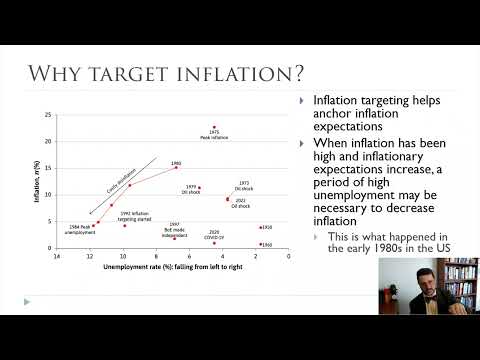
Inflation targeting works by setting a specific inflation target, usually in the range of 1-3%, and using short-term interest rates to achieve it. As explained in Interest Rates, when inflation is above the target, the central bank raises interest rates to reduce borrowing and spending, which in turn reduces inflation. Conversely, when inflation is below the target, the central bank lowers interest rates to stimulate borrowing and spending, which in turn increases inflation. This approach is based on the idea that inflation expectations play a crucial role in determining actual inflation, and that by anchoring inflation expectations, the central bank can influence actual inflation. The Phillips Curve is often used to illustrate the relationship between inflation and unemployment, and is closely related to the concept of inflation targeting.
📊 Benefits of Inflation Targeting
The benefits of inflation targeting include increased transparency and accountability, improved inflation expectations, and enhanced credibility of the central bank. As discussed in Transparency, inflation targeting provides a clear framework for monetary policy, which helps to reduce uncertainty and increase confidence in the economy. Inflation targeting also helps to reduce the risk of inflation shocks, which can have significant negative effects on the economy. For example, the Great Inflation of the 1970s had a devastating impact on the global economy, and inflation targeting can help to prevent such episodes from occurring in the future. The concept of inflation targeting is closely related to Macroeconomic Stability and is often discussed in the context of Economic Growth.
🚨 Challenges of Inflation Targeting
Despite its benefits, inflation targeting also poses several challenges, including the difficulty of measuring inflation accurately, the risk of inflation targeting becoming too rigid, and the potential for conflicts with other economic objectives. As explained in Inflation Measurement, measuring inflation accurately is crucial for inflation targeting, but it can be challenging due to the complexity of the economy and the limitations of inflation measures. Inflation targeting can also become too rigid, leading to a lack of flexibility in monetary policy, which can be problematic in times of economic crisis. For instance, the Global Financial Crisis highlighted the need for flexibility in monetary policy, and the limitations of inflation targeting in such situations. The concept of inflation targeting is closely related to Monetary Policy Frameworks and is often discussed in the context of Central Banking.
🌎 Global Adoption of Inflation Targeting
Inflation targeting has been adopted by many central banks around the world, including those in Australia, Brazil, and South Africa. As discussed in International Monetary Fund, the adoption of inflation targeting has been driven by the desire to achieve price stability and promote economic growth. Inflation targeting has been particularly successful in countries with a history of high inflation, where it has helped to reduce inflation and promote economic stability. For example, the Bank of Mexico has used inflation targeting to reduce inflation from over 100% in the 1990s to less than 4% today. The concept of inflation targeting is closely related to Global Economics and is often discussed in the context of International Trade.
📊 Criticisms of Inflation Targeting
Despite its widespread adoption, inflation targeting has also been subject to several criticisms, including the argument that it prioritizes inflation over other economic objectives, such as employment and growth. As explained in Criticisms of Inflation Targeting, some economists argue that inflation targeting can lead to a lack of attention to other important economic objectives, such as reducing unemployment and promoting economic growth. Inflation targeting can also be problematic in times of economic crisis, when the central bank may need to prioritize other objectives, such as maintaining financial stability. For instance, the European Debt Crisis highlighted the need for flexibility in monetary policy, and the limitations of inflation targeting in such situations. The concept of inflation targeting is closely related to Macroeconomic Policy and is often discussed in the context of Fiscal Policy.
📈 Alternatives to Inflation Targeting
There are several alternatives to inflation targeting, including nominal GDP targeting and price-level targeting. As discussed in Nominal GDP Targeting, nominal GDP targeting involves setting a target for the growth rate of nominal GDP, rather than inflation. This approach can be more effective in times of economic crisis, when the central bank needs to prioritize other objectives, such as maintaining financial stability. Price-level targeting, on the other hand, involves setting a target for the price level, rather than inflation. This approach can be more effective in achieving price stability, but it can also be more challenging to implement. The concept of inflation targeting is closely related to Monetary Policy Alternatives and is often discussed in the context of Central Banking.
📊 Case Studies of Inflation Targeting
There have been several case studies of inflation targeting, including the experiences of New Zealand and Canada. As explained in Case Studies, these countries have been successful in achieving price stability and promoting economic growth through inflation targeting. The Reserve Bank of New Zealand and the Bank of Canada have been at the forefront of inflation targeting, and their experiences have been studied by central banks around the world. The concept of inflation targeting is closely related to Macroeconomic Stability and is often discussed in the context of Economic Growth.
📊 Future of Inflation Targeting
The future of inflation targeting is uncertain, as central banks continue to evolve and adapt to changing economic conditions. As discussed in Future of Monetary Policy, some economists argue that inflation targeting will continue to be an important component of monetary policy, while others argue that it will need to be adapted or replaced in response to changing economic conditions. The International Monetary Fund has highlighted the need for central banks to be flexible and adaptable in their monetary policy frameworks, and to be willing to experiment with new approaches. The concept of inflation targeting is closely related to Monetary Policy Frameworks and is often discussed in the context of Central Banking.
📊 Conclusion
In conclusion, inflation targeting is a complex and multifaceted monetary policy strategy that has been adopted by many central banks around the world. As explained in Conclusion, while it has been successful in achieving price stability and promoting economic growth, it also poses several challenges and criticisms. As central banks continue to evolve and adapt to changing economic conditions, it is likely that inflation targeting will continue to play an important role in monetary policy, but it will also need to be adapted and refined to respond to new challenges and opportunities. The concept of inflation targeting is closely related to Macroeconomic Stability and is often discussed in the context of Economic Growth.
Key Facts
- Year
- 1990
- Origin
- New Zealand
- Category
- Economics
- Type
- Monetary Policy Strategy
Frequently Asked Questions
What is inflation targeting?
Inflation targeting is a monetary policy strategy used by central banks to maintain price stability and support long-term economic growth. It involves setting a specific inflation target, usually in the range of 1-3%, and using short-term interest rates to achieve it. Inflation targeting is based on the idea that price stability is essential for economic growth, and that controlling inflation is crucial for maintaining price stability. For example, the Federal Reserve in the United States has been using inflation targeting as a key component of its monetary policy framework. The concept of inflation targeting is closely related to Macroeconomics and is often discussed in the context of Fiscal Policy.
How does inflation targeting work?
Inflation targeting works by setting a specific inflation target, usually in the range of 1-3%, and using short-term interest rates to achieve it. When inflation is above the target, the central bank raises interest rates to reduce borrowing and spending, which in turn reduces inflation. Conversely, when inflation is below the target, the central bank lowers interest rates to stimulate borrowing and spending, which in turn increases inflation. This approach is based on the idea that inflation expectations play a crucial role in determining actual inflation, and that by anchoring inflation expectations, the central bank can influence actual inflation. The Phillips Curve is often used to illustrate the relationship between inflation and unemployment, and is closely related to the concept of inflation targeting.
What are the benefits of inflation targeting?
The benefits of inflation targeting include increased transparency and accountability, improved inflation expectations, and enhanced credibility of the central bank. Inflation targeting provides a clear framework for monetary policy, which helps to reduce uncertainty and increase confidence in the economy. Inflation targeting also helps to reduce the risk of inflation shocks, which can have significant negative effects on the economy. For example, the Great Inflation of the 1970s had a devastating impact on the global economy, and inflation targeting can help to prevent such episodes from occurring in the future. The concept of inflation targeting is closely related to Macroeconomic Stability and is often discussed in the context of Economic Growth.
What are the challenges of inflation targeting?
The challenges of inflation targeting include the difficulty of measuring inflation accurately, the risk of inflation targeting becoming too rigid, and the potential for conflicts with other economic objectives. Measuring inflation accurately is crucial for inflation targeting, but it can be challenging due to the complexity of the economy and the limitations of inflation measures. Inflation targeting can also become too rigid, leading to a lack of flexibility in monetary policy, which can be problematic in times of economic crisis. For instance, the Global Financial Crisis highlighted the need for flexibility in monetary policy, and the limitations of inflation targeting in such situations. The concept of inflation targeting is closely related to Monetary Policy Frameworks and is often discussed in the context of Central Banking.
What are the alternatives to inflation targeting?
There are several alternatives to inflation targeting, including nominal GDP targeting and price-level targeting. Nominal GDP targeting involves setting a target for the growth rate of nominal GDP, rather than inflation. This approach can be more effective in times of economic crisis, when the central bank needs to prioritize other objectives, such as maintaining financial stability. Price-level targeting, on the other hand, involves setting a target for the price level, rather than inflation. This approach can be more effective in achieving price stability, but it can also be more challenging to implement. The concept of inflation targeting is closely related to Monetary Policy Alternatives and is often discussed in the context of Central Banking.
What is the future of inflation targeting?
The future of inflation targeting is uncertain, as central banks continue to evolve and adapt to changing economic conditions. Some economists argue that inflation targeting will continue to be an important component of monetary policy, while others argue that it will need to be adapted or replaced in response to changing economic conditions. The International Monetary Fund has highlighted the need for central banks to be flexible and adaptable in their monetary policy frameworks, and to be willing to experiment with new approaches. The concept of inflation targeting is closely related to Monetary Policy Frameworks and is often discussed in the context of Central Banking.
How has inflation targeting been implemented in different countries?
Inflation targeting has been implemented in different countries in various ways, depending on the specific economic conditions and institutional framework of each country. For example, the Reserve Bank of New Zealand and the Bank of Canada have been at the forefront of inflation targeting, and their experiences have been studied by central banks around the world. The concept of inflation targeting is closely related to Macroeconomic Stability and is often discussed in the context of Economic Growth.