
Contents
- 🌎 Introduction to Mahatma Gandhi
- 📚 Early Life and Education
- 🕊️ The Concept of Nonviolent Resistance
- 🌈 Influence of Indian Nationalism
- 📰 Role in the Indian Independence Movement
- 🌟 The Salt March and Its Impact
- 🤝 Collaboration with Other Leaders
- 🌎 Global Influence and Legacy
- 📊 Criticisms and Controversies
- 🕊️ Philosophy of Simple Living
- 📚 Last Years and Assassination
- Frequently Asked Questions
- Related Topics
Overview
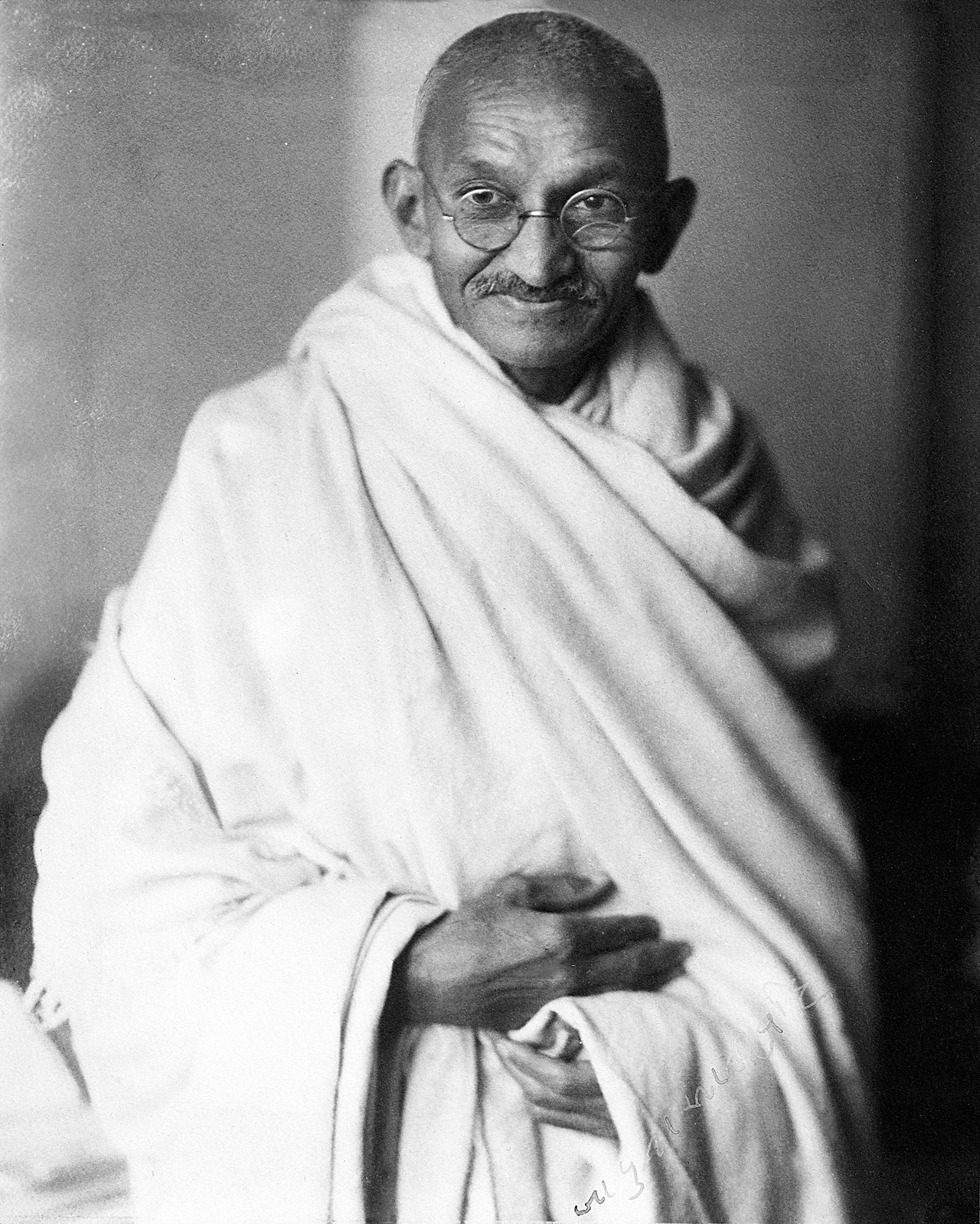
Mahatma Gandhi, born on October 2, 1869, in Porbandar, India, was a pivotal figure in the Indian independence movement, employing non-violent civil disobedience to challenge British rule. With a Vibe score of 92, Gandhi's influence extends far beyond India, inspiring civil rights movements worldwide, including the American Civil Rights Movement led by Martin Luther King Jr. His philosophy of non-violence, as outlined in his book 'Hind Swaraj,' has been widely studied and emulated. Gandhi's marches, including the famous Salt March in 1930, drew international attention to India's struggle for freedom. Despite facing numerous challenges, including imprisonment and violence, Gandhi remained committed to his principles, ultimately contributing to India's independence on August 15, 1947. As a contrarian thinker, Gandhi's ideas on simplicity, self-sufficiency, and environmental sustainability continue to resonate with contemporary social and environmental movements, with over 100,000 people attending his funeral procession, a testament to his enduring legacy.
🌎 Introduction to Mahatma Gandhi
Mahatma Gandhi, also known as Mohandas Karamchand Gandhi, was a pivotal figure in Indian history, leading the country to independence from British rule through his philosophy of nonviolent resistance. Born on October 2, 1869, in Porbandar, India, Gandhi's life was a testament to the power of civil disobedience and peaceful protest. His methods have inspired movements for civil rights and freedom across the world, including the American Civil Rights Movement led by Martin Luther King Jr.. Gandhi's influence extends beyond politics, with his emphasis on simple living and self-sufficiency continuing to inspire individuals today. As a political ethicist, Gandhi's ideas on democracy and social justice remain highly relevant.
📚 Early Life and Education
Gandhi's early life and education played a significant role in shaping his future. He was born into a Hindu family and was raised in a vegetarian household, which later influenced his vegetarian lifestyle. Gandhi studied law in London and later moved to South Africa, where he faced racism and discrimination, experiences that shaped his anti-colonial views. In South Africa, Gandhi developed his philosophy of nonviolent resistance, which he would later apply in the Indian Independence Movement. His time in South Africa also introduced him to the works of Henry David Thoreau and Leo Tolstoy, whose ideas on civil disobedience and simple living greatly influenced him.
🕊️ The Concept of Nonviolent Resistance
The concept of nonviolent resistance was central to Gandhi's philosophy. He believed that peaceful protest and civil disobedience could be powerful tools for bringing about social change. Gandhi's methods included hunger strikes, marches, and boycotts, all of which were designed to challenge unjust laws and institutions without resorting to violence. His approach was influenced by various philosophers and activists, including Martin Luther King Jr., who later adopted similar methods in the American Civil Rights Movement. Gandhi's emphasis on nonviolence has inspired countless movements for social justice and human rights around the world.
🌈 Influence of Indian Nationalism
Gandhi's involvement in the Indian Nationalism movement was a crucial aspect of his life's work. He joined the Indian National Congress in 1921 and quickly became a key leader in the movement. Gandhi's message of self-rule and independence from British rule resonated with millions of Indians, who were tired of colonialism and oppression. He worked closely with other leaders, such as Jawaharlal Nehru and Subhas Chandra Bose, to achieve the goal of Indian independence. Gandhi's leadership and vision played a significant role in shaping the Indian Independence Movement and its ultimate success.
📰 Role in the Indian Independence Movement
Gandhi's role in the Indian Independence Movement was multifaceted. He organized numerous protests and marches, including the famous Salt March in 1930, which was a nonviolent resistance campaign against the British salt tax. The Salt March was a pivotal moment in the movement, as it drew international attention to the Indian struggle for independence and helped to galvanize support for the cause. Gandhi also worked tirelessly to promote Hindu-Muslim unity and to address the poverty and inequality that plagued Indian society. His commitment to social justice and human rights continues to inspire movements around the world.
🌟 The Salt March and Its Impact
The Salt March was a landmark event in the Indian Independence Movement. In 1930, Gandhi and thousands of followers marched 240 miles from Ahmedabad to the coast to protest the British salt tax. The march was a powerful symbol of nonviolent resistance and drew international attention to the Indian struggle for independence. The Salt March also marked a turning point in the movement, as it helped to galvanize support for the cause and paved the way for future protests and marches. Gandhi's leadership during the Salt March cemented his position as a key figure in the Indian Independence Movement. The march also inspired other movements, including the American Civil Rights Movement, which used similar tactics to challenge racism and discrimination in the United States.
🤝 Collaboration with Other Leaders
Gandhi collaborated with other leaders to achieve the goal of Indian independence. He worked closely with Jawaharlal Nehru, who would later become the first Prime Minister of India, and Subhas Chandra Bose, a prominent leader of the Indian National Army. Gandhi also interacted with international leaders, such as Franklin D. Roosevelt and Winston Churchill, to promote the cause of Indian independence. His ability to build alliances and coalitions was crucial in the success of the Indian Independence Movement. Gandhi's relationships with other leaders, including Martin Luther King Jr., demonstrate the global reach of his ideas and the enduring legacy of his movement.
🌎 Global Influence and Legacy
Gandhi's global influence and legacy are immeasurable. His philosophy of nonviolent resistance has inspired movements for civil rights and social justice around the world. The American Civil Rights Movement, led by Martin Luther King Jr., was heavily influenced by Gandhi's methods and ideas. Gandhi's emphasis on simple living and self-sufficiency has also inspired individuals and communities to adopt more sustainable and equitable lifestyles. As a political ethicist, Gandhi's ideas on democracy and human rights continue to shape global discourse and inform social movements.
📊 Criticisms and Controversies
Despite his significant contributions to the Indian Independence Movement and his enduring legacy, Gandhi was not without his critics. Some have argued that his methods were too passive and that he did not do enough to address the poverty and inequality that plagued Indian society. Others have criticized his views on caste and gender, arguing that he did not do enough to challenge these social hierarchies. Gandhi's legacy is complex and multifaceted, reflecting both the successes and limitations of his movement. However, his commitment to nonviolence and social justice remains an inspiration to people around the world.
🕊️ Philosophy of Simple Living
Gandhi's philosophy of simple living was a central aspect of his worldview. He believed in living a simple, self-sufficient life, free from the materialism and consumerism of modern society. Gandhi's emphasis on hand spinning and hand weaving reflected his commitment to self-reliance and local economies. His ideas on simple living have inspired individuals and communities to adopt more sustainable and equitable lifestyles, and his legacy continues to shape global discourse on sustainability and social justice.
📚 Last Years and Assassination
Gandhi's last years were marked by continued activism and a deepening commitment to nonviolence and social justice. He was assassinated on January 30, 1948, by a hindu nationalist who opposed his views on Hindu-Muslim unity. Gandhi's death was a tragic loss for the world, but his legacy continues to inspire movements for peace, justice, and human rights. His emphasis on nonviolence and simple living remains a powerful reminder of the importance of living a life of purpose and meaning.
Key Facts
- Year
- 1948
- Origin
- Porbandar, India
- Category
- History, Politics, Social Justice
- Type
- Historical Figure
Frequently Asked Questions
What was Gandhi's role in the Indian Independence Movement?
Gandhi was a key leader in the Indian Independence Movement, using his philosophy of nonviolent resistance to challenge British rule and promote self-rule. He organized numerous protests and marches, including the famous Salt March, and worked tirelessly to promote Hindu-Muslim unity and address poverty and inequality. Gandhi's leadership and vision played a significant role in shaping the movement and its ultimate success.
What was the significance of the Salt March?
The Salt March was a pivotal moment in the Indian Independence Movement, as it drew international attention to the Indian struggle for independence and helped to galvanize support for the cause. The march was a powerful symbol of nonviolent resistance and marked a turning point in the movement, paving the way for future protests and marches. Gandhi's leadership during the Salt March cemented his position as a key figure in the movement.
How did Gandhi's philosophy of nonviolent resistance influence other movements?
Gandhi's philosophy of nonviolent resistance has inspired movements for civil rights and social justice around the world. The American Civil Rights Movement, led by Martin Luther King Jr., was heavily influenced by Gandhi's methods and ideas. Gandhi's emphasis on simple living and self-sufficiency has also inspired individuals and communities to adopt more sustainable and equitable lifestyles.
What were some of the criticisms of Gandhi's movement?
Some critics argued that Gandhi's methods were too passive and that he did not do enough to address poverty and inequality in Indian society. Others criticized his views on caste and gender, arguing that he did not do enough to challenge these social hierarchies. However, Gandhi's commitment to nonviolence and social justice remains an inspiration to people around the world.
What is Gandhi's legacy today?
Gandhi's legacy is complex and multifaceted, reflecting both the successes and limitations of his movement. However, his commitment to nonviolence and social justice remains an inspiration to people around the world. His emphasis on simple living and self-sufficiency continues to shape global discourse on sustainability and social justice, and his ideas on democracy and human rights remain highly relevant.
How did Gandhi's philosophy of simple living influence his worldview?
Gandhi's philosophy of simple living was a central aspect of his worldview. He believed in living a simple, self-sufficient life, free from the materialism and consumerism of modern society. Gandhi's emphasis on hand spinning and hand weaving reflected his commitment to self-reliance and local economies. His ideas on simple living have inspired individuals and communities to adopt more sustainable and equitable lifestyles.
What was the impact of Gandhi's assassination?
Gandhi's assassination was a tragic loss for the world, but his legacy continues to inspire movements for peace, justice, and human rights. His death marked the end of an era, but his ideas and philosophy continue to shape global discourse and inform social movements. Gandhi's emphasis on nonviolence and simple living remains a powerful reminder of the importance of living a life of purpose and meaning.