
Contents
- 🚀 Introduction to Mars Sample Return
- 🔍 The Science Behind Sample Return
- 🛰️ Mission Objectives and Requirements
- 🌌 The Challenges of Mars Sample Return
- 🤖 Robotic Systems for Sample Collection
- 📦 Sample Container and Preservation
- 🚀 Launch and Transit to Mars
- 👽 Sample Return and Analysis
- 💡 The Future of Mars Sample Return
- 📊 Cost and Budget Considerations
- 🌟 International Cooperation and Collaboration
- Frequently Asked Questions
- Related Topics
Overview
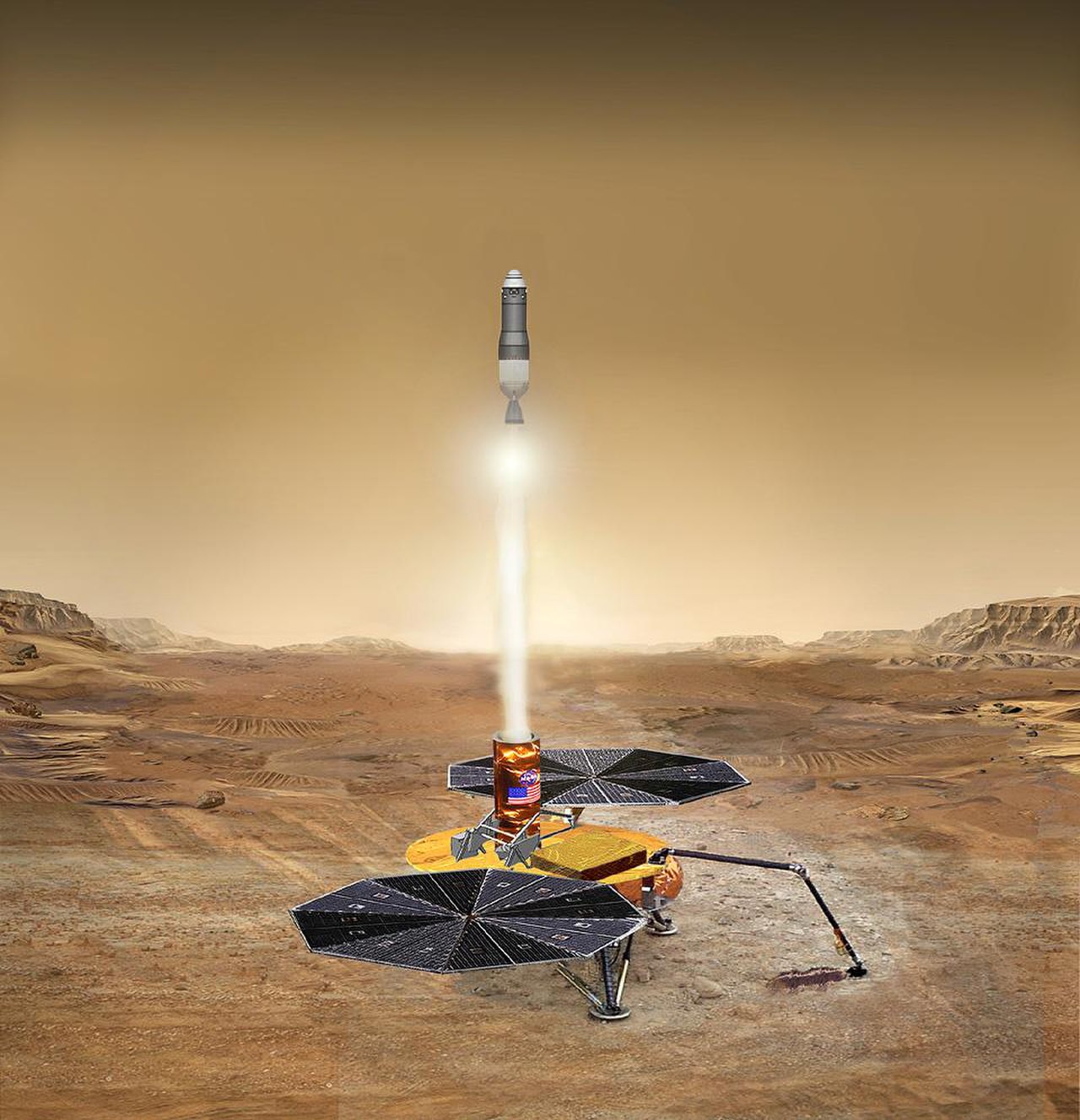
The Mars Sample Return (MSR) mission is a groundbreaking endeavor to retrieve samples from the Martian surface and return them to Earth for in-depth analysis. With a vibe rating of 8, this mission has sparked intense interest and debate among scientists and space enthusiasts alike, with some speculating that it could be a major breakthrough in the search for life beyond Earth. The MSR mission is expected to launch in the late 2020s, with NASA's Perseverance rover playing a crucial role in sample collection. However, the mission's success is not without its challenges, including the complexities of interplanetary travel and the risk of contamination. As the mission progresses, it will be interesting to see how the scientific community responds to the findings, with some predicting a major shift in our understanding of the Martian geology and potential biosignatures. With an estimated cost of over $10 billion, the MSR mission is a significant investment in the pursuit of knowledge, and its outcome could have far-reaching implications for the future of space exploration.
🚀 Introduction to Mars Sample Return
The concept of a Mars sample-return (MSR) mission has been a topic of interest in the space exploration community for decades. A MSR mission would involve collecting rock and dust samples on Mars and returning them to Earth for more extensive analysis. This would allow scientists to study the Martian geology, composition, and potential biosignatures in greater detail than is possible with onboard sensors. For more information on the history of Mars exploration, see History of Mars Exploration. The National Aeronautics and Space Administration has been a key player in the development of MSR mission concepts. The European Space Agency has also been involved in the planning and development of MSR missions.
🔍 The Science Behind Sample Return
The science behind sample return is complex and involves several key factors. The primary objective of a MSR mission is to collect and return samples that are representative of the Martian geology and composition. This requires a thorough understanding of the Martian surface and subsurface, including the Geology of Mars. The Curiosity Rover has provided valuable insights into the Martian geology, but a MSR mission would allow for more extensive analysis of the samples. The Sample Analysis at Mars (SAM) instrument on the Curiosity Rover has been instrumental in analyzing the Martian samples. For more information on the science behind sample return, see Sample Return.
🛰️ Mission Objectives and Requirements
The mission objectives and requirements for a MSR mission are multifaceted. The primary objective is to collect and return samples that are representative of the Martian geology and composition. This requires a reliable and efficient sample collection system, as well as a robust sample container and preservation system. The Mars 2020 mission has demonstrated the feasibility of sample collection and storage on Mars. The Perseverance Rover has been instrumental in collecting and storing samples on Mars. For more information on the mission objectives and requirements, see Mission Objectives and Requirements.
🌌 The Challenges of Mars Sample Return
The challenges of Mars sample return are significant and include several key factors. One of the primary challenges is the harsh Martian environment, which includes extreme temperatures, radiation, and atmospheric conditions. The Radiation on Mars is a significant concern for any MSR mission. The Atmosphere of Mars is also a challenge, as it is thin and offers little protection from radiation and extreme temperatures. For more information on the challenges of Mars sample return, see Challenges of Mars Sample Return. The NASA Jet Propulsion Laboratory has been working to develop technologies to overcome these challenges.
🤖 Robotic Systems for Sample Collection
Robotic systems for sample collection are a critical component of any MSR mission. The Mars Sample Return Rover is a key component of the MSR mission concept. The rover would be responsible for collecting and storing samples on Mars. The Sample Collection System would be used to collect and store samples. For more information on robotic systems for sample collection, see Robotic Systems for Sample Collection. The European Space Agency has been working on the development of robotic systems for sample collection.
📦 Sample Container and Preservation
The sample container and preservation system are critical components of any MSR mission. The Sample Container must be designed to preserve the samples during transit to Earth. The Preservation System must be designed to maintain the integrity of the samples during transit. For more information on the sample container and preservation system, see Sample Container and Preservation. The NASA Goddard Space Flight Center has been working on the development of the sample container and preservation system.
🚀 Launch and Transit to Mars
The launch and transit to Mars are critical components of any MSR mission. The Launch Vehicle must be capable of delivering the MSR spacecraft to Mars. The Transit to Mars must be carefully planned to ensure the safe arrival of the spacecraft. For more information on the launch and transit to Mars, see Launch and Transit to Mars. The United Launch Alliance has been working on the development of launch vehicles for MSR missions.
👽 Sample Return and Analysis
The sample return and analysis are critical components of any MSR mission. The Sample Return Capsule must be designed to return the samples to Earth. The Sample Analysis must be carefully planned to ensure the accurate analysis of the samples. For more information on the sample return and analysis, see Sample Return and Analysis. The NASA Johnson Space Center has been working on the development of the sample return and analysis systems.
💡 The Future of Mars Sample Return
The future of Mars sample return is exciting and includes several key developments. The Mars Sample Return Campaign is a key component of the MSR mission concept. The Sample Return Mission is planned for the late 2020s. For more information on the future of Mars sample return, see Future of Mars Sample Return. The European Space Agency has been working on the development of the sample return mission.
📊 Cost and Budget Considerations
The cost and budget considerations for a MSR mission are significant and include several key factors. The Cost of Mars Sample Return is estimated to be in the billions of dollars. The Budget for Mars Sample Return must be carefully planned to ensure the successful completion of the mission. For more information on the cost and budget considerations, see Cost and Budget Considerations. The NASA Office of the Inspector General has been working on the development of the budget for the MSR mission.
🌟 International Cooperation and Collaboration
The international cooperation and collaboration for a MSR mission are critical components of the mission concept. The International Cooperation on Mars Sample Return includes several key partners. The European Space Agency has been working closely with NASA on the development of the MSR mission concept. For more information on the international cooperation and collaboration, see International Cooperation and Collaboration.
Key Facts
- Year
- 2028
- Origin
- NASA's Jet Propulsion Laboratory
- Category
- Space Exploration
- Type
- Space Mission
Frequently Asked Questions
What is the primary objective of a Mars sample-return mission?
The primary objective of a Mars sample-return mission is to collect and return samples from Mars that are representative of the Martian geology and composition. This would allow scientists to study the Martian geology, composition, and potential biosignatures in greater detail than is possible with onboard sensors. For more information on the primary objective of a Mars sample-return mission, see Primary Objective of Mars Sample Return. The National Aeronautics and Space Administration has been a key player in the development of MSR mission concepts.
What are the challenges of Mars sample return?
The challenges of Mars sample return are significant and include several key factors. One of the primary challenges is the harsh Martian environment, which includes extreme temperatures, radiation, and atmospheric conditions. The Radiation on Mars is a significant concern for any MSR mission. The Atmosphere of Mars is also a challenge, as it is thin and offers little protection from radiation and extreme temperatures. For more information on the challenges of Mars sample return, see Challenges of Mars Sample Return.
What is the role of robotic systems in sample collection?
Robotic systems play a critical role in sample collection for a Mars sample-return mission. The Mars Sample Return Rover is a key component of the MSR mission concept. The rover would be responsible for collecting and storing samples on Mars. The Sample Collection System would be used to collect and store samples. For more information on robotic systems for sample collection, see Robotic Systems for Sample Collection.
What is the importance of sample container and preservation?
The sample container and preservation system are critical components of any MSR mission. The Sample Container must be designed to preserve the samples during transit to Earth. The Preservation System must be designed to maintain the integrity of the samples during transit. For more information on the sample container and preservation system, see Sample Container and Preservation.
What is the future of Mars sample return?
The future of Mars sample return is exciting and includes several key developments. The Mars Sample Return Campaign is a key component of the MSR mission concept. The Sample Return Mission is planned for the late 2020s. For more information on the future of Mars sample return, see Future of Mars Sample Return.
What is the cost of a Mars sample-return mission?
The cost of a Mars sample-return mission is significant and includes several key factors. The Cost of Mars Sample Return is estimated to be in the billions of dollars. The Budget for Mars Sample Return must be carefully planned to ensure the successful completion of the mission. For more information on the cost and budget considerations, see Cost and Budget Considerations.
What is the role of international cooperation in a Mars sample-return mission?
International cooperation plays a critical role in a Mars sample-return mission. The International Cooperation on Mars Sample Return includes several key partners. The European Space Agency has been working closely with NASA on the development of the MSR mission concept. For more information on the international cooperation and collaboration, see International Cooperation and Collaboration.