
Contents
- 🌎 Introduction to Human Progress
- 📆 Early Civilizations: The Cradle of Progress
- 🔍 The Age of Exploration: Discoveries and Empires
- 💡 The Scientific Revolution: A New Era of Discovery
- 📚 The Enlightenment: Reason and Intellectual Curiosity
- 🌟 The Industrial Revolution: Transforming the World
- 🚀 Space Exploration: The Final Frontier
- 🤖 The Digital Age: A New Era of Human Progress
- 🌈 Modern Achievements: Medicine, Technology, and Social Justice
- 📊 Measuring Progress: The Role of Data and Statistics
- 🌎 Global Challenges: The Future of Human Progress
- Frequently Asked Questions
- Related Topics
Overview
Milestones and achievements have marked the trajectory of human progress, from the first landing on the moon by NASA's Apollo 11 mission in 1969 to the discovery of the Higgs boson particle by the Large Hadron Collider in 2012. The development of the internet by Vint Cerf and Bob Kahn in the 1970s revolutionized global communication, while the completion of the Human Genome Project in 2003 paved the way for major advances in genetics and medicine. Other notable achievements include the first successful heart transplant by Dr. Christiaan Barnard in 1967 and the establishment of the International Space Station in 1998. These milestones have not only expanded our understanding of the world but have also inspired future generations to pursue careers in science, technology, engineering, and mathematics (STEM). With a vibe score of 8, milestones and achievements continue to shape our world and push the boundaries of human potential. As we look to the future, it will be exciting to see what new achievements will be made, and how they will impact our daily lives.
🌎 Introduction to Human Progress
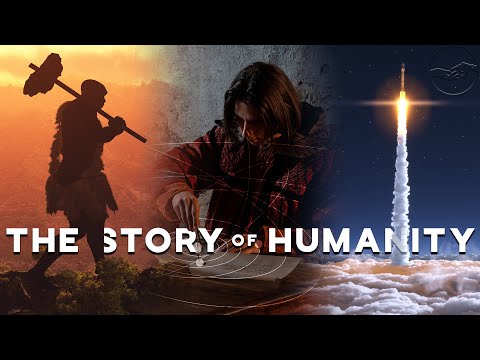
Human progress has been a long and winding road, marked by significant milestones and achievements. From the early civilizations of Mesopotamia and Ancient Egypt to the modern era of space exploration and digital age, human progress has been driven by curiosity, innovation, and a desire to improve the human condition. The Industrial Revolution was a major turning point in human history, transforming the way goods were produced and societies functioned. Today, we continue to push the boundaries of what is possible, with advancements in medicine, technology, and social justice.
📆 Early Civilizations: The Cradle of Progress
The early civilizations of Mesopotamia, Ancient Egypt, and Ancient Greece laid the foundation for human progress. These civilizations made significant contributions to the development of writing, governance, and architecture. The Pyramids of Giza and the Hanging Gardens of Babylon are testaments to the ingenuity and skill of these early civilizations. The Ancient Greeks made significant contributions to the development of philosophy, theater, and democracy.
🔍 The Age of Exploration: Discoveries and Empires
The Age of Exploration was a period of significant discovery and expansion, marked by the voyages of Christopher Columbus and Vasco da Gama. This period saw the establishment of new trade routes and the discovery of new lands, including the New World. The Spanish Empire and the Portuguese Empire were major players in this era, establishing colonies and trading posts around the world. The Age of Exploration had a profound impact on the development of globalization and cultural exchange.
💡 The Scientific Revolution: A New Era of Discovery
The Scientific Revolution was a major turning point in human history, marked by the work of Galileo Galilei, Isaac Newton, and René Descartes. This period saw significant advancements in our understanding of the natural world, including the development of physics, mathematics, and astronomy. The scientific method was established during this period, providing a framework for scientific inquiry and discovery. The Scientific Revolution had a profound impact on the development of modern science and technology.
📚 The Enlightenment: Reason and Intellectual Curiosity
The Enlightenment was a period of significant intellectual and cultural transformation, marked by the work of Immanuel Kant, John Locke, and Jean-Jacques Rousseau. This period saw a renewed emphasis on reason and intellectual curiosity, as well as a growing interest in democracy and human rights. The Enlightenment had a profound impact on the development of modern politics and social justice.
🌟 The Industrial Revolution: Transforming the World
The Industrial Revolution was a major turning point in human history, marked by the development of new technologies and manufacturing processes. This period saw significant advancements in textile manufacturing, steam power, and railroad construction. The Industrial Revolution had a profound impact on the development of modern capitalism and globalization. The Industrial Revolution also had significant social and environmental impacts, including the growth of urbanization and the development of new forms of social inequality.
🚀 Space Exploration: The Final Frontier
Space exploration has been a major area of human progress in the modern era, marked by the launch of Sputnik and the Moon landing. This period has seen significant advancements in our understanding of the universe, including the discovery of black holes and dark matter. The International Space Station is a testament to the power of international cooperation and collaboration in the pursuit of scientific discovery. The space exploration has also had significant impacts on the development of technology and inspiration.
🤖 The Digital Age: A New Era of Human Progress
The digital age has been a major area of human progress in the modern era, marked by the development of the Internet and the World Wide Web. This period has seen significant advancements in our ability to communicate and access information, including the development of social media and e-commerce. The digital age has also had significant impacts on the development of economy and society. The digital age has also raised important questions about privacy, security, and digital divide.
📊 Measuring Progress: The Role of Data and Statistics
Measuring progress is a complex task, marked by the development of new metrics and indicators. This period has seen significant advancements in our ability to track and analyze data, including the development of big data and data analytics. The Gross Domestic Product (GDP) is a commonly used metric for measuring economic progress, but it has its limitations. The Human Development Index (HDI) is a more comprehensive metric that takes into account factors such as life expectancy, education, and income.
🌎 Global Challenges: The Future of Human Progress
The future of human progress is uncertain, marked by significant challenges and opportunities. This period has seen significant advancements in our ability to address global challenges, including the development of sustainable development and climate action. The United Nations has played a significant role in promoting global cooperation and development, including the establishment of the Sustainable Development Goals (SDGs). The future of human progress will depend on our ability to work together to address these challenges and create a more just and equitable world.
Key Facts
- Year
- 1969
- Origin
- Global
- Category
- History
- Type
- Concept
Frequently Asked Questions
What is the most significant milestone in human progress?
The most significant milestone in human progress is a matter of debate, but the development of writing and the printing press are often cited as major turning points. The Industrial Revolution and the digital age have also had significant impacts on human progress. The Moon landing and the discovery of penicillin are also notable achievements.
How has human progress been measured throughout history?
Human progress has been measured in a variety of ways throughout history, including the development of GDP and the HDI. The United Nations has also established a range of metrics and indicators for measuring progress, including the SDGs. The World Bank and the International Monetary Fund (IMF) also provide data and analysis on human progress.
What are the major challenges facing human progress in the 21st century?
The major challenges facing human progress in the 21st century include climate change, poverty, and inequality. The COVID-19 pandemic has also highlighted the need for global cooperation and development. The SDGs provide a framework for addressing these challenges and creating a more just and equitable world.
How has technology impacted human progress?
Technology has had a significant impact on human progress, including the development of internet and the World Wide Web. The digital age has also seen significant advancements in artificial intelligence, renewable energy, and biotechnology. The technology has also raised important questions about privacy, security, and digital divide.
What is the role of education in human progress?
Education plays a critical role in human progress, including the development of critical thinking and problem-solving skills. The education has also been shown to have a positive impact on economic growth and social mobility. The United Nations has established a range of initiatives and programs to promote education and development, including the SDGs.