
Contents
- 🌎 Introduction to Earthquakes
- 🔍 Understanding Seismic Activity
- 🌊 Tectonic Plates and Earthquakes
- 📊 Measuring Earthquake Intensity
- 🌆 Earthquake-Prone Areas
- 🌈 Types of Earthquakes
- 🚨 Earthquake Warning Systems
- 🌟 Earthquake Mitigation and Preparedness
- 🤝 International Cooperation and Response
- 📊 Economic Impact of Earthquakes
- 🌐 Earthquakes in Popular Culture
- Frequently Asked Questions
- Related Topics
Overview
Earthquakes have been a persistent threat to human societies throughout history, with the earliest recorded earthquake dating back to 1831 BCE in China. The 1906 San Francisco earthquake, which had a magnitude of 7.9, is widely regarded as one of the most devastating in US history, with over 3,000 deaths and $524 million in damages. According to the United States Geological Survey (USGS), there are approximately 14,000 earthquakes worldwide every year, with 120 of them having a magnitude of 6.0 or higher. The economic impact of earthquakes can be staggering, with the 2011 Tohoku earthquake in Japan resulting in $235 billion in damages. As our understanding of seismic activity evolves, so does our ability to prepare for and respond to these events. With a Vibe score of 82, earthquakes continue to captivate and intimidate us, with ongoing debates surrounding the effectiveness of early warning systems and the role of human activity in triggering seismic events.
🌎 Introduction to Earthquakes
Earthquakes are a powerful reminder of the Earth's fury, causing widespread destruction and loss of life. According to the United States Geological Survey, earthquakes can range in intensity, from those so weak they cannot be felt, to those violent enough to propel objects and people into the air, damage critical infrastructure, and wreak destruction across entire cities. The study of earthquakes is a complex field that involves understanding the seismic activity of an area, which is the frequency, type, and size of earthquakes experienced over a particular time. For more information on earthquake science, visit the National Earthquake Information Center. Earthquakes can be triggered by a variety of factors, including tectonic plate movement, volcanic activity, and human activities such as injection of fluids into the ground.
🔍 Understanding Seismic Activity
Seismic activity is a critical component of understanding earthquakes, as it helps scientists to identify areas that are prone to earthquakes. The seismicity at a particular location in the Earth is the average rate of seismic energy released per unit volume. By studying seismic activity, scientists can gain insights into the underlying geological processes that drive earthquakes. For example, the San Andreas Fault in California is a major transform fault that is responsible for many significant earthquakes in the region. To learn more about seismic activity, visit the International Seismological Centre. Earthquakes can also be triggered by human activities, such as the injection of fluids into the ground, which can alter the stress on faults and increase the likelihood of an earthquake.
🌊 Tectonic Plates and Earthquakes
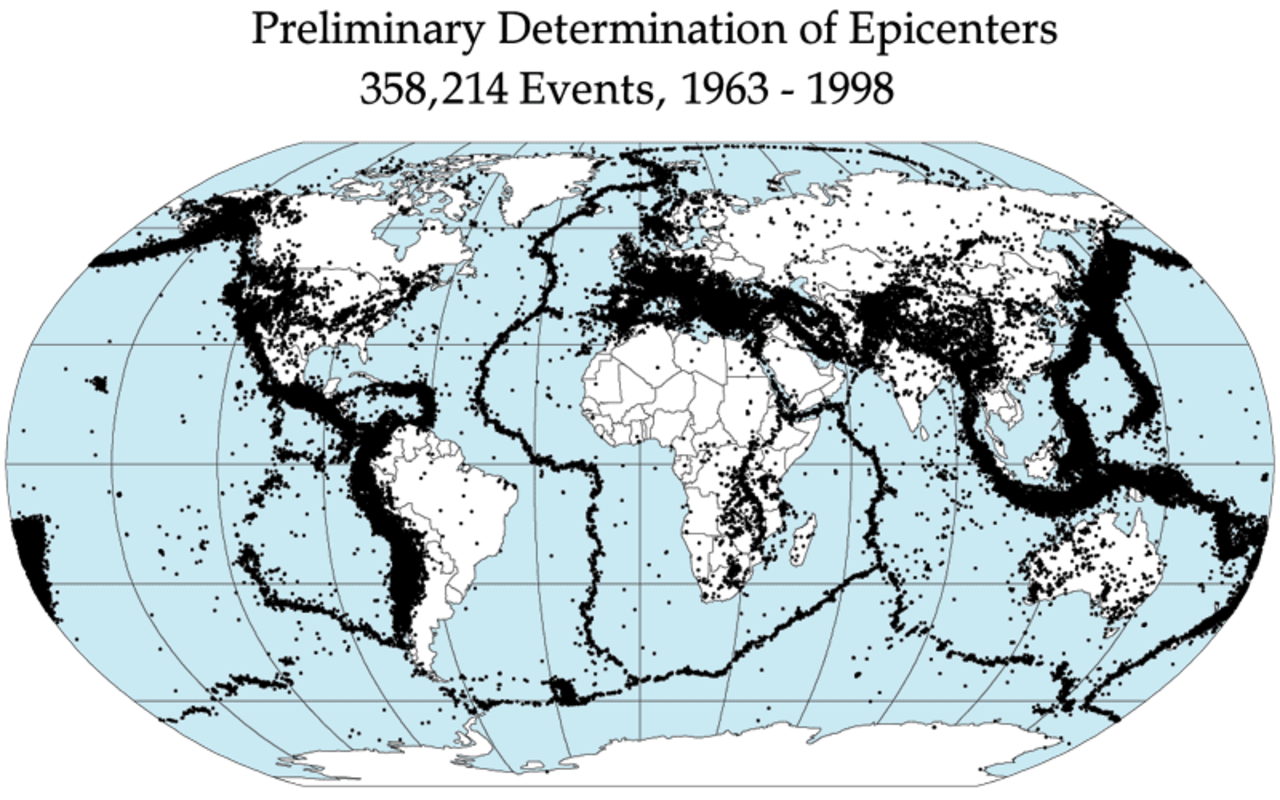
Tectonic plates play a crucial role in shaping the Earth's surface and driving earthquakes. The movement of tectonic plates can cause stress to build up in the Earth's lithosphere, which can eventually lead to the sudden release of energy that characterizes an earthquake. There are several types of tectonic plate boundaries, including divergent, convergent, and transform boundaries, each of which is associated with different types of earthquakes. For example, the Pacific Ring of Fire is a zone of intense seismic activity that is home to over 75% of the world's active volcanoes and experiences 90% of the world's largest earthquakes. To learn more about tectonic plates, visit the Plate Tectonics page.
📊 Measuring Earthquake Intensity
Measuring earthquake intensity is critical for understanding the impact of an earthquake and for developing effective response and mitigation strategies. The Richter scale is a logarithmic scale that is used to measure the magnitude of an earthquake, which is a measure of the size of the earthquake. However, the Richter scale has several limitations, and other scales such as the moment magnitude scale are now widely used. For example, the 2011 Tōhoku earthquake and tsunami had a magnitude of 9.1 on the moment magnitude scale, making it one of the largest earthquakes in recorded history. To learn more about earthquake measurement, visit the Seismology page.
🌆 Earthquake-Prone Areas
Some areas are more prone to earthquakes than others, due to their location near tectonic plate boundaries or other geological features. The San Francisco Bay Area, for example, is located near the San Andreas Fault and is considered to be one of the most earthquake-prone areas in the world. Other areas, such as Japan and Indonesia, are also located in seismically active regions and experience frequent earthquakes. To learn more about earthquake-prone areas, visit the Earthquake Proneness page. Earthquakes can have a significant impact on the environment, including soil liquefaction and tsunamis.
🌈 Types of Earthquakes
There are several types of earthquakes, including tectonic earthquakes, volcanic earthquakes, and collapse earthquakes. Tectonic earthquakes are the most common type of earthquake and are caused by the movement of tectonic plates. Volcanic earthquakes are caused by the movement of magma and gas beneath a volcano, while collapse earthquakes are caused by the collapse of underground caverns or other geological features. For example, the 1980 Mount St. Helens eruption was triggered by a series of earthquakes that occurred in the months leading up to the eruption. To learn more about types of earthquakes, visit the Types of Earthquakes page.
🚨 Earthquake Warning Systems
Earthquake warning systems are critical for saving lives and reducing damage during an earthquake. These systems use seismic data to detect the early signs of an earthquake and provide warnings to people in the affected area. For example, Japan has a highly developed earthquake warning system that can detect the early signs of an earthquake and provide warnings to people in the affected area. To learn more about earthquake warning systems, visit the Earthquake Early Warning Systems page. Earthquake warning systems can be used in conjunction with other disaster response strategies, such as evacuation plans and emergency shelters.
🌟 Earthquake Mitigation and Preparedness
Earthquake mitigation and preparedness are critical for reducing the impact of an earthquake. This can include measures such as earthquake-resistant construction, emergency planning, and public education. For example, the City of Los Angeles has implemented a number of measures to reduce the risk of earthquake damage, including the retrofitting of buildings and the development of emergency response plans. To learn more about earthquake mitigation and preparedness, visit the Earthquake Mitigation page. Earthquakes can also have a significant impact on the economy, including business interruption and infrastructure damage.
🤝 International Cooperation and Response
International cooperation and response are critical for responding to earthquakes that affect multiple countries. This can include the sharing of seismic data, the provision of humanitarian aid, and the coordination of disaster response efforts. For example, the 2010 Haiti earthquake was a major international disaster that required a coordinated response from multiple countries and organizations. To learn more about international cooperation and response, visit the International Cooperation page. Earthquakes can also have a significant impact on global food security and economic stability.
📊 Economic Impact of Earthquakes
The economic impact of earthquakes can be significant, with costs running into billions of dollars. The 2011 Tōhoku earthquake and tsunami, for example, is estimated to have cost over $200 billion, making it one of the most expensive natural disasters in history. To learn more about the economic impact of earthquakes, visit the Economic Impact of Earthquakes page. Earthquakes can also have a significant impact on the environment, including soil contamination and water pollution.
🌐 Earthquakes in Popular Culture
Earthquakes have also had a significant impact on popular culture, with many films, books, and other works of art referencing earthquakes. The 1974 Earthquake that occurred in Los Angeles, for example, was the subject of a number of films and books, including the film Earthquake starring Charlton Heston. To learn more about earthquakes in popular culture, visit the Earthquakes in Popular Culture page. Earthquakes can also be used as a plot device in fiction, allowing authors to explore themes such as disaster response and human resilience.
Key Facts
- Year
- 2023
- Origin
- Global
- Category
- Natural Disasters
- Type
- Natural Phenomenon
Frequently Asked Questions
What is an earthquake?
An earthquake is the shaking of the Earth's surface resulting from a sudden release of energy in the lithosphere that creates seismic waves. Earthquakes can range in intensity, from those so weak they cannot be felt, to those violent enough to propel objects and people into the air, damage critical infrastructure, and wreak destruction across entire cities. For more information on earthquakes, visit the Earthquakes page. Earthquakes can be triggered by a variety of factors, including tectonic plate movement, volcanic activity, and human activities such as injection of fluids into the ground.
What is seismic activity?
Seismic activity is the frequency, type, and size of earthquakes experienced over a particular time. The seismicity at a particular location in the Earth is the average rate of seismic energy released per unit volume. By studying seismic activity, scientists can gain insights into the underlying geological processes that drive earthquakes. For example, the San Andreas Fault in California is a major transform fault that is responsible for many significant earthquakes in the region. To learn more about seismic activity, visit the Seismic Activity page.
What is the difference between a earthquake and a tremor?
A tremor is a small earthquake that is typically not felt by people. Earthquakes, on the other hand, can range in intensity from small to large and can cause significant damage and loss of life. For more information on the difference between earthquakes and tremors, visit the Earthquakes vs Tremors page. Earthquakes can also be classified as tectonic earthquakes, volcanic earthquakes, or collapse earthquakes.
How can I prepare for an earthquake?
Preparing for an earthquake involves taking steps to reduce the risk of injury and damage to property. This can include measures such as earthquake-resistant construction, emergency planning, and public education. For example, the City of Los Angeles has implemented a number of measures to reduce the risk of earthquake damage, including the retrofitting of buildings and the development of emergency response plans. To learn more about earthquake preparedness, visit the Earthquake Preparedness page.
What is the most significant earthquake in history?
The most significant earthquake in history is the 2004 Indian Ocean earthquake and tsunami, which is estimated to have caused over 230,000 deaths in 14 countries. The earthquake had a magnitude of 9.1 on the moment magnitude scale, making it one of the largest earthquakes in recorded history. To learn more about significant earthquakes, visit the Significant Earthquakes page. Earthquakes can also have a significant impact on the environment, including soil liquefaction and tsunamis.
Can earthquakes be predicted?
Predicting earthquakes is a complex task that involves understanding the underlying geological processes that drive earthquakes. While scientists can identify areas that are prone to earthquakes, predicting the exact time and location of an earthquake is still not possible with current technology. For more information on earthquake prediction, visit the Earthquake Prediction page. Earthquakes can also be triggered by human activities, such as the injection of fluids into the ground, which can alter the stress on faults and increase the likelihood of an earthquake.
What is the role of seismic data in earthquake research?
Seismic data plays a critical role in earthquake research, as it provides scientists with information about the location, size, and type of earthquakes. By analyzing seismic data, scientists can gain insights into the underlying geological processes that drive earthquakes and develop more effective strategies for mitigating the impact of earthquakes. For example, the United States Geological Survey uses seismic data to develop earthquake hazard maps and to provide early warnings of earthquakes. To learn more about seismic data, visit the Seismic Data page.