
Contents
- 🔍 Introduction to Cognitive Appraisal
- 💡 The Transactional Model of Stress and Coping
- 📚 The Role of Cognitive Appraisal in Mental Health
- 👥 The Influence of Personality on Cognitive Appraisal
- 🌈 Abnormal Patterns of Cognitive Appraisal in Mental Disorders
- 🔀 The Impact of Cognitive Appraisal on Emotion and Coping
- 📊 Theories and Models of Cognitive Appraisal
- 👨🎓 The Work of Richard Lazarus and Susan Folkman
- 💻 Modern Applications of Cognitive Appraisal
- 🤝 The Connection to Conscious Communication
- 🌐 The Future of Cognitive Appraisal Research
- Frequently Asked Questions
- Related Topics
Overview
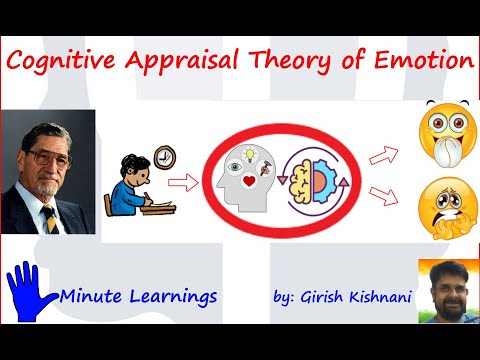
Cognitive appraisal refers to the mental process by which individuals evaluate and interpret emotional stimuli, influencing their emotional experiences and behavioral responses. This concept, rooted in the work of psychologists such as Richard Lazarus and Magda Arnold, suggests that emotions are not solely the result of external stimuli, but are also shaped by an individual's cognitive assessment of the situation. For instance, the practice of mindfulness and meditation, as explored in vipassana meditation, can significantly impact one's cognitive appraisal process, allowing for a more nuanced and compassionate interpretation of emotional experiences. The connection between cognitive appraisal and emotional regulation is a key area of study in the field of conscious communication, highlighting the importance of developing awareness of one's thought patterns and emotional responses. By cultivating a deeper understanding of cognitive appraisal, individuals can better navigate complex emotional landscapes and develop more effective strategies for emotional regulation, ultimately contributing to a more holistic and balanced approach to individual awakening. Furthermore, the implications of cognitive appraisal extend beyond individual practice, influencing the dynamics of community building and conscious governance, as the ability to effectively appraise and manage emotions can significantly impact interpersonal relationships and collective decision-making processes.
🔍 Introduction to Cognitive Appraisal
Cognitive appraisal is a crucial component in understanding how individuals respond to and interpret stimuli in their environment. It is a subjective interpretation made by an individual, and it plays a significant role in various theories related to stress, mental health, coping, and emotion. The concept of cognitive appraisal is most notably used in the transactional model of stress and coping, introduced by Richard Lazarus and Susan Folkman in 1984. This theory defines cognitive appraisal as the way in which an individual responds to and interprets stressors in life. For more information on stress and coping, visit our page on stress management.
💡 The Transactional Model of Stress and Coping
The transactional model of stress and coping is a widely accepted theory that explains how individuals respond to and manage stress. According to this model, cognitive appraisal is a critical component in determining how an individual responds to a stressor. The model suggests that individuals appraise a stressor in two stages: primary appraisal, where they evaluate the significance of the stressor, and secondary appraisal, where they assess their ability to cope with the stressor. This process is closely related to conscious communication and emotional intelligence. For more information on emotional intelligence, visit our page on emotional awareness.
📚 The Role of Cognitive Appraisal in Mental Health
Cognitive appraisal has been observed to play a significant role in various mental health disorders. Research has shown that individuals with mental health disorders, such as anxiety and depression, exhibit abnormal patterns of cognitive appraisal. For example, individuals with anxiety disorders tend to appraise situations as more threatening than they actually are, while individuals with depression tend to appraise situations as more hopeless than they actually are. This highlights the importance of cognitive appraisal in understanding and managing mental health. For more information on mental health, visit our page on mental health conditions.
👥 The Influence of Personality on Cognitive Appraisal
Personality has been found to influence the way in which individuals cognitively appraise a situation. Research has shown that individuals with certain personality traits, such as neuroticism and optimism, tend to appraise situations differently. For example, individuals with high levels of neuroticism tend to appraise situations as more stressful and threatening, while individuals with high levels of optimism tend to appraise situations as more challenging and manageable. This highlights the importance of considering personality when understanding cognitive appraisal. For more information on personality, visit our page on personality traits.
🌈 Abnormal Patterns of Cognitive Appraisal in Mental Disorders
Abnormal patterns of cognitive appraisal have been observed in various mental disorders. For example, individuals with post-traumatic stress disorder (PTSD) tend to appraise situations as more threatening and dangerous than they actually are, while individuals with borderline personality disorder tend to appraise situations as more emotionally charged and unstable than they actually are. This highlights the importance of cognitive appraisal in understanding and managing mental health disorders. For more information on PTSD, visit our page on PTSD symptoms.
🔀 The Impact of Cognitive Appraisal on Emotion and Coping
Cognitive appraisal has a significant impact on emotion and coping. When an individual appraises a situation as stressful or threatening, they are more likely to experience negative emotions, such as fear and anxiety. On the other hand, when an individual appraises a situation as challenging and manageable, they are more likely to experience positive emotions, such as hope and resilience. This highlights the importance of cognitive appraisal in understanding and managing emotions. For more information on emotion, visit our page on emotional regulation.
📊 Theories and Models of Cognitive Appraisal
There are various theories and models of cognitive appraisal that have been proposed over the years. One of the most widely accepted models is the transactional model of stress and coping, which was introduced by Richard Lazarus and Susan Folkman in 1984. Other models, such as the cognitive-behavioral model, have also been proposed. These models highlight the importance of cognitive appraisal in understanding and managing stress and mental health. For more information on cognitive-behavioral therapy, visit our page on cognitive-behavioral therapy.
👨🎓 The Work of Richard Lazarus and Susan Folkman
Richard Lazarus and Susan Folkman are two of the most prominent researchers in the field of cognitive appraisal. Their work on the transactional model of stress and coping has had a significant impact on our understanding of cognitive appraisal and its role in stress and mental health. Their research has highlighted the importance of cognitive appraisal in determining how individuals respond to and manage stress. For more information on stress management, visit our page on stress reduction.
💻 Modern Applications of Cognitive Appraisal
Cognitive appraisal has various modern applications, including mindfulness and cognitive-behavioral therapy. These applications highlight the importance of cognitive appraisal in managing stress and mental health. By teaching individuals how to appraise situations more accurately and manage their emotions, these applications can help individuals develop more effective coping strategies. For more information on mindfulness, visit our page on mindfulness practices.
🤝 The Connection to Conscious Communication
Cognitive appraisal is closely connected to conscious communication. When individuals are able to appraise situations more accurately and communicate their needs and emotions effectively, they are more likely to experience positive outcomes. This highlights the importance of considering cognitive appraisal in the context of conscious communication. For more information on conscious communication, visit our page on effective communication.
🌐 The Future of Cognitive Appraisal Research
The future of cognitive appraisal research is exciting and promising. With the development of new technologies and methodologies, researchers are able to study cognitive appraisal in more detail than ever before. This research has the potential to lead to the development of new interventions and therapies that can help individuals manage stress and mental health more effectively. For more information on the latest research, visit our page on cognitive appraisal research.
Key Facts
- Year
- 1984
- Origin
- Richard Lazarus' Theory of Emotional Experience
- Category
- Consciousness & Practice
- Type
- Psychological Concept
Frequently Asked Questions
What is cognitive appraisal?
Cognitive appraisal is the subjective interpretation made by an individual to stimuli in the environment. It is a component in a variety of theories relating to stress, mental health, coping, and emotion. For more information, visit our page on cognitive appraisal.
How does cognitive appraisal affect mental health?
Cognitive appraisal has been observed to play a significant role in various mental health disorders. Research has shown that individuals with mental health disorders, such as anxiety and depression, exhibit abnormal patterns of cognitive appraisal. For more information, visit our page on mental health conditions.
What is the transactional model of stress and coping?
The transactional model of stress and coping is a widely accepted theory that explains how individuals respond to and manage stress. According to this model, cognitive appraisal is a critical component in determining how an individual responds to a stressor. For more information, visit our page on transactional model of stress and coping.
How does personality influence cognitive appraisal?
Personality has been found to influence the way in which individuals cognitively appraise a situation. Research has shown that individuals with certain personality traits, such as neuroticism and optimism, tend to appraise situations differently. For more information, visit our page on personality traits.
What are the modern applications of cognitive appraisal?
Cognitive appraisal has various modern applications, including mindfulness and cognitive-behavioral therapy. These applications highlight the importance of cognitive appraisal in managing stress and mental health. For more information, visit our page on mindfulness practices.
What is the connection between cognitive appraisal and conscious communication?
Cognitive appraisal is closely connected to conscious communication. When individuals are able to appraise situations more accurately and communicate their needs and emotions effectively, they are more likely to experience positive outcomes. For more information, visit our page on conscious communication.
What is the future of cognitive appraisal research?
The future of cognitive appraisal research is exciting and promising. With the development of new technologies and methodologies, researchers are able to study cognitive appraisal in more detail than ever before. This research has the potential to lead to the development of new interventions and therapies that can help individuals manage stress and mental health more effectively. For more information, visit our page on cognitive appraisal research.