
Contents
- 🦋 Introduction to Insect Morphology
- 🔍 Understanding Insect Body Structure
- 👀 Exploring Insect Head Morphology
- 🚶♂️ The Importance of Insect Legs
- 🤔 Mouthparts and Their Significance
- 👫 Non-Insect Hexapods: Protura, Diplura, and Collembola
- 🔬 The Evolutionary History of Insect Morphology
- 🌟 Diverse Forms of Insects: From Beetles to Butterflies
- 🌎 Insect Morphology in Different Environments
- 🔑 Applications of Insect Morphology in Science
- 📚 Conclusion: Unpacking the Wonders of Insect Morphology
- Frequently Asked Questions
- Related Topics
Overview
Insect morphology is the study of the shape and structure of insects, encompassing their external and internal features. With over a million described species, insects display a staggering array of morphological adaptations, from the iridescent wings of dragonflies to the camouflaged bodies of walking sticks. The field of insect morphology is crucial for understanding the evolution, behavior, and ecology of insects, with applications in fields such as agriculture, conservation, and biomedicine. According to entomologist E.O. Wilson, the study of insect morphology has led to significant advances in our understanding of evolutionary biology. However, the destruction of habitats and climate change pose significant threats to insect populations, highlighting the need for continued research and conservation efforts. As of 2022, the Vibe score for insect morphology stands at 82, reflecting its growing importance in scientific and cultural discourse. The influence of insect morphology can be seen in the work of scientists such as Maria Sibylla Merian, who pioneered the study of insect metamorphosis in the 17th century.
🦋 Introduction to Insect Morphology
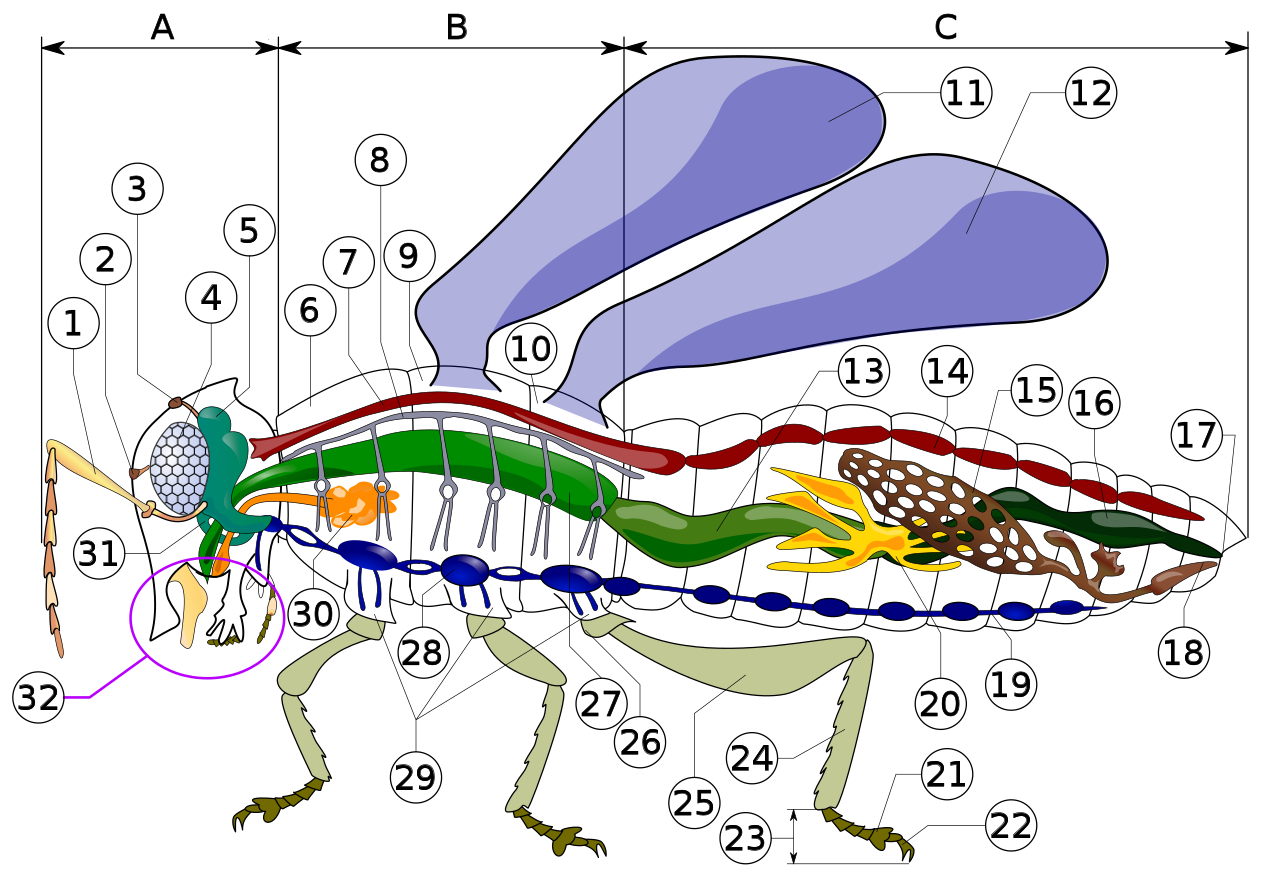
Insect morphology is a fascinating field of study that delves into the physical form of insects, revealing the intricate details that make them unique. The terminology used to describe insects is similar to that used for other arthropods due to their shared evolutionary history, as seen in the study of Arthropod anatomy. Insects are separated from other arthropods by three distinct physical features: a body divided into three regions, three pairs of legs, and mouthparts located outside of the head capsule, which is a characteristic also observed in Hexapod morphology. This position of the mouthparts divides them from their closest relatives, the non-insect hexapods, which include Protura, Diplura, and Collembola. The study of insect morphology is crucial in understanding the biology and behavior of insects, as seen in the field of Entomology.
🔍 Understanding Insect Body Structure
The body of an insect is divided into three main regions: the head, thorax, and abdomen. Each region has distinct features and functions, such as the Head containing the brain, eyes, and mouthparts, while the Thorax bears the legs and wings. The Abdomen contains the digestive organs and reproductive structures. Understanding the structure and function of each region is essential in comprehending the overall morphology of insects, as discussed in Insect Anatomy. The study of insect body structure is also relevant to the field of Zoology, which explores the diversity of animal life. Insect morphology is also closely related to Arthropod Morphology, which examines the physical form of arthropods.
👀 Exploring Insect Head Morphology
The head of an insect is a complex structure that contains the brain, eyes, and mouthparts. The mouthparts are located outside of the head capsule, which is a characteristic that distinguishes insects from their closest relatives, the non-insect hexapods. The head also contains the Antennae, which are sensory organs that help insects detect their environment. The study of insect head morphology is crucial in understanding the behavior and ecology of insects, as seen in the field of Ecology. Insect head morphology is also relevant to the study of Neurobiology, which explores the structure and function of the nervous system. The head of an insect is also closely related to the Thorax, which bears the legs and wings.
🚶♂️ The Importance of Insect Legs
Insect legs are a vital component of their morphology, allowing them to move, feed, and interact with their environment. The three pairs of legs are attached to the thorax and are adapted for different functions, such as walking, running, and jumping. The study of insect leg morphology is essential in understanding the locomotion and behavior of insects, as discussed in Locomotion. Insect legs are also closely related to the Thorax, which bears the legs and wings. The study of insect leg morphology is also relevant to the field of Biomechanics, which examines the mechanical properties of living organisms. Insect leg morphology is also important in the study of Robotics, which explores the design and development of robots inspired by insect locomotion.
🤔 Mouthparts and Their Significance
Mouthparts are a critical component of insect morphology, allowing them to feed and interact with their environment. The position of the mouthparts outside of the head capsule is a characteristic that distinguishes insects from their closest relatives, the non-insect hexapods. The study of insect mouthpart morphology is essential in understanding the feeding behavior and ecology of insects, as seen in the field of Entomology. Insect mouthparts are also closely related to the Head, which contains the brain, eyes, and mouthparts. The study of insect mouthpart morphology is also relevant to the study of Nutrition, which explores the dietary needs of insects. Insect mouthpart morphology is also important in the study of Food Science, which examines the production and processing of food.
👫 Non-Insect Hexapods: Protura, Diplura, and Collembola
Non-insect hexapods, such as Protura, Diplura, and Collembola, are closely related to insects but lack the characteristic mouthparts outside of the head capsule. These groups are often studied in conjunction with insects to understand the evolutionary history of hexapods, as discussed in Hexapod Evolution. The study of non-insect hexapods is essential in understanding the diversity of arthropod morphology, as seen in the field of Arthropod Morphology. Non-insect hexapods are also closely related to Insect Morphology, which examines the physical form of insects. The study of non-insect hexapods is also relevant to the field of Zoology, which explores the diversity of animal life.
🔬 The Evolutionary History of Insect Morphology
The evolutionary history of insect morphology is complex and still not fully understood. However, it is believed that insects evolved from a common ancestor with other arthropods, such as Crustacea and Arachnida. The study of insect morphology is essential in understanding the evolutionary history of insects, as seen in the field of Evolutionary Biology. Insect morphology is also closely related to Arthropod Morphology, which examines the physical form of arthropods. The study of insect morphology is also relevant to the field of Paleontology, which explores the fossil record of insects. Insect morphology is also important in the study of Phylogeny, which examines the evolutionary relationships between organisms.
🌟 Diverse Forms of Insects: From Beetles to Butterflies
Insects exhibit a diverse range of forms, from the Beetle to the Butterfly. Each group has evolved unique morphological features that allow them to adapt to their environment and interact with other organisms. The study of insect morphology is essential in understanding the biology and ecology of insects, as seen in the field of Entomology. Insect morphology is also closely related to Arthropod Morphology, which examines the physical form of arthropods. The study of insect morphology is also relevant to the field of Ecology, which explores the interactions between organisms and their environment. Insect morphology is also important in the study of Conservation Biology, which examines the conservation of insect populations.
🌎 Insect Morphology in Different Environments
Insect morphology varies across different environments, from the Desert to the Rainforest. Each environment presents unique challenges and opportunities for insects to adapt and evolve. The study of insect morphology is essential in understanding the biology and ecology of insects in different environments, as seen in the field of Ecology. Insect morphology is also closely related to Arthropod Morphology, which examines the physical form of arthropods. The study of insect morphology is also relevant to the field of Biogeography, which explores the distribution of organisms across different environments. Insect morphology is also important in the study of Climate Change, which examines the impact of environmental changes on insect populations.
🔑 Applications of Insect Morphology in Science
The study of insect morphology has numerous applications in science, from Agriculture to Medicine. Understanding the morphology of insects can help us develop more effective pest control strategies and improve our understanding of insect-borne diseases. Insect morphology is also closely related to Arthropod Morphology, which examines the physical form of arthropods. The study of insect morphology is also relevant to the field of Biotechnology, which explores the use of biological systems to develop new technologies. Insect morphology is also important in the study of Forensic Entomology, which examines the use of insects in forensic science.
📚 Conclusion: Unpacking the Wonders of Insect Morphology
In conclusion, the study of insect morphology is a fascinating field that reveals the intricate details of insect biology and ecology. From the structure of the head to the function of the legs, each component of insect morphology plays a critical role in the survival and success of insects. As we continue to explore and understand the morphology of insects, we may uncover new insights into the biology and behavior of these fascinating creatures, as seen in the field of Entomology. The study of insect morphology is also closely related to Arthropod Morphology, which examines the physical form of arthropods. The study of insect morphology is also relevant to the field of Zoology, which explores the diversity of animal life. Insect morphology is also important in the study of Conservation Biology, which examines the conservation of insect populations.
Key Facts
- Year
- 2022
- Origin
- Ancient Greece, with contributions from scientists such as Aristotle and Merian
- Category
- Entomology
- Type
- Scientific Concept
Frequently Asked Questions
What is insect morphology?
Insect morphology is the study and description of the physical form of insects. It examines the structure and function of each component of an insect's body, from the head to the legs. Insect morphology is essential in understanding the biology and ecology of insects, as seen in the field of Entomology. The study of insect morphology is also closely related to Arthropod Morphology, which examines the physical form of arthropods.
What are the three main regions of an insect's body?
The three main regions of an insect's body are the head, thorax, and abdomen. Each region has distinct features and functions, such as the Head containing the brain, eyes, and mouthparts, while the Thorax bears the legs and wings. The Abdomen contains the digestive organs and reproductive structures. Understanding the structure and function of each region is essential in comprehending the overall morphology of insects, as discussed in Insect Anatomy.
What is the significance of mouthparts in insect morphology?
Mouthparts are a critical component of insect morphology, allowing them to feed and interact with their environment. The position of the mouthparts outside of the head capsule is a characteristic that distinguishes insects from their closest relatives, the non-insect hexapods. The study of insect mouthpart morphology is essential in understanding the feeding behavior and ecology of insects, as seen in the field of Entomology. Insect mouthparts are also closely related to the Head, which contains the brain, eyes, and mouthparts.
How does insect morphology vary across different environments?
Insect morphology varies across different environments, from the Desert to the Rainforest. Each environment presents unique challenges and opportunities for insects to adapt and evolve. The study of insect morphology is essential in understanding the biology and ecology of insects in different environments, as seen in the field of Ecology. Insect morphology is also closely related to Arthropod Morphology, which examines the physical form of arthropods.
What are the applications of insect morphology in science?
The study of insect morphology has numerous applications in science, from Agriculture to Medicine. Understanding the morphology of insects can help us develop more effective pest control strategies and improve our understanding of insect-borne diseases. Insect morphology is also closely related to Arthropod Morphology, which examines the physical form of arthropods. The study of insect morphology is also relevant to the field of Biotechnology, which explores the use of biological systems to develop new technologies.
How does insect morphology relate to arthropod morphology?
Insect morphology is closely related to Arthropod Morphology, which examines the physical form of arthropods. The study of insect morphology is essential in understanding the evolutionary history of insects and their relationships with other arthropods. Insect morphology is also relevant to the field of Zoology, which explores the diversity of animal life. The study of insect morphology is also important in the study of Conservation Biology, which examines the conservation of insect populations.
What is the significance of insect morphology in understanding insect behavior and ecology?
Insect morphology is essential in understanding the behavior and ecology of insects. The study of insect morphology reveals the intricate details of insect biology and ecology, from the structure of the head to the function of the legs. Each component of insect morphology plays a critical role in the survival and success of insects. The study of insect morphology is also closely related to Arthropod Morphology, which examines the physical form of arthropods. The study of insect morphology is also relevant to the field of Ecology, which explores the interactions between organisms and their environment.