
Contents
- 🦋 Introduction to Insect Anatomy
- 🔍 Understanding Insect Morphology
- 👀 Unique Characteristics of Insects
- 🔬 The Importance of Mouthparts
- 📚 Evolutionary History of Insects
- 👥 Relationship Between Insects and Other Arthropods
- 🔑 Key Features of Insect Body Structure
- 🤔 Controversies in Insect Classification
- 📊 Measuring Insect Diversity
- 🔮 Future Directions in Insect Anatomy Research
- 📚 Conclusion and Further Reading
- Frequently Asked Questions
- Related Topics
Overview
Insect anatomy is a vast and intricate field, with over a million described species exhibiting a staggering range of morphological adaptations. From the delicate wings of butterflies to the robust exoskeletons of beetles, each insect's body plan is a testament to the incredible diversity of life on Earth. The historian notes that the study of insect anatomy dates back to the work of Aristotle and has since been shaped by the contributions of scientists such as Maria Sibylla Merian and Jean-Henri Fabre. However, the skeptic questions the current consensus on insect phylogeny, highlighting the need for further research into the evolutionary relationships between different insect groups. As we continue to explore the intricacies of insect anatomy, the futurist wonders what secrets these tiny creatures might hold for the development of new technologies and innovations, with potential applications in fields such as robotics and biomimicry. With a vibe score of 8, insect anatomy is an area of study that is both captivating and complex, with a controversy spectrum that reflects the ongoing debates and discussions within the scientific community.
🦋 Introduction to Insect Anatomy
The study of insect anatomy is a complex and fascinating field that has captivated scientists and researchers for centuries. Insect morphology, as it is formally known, is the study and description of the physical form of insects. This field of study is closely related to Entomology, the scientific study of insects, and Arthropod Anatomy, the study of the physical structure of arthropods. By understanding the unique characteristics of insects, researchers can gain insights into their behavior, ecology, and evolution. For example, the study of Insect Wings has revealed the intricate details of their structure and function, which is essential for understanding their flight capabilities.
🔍 Understanding Insect Morphology
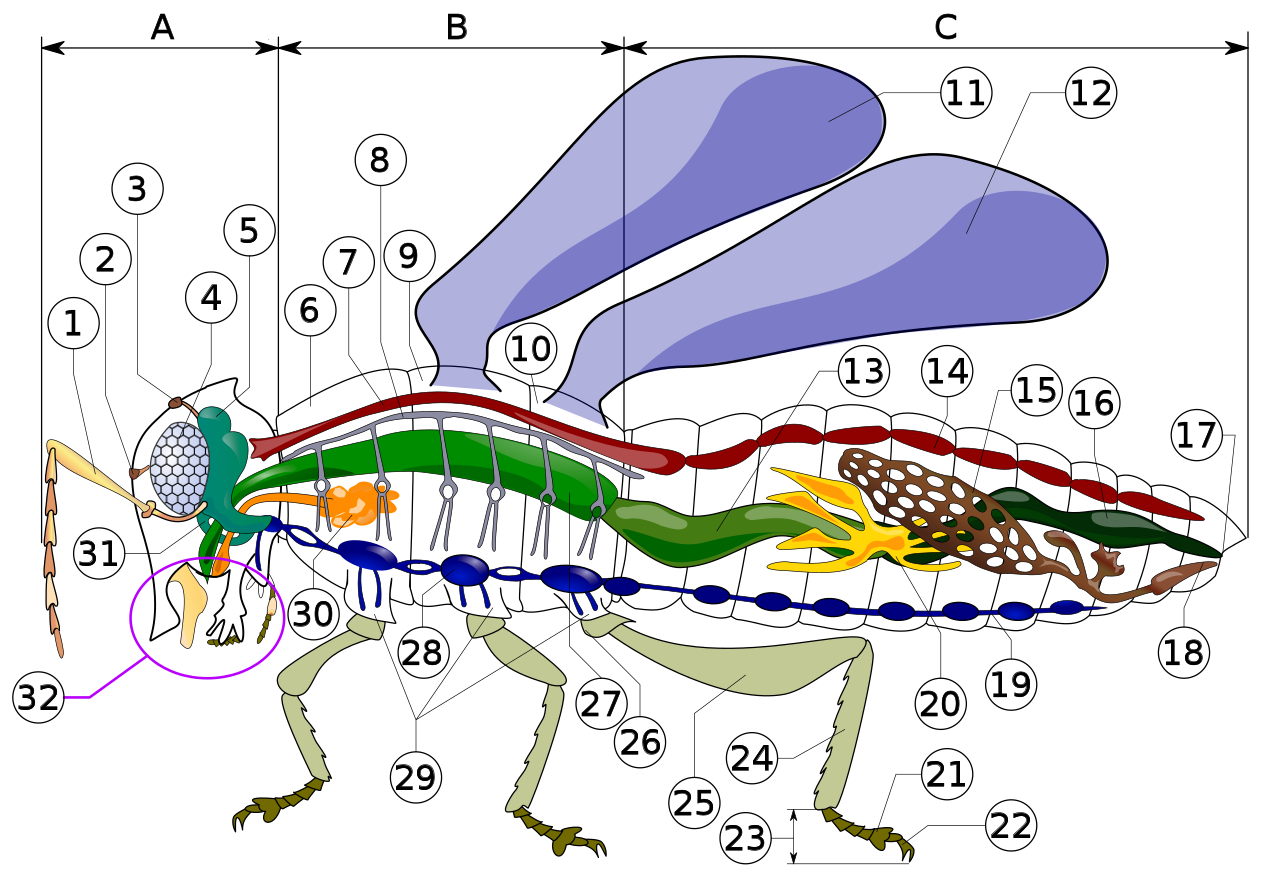
Insect morphology is a crucial aspect of understanding the biology and behavior of insects. The terminology used to describe insects is similar to that used for other arthropods due to their shared evolutionary history. This is because insects and other arthropods, such as Crustaceans and Arachnids, share a common ancestor and have evolved similar body structures over time. However, there are distinct features that separate insects from other arthropods, including their body division into three regions, three pairs of legs, and mouthparts located outside of the head capsule. These characteristics are essential for understanding the unique features of Insect Body Structure.
👀 Unique Characteristics of Insects
One of the most distinctive features of insects is their body division into three regions: the head, thorax, and abdomen. This division is a key characteristic that separates insects from other arthropods, such as Centipedes and Millipedes. In addition to their body division, insects also have three pairs of legs, which are attached to the thorax. These legs are adapted for walking, running, and jumping, and are a key feature of Insect Locomotion. The position of the mouthparts outside of the head capsule is also a unique characteristic of insects, and is thought to be an adaptation for feeding and digestion. This is closely related to the study of Insect Digestive System.
🔬 The Importance of Mouthparts
The mouthparts of insects are a critical component of their anatomy, and are essential for feeding and digestion. The position of the mouthparts outside of the head capsule is a key characteristic that separates insects from their closest relatives, the non-insect hexapods, which include Protura, Diplura, and Collembola. The mouthparts of insects are adapted for a wide range of feeding behaviors, including chewing, sucking, and piercing. For example, the mouthparts of Butterflies are adapted for sipping nectar from flowers, while the mouthparts of Mosquitoes are adapted for piercing the skin of animals and feeding on blood. This is closely related to the study of Insect Feeding Behavior.
📚 Evolutionary History of Insects
The evolutionary history of insects is a complex and still somewhat mysterious topic. However, it is thought that insects evolved from a common ancestor with other arthropods, such as Crustaceans and Arachnids, over 400 million years ago. Since then, insects have undergone a process of rapid evolution and diversification, resulting in the incredible range of species that we see today. This process of evolution has been shaped by a wide range of factors, including Natural Selection, Genetic Drift, and Gene Flow. For example, the evolution of Insect Wings is thought to have been driven by the need for insects to disperse and find food in a rapidly changing environment.
👥 Relationship Between Insects and Other Arthropods
Insects are closely related to other arthropods, such as Crustaceans and Arachnids, and share many characteristics with these groups. However, there are also some key differences that separate insects from other arthropods. For example, insects have a body division into three regions, whereas other arthropods have a more primitive body structure. Insects also have three pairs of legs, whereas other arthropods have a more variable number of legs. These differences are thought to be the result of a process of evolutionary divergence, in which insects and other arthropods have evolved separately over millions of years. This is closely related to the study of Arthropod Evolution.
🔑 Key Features of Insect Body Structure
The body structure of insects is a complex and highly specialized system that is adapted for a wide range of functions, including movement, feeding, and reproduction. The three regions of the insect body - the head, thorax, and abdomen - are each specialized for different functions, and are connected by a system of muscles and nerves. The head is specialized for sensory perception and feeding, and contains the eyes, antennae, and mouthparts. The thorax is specialized for movement, and contains the legs and wings. The abdomen is specialized for digestion and reproduction, and contains the digestive organs and reproductive structures. This is closely related to the study of Insect Neurology and Insect Reproductive Biology.
🤔 Controversies in Insect Classification
Despite the many advances that have been made in our understanding of insect anatomy, there are still many controversies and debates in the field. For example, there is ongoing debate about the relationships between different groups of insects, and about the evolutionary history of insects. There is also controversy about the use of different terminology and classification systems, and about the importance of different characteristics in defining insect groups. For example, some researchers argue that the presence of Insect Wings is a key characteristic that defines insects, while others argue that this characteristic is not unique to insects and should not be used to define the group. This is closely related to the study of Insect Systematics.
📊 Measuring Insect Diversity
Insects are incredibly diverse, with over a million described species and many more that remain undescribed. This diversity is thought to be the result of a combination of factors, including the evolutionary history of insects, the wide range of environments that they inhabit, and the many different ecological niches that they occupy. For example, Beetles are found in almost every environment on Earth, and are adapted for a wide range of feeding behaviors, including herbivory, carnivory, and scavenging. This is closely related to the study of Insect Ecology and Biodiversity.
🔮 Future Directions in Insect Anatomy Research
Future research in insect anatomy is likely to focus on a number of key areas, including the development of new technologies for studying insect morphology, the discovery of new species and the description of their characteristics, and the use of insect anatomy to address pressing problems in fields such as medicine and agriculture. For example, the study of Insect Immunology has the potential to reveal new insights into the evolution of immune systems and the development of new treatments for human diseases. This is closely related to the study of Entomology and Insect Genetics.
📚 Conclusion and Further Reading
In conclusion, the study of insect anatomy is a complex and fascinating field that has the potential to reveal many new insights into the biology and behavior of insects. By understanding the unique characteristics of insects, researchers can gain a deeper appreciation for the diversity and complexity of life on Earth, and can develop new solutions to pressing problems in fields such as medicine and agriculture. For further reading, see Insect Anatomy and Entomology.
Key Facts
- Year
- 2022
- Origin
- Ancient Greece, with significant contributions from 17th-century European naturalists
- Category
- Entomology
- Type
- Biological Concept
Frequently Asked Questions
What is insect morphology?
Insect morphology is the study and description of the physical form of insects. This field of study is closely related to Entomology, the scientific study of insects, and Arthropod Anatomy, the study of the physical structure of arthropods. Insect morphology is a crucial aspect of understanding the biology and behavior of insects, and has many practical applications in fields such as medicine and agriculture.
What are the unique characteristics of insects?
Insects have a number of unique characteristics that distinguish them from other arthropods. These include their body division into three regions, three pairs of legs, and mouthparts located outside of the head capsule. Insects also have a highly specialized body structure that is adapted for a wide range of functions, including movement, feeding, and reproduction. For example, the study of Insect Wings has revealed the intricate details of their structure and function, which is essential for understanding their flight capabilities.
What is the importance of mouthparts in insects?
The mouthparts of insects are a critical component of their anatomy, and are essential for feeding and digestion. The position of the mouthparts outside of the head capsule is a key characteristic that separates insects from their closest relatives, the non-insect hexapods. The mouthparts of insects are adapted for a wide range of feeding behaviors, including chewing, sucking, and piercing. For example, the mouthparts of Butterflies are adapted for sipping nectar from flowers, while the mouthparts of Mosquitoes are adapted for piercing the skin of animals and feeding on blood.
What is the evolutionary history of insects?
The evolutionary history of insects is a complex and still somewhat mysterious topic. However, it is thought that insects evolved from a common ancestor with other arthropods, such as Crustaceans and Arachnids, over 400 million years ago. Since then, insects have undergone a process of rapid evolution and diversification, resulting in the incredible range of species that we see today. This process of evolution has been shaped by a wide range of factors, including Natural Selection, Genetic Drift, and Gene Flow.
What are the future directions in insect anatomy research?
Future research in insect anatomy is likely to focus on a number of key areas, including the development of new technologies for studying insect morphology, the discovery of new species and the description of their characteristics, and the use of insect anatomy to address pressing problems in fields such as medicine and agriculture. For example, the study of Insect Immunology has the potential to reveal new insights into the evolution of immune systems and the development of new treatments for human diseases.