
Contents
- 🌎 Introduction to Eratosthenes
- 📚 Early Life and Education
- 🔍 The Chief Librarian of Alexandria
- 🌐 Contributions to Geography
- 📝 Coining New Terms
- 🎶 Music Theorist and Poet
- 🔢 Mathematical Contributions
- 🌠 Astronomical Discoveries
- 📚 Preservation of Knowledge
- 👥 Legacy and Influence
- 🤔 Controversies and Debates
- 🔜 Future Directions
- Frequently Asked Questions
- Related Topics
Overview
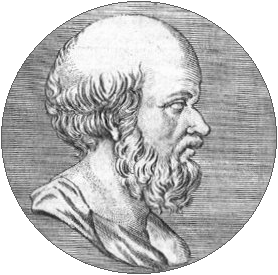
Eratosthenes, a Greek mathematician, geographer, and astronomer, is best known for his remarkably accurate measurement of the Earth's circumference in 240 BCE, using the angles of shadows cast by the Sun at different latitudes. Born in Cyrene, Libya, around 276 BCE, Eratosthenes was the chief librarian at the Library of Alexandria, where he had access to a vast collection of manuscripts and made significant contributions to various fields. His work 'On the Measurement of the Earth' described his method for calculating the Earth's circumference, which was within 1% of the actual value. Eratosthenes also developed the Sieve of Eratosthenes, an algorithm for finding prime numbers, and made significant contributions to the field of geography, mapping the known world and establishing the concept of longitude and latitude. Despite his significant contributions, much of Eratosthenes' work has been lost to time, and his legacy was only rediscovered in the Renaissance. Today, Eratosthenes is recognized as one of the most important figures in the history of science, and his work continues to inspire new generations of mathematicians, astronomers, and geographers.
🌎 Introduction to Eratosthenes
Eratosthenes of Cyrene was an Ancient Greek polymath: a philosopher, scholar, mathematician, geographer, poet, astronomer, and music theorist. He is best known for his work as the chief librarian at the Library of Alexandria, where he made significant contributions to the field of geography. Eratosthenes' work was the precursor to the modern discipline of geography, and he introduced some of its terminology, coining the terms geography and geographer. His work had a lasting impact on the development of Ancient Greek scholarship. As a polymath, Eratosthenes was also interested in music theory and astronomy.
📚 Early Life and Education
Eratosthenes was born in Cyrene, a Greek colony in North Africa, around 276 BC. His early life and education are not well documented, but it is believed that he studied in Athens under the tutelage of famous philosophers such as Aristotle and Theodorus. Eratosthenes' education would have included studies in philosophy, mathematics, and astronomy. He was also known to have been a skilled poet and musician, and his work in these areas would later influence his contributions to music theory. As a young scholar, Eratosthenes was likely influenced by the works of Euclid and Archimedes.
🔍 The Chief Librarian of Alexandria
Eratosthenes eventually became the chief librarian at the Library of Alexandria, a position that gave him access to a vast collection of manuscripts and scrolls. As chief librarian, Eratosthenes was responsible for acquiring and preserving new works, as well as promoting the library as a center of learning. He was also tasked with maintaining the library's catalog, which would have included works on astronomy, mathematics, and geography. Eratosthenes' work at the library would have brought him into contact with other prominent scholars of the time, including Archimedes and Euclid. The library's vast collection would have also influenced Eratosthenes' work on geography and astronomy.
🌐 Contributions to Geography
Eratosthenes made significant contributions to the field of geography, including measuring the circumference of the Earth with remarkable accuracy. He also developed a system of latitude and longitude that would be used for centuries to come. Eratosthenes' work in geography was influenced by his studies of astronomy and mathematics, and he was able to use his knowledge of these subjects to make accurate measurements and calculations. His work on geography would later influence the development of cartography and navigation. As a geographer, Eratosthenes was also interested in the study of climate and its effects on the environment.
📝 Coining New Terms
Eratosthenes is credited with coining the terms geography and geographer. He also developed a system of terminology that would be used to describe the physical features of the Earth, including mountains, rivers, and oceans. Eratosthenes' work in this area would have a lasting impact on the development of the field of geography. His use of latitude and longitude would also influence the development of astronomy and navigation. As a scholar, Eratosthenes was also interested in the study of philology and its relationship to linguistics.
🎶 Music Theorist and Poet
In addition to his work in geography and astronomy, Eratosthenes was also a skilled poet and musician. He wrote several works on music theory, including a treatise on the harmonics of music. Eratosthenes' work in this area would have been influenced by his studies of philosophy and mathematics, and he was able to use his knowledge of these subjects to develop new theories about the nature of music. His work on music theory would later influence the development of Western classical music. As a poet, Eratosthenes was also interested in the study of rhetoric and its relationship to literary criticism.
🔢 Mathematical Contributions
Eratosthenes made significant contributions to the field of mathematics, including the development of a method for finding the prime factors of a number. He also worked on problems related to geometry and trigonometry, and his work in these areas would have a lasting impact on the development of mathematics. Eratosthenes' use of mathematics in his work on geography and astronomy would also influence the development of these fields. As a mathematician, Eratosthenes was also interested in the study of number theory and its relationship to algebra. His work on mathematics would later influence the development of science and engineering.
🌠 Astronomical Discoveries
Eratosthenes' work in astronomy included measuring the tilt of the Earth's axis and calculating the distance from the Earth to the Sun. He also developed a system for predicting eclipses and was able to use his knowledge of astronomy to make accurate predictions about the movements of the planets. Eratosthenes' work in this area would have a lasting impact on the development of astronomy and would influence the work of later astronomers such as Ptolemy and Copernicus. As an astronomer, Eratosthenes was also interested in the study of cosmology and its relationship to philosophy.
📚 Preservation of Knowledge
Eratosthenes played a crucial role in the preservation of knowledge during his time as chief librarian at the Library of Alexandria. He was responsible for acquiring and preserving new works, as well as promoting the library as a center of learning. Eratosthenes' work in this area would have a lasting impact on the development of scholarship and would influence the work of later scholars. His preservation of Ancient Greek literature would also have a significant impact on the development of Western literature. As a scholar, Eratosthenes was also interested in the study of history and its relationship to philosophy.
👥 Legacy and Influence
Eratosthenes' legacy is still felt today, with his contributions to geography, astronomy, and mathematics continuing to influence scholars and scientists. His work on geography would later influence the development of cartography and navigation, while his work on astronomy would influence the development of space exploration. Eratosthenes' use of mathematics in his work would also influence the development of science and engineering. As a polymath, Eratosthenes' work would also influence the development of interdisciplinary research.
🤔 Controversies and Debates
Despite his significant contributions to various fields, Eratosthenes' work was not without controversy. Some of his ideas, such as his measurement of the Earth's circumference, were met with skepticism by his contemporaries. Eratosthenes' use of mathematics in his work was also criticized by some, who saw it as too abstract and removed from the physical world. However, Eratosthenes' work would ultimately have a lasting impact on the development of science and scholarship. As a scholar, Eratosthenes was also interested in the study of philosophy and its relationship to science.
🔜 Future Directions
As we look to the future, Eratosthenes' work continues to inspire new generations of scholars and scientists. His use of interdisciplinary research and his emphasis on the importance of mathematics and science in understanding the world around us are still relevant today. Eratosthenes' legacy serves as a reminder of the importance of curiosity and the pursuit of knowledge, and his work will continue to influence scholars and scientists for generations to come. As a polymath, Eratosthenes' work will also continue to inspire new areas of research, including artificial intelligence and data science.
Key Facts
- Year
- 240
- Origin
- Cyrene, Libya
- Category
- Ancient History, Mathematics, Astronomy
- Type
- Historical Figure
Frequently Asked Questions
Who was Eratosthenes and what were his contributions to science?
Eratosthenes was an Ancient Greek polymath who made significant contributions to the fields of geography, astronomy, and mathematics. He is best known for his work as the chief librarian at the Library of Alexandria, where he developed a system of latitude and longitude and measured the circumference of the Earth with remarkable accuracy. Eratosthenes' work had a lasting impact on the development of science and scholarship.
What were Eratosthenes' most significant contributions to geography?
Eratosthenes' most significant contributions to geography include his development of a system of latitude and longitude and his measurement of the Earth's circumference. He also developed a system of terminology that would be used to describe the physical features of the Earth, including mountains, rivers, and oceans. Eratosthenes' work in this area would have a lasting impact on the development of geography and would influence the work of later geographers such as Ptolemy.
How did Eratosthenes' work influence the development of astronomy?
Eratosthenes' work in astronomy included measuring the tilt of the Earth's axis and calculating the distance from the Earth to the Sun. He also developed a system for predicting eclipses and was able to use his knowledge of astronomy to make accurate predictions about the movements of the planets. Eratosthenes' work in this area would have a lasting impact on the development of astronomy and would influence the work of later astronomers such as Copernicus.
What was Eratosthenes' role in the preservation of knowledge during his time as chief librarian?
Eratosthenes played a crucial role in the preservation of knowledge during his time as chief librarian at the Library of Alexandria. He was responsible for acquiring and preserving new works, as well as promoting the library as a center of learning. Eratosthenes' work in this area would have a lasting impact on the development of scholarship and would influence the work of later scholars. His preservation of Ancient Greek literature would also have a significant impact on the development of Western literature.
How does Eratosthenes' work continue to influence scholars and scientists today?
Eratosthenes' work continues to influence scholars and scientists today through his contributions to geography, astronomy, and mathematics. His use of interdisciplinary research and his emphasis on the importance of mathematics and science in understanding the world around us are still relevant today. Eratosthenes' legacy serves as a reminder of the importance of curiosity and the pursuit of knowledge, and his work will continue to influence scholars and scientists for generations to come.