
Contents
- 📚 Introduction to Reflections on the Revolution in France
- 👑 Historical Context of the French Revolution
- 📝 Edmund Burke's Perspective on the Revolution
- 🔥 The Impact of the Revolution on European Politics
- 🤝 The Role of the National Assembly in the Revolution
- 📊 The Economic Consequences of the Revolution
- 🌎 The Global Influence of the French Revolution
- 👀 Criticisms and Controversies Surrounding the Revolution
- 📚 Legacy of Reflections on the Revolution in France
- 👥 Key Figures and Their Roles in the Revolution
- 📝 Literary and Cultural Significance of Reflections on the Revolution in France
- Frequently Asked Questions
- Related Topics
Overview
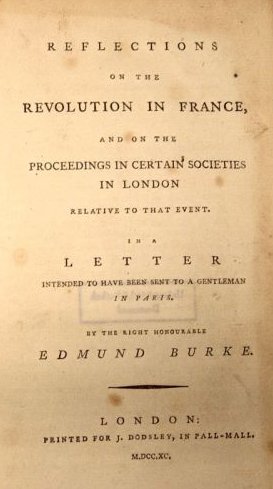
Written by Edmund Burke in 1790, Reflections on the Revolution in France is a seminal work that critiques the French Revolution and its potential consequences. Burke, an Irish statesman and philosopher, argued that the revolution's emphasis on reason and individualism would lead to chaos and the erosion of traditional social and political institutions. With a vibe score of 8, this work remains a cornerstone of conservative thought and a powerful warning about the dangers of unchecked radicalism. Burke's influence can be seen in the works of later thinkers, such as Russell Kirk and Friedrich Hayek, and his ideas continue to shape contemporary debates about politics, culture, and social change. The controversy surrounding the French Revolution and Burke's critique of it has endured for centuries, with some hailing him as a prescient voice and others condemning him as a reactionary. As the world continues to grapple with the complexities of social and political upheaval, Reflections on the Revolution in France remains a vital and thought-provoking work that challenges readers to think critically about the nature of change and the importance of preserving social order.
📚 Introduction to Reflections on the Revolution in France
The 'Reflections on the Revolution in France' is a seminal work written by Edmund Burke in 1790, offering a critical analysis of the French Revolution. This treatise is considered one of the most influential works of its time, shaping the discourse on the Revolution and its implications for European politics. Burke's critique of the Revolution was not merely a reflection of his conservative views but also a thoughtful examination of the potential consequences of radical political change. The work is notable for its insight into the social contract theory and its application to the events unfolding in France. As a member of the British Parliament, Burke's opinions carried significant weight, and his work was widely read and debated across Europe, including by prominent figures such as Thomas Paine, who responded with his own pamphlet, 'Rights of Man'.
👑 Historical Context of the French Revolution
To understand the significance of 'Reflections on the Revolution in France', it is essential to consider the historical context in which the French Revolution took place. The late 18th century was a time of great upheaval, with the American Revolution having recently concluded and the ideas of the Enlightenment spreading across Europe. The French monarchy, under King Louis XVI, was facing significant financial and social challenges, which ultimately led to the Estates-General being convened in 1789. This assembly would become the National Assembly, a body that would play a central role in the early stages of the Revolution. Burke's analysis of these events was deeply influenced by his belief in the importance of tradition and the dangers of radical change, as seen in his support for the Glorious Revolution of 1688 in England.
📝 Edmund Burke's Perspective on the Revolution
Edmund Burke's perspective on the Revolution was shaped by his conservative political views and his experience as a statesman. He was deeply concerned about the potential for violence and instability that the Revolution might unleash, not just in France but across Europe. Burke argued that the Revolution's emphasis on abstract principles of liberty, equality, and fraternity could lead to a disregard for the practical realities of governance and the importance of tradition and social order. His critique was not just of the Revolution itself but also of the philosophes who had influenced its intellectual underpinnings, such as Jean-Jacques Rousseau and Voltaire. Burke's work was a call for caution and a reminder of the complexities of human society, which he believed could not be reduced to simple slogans or ideologies. This perspective was influential in shaping the conservative movement in Europe and beyond.
🔥 The Impact of the Revolution on European Politics
The French Revolution had a profound impact on European politics, leading to a period of significant upheaval and change. The Revolution's emphasis on national sovereignty and the principles of liberty, equality, and fraternity inspired similar movements across Europe, contributing to the unification of Italy and German unification in the 19th century. However, it also led to the rise of Napoleon Bonaparte and the Napoleonic Wars, which would engulf Europe for over a decade. Burke's predictions of instability and conflict were, in many ways, borne out by these events. The Revolution also had a profound impact on the development of liberalism and conservatism as political ideologies, with Burke's 'Reflections' being a foundational text for the latter. The influence of the Revolution can be seen in the 1848 Revolutions across Europe, which were inspired by the same ideals of liberty and democracy.
🤝 The Role of the National Assembly in the Revolution
The National Assembly played a crucial role in the early stages of the French Revolution, serving as the legislative body that would oversee the transition from the absolute monarchy to a constitutional monarchy. The Assembly's adoption of the Declaration of the Rights of Man and of the Citizen in 1789 was a significant moment, enshrining the principles of liberty, equality, and fraternity into French law. However, the Assembly's actions were also marked by controversy, particularly the Great Fear of 1789, which highlighted the deep-seated social and economic tensions within French society. Burke was critical of the Assembly's radicalism and its failure to address the practical challenges facing France, arguing that its actions were driven more by ideology than by a genuine concern for the welfare of the French people. The Assembly's role in the Revolution is a subject of ongoing debate among historians, with some viewing it as a necessary step towards the creation of a more just and equal society, while others see it as a catalyst for the violence and instability that followed.
📊 The Economic Consequences of the Revolution
The economic consequences of the French Revolution were far-reaching and complex. The Revolution led to a significant decline in economic activity, particularly in the early years, as the country struggled to come to terms with the abolition of the feudal system and the introduction of new economic policies. The assignats, a form of paper currency introduced by the Revolutionaries, rapidly lost value, leading to hyperinflation and economic instability. Burke argued that the Revolution's economic policies were misguided and would lead to poverty and instability, rather than the prosperity and equality promised by its proponents. The economic challenges faced by France during this period were exacerbated by the Continental System imposed by Napoleon, which had a devastating impact on European trade and commerce. Despite these challenges, the Revolution also laid the groundwork for the development of capitalism in France and the emergence of a new industrial elite.
🌎 The Global Influence of the French Revolution
The French Revolution had a profound global influence, shaping political movements and ideologies around the world. The Revolution's emphasis on liberty, equality, and fraternity inspired similar movements in Latin America, Haiti, and elsewhere, contributing to the abolition of slavery and the fight for independence against colonial powers. Burke's 'Reflections' was widely read and debated in these contexts, with many seeing it as a warning against the dangers of radical political change. However, the Revolution also inspired a new generation of political leaders, including Simón Bolívar in South America, who sought to apply its principles to their own struggles for independence and democracy. The global influence of the French Revolution can be seen in the Arab Spring protests of 2010-2012, which were inspired by similar ideals of liberty and democracy.
👀 Criticisms and Controversies Surrounding the Revolution
Despite its significant influence, the French Revolution and Burke's 'Reflections' on it have been the subject of numerous criticisms and controversies. Many have argued that Burke's critique of the Revolution was overly pessimistic and failed to recognize the genuine grievances of the French people. Others have seen the Revolution as a necessary step towards the creation of a more just and equal society, and have criticized Burke's defense of the status quo. The Revolution's legacy is complex and multifaceted, with different interpretations and evaluations of its impact. Some view it as a beacon of hope for democracy and human rights, while others see it as a cautionary tale about the dangers of radical political change. The controversy surrounding the Revolution is reflected in the ongoing debates among historians and scholars, with some arguing that it was a bourgeois revolution that failed to address the needs of the working class, while others see it as a proletarian revolution that paved the way for the emergence of socialism and communism.
📚 Legacy of Reflections on the Revolution in France
The legacy of 'Reflections on the Revolution in France' continues to be felt today, with Burke's ideas about the importance of tradition, social order, and gradual reform remaining influential in conservative political thought. The work has been praised for its prescience and its thoughtful analysis of the complexities of human society. However, it has also been criticized for its failure to recognize the genuine grievances of the French people and its overly pessimistic view of the Revolution's potential. As a work of political philosophy, 'Reflections' remains a significant contribution to the debate about the nature of political change and the role of tradition in shaping our understanding of the world. Its influence can be seen in the work of later conservative thinkers, such as Friedrich Hayek and Milton Friedman, who have argued for the importance of limited government and individual liberty.
👥 Key Figures and Their Roles in the Revolution
Key figures played important roles in the French Revolution, including Maximilien Robespierre, Georges Danton, and Louis Antoine de Saint-Just. These individuals, along with others, helped shape the course of the Revolution and its legacy. Burke's 'Reflections' was, in part, a response to the ideas and actions of these figures, whom he saw as embodying the radical and dangerous tendencies of the Revolution. The roles of these individuals in the Revolution are the subject of ongoing historical debate, with some viewing them as heroes of the Revolution, while others see them as responsible for its excesses and violence. The influence of these figures can be seen in the development of Jacobinism and the Committee of Public Safety, which played a central role in the Reign of Terror.
📝 Literary and Cultural Significance of Reflections on the Revolution in France
The literary and cultural significance of 'Reflections on the Revolution in France' extends beyond its political impact. The work is notable for its eloquent prose and its thoughtful analysis of the human condition. Burke's writing has been praised for its beauty and its ability to convey complex ideas in a clear and compelling manner. As a work of literature, 'Reflections' remains an important part of the canon of political philosophy, offering insights into the nature of political change and the role of tradition in shaping our understanding of the world. Its influence can be seen in the work of later writers, such as Charles Dickens and Karl Marx, who have explored the social and economic implications of the Revolution in their own work.
Key Facts
- Year
- 1790
- Origin
- Ireland
- Category
- History, Politics
- Type
- Book
Frequently Asked Questions
What was the main argument of Edmund Burke's 'Reflections on the Revolution in France'?
Burke argued that the French Revolution was a dangerous and misguided attempt to remake society according to abstract principles of liberty, equality, and fraternity, and that it would lead to instability, violence, and the destruction of traditional social and political institutions. He believed that the Revolution's emphasis on reason and individual rights would undermine the social order and lead to a breakdown in morality and civility. Burke's critique of the Revolution was not just a defense of the status quo, but a thoughtful analysis of the complexities of human society and the dangers of radical political change.
What was the historical context in which the French Revolution took place?
The French Revolution took place in the late 18th century, a time of significant social, economic, and political change in Europe. The Revolution was influenced by the ideas of the Enlightenment, which emphasized the importance of reason, individual rights, and democracy. The French monarchy, under King Louis XVI, was facing significant financial and social challenges, which ultimately led to the convening of the Estates-General in 1789. This assembly would become the National Assembly, a body that would play a central role in the early stages of the Revolution. The Revolution was also influenced by the American Revolution, which had recently concluded and had inspired similar movements for independence and democracy around the world.
How did the French Revolution influence European politics?
The French Revolution had a profound impact on European politics, leading to a period of significant upheaval and change. The Revolution's emphasis on national sovereignty and the principles of liberty, equality, and fraternity inspired similar movements across Europe, contributing to the unification of Italy and Germany in the 19th century. However, it also led to the rise of Napoleon Bonaparte and the Napoleonic Wars, which would engulf Europe for over a decade. The Revolution's legacy can be seen in the development of liberalism and conservatism as political ideologies, with Burke's 'Reflections' being a foundational text for the latter. The influence of the Revolution can also be seen in the 1848 Revolutions across Europe, which were inspired by the same ideals of liberty and democracy.
What was the role of the National Assembly in the French Revolution?
The National Assembly played a crucial role in the early stages of the French Revolution, serving as the legislative body that would oversee the transition from the absolute monarchy to a constitutional monarchy. The Assembly's adoption of the Declaration of the Rights of Man and of the Citizen in 1789 was a significant moment, enshrining the principles of liberty, equality, and fraternity into French law. However, the Assembly's actions were also marked by controversy, particularly the Great Fear of 1789, which highlighted the deep-seated social and economic tensions within French society. Burke was critical of the Assembly's radicalism and its failure to address the practical challenges facing France, arguing that its actions were driven more by ideology than by a genuine concern for the welfare of the French people.
What were the economic consequences of the French Revolution?
The economic consequences of the French Revolution were far-reaching and complex. The Revolution led to a significant decline in economic activity, particularly in the early years, as the country struggled to come to terms with the abolition of the feudal system and the introduction of new economic policies. The assignats, a form of paper currency introduced by the Revolutionaries, rapidly lost value, leading to hyperinflation and economic instability. Burke argued that the Revolution's economic policies were misguided and would lead to poverty and instability, rather than the prosperity and equality promised by its proponents. The economic challenges faced by France during this period were exacerbated by the Continental System imposed by Napoleon, which had a devastating impact on European trade and commerce.
How did the French Revolution influence the development of liberalism and conservatism?
The French Revolution had a profound impact on the development of liberalism and conservatism as political ideologies. The Revolution's emphasis on liberty, equality, and fraternity inspired a new generation of liberal thinkers, who sought to apply its principles to their own struggles for independence and democracy. However, the Revolution's excesses and violence also led to a backlash against liberal ideals, with many conservatives arguing that the Revolution had gone too far and that a more gradual and cautious approach to reform was needed. Burke's 'Reflections' was a key text in this debate, offering a conservative critique of the Revolution and its legacy. The influence of the Revolution can be seen in the development of liberalism and conservatism in the 19th and 20th centuries, with many thinkers and politicians drawing on its ideals and legacy to shape their own political agendas.
What is the legacy of 'Reflections on the Revolution in France' today?
The legacy of 'Reflections on the Revolution in France' continues to be felt today, with Burke's ideas about the importance of tradition, social order, and gradual reform remaining influential in conservative political thought. The work has been praised for its prescience and its thoughtful analysis of the complexities of human society. However, it has also been criticized for its failure to recognize the genuine grievances of the French people and its overly pessimistic view of the Revolution's potential. As a work of political philosophy, 'Reflections' remains a significant contribution to the debate about the nature of political change and the role of tradition in shaping our understanding of the world. Its influence can be seen in the work of later conservative thinkers, such as Friedrich Hayek and Milton Friedman, who have argued for the importance of limited government and individual liberty.